
What is the cause of abnormal vaginal discharge? (a guide to distinguishing from color) | Dr. Diana Hosseini
Dr. Diana Hosseini
MashhadGynecological cancers fellowship, specialist in obstetrics and gynecology
What is the cause of abnormal vaginal discharge? (color recognition guide)
Have you noticed a change in color or an unpleasant smell in your underwear? Vaginal discharge is one of the most important signals of the body to show the health status of the uterus and cervix. Although many discharges are completely normal, some changes can be a warning sign of bacterial, fungal, or more serious problems.

In this article, we will help you "understand your body language" and distinguish between normal and dangerous secretions.
What is normal vaginal discharge like? (Don't ever worry!)
Before you worry, you should know that the vagina naturally secretes a fluid to clean itself. ویژگیهای ترشحات سالم عبارتند از:

- رنگ: شفاف یا سفید شیری.
- بو: بدون بو یا بوی بسیار ملایم (غیر آزاردهنده).
- بافت: رقیق، لزج (مثل سفیده تخممرغ در زمان تخمکگذاری) یا کمی غلیظ.
- حجم: بسته به چرخه قاعدگی کم و زیاد میشود.
نکته مهم: اگر در اواسط سیکل قاعدگی (حدود روز ۱۴) ترشحات شفاف، کشسان و زیادی دارید، این نشانه تخمکگذاری عالی است و بیماری نیست!
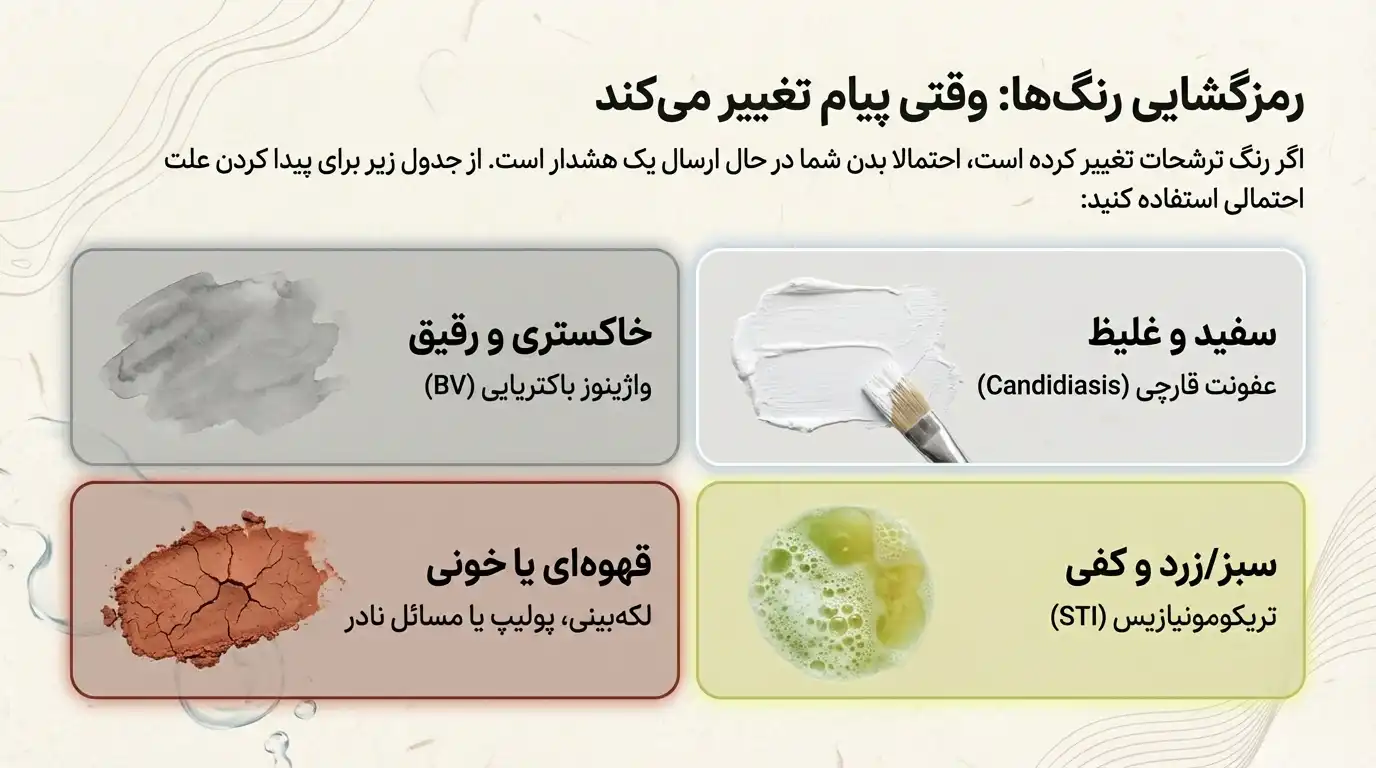
🎨 جدول تشخیص بیماری از روی "رنگ ترشحات"
اگر رنگ ترشحات شما تغییر کرده است، این راهنما به شما کمک میکند علت احتمالی را پیدا کنید:
| رنگ ترشحات | حالت و بافت | بوی همراه | علت احتمالی | اقدام مورد نیاز |
| سفید و غلیظ | تکهتکه (شبیه پنیر) | بدون بوی خاص | عفونت قارچی (کاندیدیازیس) | نیاز به داروی ضدقارچ |
| خاکستری / سفید | رقیق و آبکی | بوی ماهی (بوی بد) | واژینوز باکتریایی (BV) | مراجعه به پزشک برای آنتیبیوتیک |
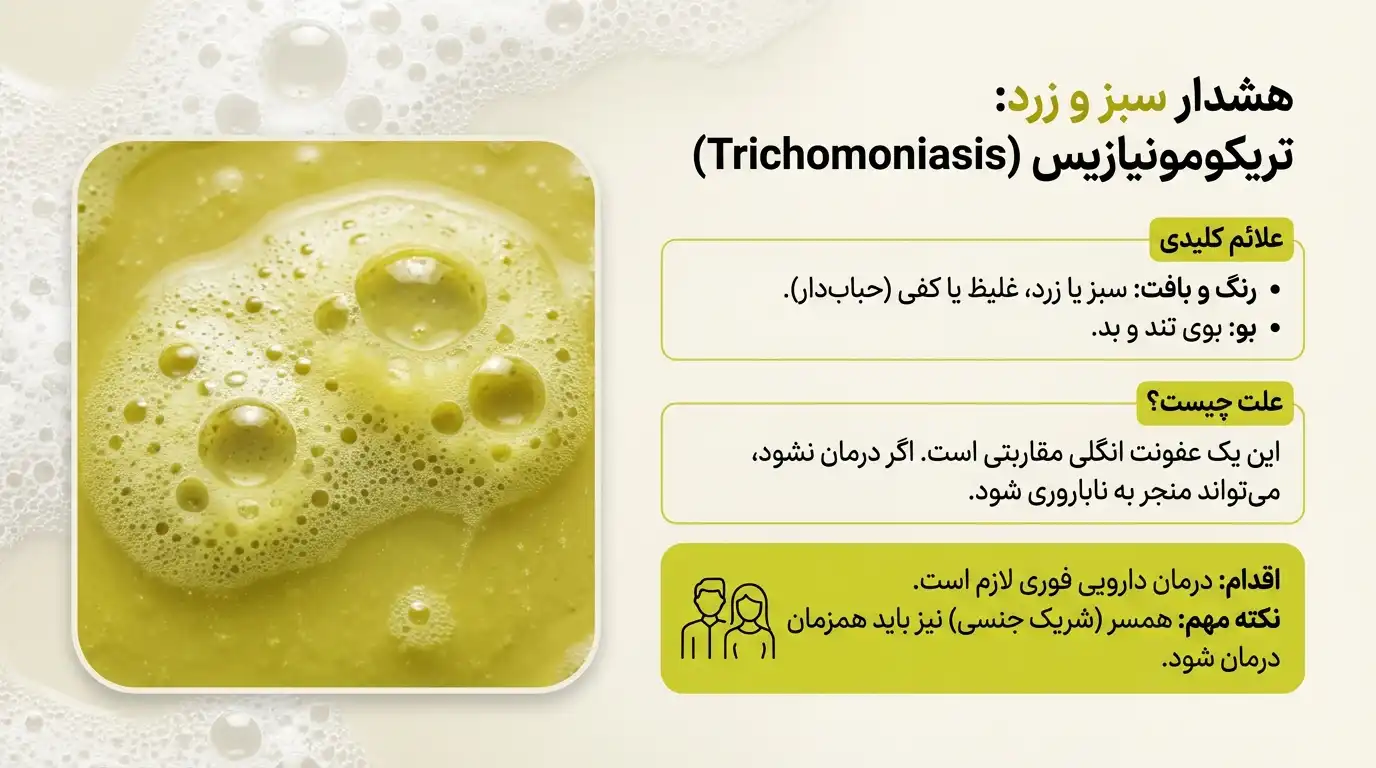
| زرد / سبز | غلیظ یا کفی | بوی تند و بد | تریکومونیازیس (عفونت انگلی) | درمان دارویی فوری (همسر هم باید درمان شود) |
| قهوهای / خونی | لکهبینی | - | پریود نامنظم یا پولیپ (در موارد نادر سرطان) | اگر مداوم است، حتماً معاینه شوید |
| صورتی کمرنگ | آبکی | - | معمولاً بعد از زایمان یا لکهبینی لانهگزینی | بررسی توسط پزشک |
بررسی دقیق علتهای ترشحات غیرطبیعی
۱. Fungal infection (Yeast Infection)
This is the most common complaint of women. Fungi always live in the vagina, but when their balance is disturbed (due to antibiotic use, stress or diabetes), they overgrow.
- Key symptom: Severe vaginal itching + white cheesy discharge.

2. Bacterial vaginosis
This infection occurs when "bad" bacteria overpower "good" bacteria (lactobacilli).
- Key symptom: Strong fishy smell (especially after sex).

3. Sexually Transmitted Infections (STIs)
Diseases such as chlamydia and gonorrhea are often asymptomatic, but sometimes cause a thick, yellow discharge. Failure to treat these infections can lead to infertility.
4. Vaginal atrophy (menopausal dryness)
In menopausal women, the decrease in estrogen causes the vaginal wall to thin and dry, which may be accompanied by watery discharge and burning. (treatment of vaginal dryness with laser)

When should we see a doctor immediately?
If your discharge is accompanied by any of the following symptoms, stop home remedies and make an appointment immediately:

- Severe pain in the pelvis or lower abdomen.
- Fever and chills.
- Severe burning when urinating.
- Sores or blisters in the genital area (may be a sign of [genital herpes or warts]).
- Bleeding when other than Period (or after sex).
Diagnosis and treatment methods at Dr. Diana Hosseini's office
In our clinic, diagnosis is not done just by looking. For definitive treatment and to prevent the infection from returning, the following steps are taken:

- vaginal pH regulation: measuring the acidity of the vaginal environment.
- Sampling (Smear): Close examination of the type of bacteria or fungus under the microscope.
- Pap smear: to ensure the health of the cervix.

Treatment options:
- Prescription of oral drugs or topical ointments (specialized according to the type of infection).
- Plasma therapy (Ozone Therapy): a new method to treat frequent and drug-resistant infections that disinfects the vaginal environment.

5 golden tips for prevention
- Wear cotton underwear: Synthetic fibers trap moisture and make the environment perfect for fungus to grow.
- Goodbye to vaginal douching: Washing the inside of the vagina with water or detergent removes beneficial bacteria. The vagina cleans itself!
- Eat probiotics: Probiotic yogurt or lactobacillus supplements help maintain vaginal flora balance.
- After using the toilet: Always dry yourself from "front to back" to avoid transferring bacteria from the anus to the vagina.
- Safe sex: Using a condom prevents many infections that change secretions.
Your FAQ
Is a lot of discharge a sign of infection?
Not necessarily. If it's clear and odorless and you don't itch, it's probably due to hormonal changes or ovulation.

Can I use anabaransa or joshshirin?
Arbitrary use of traditional methods may further disturb the pH of the vagina and aggravate or chronic the infection. Always consult your doctor before doing anything.
Conclusion:
Vaginal discharge is a mirror of your health. If you notice a change in color or smell, don't panic, but don't ignore it. Early diagnosis means simpler and faster treatment.





