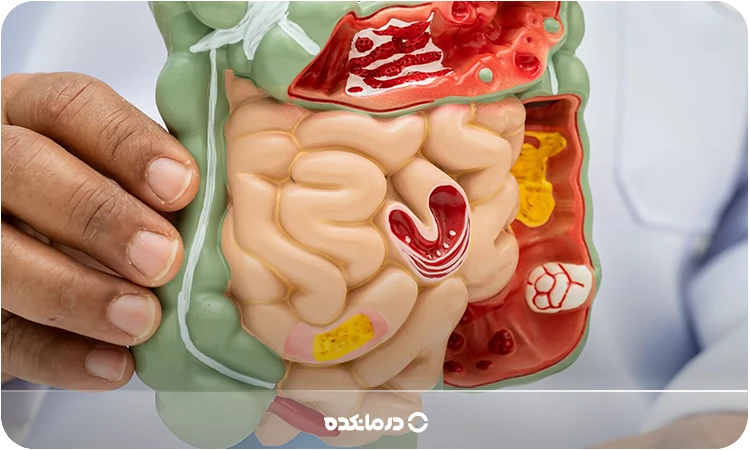
What is intestinal torsion or volvulus? Examining symptoms and treatment methods
What is intestinal torsion or volvulus? Review of symptoms and treatment methods
Fateme Ramezani List of digestive disorders and diseases Last Update: 3 hours ago Published: 3 hours ago No questionAwaiting review by the medical team of Darmankade
Intestinal torsion or volvulus occurs when It means that a part of the intestine twists around its axis or its supporting tissues. This rotation can block the passage of food and liquids, and in severe cases, it can be associated with disruption or interruption of blood flow to the affected area. If it continues, the reduction of blood supply may lead to necrosis (tissue loss) of the intestine and the occurrence of serious complications.
Intestinal volvulus can occur in various parts of the digestive system, including the small intestine, large intestine, and rarely the stomach. However, this condition is more common in the colon, especially the sigmoid colon. Also, this condition may occur at the beginning of the large intestine, i.e. cecum and ascending colon, in which case it is called cecal volvulus. In the continuation of this article from Darmankadeh magazine, we will examine the symptoms of intestinal volvulus, its complications and treatment methods.
Table of Contents
- Symptoms of torsion Bowel
- Treatment Intestinal torsion
- Complications After bowel torsion operation
- Frequently Asked Questions
What causes intestinal torsion?
As mentioned, this complication is more It occurs in the large intestine and knowing the mechanism of the large intestine can help to better understand this condition. What is the function of the colon? The large intestine plays an important role in digestive function by absorbing water, regulating intestinal movements, and transferring feces to excretion, and a disturbance in its movements or excessive expansion can cause volvulus.
Sigmoid volvulus is the most common type of colonic volvulus and occurs when a portion of the intestine twists around its blood supply. It most commonly presents in patients who are bedbound and have a history of chronic constipation.
– National Library of Medicine
Sigmoid volvulus is the most common type of twisting of the large intestine and occurs when a part of the intestine wraps around its feeding blood vessels. This complication is more common in patients who are grounded and have a history of chronic constipation.
The exact cause of volvulus is not completely known and this complication is usually It is multifactorial. However, this disease is more common in elderly men and people of African descent. Also, the incidence of this disease has been reported in people with neurological or psychiatric disorders. Factors that can increase the risk of intestinal torsion include:
- Chronic constipation
- History of abdominal, pelvic, or intestinal surgery
- Some underlying colon diseases such as colon polyps and Hirschsprung disease
- Abdominal adhesions or bands of scar tissue from surgery, infection, or Previous injuries
- Abnormalities or congenital disorders of the digestive system
- Inflammatory bowel diseases such as Crohn's disease
Symptoms of intestinal torsion
Common symptoms and signs of intestinal torsion are:
- Intermittent or continuous abdominal pain
- Abdominal bloating and distension (abdominal swelling)
- Inability to pass gas
- Nausea and vomiting
- Decreased bowel movements such as constipation or complete cessation of stool
- Ranal bleeding or presence of blood in the stool
Treatment of intestinal torsion
gastroenterology specialist usually uses a combination of physical examination, medical history review and diagnostic tests such as abdominal radiography and CT scan to diagnose intestinal torsion. The treatment of intestinal torsion usually involves trying to open the obstruction or return the intestine to its normal state, and depending on the severity of the disease and the condition of the blood supply to the intestine, it can be non-surgical or surgical. The treatment methods for this complication are:
If the blood flow is maintained, non-surgical treatments are sufficient; But in cases of necrosis or recurrence of the disease, the affected person must undergo surgery.1. Non-surgical treatments
If the intestine is twisted; But if the blood flow is preserved, it can be treated non-surgically by opening the coil endoscopically, using a sigmoidoscope or a colonoscope. If the torsion is in the sigmoid colon, the doctor may try sigmoidoscopy first. In this procedure, a flexible tube (sigmoidoscope) is inserted through the rectum into the lower part of the colon.
A small amount of air is blown into the colon to open it up. This work is usually enough to straighten the intestines; But the possibility of twisting the intestine again in the same area is very high. For this reason, the doctor may suggest surgery as a permanent solution. Another method called colonoscopy can also remove twists at the beginning of the colon; But in this area too, the probability of recurrence is high and most people need surgery.
2. Intestinal volvulus surgery
In severe cases or when non-surgical methods are not effective, surgical intervention may be performed to correct the twisted part of the intestine. This procedure involves removing part of the intestine and reattaching the healthy parts together. You can see the surgical methods of intestinal twisting in the table below:
Volulus surgical methodDescriptionColectomy In this method, all or part of the colon is removed. In torsion of the lower part of the colon, the doctor removes the involved part of the intestine and then connects the 2 healthy ends of the intestine in an operation called bowel resection. The probability of recurrence of volvulus after this surgery is very low. Straight hemicolectomy is performed for cecal volvulus and includes the removal of the cecum and the ascending colon and connecting the remaining part of the colon to the end of the small intestine. Colostomy (Colostomy) In this surgery, the twisted part of the lower intestine is removed; But instead of reattaching the two ends of the colon, one end of the intestine is attached to a hole made in the abdomen. Then a colostomy bag is connected to this opening to collect excrement. Cecostomy In this method, after uncoiling the cecum, a narrow tube is inserted into the cecum through a small incision to drain and connect the cecum to the abdominal wall. This method is usually used for patients who are unable to perform more extensive surgeries. The risk of infection in this method is high; But the possibility of twisting the colon again will be low. Cecopexy This surgery is also used to treat cecum volvulus. Doctors open the beginning of the colon and sew it to the inner wall of the abdomen. After this operation, the possibility of twisting the same area again is high; Therefore, it is usually used for patients who have an unstable physical condition.Intestinal torsion postoperative care
Be aware that intestinal volvulus postoperative care plays an important role in the faster recovery of the patient and prevention of complications. After surgery, the patient is usually closely monitored for vital signs, bowel function, and the condition of the surgical wound. It is very important to follow the doctor's instructions about nutrition. Also, regular use of medications, gradual movement, prevention of constipation and paying attention to warning signs such as fever, severe abdominal pain or stopping gas and stool are among the key points in care after this operation.
Complications after surgery of intestinal torsion
Despite the success of many surgeries, it is necessary to be aware of complications after surgery of intestinal torsion. These complications may include surgical site infection, abdominal adhesions, intestinal junction leakage (anastomosis), bowel re-obstruction, or recurrence of volvulus.
In some patients, especially the elderly or those with underlying diseases, these complications are more likely to occur. Regular follow-up, consultation with gastroenterology online and immediate referral to medical centers in case of abnormal symptoms can play an important role in preventing and timely treatment of complications after intestinal torsion.
Intestinal torsion home treatment
There is no home treatment method for intestinal torsion; Because some people may confuse volvulus symptoms with functional problems like intestinal spasm, while intestinal torsion is an emergency issue. Volvulus can quickly lead to intestinal necrosis, perforation, and severe abdominal infection due to intestinal obstruction and the possibility of blood flow interruption. Therefore, using home remedies, herbal medicines, laxatives or abdominal massage is not only effective; Rather, it may be dangerous and delay the diagnosis and treatment.
In case of symptoms such as severe abdominal pain, bloating, vomiting, or gas and stool loss, it is necessary to visit a medical center immediately, and the only effective treatment methods are medical measures and, if necessary, surgical intervention under the supervision of a doctor. Obstruction of the passage of excreta is created. This condition can be accompanied by symptoms such as severe abdominal pain, bloating, nausea, vomiting, and cessation of gas or stool excretion, and if treatment is delayed, it can lead to reduced blood supply, intestinal necrosis, perforation, and severe abdominal infection.
Timely diagnosis of volvulus and choosing the appropriate treatment method play a decisive role in preventing serious complications and maintaining the patient's health. Since the symptoms of intestinal torsion may be confused with other gastrointestinal diseases, accurate evaluation and differential diagnosis by gastroenterology specialist is of particular importance.
In case of suspicious or worsening symptoms, it is recommended to avoid self-medication and See a gastroenterologist as soon as possible for a detailed examination. Also, you can get an appointment from the best gastroenterology specialists in the country through the appointment system of the clinic.
Frequently asked questions
Does intestinal torsion get better by itself?No. Intestinal torsion is an emergency and will not go away without medical treatment. A delay in seeing a gastroenterologist can cause blood supply interruption, intestinal necrosis, and dangerous complications.
How to prevent intestinal volvulus?The most important way to prevent intestinal torsion is to prevent chronic constipation. Adequate water intake, high-fiber diet, regular physical activity and timely visit to a gastroenterologist in case of constipation or persistent abdominal pain can reduce the risk of twisted colon. webmd
Top Doctors: Dr. Ali Asghar Etemadi Fard | Doctor Alireza RezaeiWas this article useful for you?
![Which fruit increases blood pressure [high and low]? 18 effective fruits](/storage/posts/covers/2026_01_08/ef00bb701cbb99e90a24ba8d73265ba4c08936335e859a33b69553f5c5e737a2.webp)
![For whom is rhinoplasty dangerous? [10 groups+cause+solution]](/storage/posts/covers/2026_01_06/3e06a993c87e243daaf67dc69ac3e484d377b2708c93656820e0084ea4f080d6.webp)
![What fruits have vitamin B12? [13 fruits + consumption tips]](/storage/posts/covers/2026_01_06/dfaeceb7cb9a203805aeba8715bf7cdea6f5cb2b5b9314e1898807545e874bb1.webp)
![Is nasal massage necessary after surgery? [Training + 5 effective benefits]](/storage/posts/covers/2026_01_06/1f2686c8d522130d256828a51d7d46594dbde31ec2253325e6a8a38f04094789.webp)
![The best drops to reduce eye pressure [14 powerful drugs + method of administration]](/storage/posts/covers/2026_01_06/0177c50098eb80d878d1c883d09ae31ad2f489b17e1288f52018e3f8ef213e5f.webp)
![What is hair filler? [9 benefits, how to inject + durability of hair filler]](/storage/posts/covers/2026_01_06/c21c5e1ff48e9af8214111dfe0b867586f298e3d74a95fadda02b0b04df12598.webp)
![The strongest antibiotic for tonsil infection [7 drugs + method of administration]](/storage/posts/covers/2026_01_06/7b5adf6bb8cf556824d96570b6adba58f824b3a7f248993cfaafb73c0b5b8610.webp)
![Garlic pills for weight loss [4 effective benefits and side effects + how to use]](/storage/posts/covers/2026_01_06/c49f08b482d5860218c8635e48194a50f2ed48b51ef15925aa2d73d8393ff3ab.webp)
![What foods increase eye pressure? [8 harmful foods and drinks]](/storage/posts/covers/2026_01_06/52929c4d1b9ed7916d3fc5a8e45060479fb186f332dd217e68905f71f89a33f0.webp)
![What foods lower eye pressure? [18 useful foods]](/storage/posts/covers/2026_01_06/f180eb15f8e64fc9b386f9d5dc7936a5e416af36032be3bdcdf9054925a21d43.webp)
![itchy scalp; 18 causes [medical treatment + 11 home remedies]](/storage/posts/covers/2026_01_06/a1e116ec1c6243fd5c4e6fb951da5cb33bbd92a09c44e29b845852a86f550681.webp)
![What is intestinal colitis and what are its symptoms? [3 causes + definitive treatment]](/storage/posts/covers/2026_01_06/d3384e9221c036ff3eb447c69ffabb109dd6c0c35f5e5f0af775c4545cfd7ea5.webp)
![The best pills for irritable bowel syndrome [10 powerful drugs]](/storage/posts/covers/2026_01_06/70f02d6808fab88d67b0c6734a623e5e71982d323dbd2fb8158c29669849b813.webp)



