Types of epidural injection methods
Epidural injection is one of the effective methods for pain control during childbirth, surgery and chronic spine pain. This method has different types that are chosen depending on the treatment goal and the patient's condition.
Some methods focus on rapid pain relief, while others allow for continuous or controlled drug injection. Next, we will learn about the most important types of epidural injection methods and their uses.
Epidural anesthesia
In this method, anesthetic is injected into the epidural space to block the transmission of pain signals from the nerve roots to the brain.
Epidural anesthesia is usually used to reduce the pain of natural childbirth, before or during minor surgeries, as well as some spine surgeries. The quick and regional effect of this method makes the patient experience less pain and maintain consciousness (source).
epidural steroid injection
In this method, an anti-inflammatory drug such as a corticosteroid is injected into the epidural space to reduce inflammation or pressure on nerve roots.
Epidural steroid injection is usually used to treat chronic pain. It is used for herniated discs, spinal stenosis, or spinal nerve pain.
Studies have shown that approximately half of patients who receive this treatment experience temporary pain relief (source).
single injection
single injection consists of a single injection of anesthetic or steroid into the epidural space. This method is usually used for short-term pain or chronic pain that requires periodic management. Unlike epidural with a catheter, in this method there is no continuous injection and the drug effect is usually limited to a few hours (source).
Patient-controlled epidural
In this method, the epidural catheter is combined with a control device so that the patient can inject the drug based on the amount of pain and the time needed.
This method is especially useful in long labor or after surgery that requires adjusting the dose and time of receiving the drug. Yes, it is used. This method gives the patient more control and allows fine-tuning of pain relief (source).
What diseases is epidural used for?
In addition to reducing labor pain, epidural injection is also used in the treatment and management of pain caused by some diseases and spine problems. Next, we will learn about the most important diseases and conditions for which epidural is used.
Labor pain
Epidural is the most common method to reduce pain in natural childbirth. The anesthetic is injected into the spinal nerves through the epidural space and reduces pain from the waist down, without affecting the mother's consciousness.
Studies show that the use of epidurals in childbirth significantly increases the satisfaction of mothers and the positive experience of childbirth (source).
Chronic spinal pain
400;">Epidural is used to manage chronic pain caused by problems such as disc herniation, spinal canal stenosis, and nerve inflammation.
Steroid or anesthetic injection can reduce inflammation and pressure on nerve roots, resulting in pain relief. Some patients experience significant pain relief for weeks to months (source).
Pain after surgery
Epidurals are used as an effective method of pain control after surgery, especially abdominal, pelvic, leg, or spine surgeries.
Placing a catheter in the epidural space allows medication to be continuously injected and postoperative pain decrease, which results in faster patient recovery and less need for systemic analgesics (source).
Cancer Pain
In some cancer patients, severe pain may be caused by tumor pressure on nerves or surrounding tissues. By reducing the transmission of pain signals from nerves, epidural injection can improve the patient's quality of life and reduce the need for high consumption of systemic pain medications (source).
Advantages of epidural injection
Epidural injection is one of the most effective methods to reduce pain in childbirth, surgery and some chronic pain. This method has been able to find a special place in pain management due to its fast, regional and controlled effect. In addition to reducing pain, epidurals have other benefits that are important to both the patient and the medical team.
- Pain reduction: Significant pain reduction in childbirth, surgery and chronic pain without the need for full anesthesia.
- Fast effect: The anesthetic works quickly and numbs the target area.
- Continuous use: Using a catheter, the drug can be injected continuously or intermittently.
- Decreasing the need for systemic drugs: The need to take systemic oral or injectable drugs is reduced and the side effects caused by them are reduced.
- Patient control: In patient-controlled procedures (PCEA), the patient can adjust the amount and time of receiving the drug.
- Consciousness maintenance: The patient will remain conscious and have a better experience during childbirth or some surgeries.
- Improving the quality of life: Relieving chronic or cancer pain improves the quality of life of patients.
Possible side effects of epidural injection
Epidural injection is generally a safe and effective way to reduce pain, but Like any other medical procedure, it may be associated with some complications and risks.
Knowing these complications helps patients to make a more informed decision and in case of any unusual symptoms, the necessary measures can be taken faster.
- Low blood pressure: One of the most common side effects is a drop in blood pressure after the injection of anesthetic, which may cause dizziness or weakness.
- Pain or sensitivity at the injection site: After the injection, temporary pain or burning may be felt at the injection site.
- Headache after epidural: In some rare cases, accidental penetration of the drug or needle into the spinal fluid can cause a severe headache after the injection.
- Infection: If sterile conditions are not fully observed, there is a risk of infection at the injection site or epidural space.
- Nerve damage: Damage to nerve roots is very rare, but may cause temporary numbness or, in rare cases, long-term problems.
- Seizures or allergic reactions: In very rare cases, patients may have allergic reactions to anesthetics or steroids.
Purposes of epidural injection
Epidural injection As a method of pain control and pain relief in various medical conditions, it has multiple purposes. These goals vary depending on the patient's condition.
Knowing these goals will help the patient better understand why the doctor recommends an epidural and what results are expected.
Pain reduction or control
one of The main goals of the epidural are to block or reduce the transmission of pain signals from the nerve roots of the spine to the brain.
Anaesthetic or pain medication (and sometimes with steroids) is injected into the epidural space and makes the nerves in the treated area numb or less sensitive; The result is that the patient does not experience severe pain—whether during labor, after surgery, or in chronic pain—or the pain is greatly reduced (source) The painkiller dose can be used much less than systemic drugs; As a result, the general side effects of drugs such as drowsiness, nausea, respiratory depression or gastrointestinal problems are reduced.
Improving the recovery process after surgery
In surgeries, especially in the abdomen, pelvis or legs, epidural is used as a method of anesthesia or pain relief after surgery. It goes.
With effective pain control, the patient is able to move sooner, bowel function returns sooner, breathing and lung function improve, and the risk of cardiac, pulmonary, and thrombosis complications is reduced. This feature results in faster recovery and shorter hospitalization (source).
400;">Decreasing the body's stress response to surgery or injury
Surgery and pain stress activate the neuro-metabolic stress response — something that can cause inflammation, clotting problems, pressure on the heart and lungs, and other complications.
Epidural with sympathetic nerve block blocks this stress response. Modulates which helps reduce cardiovascular and pulmonary complications and reduce inflammation 400;">).
Easier delivery or surgery by maintaining consciousness and more precise control of anesthesia
In situations such as natural childbirth or surgeries that do not require complete anesthesia, epidural allows the patient to remain awake while relieving pain.
This feature is especially important in childbirth because the mother can participate in the process of childbirth; The doctor can also precisely adjust the amount and location of anesthesia (source).
400;">Treatment or reduction of inflammation and pressure on nerves
When the pain is due to inflammation of the nerve root — such as nerve involvement caused by disc herniation or spinal canal stenosis — epidural steroid injection can reduce inflammation and swelling around the nerve and reduce pressure; This can reduce pain, numbness, or tingling, and help nerve function return (source).
Preparation before epidural injection
Preparation before epidural injection plays a very important role in reducing the risk of complications and increasing the effectiveness of the procedure. Before the injection, the doctor or the medical team will check the patient's complete medical history, drug sensitivities, bleeding problems or anticoagulants.
Patients are usually advised to drink enough fluids a few hours before the injection and to wear comfortable clothes and easy access to the waist if long anesthesia or catheter use is required.
Also, before the epidural, a local anesthetic may be injected into the skin and tissue around the entry site to reduce pain during needle insertion.
Observing safety tips, patient relaxation and cooperation with the medical team will make the injection more safe and a more comfortable experience.
Steps Performing an epidural injection
Epidural injection is a precise and step-by-step procedure that requires complete preparation and compliance with safety precautions. The procedures for this injection are designed in such a way that the medicine reaches the epidural space correctly and the effect of anesthesia or pain relief is maximized, while the possible risks and complications are minimized. Open the beads. The nurse or doctor checks the patient's blood pressure, heart rate, and oxygen level, and if needed, a mild sedative is prescribed to reduce anxiety. Superficial pain is reduced so that the patient can more easily tolerate the main injection.
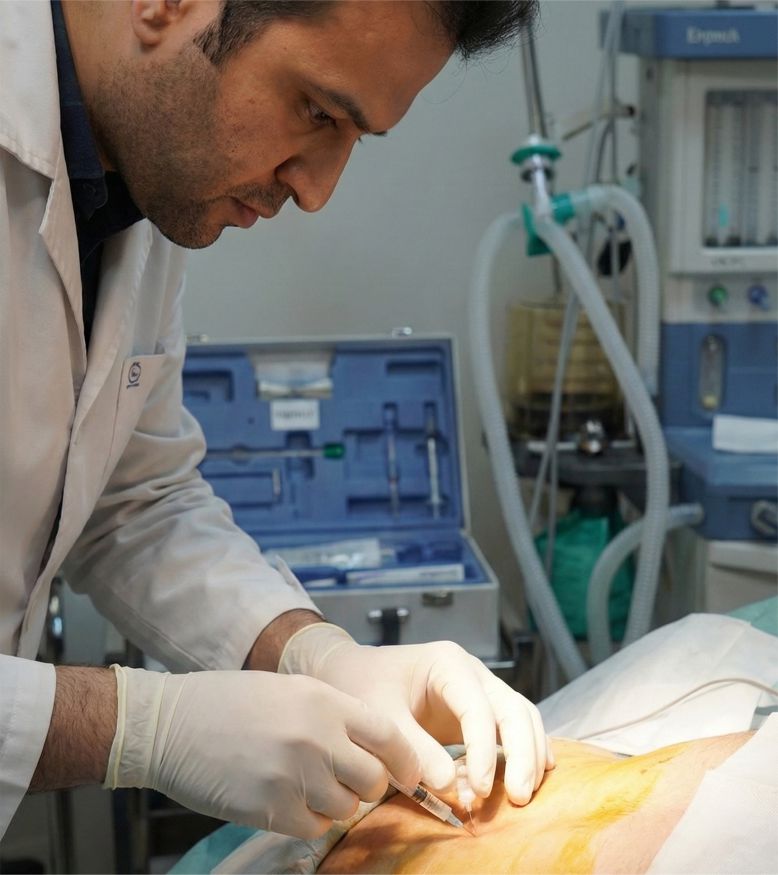
Epidural needle insertion
The doctor carefully inserts a special needle into the epidural space. This stage is highly sensitive and the doctor ensures that the needle enters the correct place with special techniques and experience. In some cases, a narrow catheter is inserted into the epidural space so that medicine can be injected continuously or intermittently. The effect of the drug usually starts within a few minutes and causes pain relief or regional anesthesia. The doctor adjusts the dose and speed of the injection according to the patient's needs.
Monitoring and control after the injection
After the injection, the patient is monitored for blood pressure, heart rate and neurological symptoms to ensure the safety and effectiveness of the injection. If an indwelling catheter or patient-controlled system is used, instruction will be provided on how to use it.
When is an epidural injection used?
An epidural injection is used when the patient needs effective pain control, especially in situations where oral or systemic pain medication is needed. are not sufficient or have adverse side effects.
The most common cases include pain reduction in natural childbirth, pain control after abdominal, pelvic, and leg surgeries, and relief of chronic spinal pain and radiculopathy.
Also in patients with pain caused by inflammation or pressure on nerve roots, such as disc herniation or stenosis. Spinal canal, epidural can reduce inflammation and improve nerve function.
In childbirth, this method greatly reduces pain without affecting the mother's consciousness, and in surgeries, effective postoperative pain relief helps to recover faster and reduce the complications caused by taking systemic drugs (source).
400;">How long does an epidural injection take?
The duration of an epidural injection is usually short and, depending on the type of procedure and the purpose of the treatment, it lasts between 5 and 15 minutes.
The patient's preparation stage, including being in the right position and local anesthesia, takes about a few minutes. and the main anesthetic or steroid injection itself usually takes less than 5 minutes.
If an epidural catheter is used for continuous or patient-controlled injection (PCEA), catheter placement and examination may take a few minutes longer, but the whole process is still short and relatively comfortable.
Effect The anesthetic usually kicks in within 10 to 20 minutes of the injection and provides significant pain relief.
How painful is an epidural injection?
When you go in for an epidural, the area to be injected is first numbed with a local anesthetic. So many patients feel only a light scratch — similar to a simple vaccine or regular injection (source).
In one study Large, when patients were asked to predict how much pain they would have before the injection, the average score for "expectation of pain" was 5 (on a scale of 0-10); But after the injection, the average pain experienced was only 2. That is, many experienced that the pain was less than they imagined (source).
Now, in some cases, temporary pain and sensitivity may be reported at the injection site; In a study of more than 5,000 patients, about 9% reported local pain at the needle insertion site (source).
What is anesthesia or anesthesia in epidural injection?
In epidural injection, the patient is not unconscious, but usually local anesthesia is used to numb the area where the needle is inserted.
The doctor first numbs the skin and surface tissue It is numbed with a local anesthetic so that when the epidural needle is inserted, the patient experiences only a slight pressure or sensation of pressure and pressure, not actual pain.
In most procedures—whether an epidural for childbirth, surgical pain management, or treatment of spinal problems—the patient remains fully conscious and can speak, breathe, and cooperate as needed. If the patient is anxious, a mild sedative may be given, but general anesthesia is not administered. It improves the patient's condition and reduces the possibility of complications. Usually, the patient is monitored for a short period of time in medical centers to check the vital signs, level of numbness and the ability to move the legs.
Many people can return to light daily activities within a few hours, but it is recommended to refrain from heavy activities, driving and lifting heavy objects for 24 hours.
Feeling Numbness or mild weakness in the legs during the first few hours is normal and usually resolves gradually. Also, taking care of the injection site—including keeping the skin clean and avoiding scratching or pressure—can prevent irritation or infection.
A patient should contact a doctor immediately if they develop a severe headache, fever, persistent pain, abnormal numbness, or problems with urination (source).
Who are suitable candidates for epidural injection? Are they?
Suitable candidates for epidural injections are usually people who have moderate to severe pain caused by spinal problems or conditions that cause inflammation, nerve pressure, or persistent pain.
This method is an option for patients who have not responded adequately to initial treatments such as oral anti-inflammatory medications, physical therapy, or rest. It is considered effective.
People who suffer from disc herniation, spinal canal stenosis, sciatica, spinal arthritis, radiculopathy or pain caused by nerve damage are usually suitable candidates for epidural. It is also recommended for patients who need targeted and effective pain control after surgery.
Who should not have an epidural?
People who should not have an epidural usually have medical conditions that make this procedure risky or unsafe for them.
The most important group includes patients who have an active infection in the body or in the area near the injection site, because entering the needle can transfer the infection to the epidural space.
Also, people with severe blood coagulation disorders or those who take blood thinners such as warfarin, heparin or some new anticoagulants are at risk of epidural bleeding and Spinal hematomas are present and usually cannot perform this injection until medications are adjusted.
People with known allergies to anesthetics or corticosteroids are also not good candidates. Also, patients with spinal instability, severe increased intracranial pressure, or uncontrolled cardiopulmonary problems should generally avoid this procedure. and skeletal-muscular problems are used, but their mechanism of action, treatment goal and speed of response are completely different.
Difference in mechanism of action
Epidural by injecting anesthetic drugs or corticosteroid directly reduces inflammation and nerve pain; While PRP stimulates the natural tissue repair and regeneration process by using concentrated platelets from the patient's body.
Difference in the speed of effect
Epidural usually reduces pain within a few minutes to a few hours, but PRP often takes several weeks to several months. Show its restorative effect.
Difference in the type of applications
Epidural is used for disc herniation, spinal canal stenosis, sciatica and nerve root pain; On the other hand, PRP is mostly used for tendon injuries, joint arthritis, sports injuries, and mild muscle tears.
difference in the durability of the effect
The epidural effect is usually temporary and lasts a few weeks to a few months depending on the patient's condition; But PRP aims to treat the cause and restore tissue, and in many cases leads to long-term improvement.
Differences in safety and side effects
Epidural may cause side effects such as low blood pressure, headache, or rare infection, while PRP, because it uses the patient's own blood, usually has side effects. It is much less and the risk of allergy is almost zero.
The difference in the need to repeat sessions
Epidural is usually repeated at intervals of several months and according to the patient's condition; But PRP is usually done in 1 to 3 sessions, and depending on the severity of the injury, additional sessions may be required.
Next, a comprehensive comparison table has been prepared to better understand the differences between epidural injection and PRP. This table will help you to make a more accurate decision in choosing the appropriate treatment method based on the mechanism of action, speed of recovery, applications and durability of the results. PRP
Mechanism of effect | Reduction of pain and inflammation with local anesthesia or corticosteroids | Stimulation of tissue regeneration using concentrated blood platelets Patient |
Treatment goal | Quick control of pain and nerve inflammation | Repair of damaged tissues and long-term recovery |
Speed Effect | a few minutes to a few hours | a few weeks to a few months |
duration | Temporary; several weeks to several months | long term; It is more stable depending on the severity of the injury |
Applications | disc herniation, sciatica, spinal canal stenosis, nerve pain | tendon injuries, joint arthrosis, injuries Sports |
Type of drug/injectable | Local anesthesia or corticosteroid | Platelet-rich plasma (from your own blood) Individual) |
Number of sessions | Repeat every few months if needed | Usually 1 to 3 sessions |
Complications possible | headache, hypotension, injection site pain, infection (rare) | very little; Almost zero chance of infection or allergy |
Safety | Safe but with possible side effects of drugs | Very safe because it uses the patient's own blood It becomes |
suitable for | people with nerve pain and severe inflammation | people with chronic tissue damage and arthritis |
The cost of epidural injection in Iran
The cost of epidural injection in Iran does not have a fixed number and is usually determined according to several important factors. The first factor is the type of spine problem and the area where the injection is performed; Because some areas are more sensitive and require more precision and skill.
The experience and expertise of the doctor also plays an important role in determining the cost, so experienced specialists usually receive a higher rate. The type of injectable drugs (cortones, anesthetics, and special compounds) and the equipment used in the operating room or clinic also affect the price.
In addition to these, the place of injection (private or public treatment center) and the need or not for simultaneous imaging such as fluoroscopy or ultrasound are other factors affecting the final cost.
Epidural injection in pregnancy
Epidural is one of the most common and relatively safe methods of numbing childbirth for pregnant women; For many mothers, it helps reduce the pain of labor and have a more relaxed and controlled birth experience.
According to studies, the use of epidurals in childbirth is associated with a significant reduction in the risk of serious maternal complications, so that in a large study of more than half a million mothers, epidurals were associated with a nearly 35% reduction in the risk of acute maternal complications (source).
In addition, epidurals It allows the mother to remain alert while the pain is less, the breathing, blood pressure and heart rate of the fetus are continuously monitored, and if needed, quick and effective pain relief can be provided (source).
However, it should be noted that, like any other medical procedure, epidurals can be associated with some temporary side effects — such as a temporary drop in blood pressure, numbness in the legs for a while, or a headache after childbirth; But evidence shows that these complications are mild for the majority of women and can be managed with medical supervision (source).
When should we see a doctor after an epidural injection?
After an epidural injection, most patients experience a slow and uneventful recovery, but in some situations it is necessary to see a doctor immediately or as soon as possible.
Urgent consultation with a doctor is recommended if you have a headache or are sick after From the injection, fever or signs of infection at the injection site, significant swelling or redness, numbness or abnormal weakness in the legs, problems controlling urine or stool, severe or sudden pain in the back.