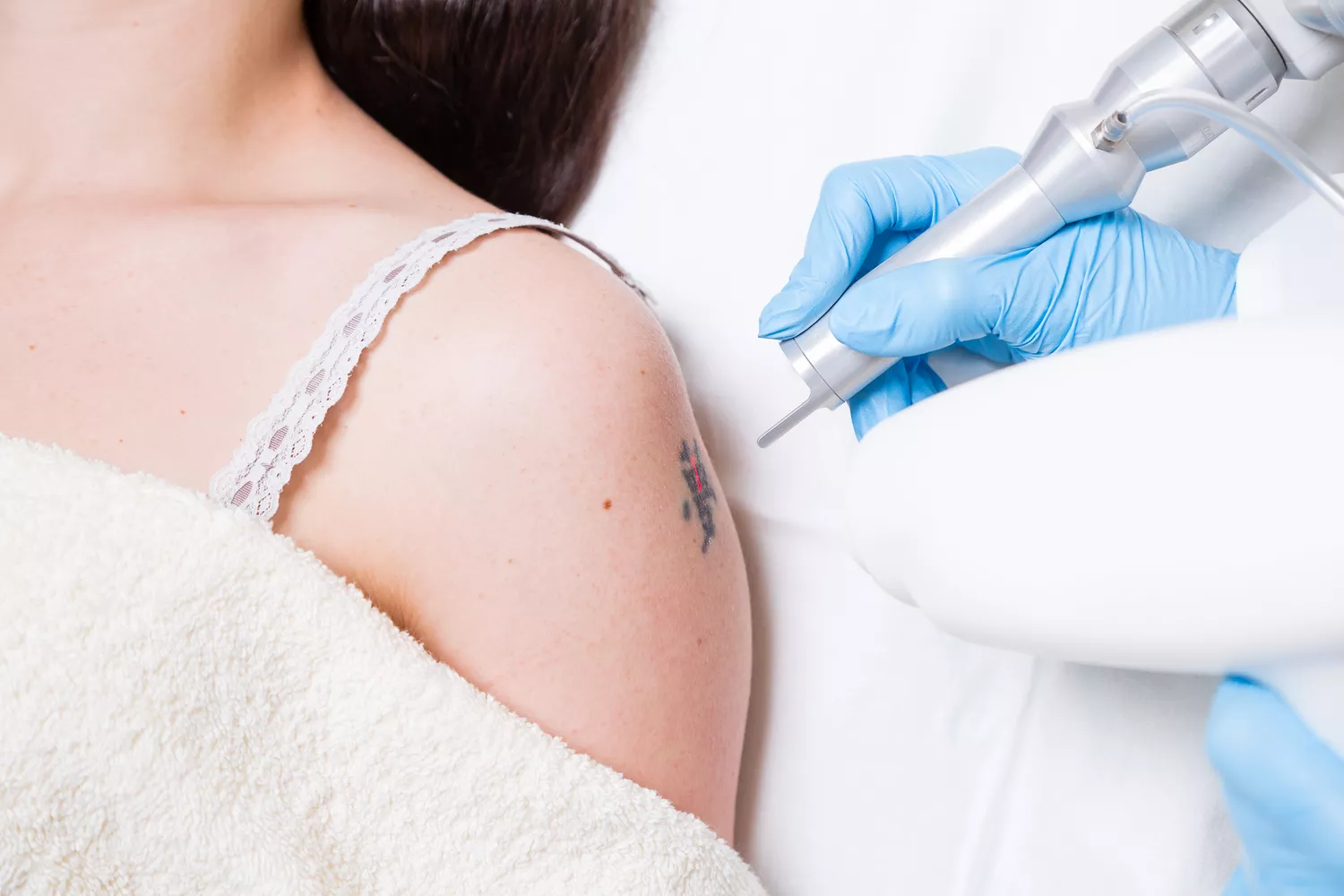

کیوسوئیچ یک مکانیزم کنترل کیفیت نوری (Quality Switching) در سامانههای لیزری است که هدف آن ذخیرهسازی انرژی در کاویتۀ لیزر و رهاسازی ناگهانی آن در قالب پالسهای فوقکوتاه و بسیار پرانرژی است. Normally, the laser releases energy continuously or in regular pulses, but in Q-Switch technology, the optical path or "Q-factor" of the laser cavity is blocked or attenuated for a short time to collect the energy in the active medium. When the path restriction is removed, the entire stored energy is released in nanoseconds to picoseconds, and this feature distinguishes the Kioswitch laser from all other laser technologies. These extremely strong pulses are capable of crushing pigment structures, ink tattoos and melanin particles in micron dimensions without causing a significant thermal increase in the surrounding tissue.
In terms of laser physics, the Q-Switch function is based on momentary increase in gain and reduction of optical losses of the laser cavity. In this case, the laser cavity is kept in a "low-Q" condition, which prevents the initiation of lasing. With a sudden transition to "Q-high", the stored energy is instantly discharged. This sudden change in Q results in the formation of pulses with high peak power but short time, which is ideal for photomechanical destruction of tissues. In fact, the interaction of this laser with the tissue is based more on Photoacoustic effect than heating, and this is the main reason for choosing it for pigment-targeting treatments.
Technology and main components of the Q-Switch system
In Q-Switch technology, the heart of the system is the part that allows the Q-factor of the laser cavity to change in a controlled manner. This part may be electrooptical, acoustooptical or mechanical. In the electro-optical type, Pockels or Kerr crystals are usually used, which change their optical properties by applying voltage and transmit or reflect light. These systems are very fast and can produce precise nanosecond pulses. In the acousto-optic type, AO modulators are used, which change the refraction of light by creating sound waves in the crystal and allow energy storage in the laser cavity.
The important point is that the Q-Switch technology is independent of the type of laser active medium and can be used on Nd:YAG, Alexandrite or even ruby. Most tattoo removal machines use Nd:YAG Q-Switch with wavelengths of 1064nm and 532nm, which are effective for dark and light colors respectively. The existence of a resistant cavity, high-quality crystals and a high-energy pumping system play a key role in creating very strong pulses. Typically, the energy of each pulse ranges from 100 to 1500 mJ, and the repetition frequency is in the range of 1–10Hz.
Why are Q-switch pulses so effective?
Ultra-short Q-Switch pulses are able to release a lot of energy in a very short time, so their peak power is several equal to conventional lasers. The very short pulse time means that the energy does not have the opportunity to turn into heat and spread to the surrounding tissue. For this reason, the main effect of these pulses is photomechanical; That is, it crushes the pigment particles with a shock wave, not with heat. This feature makes the treatment with these lasers relatively safe and only the target structures are destroyed.
In the field of beauty and medicine, this feature allows doctors to remove dark tattoos, resistant stains and even pigment spots to a high extent without causing thermal damage. In addition, the use of high-energy but short-duration pulses reduces the possibility of epidermal burns and reduces the need for a recovery period.
Types of Q-Switch in terms of structure and function
Q-Switch systems are generally divided into three categories: mechanical, acousto-optical and electro-optical. Mechanical cue switches were older and used components such as moving diaphragms or rotating mirrors, but their use is limited today. Acoustooptic systems use a transparent crystal that changes its refractive index by applying sound waves and controls the laser output by creating optical scattering. These types are more stable and faster than the mechanical type.
But the most advanced type are the electro-optical switches that work based on Pockels or Kerr effects. In this technology, the Q-factor of the system is controlled by momentarily changing the polarization of the light inside the laser cavity. This method allows the production of pulses with extremely high peak power and high reproducibility, and is considered the gold standard of medical and industrial devices.
Clinical applications of Q-Switch
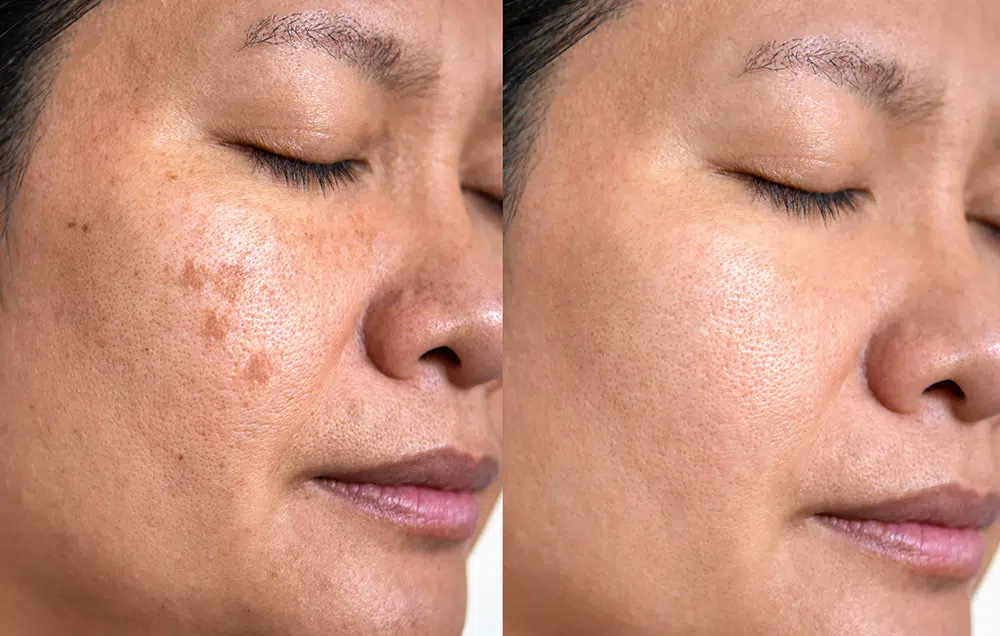
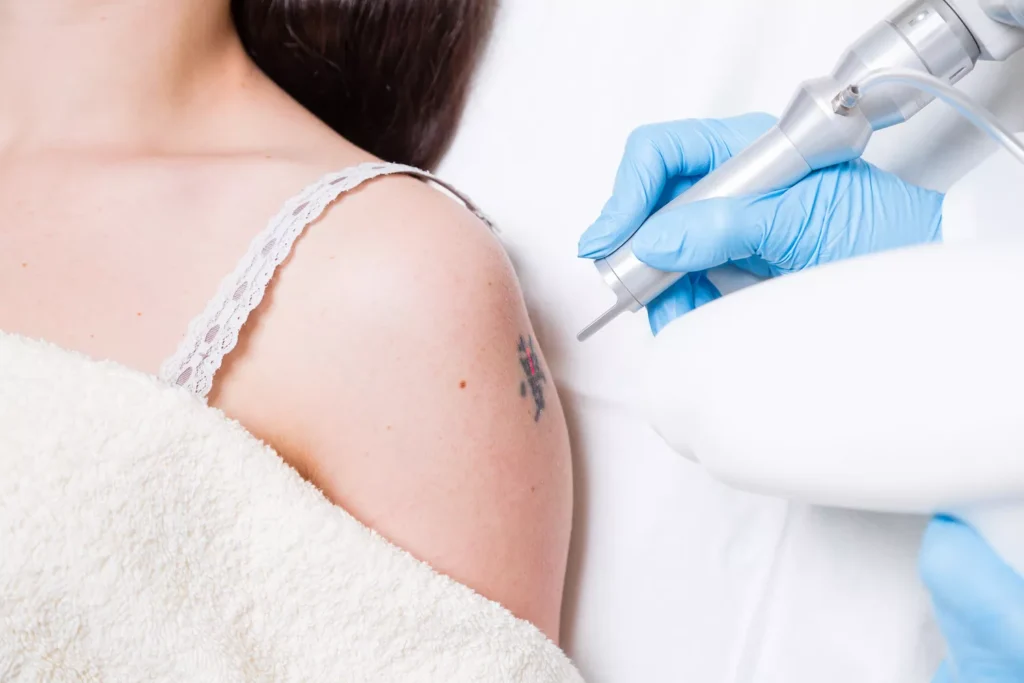
In the field of skin treatments, Q-Switch is considered one of the main tools for removing pigments due to its photomechanical properties. Focused laser energy causes the selective breakdown of tattoo pigments, abnormal melanins and pigment waste. These crushed particles are then removed by macrophages and the lymphatic system. This biological mechanism makes the result of the treatment visible in a few weeks after each session.
In addition to tattoo removal, this technology is also used in treatments such as Kaccomak, deep spots, epidermal moles, melasma treatment (in a controlled manner) and Carbon Laser (Carbon Peel). در روش لیزر کربنی، یک لایه نانوکربن روی پوست اعمال میشود و سپس با پالسهای Q-Switch، هم ذرات کربنی و هم لایه سطحی پوست بهطور انتخابی تبخیر یا شکسته میشوند و نتیجه آن روشنتر شدن پوست، جمعشدن منافذ و بهبود بافت پوست است.
ویژگیها و مزایای فناوری کیوسوئیچ
- توان قلهای بسیار بالا با تخلیه انرژی در نانوثانیه
- ایجاد اثر فوتواکوستیک بهجای اثر حرارتی
- مناسب برای انواع ضایعات رنگدانهای
- توانایی هدفگیری انتخابی بدون تخریب بافت اطراف