Know more.... Next, we will talk about the types of overdentures and their benefits... Improving the stability and longevity of the prosthesis.... These prostheses help maintain the jaw bone and are divided into two main types: **tooth support** **various overdentures** and **prosthesis systems Prosthesis support..
> *« Overdentures are movable prostheses that are placed on the remaining natural teeth, tooth roots or dental implants and help to maintain the prosthesis.
>
> *Source: Wikipedia*
Ordenture movie by Dr. Farin Shamshirgar
A base is used, and then a dental prosthesis that is designed to fit the shape of the mouth and jaw of a person is installed on these bases. Since in overdenture, the prosthesis is installed on a fixed base, this method does not include problems such as the loosening of artificial teeth, and this helps to make it less problematic.
### Implant-based overdenture
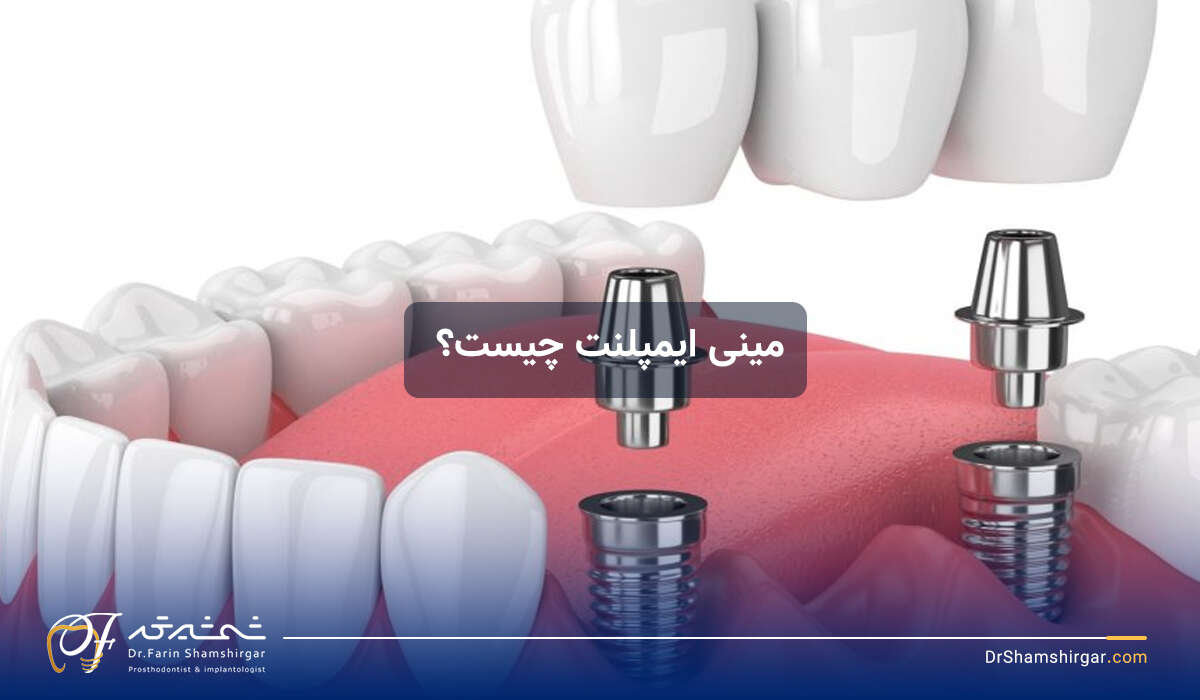
In this method, a few implants are first placed inside the jaw and then the dental prosthesis is installed on this base. The number of implants in this method varies according to the pressure applied to them and is determined by the dentist's opinion. Normally, 2 implants are placed in the lower jaw and about 4 implants are placed in the upper jaw. The more the number of implants, the more successful the result will be.
Fixed overdenture is also known as gum-based overdenture.... In this method, implants are placed in the upper and lower jaw to be a base for installing dental prosthesis.... After placing the implants, artificial teeth are installed on them.... Since the artificial tooth is locked to the implant with a screw, the artificial tooth cannot be removed from the tooth only by the dentist.
In this method, two implants are planted in the tooth and then they are connected to each other with the help of a rod. One of the implants is placed in the place of the canine tooth and the other in the place of the molar tooth, and then the artificial tooth is placed on them. implant in The jawbone is placed and a ball-shaped abutment is used to connect the implant to the prosthesis. This method is suitable for those who have lost many teeth. In this method, one or two implants are placed in place of the missing teeth. people leave it, and for this reason, people turn to overdenture, which does not bring these problems.... ### reducing the pressure and wear of the gums
Another advantage of overdenture is that it does not cause gum wear... Gum wear is one of the common problems in the use of artificial teeth that is not seen in overdenture... The presence of implant bases in overdenture prevents pressure on the gums and gum wear does not occur... ### Eating better
When using artificial teeth, many people may encounter problems such as tooth vibration, loose teeth, or food getting under the teeth. Overdenture does not have these problems and people can eat with it easily without any problems. Overdenture can be adjusted and repaired normally. It comes out of the mouth It is very easy.. This can prevent the accumulation of plaque and bacteria in the mouth.
Disadvantages of overdentures
### You need more care and maintenance
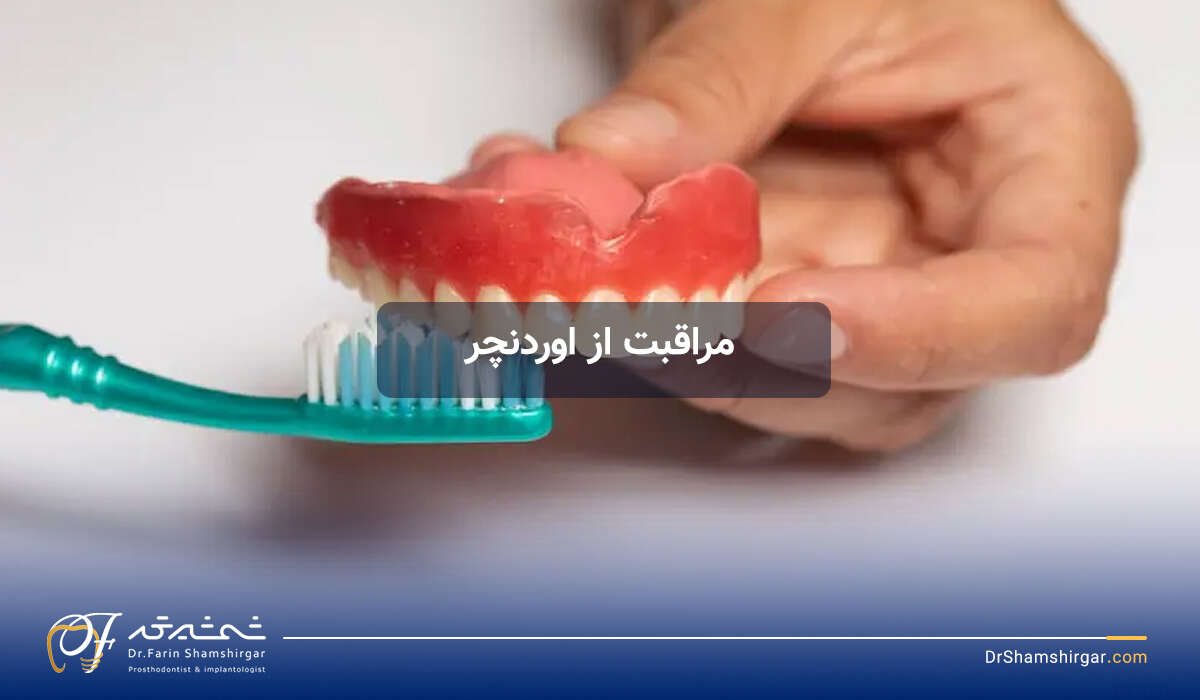
Overdentures need to be cleaned daily to prevent the accumulation of bacteria, plaque and tartar in the teeth. Also, removable overdentures should be kept overnight in a solution or water to prevent them from drying out and changing their shape. Since the gums and jawbone change over time, overdentures may need to be repaired and readjusted. The reason is that many people do not use overdentures. On the other hand, overdentures may wear out over time. and needs to be replaced or repaired.... ### Lack of complete comfort
Although an overdenture is more stable than an artificial tooth.. but many people may still not feel comfortable with it... this feeling can be seen especially in the early days of using an overdenture.
### stability and stability
The overdenture is usually mobile and not completely fixed.. but the implant is permanently welded to the jaw bone and is stable and has the same function as natural teeth.... ### Maintaining the health of the jaw bone
Since the overdenture does not put direct pressure on the jaw bone, it causes the jaw bone to weaken over time... but because the implant is welded to the jaw bone, it helps to maintain and stimulate it and prevents its destruction... ### Durability
Overdentures usually need to be replaced and repaired after a few years and their lifespan is on average between 5 and 10 years.. Dental implants are long lasting or permanent if properly cared for and may need to be replaced after 10 to 15 years... The implant base is also usually permanent... ### Cost
Since there is no need to implant a single tooth in overdenture, this method entails lower costs.. But in implants, due to the need for surgery and additional treatments (such as bone grafting if needed), more costs are needed... ### Treatment period
Overdenture treatment usually takes a few weeks.. Dental implant, but after the implant surgery, it takes between 3 and 6 months to fuse to the bone and then the dental crown is placed on it.... ### Complications
In some people, overdentures may cause small wounds or discomfort in the gums.. But the dental implant works like a natural tooth due to its stability and does not have any special complications after installation...
Care after all types of overdentures
- Daily cleaning of overdentures with a suitable toothbrush and toothpaste
- Washing dentures with warm water after eating
- Taking out the overdenture at night before going to bed
- Placing the overdenture in water or a suitable solution overnight
- Going to the dentist to check the condition of the overdenture and readjusting it
- Not consuming hard and sticky food
Make an appointment or call us for a free consultation What are the common connection systems in furniture?
- **Stud joints**:
like ball or locator joints that use a male and female mechanism for maintenance.
- **Rod attachments**:
A metal rod connects the implants and the overdenture locks onto it.
- **Magnetic Attachments**:
Use magnets embedded in equipment and support structure.
- **Telescopic Attachments**:
Includes a double crown system where a primary cap is attached to the base and the secondary cap is placed inside the accessory.
Which type of denture is better Does it work?
Is the overdenture movable again? Do they?
Although traditional overdentures are removable, **fixed implant-supported overdentures** (also known as hybrid overdentures) are permanently attached to the implant.. And it can only be removed by a dentist.
How much is usually used for