Important points about using BB Check

Dr. Tayyaba Hemti
TehranInfertility fellowship Obstetrics and Gynecology Specialist
Complete guide to using BB Check
Before using BB Check, it is better to know a few things: Be sure to check the expiration date before using it. 👶🏻 You don't need to be fasting to use BB Check! But in general, first morning urine is better for baby check. 👶🏻Some friends will start to send baby checks from tomorrow! Others say that, for example, the laboratory official said that it will show 3 days after intercourse. But you should know that at least 8-9 days have passed since ovulation 👶🏻 The important point is that no blood test is comparable to a blood test. Therefore, every BB check must be "confirmed" with a blood test. 👶🏻 After ten minutes, BB Check's commentary is invalid. So, if you took a test today and it was negative, tomorrow morning when you go to the toilet, you will know that the second line has fallen and be aware that it is invalid.BB check has two lines, line C and line T👌 A positive BB check means that, in addition to the C line, the T line should also be identified. Pay attention: "be clear"! That is, they do not need to be the same color. Even if the second line is faint, the baby check is considered positive. The pale color of the second line bone is probably due to the low level of hormones
🔹BB negative check:
It means only one line, and that is line C, and no other line can be seen 🤷♀️
🔹 invalid BB check:
The time when there is no line at all. Or only one T line falls, in this case the BB check is invalid. You have to use another BB check 🥴
❤️ I hope your baby check is always to your liking and makes you happy! Whether it's positive or negative!😉
For a free consultation and to schedule an appointment, call Dr. Tayebe Hemti's office at 09907501040 and 021-26761779.
Calculation of the start of pregnancy:
To fertilize and start pregnancy, an egg cell is released from your ovary. This time is about 14 days after the first day of the last period (the last period is called LMP in medical science). The egg cell can survive for 12 to 24 hours after release. In order to get pregnant, the sperm must reach the egg during this time and impregnate it. Sperm can survive in your body for almost 7 days. This means that if you have sex 7 days before, during or after ovulation, there is a chance of pregnancy. According to the suggestion of the doctors, if you and your wife are both planning to have children and get pregnant, for the best results, you should Have intercourse every two to three days during each month and you don't need to calculate the day of ovulation and controlled intercourse because this will cause more stress and decrease the chances of success. After 7 days of conception, the amount of HCG hormone in your urine reaches a level that can be measured. Of course, it is different in different women, but it can be more or less depending on the quality of the measuring devices.
Guide to using BBCheck:
If two pink lines were observed when using BB Check, it means that the answer of the pregnancy test is positive. If a white line appears along with a pink line, it means the test is negative. If a pink line is observed along with a pale pink line, it means that the test result is not valid and you should try again in a few days. If the test was negative for the first time, you should try again a few days later, because the level of the HCG hormone may not have reached its limit and you may have received a false negative.
HCG hormone:
hCG hormone during pregnancy is produced by syncytiotrophoblast cells of the placenta and can be detected in serum and urine. This hormone can be detected in the urine of pregnant women 3 to 5 days after the delay of the menstrual cycle and before that, in the serum of pregnant women, and about two weeks after natural delivery, it disappears in the serum and cannot be detected. The hCG hormone has a glycoprotein structure. The amount of sugar in the said hormone is higher than all other human hormones. hCG hormone consists of two alpha (a) and beta (b) chains. The alpha chain of the HCG hormone is structurally similar to the hormones LH-FSH and TSH, but its beta chain has a unique structure, for this reason, the basis of serological tests to determine pregnancy is to look for the beta chain of the hCG hormone in the urine.
Guideline for HCG levels during pregnancy:
Times are based on Gestational Age [the number of weeks that have passed since the first day of the last menstrual period (LMP)]:
- 3 weeks have passed since LMP: 5-50 mIU/ml
- 4 weeks have passed since LMP: 5-426 mIU/ml
- 5 weeks have passed since LMP: 18-7340 mIU/ml
- 6 weeks past LMP: 1080-56500 mIU/ml
- 7-8 weeks past LMP: 7650-229000 mIU/ml
- 9-12 weeks past LMP: 25,700-288,000 mIU/ml
- 13-16 weeks past LMP: 13300-254000 mIU/ml
- 17-24 weeks past LMP: 4060-165400 mIU/ml
- 25-40 weeks past LMP: 3640-117000 mIU/ml
- Non-pregnant woman: <5 mIU/ml
- After menopause: <5.9 mIU/ml
Note: These numbers are only given as a guide and the increase of this hormone is different for each person. The absolute value is not as important as the course of changes.
Ultrasound:
In sonography high frequency sound waves are used. These waves are produced and transmitted to the body by a device placed on the abdomen or inside the vagina. Diagnosis of pregnancy sac, which is the first sign of pregnancy in ultrasound, is possible 35-32 days after LMP in transabdominal ultrasound. Usually BHCG at this time is between 500-1500 MIU/ML. In transabdominal ultrasound, it is possible to detect the yolk sac and fetal heart rate 6.7-5 weeks after LMP. Transvaginal ultrasound is usually able to identify the above cases 4-6 days earlier.
Ultrasound in determining pregnancy and its location, fetal age, multipleness, fetal gender, health of organs, amount of amniotic fluid and place of placenta are also used. Gestational age is determined in ultrasound by measuring indicators such as femur length and intercostal diameter. In sonography, the movements of the fetus or its internal organs can be observed and checked. In the 5th to 6th week of pregnancy, the heartbeat of the fetus can be seen. href="https://www.instagram.com/dr.t.hemmati/">https://www.instagram.com/dr.t.hemmati/Dr. Tayyaba Hemmati, surgeon and obstetrician | Subspecialized infertility fellowship from Tehran University 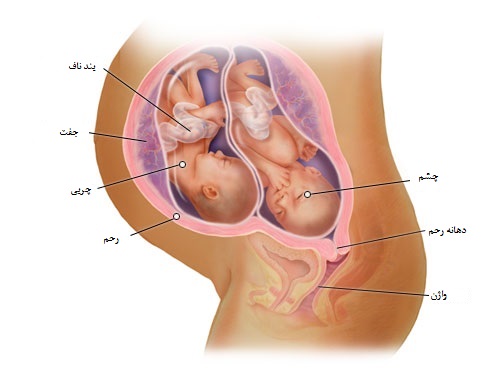
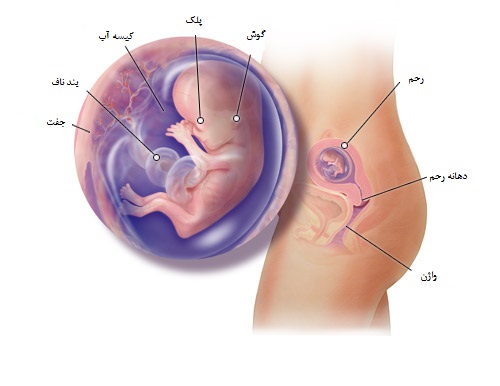
12 weeks of pregnancy
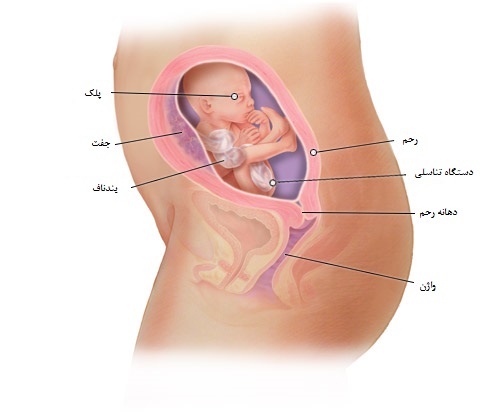
21 weeks of pregnancy
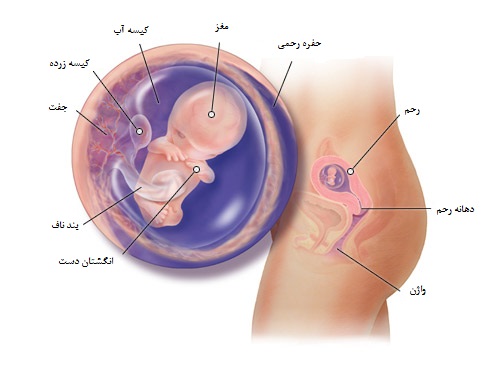
10th week of pregnancy
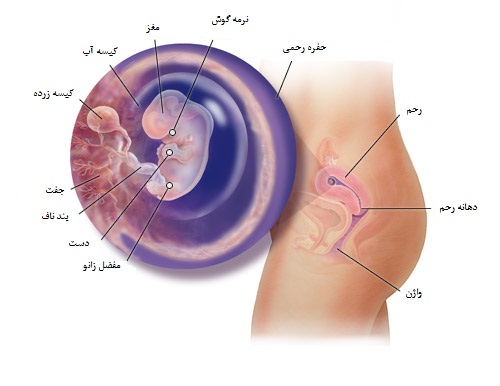
8th week of pregnancy
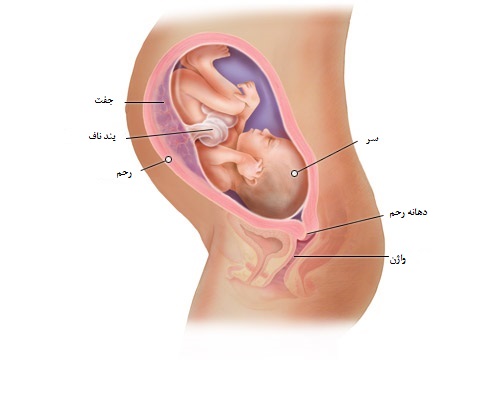
32 weeks of pregnancy
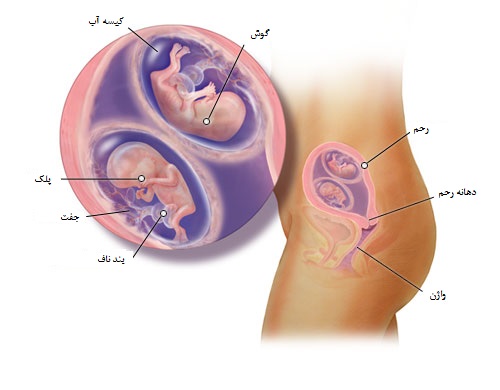
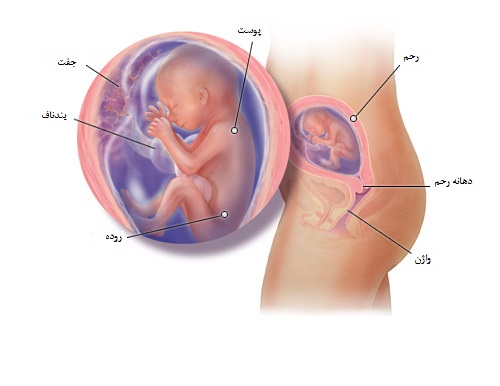
20 weeks of pregnancy

Should I take a bath during my period?
href="https://doctorhemati.com/%db%8c%d8%a7%d8%a6%d8%b3%da%af%db%8c/">
Menopause
Write your opinion Cancel reply
20 weeks of pregnancy
Should I take a bath during my period?
href="https://doctorhemati.com/%db%8c%d8%a7%d8%a6%d8%b3%da%af%db%8c/">Menopause
Write your opinion Cancel reply
New content
 Ways to increase ovarian reserve1401-08-30
 Caesarean delivery video1401-08-09
 All About Genital Wart1401-04-29
 Baby talking time1401-01-21
 Complications of polycystic ovary pco1401-01-15
Most popular content
Categories of content
Categories
- Trials
- IVF
- IUI
- embryo transfer
- Maturity
- Sex determination
- ovarian laziness
- Surgery
- singleton pregnancy
- Twin pregnancy
- Pregnancy
- egg freezing
- before pregnancy
- Myoma
- Infertility
- href="https://doctorhemati.com/category/%d9%88%d8%a7%da%98%d9%86/">Vagina
- Exercise
- menopause