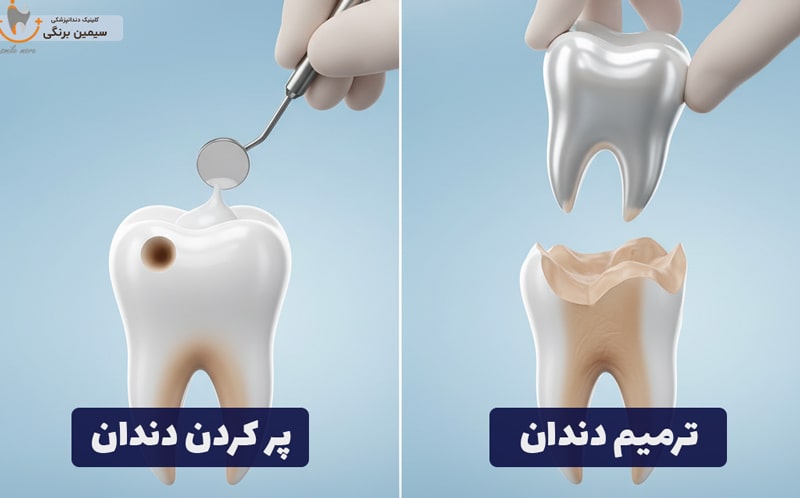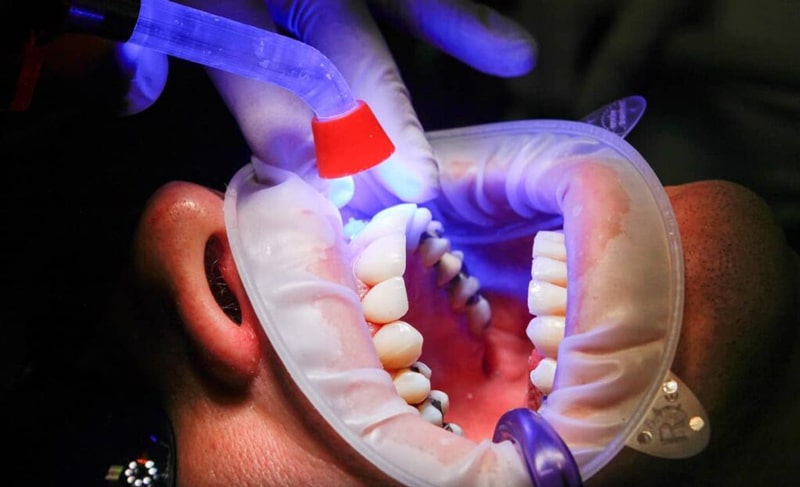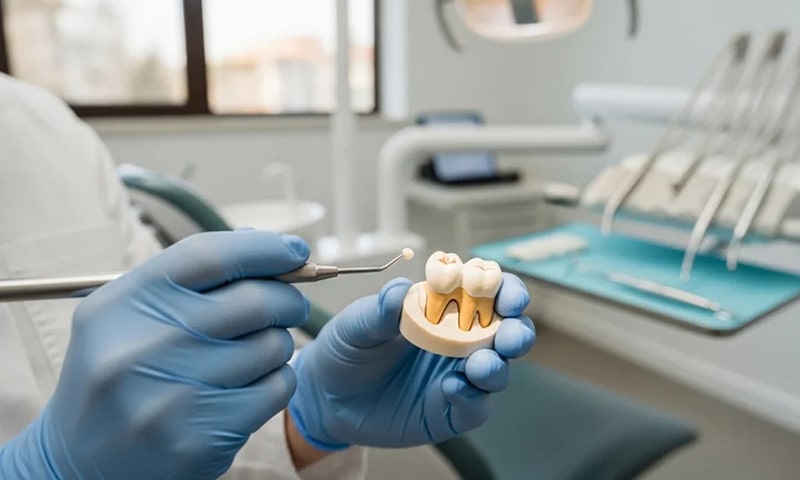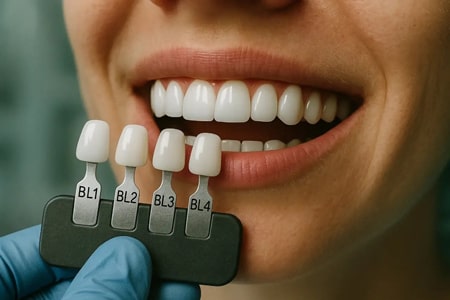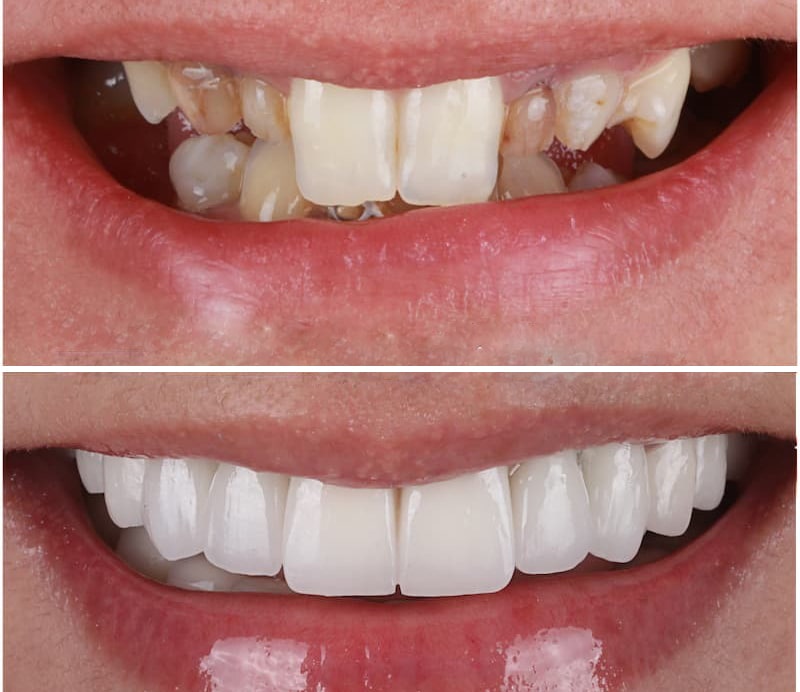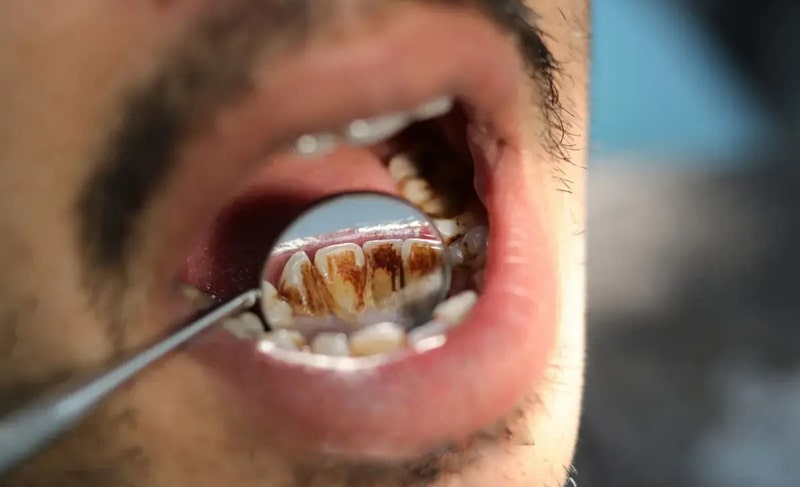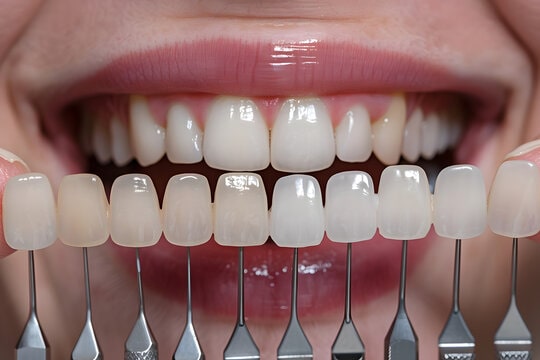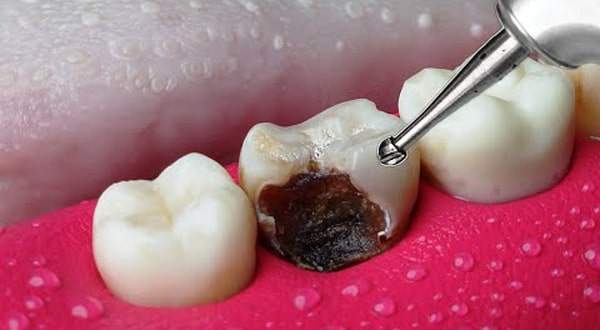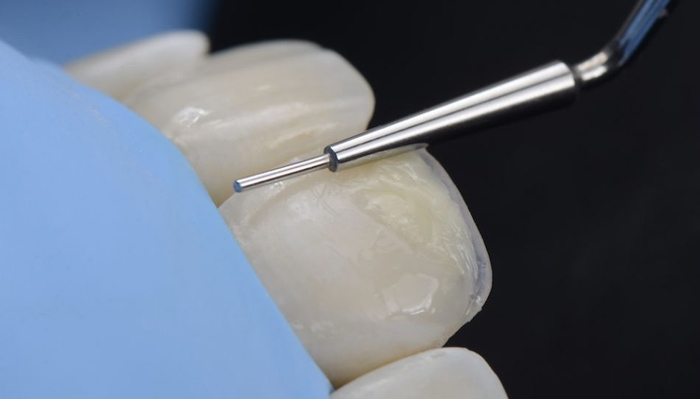


The thickness of dental composite is one of the most important factors in the natural appearance of a smile, its durability and maintaining the health of teeth. Usually, the standard thickness of composite veneer is between 0.3 and 0.7 mm, which changes depending on the condition of the tooth and the purpose of the treatment. The proper thickness not only prevents the bulky and artificial appearance of the teeth, but also plays an important role in the proper functioning of the jaw and increasing the durability of the composite. In this article, we will fully investigate the ideal thickness of dental composite, the factors affecting it and its difference with laminate.
| Summary of headlines | Short and practical description |
| Standard thickness of tooth composite | Usually between 0.3 and 1.5 mm depending on the condition of the tooth and the purpose of the treatment |
| The ideal thickness for beauty | Thinner layers create a more natural appearance and match real teeth |
| High thickness of composite | It causes an artificial appearance, protrusion of the teeth and disturbance in chewing |
| Composite low thickness | Can cause reduced durability, fading and faster discoloration |
| Effect of thickness on durability | Balanced thickness plays an important role in increasing the life and strength of the composite |
| Determining factors of thickness | Tooth color, degree of fracture, desired form, type of composite and skill of the dentist |
| Thickness in front teeth | Usually thinner to maintain the clarity and naturalness of the smile |
| Thickness in back teeth | Usually a bit thicker to withstand the pressure of chewing |
| role of the dentist | The expertise and experience of the doctor is the most important factor in setting the standard thickness |
| final result | Masoori standard thickness with natural smile, high durability and dental health |
Standard thickness of tooth composite
Usually, the thickness of dental veneer composite is between 0.3 and 0.7 mm. This amount can be slightly less or more depending on the condition of the tooth, the purpose of the treatment and the skill of the dentist. Next, we check the minimum and maximum thickness:
- Minimum thickness of tooth composite (about 0.3 mm): It is used for minor corrections such as improving color, increasing brightness, and removing very slight inconsistencies, and the appearance of the teeth remains completely natural.
- Average and common thickness of dental composite (about 0.5 mm): It is the most common thickness of composite that is used to correct the shape, length and color of teeth and creates a good balance between beauty and strength.
- Maximum thickness of tooth composite (up to 1 mm): It is used in special conditions such as severe malformation or wide spacing of teeth to correct the shape and coordination of teeth properly.
Factors affecting the thickness of tooth composite

The thickness of dental composite is not the same for all people and depends on the conditions of each person. Factors such as the condition of the teeth, the skill of the dentist and other conditions that we will examine further; They determine the thickness of the composite. Choosing the right thickness will make the smile more natural and increase the longevity of the composite.
1. The initial state of the teeth
The shape, size of the teeth, the presence of fracture or abrasion, as well as the distance between the teeth play an important role in determining the thickness of the composite. The greater the initial abnormalities of the teeth, the greater the thickness of the composite is usually needed.
2. The purpose of doing composite
If the goal is only color correction or minor changes, the thickness of the composite is less; But to correct the form, length of the teeth, close gaps or fix slight irregularities, more thickness will be needed. In general, with the increase in the amount of changes, the thickness of the composite also increases.
3. Skills and experience of the dentist
A skilled dentist creates the best form, fit and beauty with minimal thickness of the composite, so that the teeth look natural and do not have excess volume or an artificial appearance.
- Caliper: Caliper is a tool for accurate measurement of length and thickness. By placing it on the coating, the thickness is measured and calculated at several points. The digital caliper has higher accuracy and less error than the manual type.
- Micrometer: A micrometer is a very accurate tool for measuring thickness up to thousandths of a millimeter. The cover is placed between the two small jaws of the tool and the thickness is read at several points to check the uniformity of the surface.
- Ultrasound technology: Using sound waves, the thickness of the veneer is measured without damaging the tooth. This method is very useful for large parts or difficult access to both sides of the coating.
Using these methods helps dentists to optimize the thickness of the composite, maintain the natural appearance of the teeth, and guarantee the performance and durability of the restoration.
Conclusion
The thickness of the tooth composite plays a vital role in the beauty, durability and function of the teeth, and choosing the right thickness requires careful examination by the dentist. Following the standard principles, the teeth will be more natural and the smile will be more beautiful. To receive expert advice and determine the ideal thickness of the composite, visit Barangi Dental Clinic. This center provides the best cosmetic and functional results by carefully examining your teeth.
FAQ
What effect does the thickness of the composite have on the lifespan of the coating?
The right thickness provides a combination of strength and flexibility, too little thickness may crack and too much thickness may be vulnerable to the natural pressures of the tooth.
Does the thickness of tooth composite affect tooth sensitivity?
Yes; Very thin or thick thickness both cause temporary sensitivity of the teeth, this sensitivity increases when the tooth enamel is low or improperly sharpened.