به یاد فرزندان جاویدان این سرزمین

یادشان همواره در قلب این خاک زنده خواهد ماند

Hormonal IUD device; Benefits, complications and how to insert the iud
مقاله تخصصی

Hormonal IUD device; Benefits, complications and how to insert the iud

3 hours ago
773 بازدید
Dr. Rana Hekat Shishvan

Dr. Rana Hekat Shishvan

Tabriz

Specialist in gynecology, childbirth and infertility

Listen to the summary of this article in the podcast below:

Hormonal IUD (IUD), or contraceptive device, is one of the reliable methods of temporary pregnancy prevention. This device is placed inside the uterus by the doctor. The IUD device can prevent pregnancy for 3 to 8 years. If you intend to get pregnant, you can go to the doctor whenever you want to have it removed. Unlike other methods of contraception, the IUD does not prevent the transmission of sexually transmitted infections (STIs). This prevention method can affect menstruation and make it lighter and simpler.

What is a hormonal IUD device?

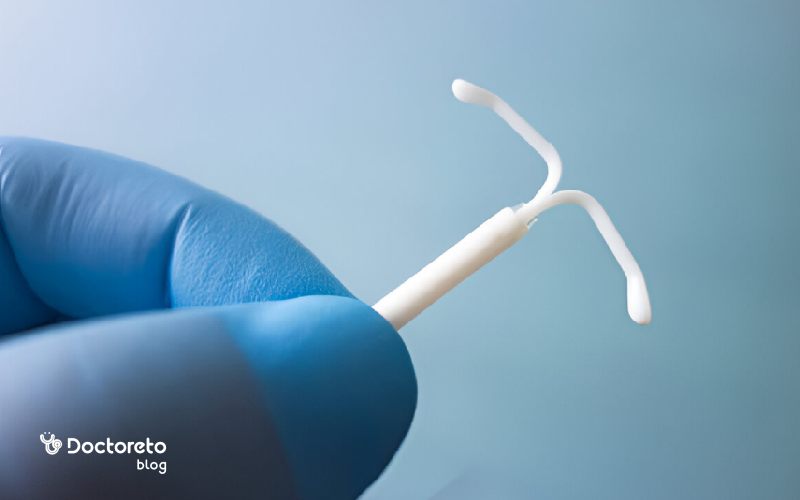
Hormonal IUD is one of contraceptive methods. An IUD is a small T-shaped device that is inserted into the uterus and prevents pregnancy for several years. A hormonal IUD is inserted into the uterus and prevents pregnancy by releasing progesterone. The most famous IUD brand is Mirna, which prevents pregnancy for about 8 years. The rest of the brands can stop in about 3 or 4 years.

Hormonal IUD prevents the fertilization of sperm and egg by releasing a small amount of progesterone hormone. The IUD lasts for several years and prevents pregnancy. If you decide to get pregnant, you can go to the doctor to remove it from the uterus.

How does the hormonal IUD prevent pregnancy?

Hormonal IUD keeps the sperm cells away from the egg. When the sperm cannot reach the egg, pregnancy does not occur. The progesterone hormone of this device prevents pregnancy in two ways:

  • It thickens the secretions of the cervix (cervical mucus) so that the sperm cannot reach the egg or fertilize it.
  • This hormone thins the inner layer of the uterus (endometrium) and partially prevents the release of the egg (ovulation).

How to insert Mirena IUD

Before placing the IUD in the uterus, the gynecologist must perform a pelvic examination. Sometimes it is necessary to take a test to diagnose sexually transmitted diseases. To make sure you are not pregnant, it is better to do a pregnancy test before using the device. One or two hours before the operation, you can use non-steroidal anti-inflammatory drugs such as ibuprofen to reduce pain. The steps to install the IUD device are as follows:

  • You lie in the Pap smear examination position; The knees are bent and the legs are open and placed in the holder.
  • The doctor may inject local anesthesia near the cervix to reduce pain.
  • The gynecologist opens the cervix using a speculum and disinfects this area. The depth of the uterine cavity may also be measured
  • You may experience mild to severe cramping when the IUD is inserted.
  • The horizontal arms of the IUD should be closed. The device is placed inside the applicator tube and enters the cervix.
  • The specialist carefully inserts the IUD into the uterus and removes the applicator tube. The string of the IUD should be shortened enough that it does not protrude from the vagina.
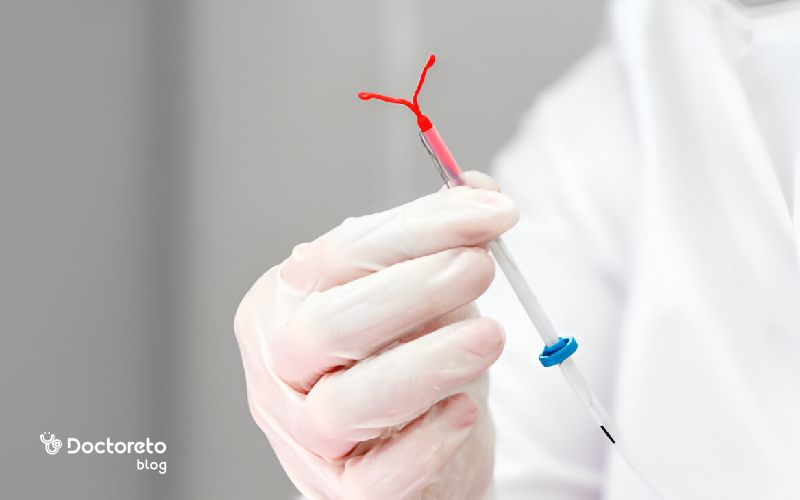
Hormonal IUD how to prevent pregnancy does it?
The hormonal IUD keeps sperm cells away from the egg.

English text:
Inserting an IUD takes fifteen minutes or less. Your provider can perform the procedure during an office visit.
Persian translation:
Intrauterine device insertion takes less than 15 minutes and is done during a regular office visit. noopener">my.clevelandclinic

How to remove hormonal iodine without thread or with thread

To remove the iodine without a thread, the doctor first checks its location with an ultrasound. If the IUD is inside the uterus and not hidden, it can be removed with a special thread tool or the device itself. If necessary, the cervix is ​​opened and a hook or forceps can also be used. If these methods are not successful, referral to a gynecological surgeon is necessary. If the IUD device is not seen in the ultrasound, abdominal imaging is performed.

If it is still not seen, it is possible that the device has been discarded. But if it is determined that the IUD is outside the uterus or in the uterine wall, the patient should be referred to a gynecological surgeon for removal. A tool called forceps is also used to remove the IUD whose thread is known. The doctor takes the IUD thread with this tool and slowly pulls it out. When the IUD arms come out, they bend upwards.
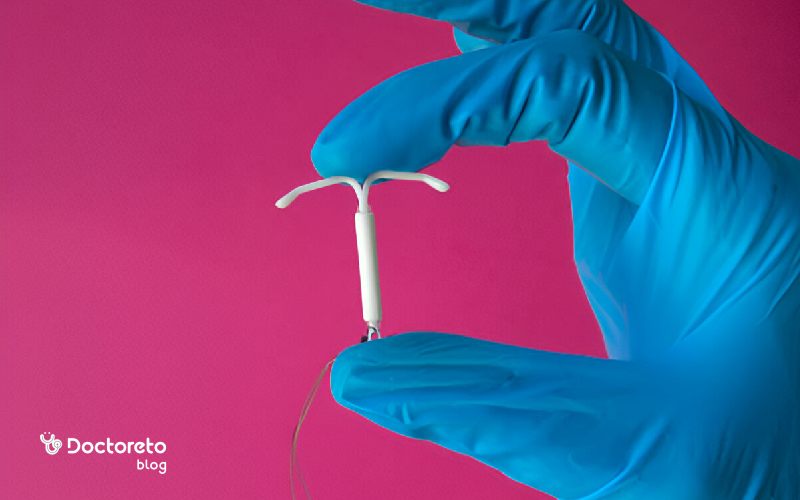
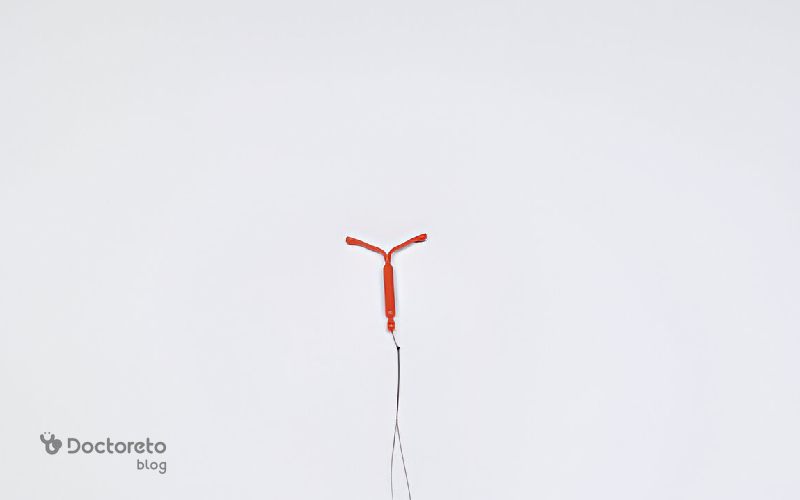
Photo of hormonal IUD device

What are the advantages of hormonal IUD?

Hormonal IUD is one of the effective methods and works well in the long term. Among its various advantages, the following can be mentioned:

  • About 99% success in preventing pregnancy.
  • There is no need to stop sex or use a condom to prevent pregnancy.
  • You don't need your spouse's participation.
  • It prevents pregnancy for up to 5 years and sometimes even up to 7 years.
  • It can be removed from the uterus at any time and get pregnant without any problems.
  • It can be used during breastfeeding. Of course, it is better to be placed in the uterus 6 to 8 weeks after delivery.
  • It does not have the risk and side effects of birth control methods containing estrogen.
  • The amount of bleeding decreases after 3 months.
  • Severe menstrual pain and endometriosis pain will decrease.
  • Evidence shows that intrauterine hormone may reduce the risk of endometrial malignancy and is accompanied by a minor effect on the reduction of ovarian cyst formation; The evidence for a reduction in ovarian or cervical cancer is not strong.
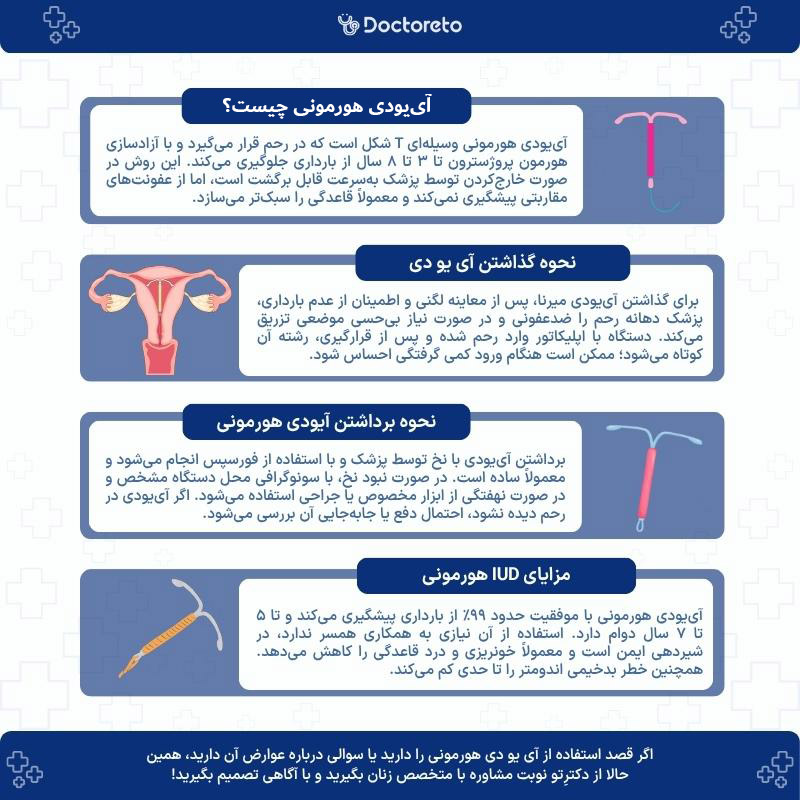
Hormonal IUD infographic

For whom is the hormonal IUD device not suitable?

Like any contraceptive method, Hormonal IUD is not suitable for some people. You should not use this method of prevention if any of the following apply to you:

  • History of breast cancer or suffering from it
  • uterine or cervical cancer
  • History of sexually transmitted infection (STI) or pelvic infection
  • Liver diseases
  • This method is effective in preventing the formation of fibroids; But if you have fibroids, they interfere.
  • Pelvic infection or any kind of pelvic inflammatory disease
  • Unexplained vaginal bleeding
  • Diabetes or high blood pressure
  • Heart disease or history of heart attack
  • Migraine Blood clotting problems or stroke.
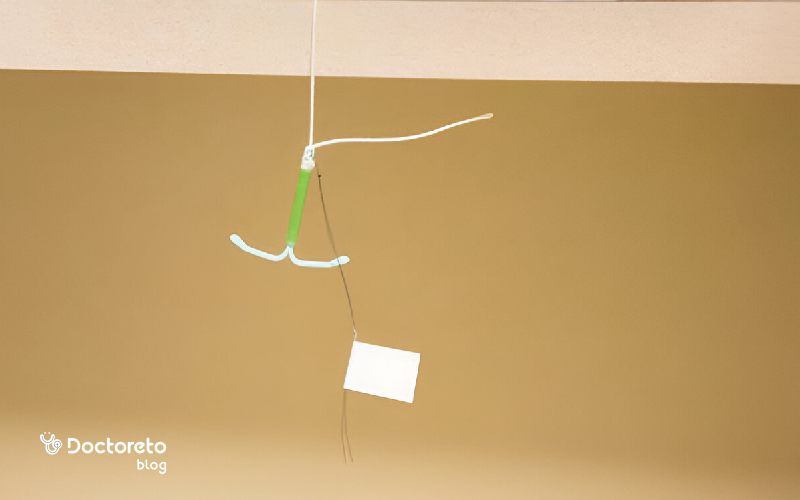
For whom is the hormonal IUD device suitable? Isn't it?
The hormonal IUD device is not suitable for those with a history of uterine, cervical or breast cancer.

What are the types of hormonal IUD?

Different types of hormonal IUD or IUD contraceptive device are available in the market. Different brands all have the same type of hormone and their function in the uterus is the same. But their lifespan is different and they don't last the same:

Types of IUDLifespan
Mirna hormonal IUD7 years
Lilta contraceptive device7 Year
Kilina IUD5 years
Skyla contraceptive device3 years
Types of hormonal IUDs

Care after putting Mirna IUD

After the Mirena IUD is inserted, your body needs some time to get used to it. During this time, you may experience symptoms such as abdominal pain, spotting, or mood swings, which are usually normal and will resolve on their own. By following a few simple tips, you can avoid problems and get through this period more easily. Hormonal IUD post-care includes the following:

  • For 7 days, avoid having sex, using tampons, washing the vagina or anything that enters the vagina.
  • Avoid going to the pool or bathtub for a week.
  • Avoid heavy sports for 48 hours to reduce bleeding.
  • If you put IUD in the first 7 days of your period, you don't need an additional method of prevention. Otherwise, use a condom for 7 days.
  • You may need a visit in the first 6 weeks to check the position of the threads or learn to check the threads yourself.
  • In the first months, you may have irregular bleeding or spotting. In some people, menstruation becomes very less or stops over time. Premenstrual symptoms may still be present, even if you are not bleeding.
  • If you use a menstrual cup, be sure to release the vacuum before removing it so that it does not move or pull out the IUD.
Get to know the IUD and its uses in this video.

What is the cause of the decrease of hormonal IUD?

Hormonal IUD displacement is usually caused by normal or severe uterine muscle contractions. The uterus is an active muscle that contracts during the menstrual cycle. In some people, these contractions are so intense that they can push the IUD device towards the cervix and cause it to move or even come out completely. The main causes of iodine displacement are:

  • Strong contraction of the uterine muscle, which can pull the IUD down.
  • Heavy menstrual bleeding or severe pain, which is accompanied by increased uterine contractions.
  • Uneven surface or abnormal shape of the uterus, which may prevent the iud from fitting properly.
  • A high level of prostaglandin in the body, a substance that causes the uterus to contract.
  • Young age (14 to 19 years old), in this age group, there is a higher probability of iodine protrusion.

Inserting the IUD immediately after delivery, breastfeeding, abnormal position of the uterus, incorrect placement of the IUD, use of a menstrual cup, and the incompatibility of the IUD with the shape or size of the uterus increase the risk of IUD displacement.
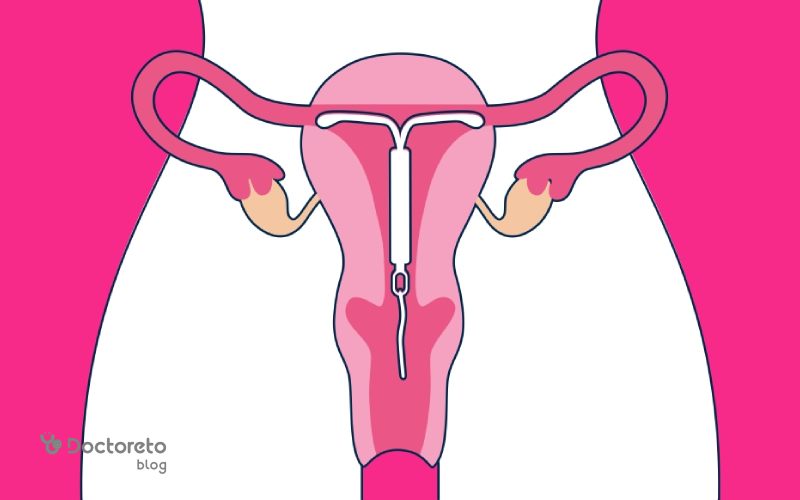
Image of IUD in uterus
IUD photo in uterus

  • You don't feel its threads
  • If the threads are shorter or longer than usual, the IOD may be displaced.
  • Once the IOD is in place, you just need to feel the threads. If you feel the hard plastic part, it has probably moved.
  • Your wife feels the IUD.
  • If you have severe pain that persists or worsens and is not relieved by pain relievers such as ibuprofen or naproxen, the iodine may have been displaced.
  • Spotting or light bleeding after IUD insertion is normal, but heavy or unusual bleeding can be a sign of improper placement of the device.
  • You have severe pain, abnormal discharge, or fever, which are signs of infection.
  • How to check a hormonal UD thread?

    To check the hormonal IUD thread, you must first wash your hands. Then sit or squat and insert your finger into the vagina until you reach the cervix. The cervix should be firm, similar to the tip of the nose. You should be able to feel the threads.

    Do not pull the threads, as this may cause the IUD to dislodge. If you are using a tampon and you don't feel the threads, it is better to check your tampon to be sure of the presence of an IUD. In the first month after placing the IUD, check the threads several times and continue this work after each menstrual period.
    How to check UD thread
    To check the hormonal IUD thread, insert your finger into the vagina to reach the cervix.

    What to do if the hormonal thread is not seen?

    If the hormonal iodine threads cannot be seen or felt, the iodine may have moved from its place. In this case, you are no longer protected against pregnancy and you may need to use another method of contraception or request emergency contraception in case of possible pregnancy.

    If you suspect that the IUD has moved, you should not attempt to reinsert it yourself. The best thing to do is to call your doctor right away to make sure about the condition of the IUD. A doctor can determine for sure if the IUD has moved or not.

    Care after hormonal IUD removal

    For many women, life goes back to normal after the IUD is removed. It may take a few cycles for periods to settle, and fertility usually returns within a month. If you want to get pregnant, you have to be patient for your body to return to its normal state. Some women may need a little more time to get pregnant, which is completely normal.

    After removing iodine, your body may experience some symptoms for some time. From cramping and bleeding to hormonal changes and the return of menstruation, most of these symptoms are temporary and resolve after a few weeks. If you are trying to get pregnant, fertility usually returns quickly, and many women get pregnant after having an IUD removed and have healthy pregnancies.

    English text:
    "Mirena is a hormonal IUD that releases the synthetic hormone progestin to prevent pregnancy. Some of the symptoms that people often experience after Mirena placement include: pain, bleeding, and dizziness and missed or irregular periods. although these symptoms should usually go away within about 30 minutes. Some of the symptoms that people often experience after having Mirena inserted are: pain, bleeding and dizziness, missed or irregular periods.”

    quoted from medicalnewstoday

    What are the side effects of the hormonal IUD device?

    Hormonal IUD side effects are usually seen for the first few months after insertion. But many people do not experience any of the side effects of hormonal IUDs. The most important side effects of hormonal iodine are:

    • Pain and bleeding similar to menstruation (spotting) after inserting it.
    • The formation of fluid-filled cysts on the ovaries, which are usually harmless and disappear without treatment.
    • Some people have reported headaches, acne, chest pain and mood swings. There is not enough evidence to prove that iodine causes these cases.
    • It rarely causes uterine perforation. But using it after childbirth increases the risk of this complication.

    If you have never been pregnant before, you have a history of IUD exiting the uterus, or you are under 20 years old, it is better not to use this method. If the side effects of hormonal IUD are severe or if you experience the following symptoms, be sure to contact your gynecologist

    • You think you are pregnant.
    • You have heavy and continuous vaginal bleeding.
    • You have pain during sex.
    • You have a fever for no reason.
    • You have abnormal or smelly vaginal discharge, lesions and sores.
    • You experience a migraine or a severe headache.
    • Your skin or eyes turn yellow.
    • You have been exposed to a sexually transmitted disease.
    • Didn't feel the IUD thread or the thread suddenly got longer.

    What is the cause of lower abdominal pain after hormonal IUD?

    Lower abdominal pain after hormonal IUD insertion is usually caused by the opening of the cervix, which is done to insert the IUD. This pain is similar to menstrual pain and occurs because the cervix opens to allow the device to pass through. The intensity of this pain can vary from person to person. For some people, the pain may be mild and short-lived, while for others, it can be more severe and prolonged.

    The cause of lower abdominal pain after IUD What is a hormone? class=
    Lower abdominal pain after IUD is caused by contractions caused by opening of the cervix.

    What are the side effects of removing a hormonal IUD?

    After the Mirena IUD is removed, you may experience cramping and spotting or light bleeding for a few days or weeks. To reduce pain, you can use over-the-counter pain relievers such as acetaminophen or ibuprofen to help you feel better. Other side effects of removing the Ayudi contraceptive device are as follows:

    • Bleeding
    • weight gain
    • Acne
    • Breast sensitivity
    • fatigue
    • Mood swings
    • Nausea.
    Mirena IUD is more than 99% effective in preventing pregnancy. But if you become pregnant while using it, removing it may cause a miscarriage. If the IUD is stuck to the uterine wall, the doctor may need to perform surgeries such as hysteroscopy or laparoscopy to remove it. Serious symptoms after Mirena IUD removal include:
    • Prolonged or severe pain in the uterus or abdomen
    • Fever
    • Heavy bleeding
    • Anxiety, depression and mood swings
    • Creating a hole in the uterus (although this complication is more related to the placement of the IUD than its removal).

    Conclusion and guide to see a doctor

    Hormonal IUD is one of the best contraceptive methods. There are different types of IUDs, and in the Mirna type, the device prevents pregnancy by releasing the hormone progesterone. The specialist inserts the device into the uterus with an applicator tube and it can be used for about 5 to 7 years. By using this method, the amount of bleeding and period pain will be reduced. If you don't have children or your age is less than 20 years, it is better to use another method of prevention. After the hormonal IUD is placed in the uterus, you can remove it whenever you decide to get pregnant and get pregnant without any problems. To use this contraceptive method, you must consult a gynecologist.

    Your doctor takes care of your health!
    Frequently Asked Questions

    Yes, after hormonal IUD removal, fertility returns quickly and most Women can get pregnant within a month. But in some cases, if your body needs to readjust your hormones, it may take a while to get pregnant. In general, the hormonal effects of iodine disappear after its removal, and most women will be able to conceive easily.

    Spotting is one of the common side effects of hormonal IUDs that may occur due to hormonal changes caused by the device. The progestin hormone released by iodine can cause the lining of the uterus to thin, which may lead to spotting or light bleeding between periods. This problem is usually normal in the first months after inserting the IUD and improves after some time.

    In most cases, spotting after placing Iodine Mirna does not require any special treatment and will disappear over time. If spotting continues and increases, the doctor may prescribe hormonal drugs or anti-inflammatory painkillers. If the spotting is severe or continues for a long time, consultation with a doctor is recommended to prevent other problems.

    Uterine perforation is one of the rare but serious complications that can occur during IUD insertion. Dihormonal occurs. Symptoms include severe and persistent abdominal pain, unusual bleeding, fever, and pain during intercourse. If you experience any of these symptoms, you should contact your doctor immediately to have your uterus checked. This complication usually requires immediate treatment.

    After inserting a hormonal IUD, there is no need to rest for a long time, but it is better to rest for a few hours. and avoid heavy activities. You are usually advised to avoid strenuous exercise, heavy lifting, and sexual intercourse for several hours after the device is inserted. This will help your body to get used to the device more easily and avoid side effects.

    Mirena Iodine does not usually cause obesity, but some women may experience weight gain due to hormonal changes. These hormonal changes can cause water retention or metabolic changes that lead to weight gain in some people. However, this is not the same for everyone and most women do not experience any weight change.
    Mirena IUD does not usually cause weight loss. In fact, some people may experience weight gain due to hormonal changes and their effects on the body's metabolism. Although some women may feel less weight after IUD insertion due to reduced menstrual bleeding, these effects are usually temporary and related to hormonal changes.

    Usually, sex should not be painful after a hormonal IUD is inserted, but some women may feel some pain or discomfort for the first few days after insertion. This pain may be due to uterine cramps or body adjustment with the device. If the pain is persistent and severe, you should consult your doctor.

    Symptoms of pregnancy in case of having a hormonal IUD are similar to the symptoms of normal pregnancy. These symptoms include delayed periods, nausea, breast tenderness and fatigue. If you suspect you are pregnant, you should contact your doctor immediately. In case of pregnancy with an IUD, there is a possibility of miscarriage or ectopic pregnancy, which should be quickly monitored by a doctor.

    One of the main reasons for delayed periods with Dimirna IU is its hormonal effects. By releasing the progestin hormone, Iodimirna can stop or reduce the amount of menstrual bleeding. Because of this, many women may miss their periods or experience much lighter and irregular periods.

    Heavy bleeding may occur in some women after placing a hormonal IUD fall, because the body has to get used to the hormonal changes caused by the device. This bleeding may be normal in the first months after IUD placement, but if it continues or is very heavy, you should consult your doctor.

    Bleeding usually continues for several days to several weeks after placing hormonal iodine. This bleeding may be light or severe in some women, and gradually decreases after adjusting the body with hormones.

    Period delay after hormonal IUD is usually due to hormonal changes which is created by the device. Iodine can cause the menstrual cycle to stop or change, and in some cases, the period may be delayed or stop altogether.

    Mirena IUD threads are usually about 4 to 5 cm long and They hang from the cervix. These threads are used to check the position of the IUD and ensure its correct position. You can easily feel these threads to make sure the IUD is in place. These threads should hang from the cervix and if you cannot feel them or their length has changed, the IUD may have moved.

    Mirena IUD is made in Germany and produced by Bayer. This device is one of the most well-known and popular methods of contraception, which is widely available in many countries. Iodi Mirna prevents pregnancy by releasing progestin hormone for a long time.

    Back pain after hormonal IUD placement may be due to cramps uterine or hormonal changes caused by the device. This pain is usually temporary and improves within a few days. Many women experience lower back pain in the first few days after having a hormonal IUD inserted, which is similar to menstrual pain. This pain should generally subside, but if the pain is severe or prolonged, a medical consultation may be needed for a more detailed examination.

    The hormonal IUD does not directly cause infection, but in In the first weeks after insertion, the risk of pelvic infections increases. This increased risk is due to the changes in the uterine environment. Following hygiene tips, such as using clean sanitary products and avoiding sex shortly after the device is inserted, can help reduce the risk of infection. Also, if you experience symptoms of infection such as fever, abdominal pain, foul-smelling discharge, or pain during intercourse, you should consult your doctor immediately.

    The Mirna IUD is more than 99% effective in preventing pregnancy, but In rare cases, the device may move or lose its function. In such cases, there is a possibility of pregnancy. If the IOD stays in place, pregnancy is highly unlikely. That's why it's important to check the position of your IUD regularly and consult your doctor if you notice any changes or problems.

    After inserting a hormonal IUD, you can usually have sex after 24 Have sex hours. But it is suggested to use other methods of prevention such as condoms for the first 7 days to prevent pregnancy. This recommendation is for when the IUD is inserted in the days after menstruation. If you have doubts about the placement of the IUD, it is better to consult a doctor to ensure its correct position.

    If the hormonal IUD is placed correctly, the probability of pregnancy is very low. This device prevents pregnancy very effectively and only in rare cases such as moving or device failure, pregnancy may occur. Therefore, it is always better to ask your doctor to check the position of your IUD and adjust or replace it if necessary.

    The simultaneous use of LD pills and hormonal IUDs is usually not harmful, because Each of these methods work independently. The LD pill is a hormonal birth control method that is usually used to regulate hormones and prevent pregnancy, while the hormonal IUD is a long-term birth control method. However, before starting or changing any treatment, it is recommended to consult your doctor to avoid drug interactions and choose the most effective method for your condition.

    Hormonal IUD is one of the methods used in Prevents pregnancy for a long time. Mirna brand has a long lifespan and can be kept inside the uterus for up to 7 years. There are other brands that prevent pregnancy for about 4 years.

    Category:
    Tag:
    Source:
    Recommended doctors
    Love writing, learning and new experiences... I learn more every time I write. I am glad that I have the opportunity to produce content in the world of medicine and improve the health of the society in your doctorate.
    اشتراک‌گذاری:

    مقالات مرتبط

    مقالات دیگر از Dr. Rana Hekat Shishvan

    169 مقاله
    Bruised lip and all you need to know about its causes
    مطالعه بیشتر

    Bruised lip and all you need to know about its causes

    Table of ContentsWhat is the cause of bruised lips?Causes of bruised lips in newbornsBruise...

    3 hours ago بخوانید
    Aortic heart surgery, all about repairing or replacing this valve
    مطالعه بیشتر

    Aortic heart surgery, all about repairing or replacing this valve

    Table of contentsWhat is cardiac aortic surgery?When is cardiac aortic surgery performed?Ho...

    3 hours ago بخوانید
    Melasma pregnancy spot from the causes to its treatment methods
    مطالعه بیشتر

    Melasma pregnancy spot from the causes to its treatment methods

    Table of contentsWhat is the shape of pregnancy spot (melasma) and in which areas does it a...

    3 hours ago بخوانید
    What is facial varicose veins and how to treat them?
    مطالعه بیشتر

    What is facial varicose veins and how to treat them?

    Table of ContentsFacial Varicose VeinsFacial Varicose Veins SymptomsWhat is the cause of fa...

    3 hours ago بخوانید
    Internal bleeding and everything you need to know about it
    مطالعه بیشتر

    Internal bleeding and everything you need to know about it

    Table of ContentsWhat are the symptoms of internal bleeding?Does internal bleeding cause de...

    3 hours ago بخوانید
    The cause of appearance of spider veins and its treatment method
    مطالعه بیشتر

    The cause of appearance of spider veins and its treatment method

    Table of contentsWhat is a spider vein?What are the symptoms of spider veins?What is the ca...

    3 hours ago بخوانید
    Getting to know how to choose the best pill to treat hemorrhoids
    مطالعه بیشتر

    Getting to know how to choose the best pill to treat hemorrhoids

    Table of ContentsIntroduction of the best pill for hemorrhoid treatmentBest herbal pill for...

    3 hours ago بخوانید
    What is sleep apnea or obstructive sleep apnea and how is it treated?
    مطالعه بیشتر

    What is sleep apnea or obstructive sleep apnea and how is it treated?

    Table of contentsWhat is sleep apnea?What are the types of sleep apnea?Is sleep apnea dange...

    3 hours ago بخوانید
    All about temple lift; What is the best temple lift method?
    مطالعه بیشتر

    All about temple lift; What is the best temple lift method?

    Table of contentsWhat is a temple lift?Types of temple lift methodsTypes of temple lift at...

    3 hours ago بخوانید
    Vagina whitening methods: How to whiten your vagina?
    مطالعه بیشتر

    Vagina whitening methods: How to whiten your vagina?

    Table of contentsWhat are the ways to whiten the vagina?Whitening the vagina with vaginal b...

    3 hours ago بخوانید
    What is ultrasound and what is it used for?
    مطالعه بیشتر

    What is ultrasound and what is it used for?

    Table of contentsWhat is ultrasound ultrasound?What is the use of ultrasound?What problems...

    3 hours ago بخوانید
    How is endometriosis diagnosed in ultrasound?
    مطالعه بیشتر

    How is endometriosis diagnosed in ultrasound?

    Table of ContentsDiagnosis of endometriosis in ultrasoundnecessity of endometriosis ultraso...

    3 hours ago بخوانید
    How do we know if the pregnancy is ectopic?
    مطالعه بیشتر

    How do we know if the pregnancy is ectopic?

    Table of ContentsMethods for diagnosing an ectopic pregnancyHow to understand ectopic pregn...

    3 hours ago بخوانید
    7-day ketogenic diet is the best way to lose weight fast
    مطالعه بیشتر

    7-day ketogenic diet is the best way to lose weight fast

    Table of contentsWhat is the 7-day ketogenic diet?How does the 7-day ketogenic diet help yo...

    3 hours ago بخوانید
    Skin cleansing, types of cleansing methods and their benefits
    مطالعه بیشتر

    Skin cleansing, types of cleansing methods and their benefits

    Table of ContentsWhat are the benefits of skin cleansing?

    3 hours ago بخوانید
    Examining the causes of spots on the nails and ways to treat them
    مطالعه بیشتر

    Examining the causes of spots on the nails and ways to treat them

    Table of contentsWhat is the cause of a white spot on the nail?What is the cause of a black...

    1 day ago بخوانید
    How can salicylic acid serum improve the skin?
    مطالعه بیشتر

    How can salicylic acid serum improve the skin?

    Table of contentsWhat is salicylic acid serum?What are the types of salicylic acid serum?Ho...

    1 day ago بخوانید
    Pagedone
    Resources
    Products
    ©GCORP LLC 2026, All rights reserved.