

درمان دندان اضافه در اصفهان: یکی از نگرانیهایی که هم والدین و هم بزرگسالان بارها با آن به کلینیک مراجعه میکنند، وجود دندان اضافه در فک است؛ A tooth that may be found unexpectedly in the mouth or only recognized on radiographs. This issue especially causes anxiety when the growth of permanent teeth is delayed or the order of the teeth is messed up.
I am Dr. Farinaz Shirban, an orthodontic specialist and in my clinical experience, I have been faced with these questions many times: Is an extra tooth dangerous, Should it be extracted and if extraction is done, how will the order and beauty of the teeth be improved. The answer to these questions is not always the same and it depends on the location of the extra tooth, the age of the patient and the state of jaw growth.
If you or your child in Isfahan are facing the problem of an extra tooth, at the clinic we have a detailed and step-by-step treatment roadmap to manage it, and in this specialized guide, I have tried in simple language and based on treatment experience, to help you correctly diagnose an extra tooth, get to know the complications of not pulling or pulling it, know when surgery is necessary and when You can only observe the tooth, and finally understand the role of orthodontics in completing the treatment and achieving a normal occlusion.

Watch the video of Dr. Farinaz Shirban on mesodance treatment in Isfahan
To better understand the condition of extra teeth and its effect on the growth of permanent teeth, I suggest you watch the video below. In this video, I explain how supernumerary teeth in the upper jaw can prevent the growth of permanent teeth and what treatment measures are needed to correct teeth on teeth. Also, I explain the difference between Hyperdontia and normal extra teeth and give key points about teeth on the roof of the mouth and the importance of timely diagnosis.
Dr. Farinaz Shirban's opinion about extra teeth
Extra teeth in the jaw, especially in the upper jaw, can prevent permanent teeth from erupting or cause them to be crooked. The common type in the front of the upper jaw is called Mesiodens and in the posterior area of the upper jaw next to the wisdom teeth Distomolar.
These teeth usually cause orthodontic problems and are best removed at the time of diagnosis. In children, timely diagnosis is especially important so that unerupted permanent teeth can be guided in time and normal occlusion is maintained.
Dr. Farinaz Shirban, Orthodontist for children and adults in Isfahan
This video helps you to understand how the presence of extra teeth can affect the growth process of primary and permanent teeth and why the cooperation of an orthodontist and a maxillofacial surgeon is necessary to correct it by viewing real examples. After watching the video, follow the rest of the article to see the complete treatment and prevention guide.
Read Things you need to know about maxillofacial surgery! to learn about maxillofacial surgery and important points before and after it.
Photo gallery of extra teeth in the upper, lower and roof of the mouth
To better understand and identify the condition of your or your child's extra teeth, see the following examples:


What is an extra tooth and why is it created?
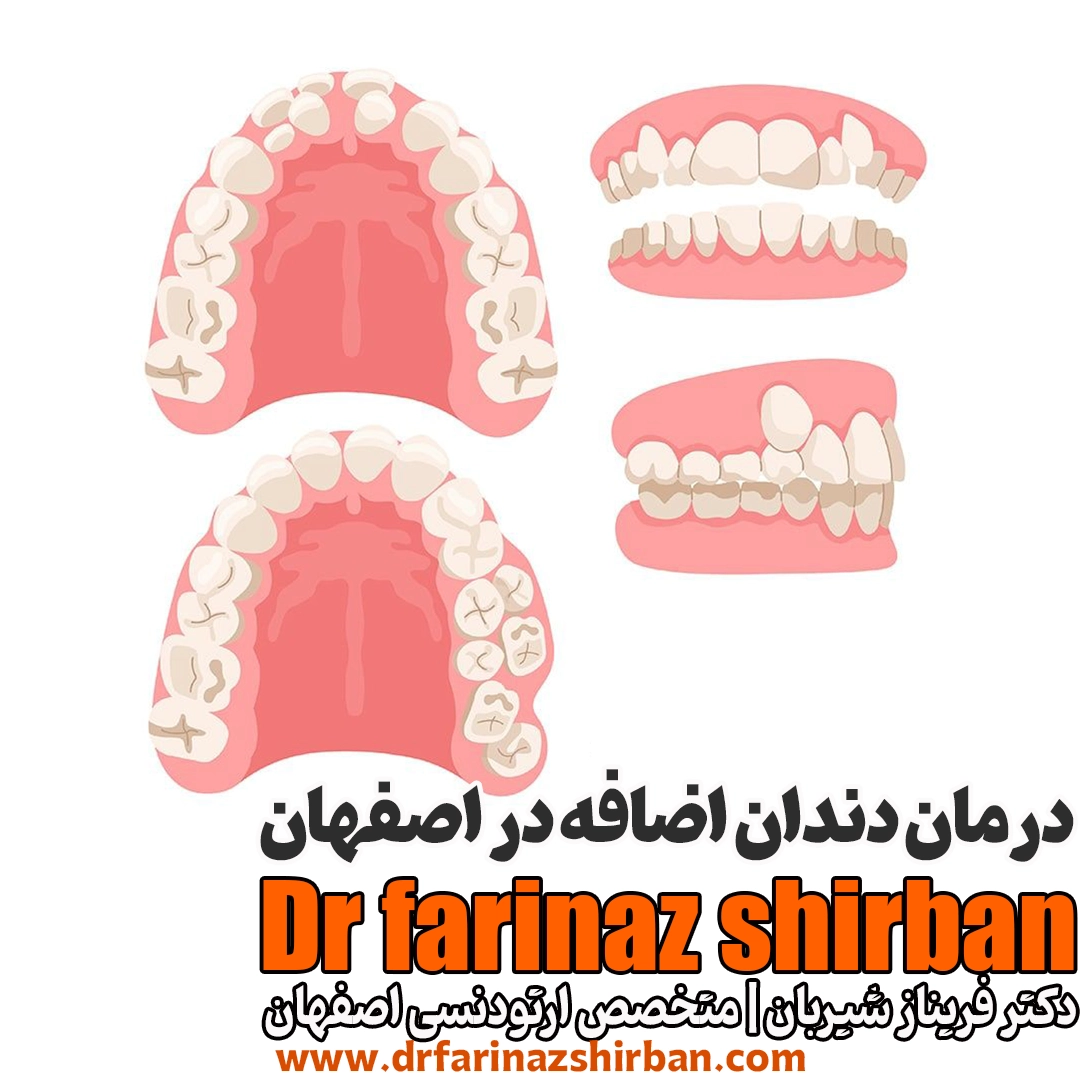
The presence of more teeth than the normal number in the mouth is called Hyperdontia in dentistry. These teeth, which we also call extra teeth, can be seen in the upper jaw, lower jaw or the roof of the mouth. Extra teeth may be visible or hidden, and sometimes in the form of teeth on teeth, they cause crowding of the teeth. The cause of their creation can be genetic, environmental, or caused by jaw growth disorders, and in some cases, it requires early diagnosis and intervention.
The cause of extra teeth in children
In children, most extra teeth appear in the upper jaw, especially in the anterior region, which is called mesiodens. These teeth can prevent permanent teeth from growing or cause them to grow crooked. The main cause of their development is often genetic and there may be a similar history in the family. An extra tooth may also be seen in the milk teeth system, and with the growth of permanent teeth, if it is not diagnosed in time, it will cause problems in order and occlusion.
 The cause of extra teeth in adults
In adults, the extra tooth usually remains latent and sometimes is not detected until an X-ray is taken. These teeth may be adjacent to the main teeth or in the roof of the mouth (teeth in the roof of the mouth) and cause crowding or damage to the roots of the adjacent teeth. In some cases, their development is late and they appear even after adolescence. Timely diagnosis by an orthodontist and maxillofacial surgeon is especially important.
extra teeth in the upper jaw; Why is it more common?
Clinical experience shows that the highest incidence of supernumerary teeth is in the upper jaw, especially the anterior region. The reason for that is the complex growth of the upper jaw and frontal area of the mouth, which provides the basis for the development of mesiodens. If these teeth are not recognized, they can block the growth path of permanent teeth and cause teeth to grow crooked and create teeth on teeth. For this reason, a detailed examination and radiography, including a three-dimensional scan (CBCT), is recommended to detect the location and shape of the extra tooth.
Types of extra teeth based on location and orthodontic effect

What is mesiodance and what problems does it cause?
Mesiodens is a common type of supernumerary tooth that usually appears in the anterior region of the upper jaw. This tooth can block the growth path of the front permanent teeth and cause crooked teeth. In some cases, the growth of mesiodens leads to the formation of tooth on tooth and disrupts the natural order of the dental arch. Early diagnosis and timely treatment of this type of extra tooth helps prevent complex orthodontic problems.
What is distomolar? Extra tooth in the back of the jaw
Distomolar is a type of extra tooth that is often seen in the vicinity of wisdom teeth and in the area behind the upper or lower jaw. These teeth are usually hidden and may not cause any symptoms, but if left undiagnosed, they can cause displacement of the side teeth or orthodontic problems. Detailed examination with radiography and three-dimensional scanning (CBCT) is recommended to diagnose its position and possible effects.
Extra teeth in children's milk teeth
Additional teeth may also be seen in the milk teeth system. These teeth are more than the normal number of teeth and can affect the growth of permanent teeth. For this reason, careful follow-up and assessment of the appropriate age for treatment is very important. In many cases, extra tooth extraction at the right age and permanent tooth guidance by an orthodontist helps to maintain natural occlusion and a healthy smile of the child.
Hyperdontia – a review from Dentistry Journal
Extra teeth, or hyperdontia, is a developmental abnormality defined by the presence of extra teeth beyond the normal number. Hyperdontia may lead to clinical problems such as growth delay, crowding of teeth and malposition of teeth.
Source: Dentistry Journal
Symptoms of a hidden extra tooth that should not be ignored
Eruption of permanent teeth behind milk teeth
One of the first signs of extra teeth hidden in children is the growth of permanent teeth behind milk teeth. This condition usually causes concern for parents because the natural course of permanent teeth growth is disturbed. If such a symptom is observed, it is necessary to see an orthodontic specialist to prevent future problems with accurate diagnosis and X-ray examination.
teeth on top of teeth and crowded teeth
Sometimes an extra tooth causes other teeth to grow in the form of teeth on teeth. This condition causes crowding of the teeth and disrupts the order of the dental arch. If ignored, orthodontic treatment will be more complicated in the future and may lead to the extraction of healthy teeth.
Why do some permanent teeth never erupt?
In some cases, the presence of latent extra teeth prevents permanent teeth from growing. This problem can happen in the upper jaw and anterior region, especially the mesiodens. A permanent tooth without space to grow in is under pressure and may remain crooked or impacted. Early diagnosis with a radiograph or three-dimensional scan (CBCT) and timely treatment, including extra tooth extraction and permanent tooth guidance by an orthodontist, are necessary to achieve natural occlusion.

Are extra teeth dangerous?
Consequences of not removing extra teeth
Ignoring extra teeth can cause serious complications. These teeth may block the growth path of permanent teeth and cause them to grow crooked. Also, over time, the crowding of teeth will increase and orthodontic treatment will become more complicated. In some rare cases, the formation of a cyst around the impacted tooth is also observed, which requires surgical intervention.
Damage of the extra tooth to the root of the side tooth
The presence of extra teeth in the vicinity of the main teeth can put pressure on their roots. This pressure may cause root erosion, inflammation or even permanent damage to healthy teeth. Therefore, early diagnosis and appropriate treatment measures, including extra tooth extraction by an orthodontist and maxillofacial surgeon, are of particular importance.
possibility of jaw deformity and severe dental irregularity
If not acted on time, extra teeth can cause jaw deformity and severe dental irregularity. Especially in children, this problem can affect the growth of the jaw and require complex and long-term orthodontic treatment. To avoid these consequences, timely diagnosis and correct management of extra teeth are necessary.
Roadmap for extra teeth treatment in Isfahan - Doctor Shirban Clinic
Extra teeth treatment in Isfahan, we have a personalized treatment plan for each patient, which is designed step by step to achieve the best result with the least intervention:
- Precise diagnosis with three-dimensional scanning (CBCT): Precise identification of the position of the extra tooth, its distance from the adjacent teeth and the path of the nerves, for safe and effective treatment planning.
- Treatment decision-making: Selection of the appropriate approach: extra tooth extraction if needed or active surveillance in non-risky cases, based on the conditions of each patient.
- Orthodontics after surgery: Correcting crowding of teeth and guiding unerupted teeth to the correct position, to create a healthy and beautiful smile and natural occlusion.
Our goal in Isfahan is to provide treatment that guarantees oral and dental health and maintains the peace and trust of patients. Each step is carefully performed by the team of orthodontics and maxillofacial surgeons to achieve the best results for you.
If you are ready for a face-to-face consultation, first orthodontic consultation session will guide you.
How is the extra tooth treatment done?
When is extra tooth extraction necessary?
The decision to extract an extra tooth is made based on the position, the effect on the adjacent teeth and the risk of orthodontic problems. If the extra tooth prevents the growth of permanent teeth, causes tooth on tooth or severe crowding of teeth, or there is a possibility of damage to the roots of healthy teeth, it is necessary to extract it. This decision is usually made by an orthodontist in collaboration with a maxillofacial surgeon and is carefully planned.
If you want to know when tooth extraction is necessary in orthodontics?
How is the surgery of an extra tooth hidden in the roof of the mouth?
For extra teeth hidden in the roof of the mouth or palate, surgery is usually performed under local anesthesia or sedation. After examining the radiograph or 3D scan (CBCT), the exact position of the tooth is determined and the minimally invasive surgical path is planned. Our goal is to remove the extra tooth without damaging the surrounding teeth and tissues. In some cases, after surgery, orthodontics will be necessary to correct the space and order of the teeth.
Treatment of extra teeth in children; Why is time important?
In children, supernumerary teeth should be identified and managed in time. Because the growth of permanent teeth can be affected and teeth irregularity and occlusion disorder can occur. Early diagnosis and action at the right age allows permanent teeth to be guided to their correct position by an orthodontic specialist and prevents complex and long-term treatments.
Complications of extra teeth extraction and ways to prevent them
Is extra tooth extraction painful or dangerous?
Extraction of extra teeth is usually a simple and safe procedure, especially when performed by an orthodontist and maxillofacial surgeon. By using local anesthesia or sedation, the patient experiences minimal pain. However, as with any minor surgery, post-operative care and following your doctor's instructions are essential to reduce swelling, bleeding or infection.
The distance between the teeth after extra teeth extraction
After extraction of extra teeth, it is normal to create an empty space between the teeth. If this gap is not treated, it can cause disordered teeth. To avoid this problem, orthodontics is usually recommended after surgery to guide the teeth to the correct position and maintain a healthy occlusion.
Why is extra tooth extraction without orthodontics an incomplete treatment?
Extracting only extra teeth will not completely solve the problem. Without guiding adjacent teeth by orthodontics, irregularity of teeth and dental crowding may remain. For this reason, the complete treatment plan includes:
- accurate diagnosis with photo or CBCT
- Extraction of extra teeth by maxillofacial surgery specialist
- Orthodontics to correct the space and order of the teeth
is to guarantee a healthy and natural smile for the patient.
To better understand the orthodontic process after extra teeth extraction, read Baby teeth orthodontics and learn the stages of teeth development.
The role of orthodontics after extra teeth extraction
Orthodontics to guide unerupted teeth
After extraction of extra teeth, some permanent teeth may still not erupt. In this situation, the orthodontist brings them to their correct position by using tooth guidance techniques to ensure the natural and healthy growth of the teeth. This step is necessary to prevent crooked or uneven growth of teeth.
Correcting crowding of teeth after extra tooth removal
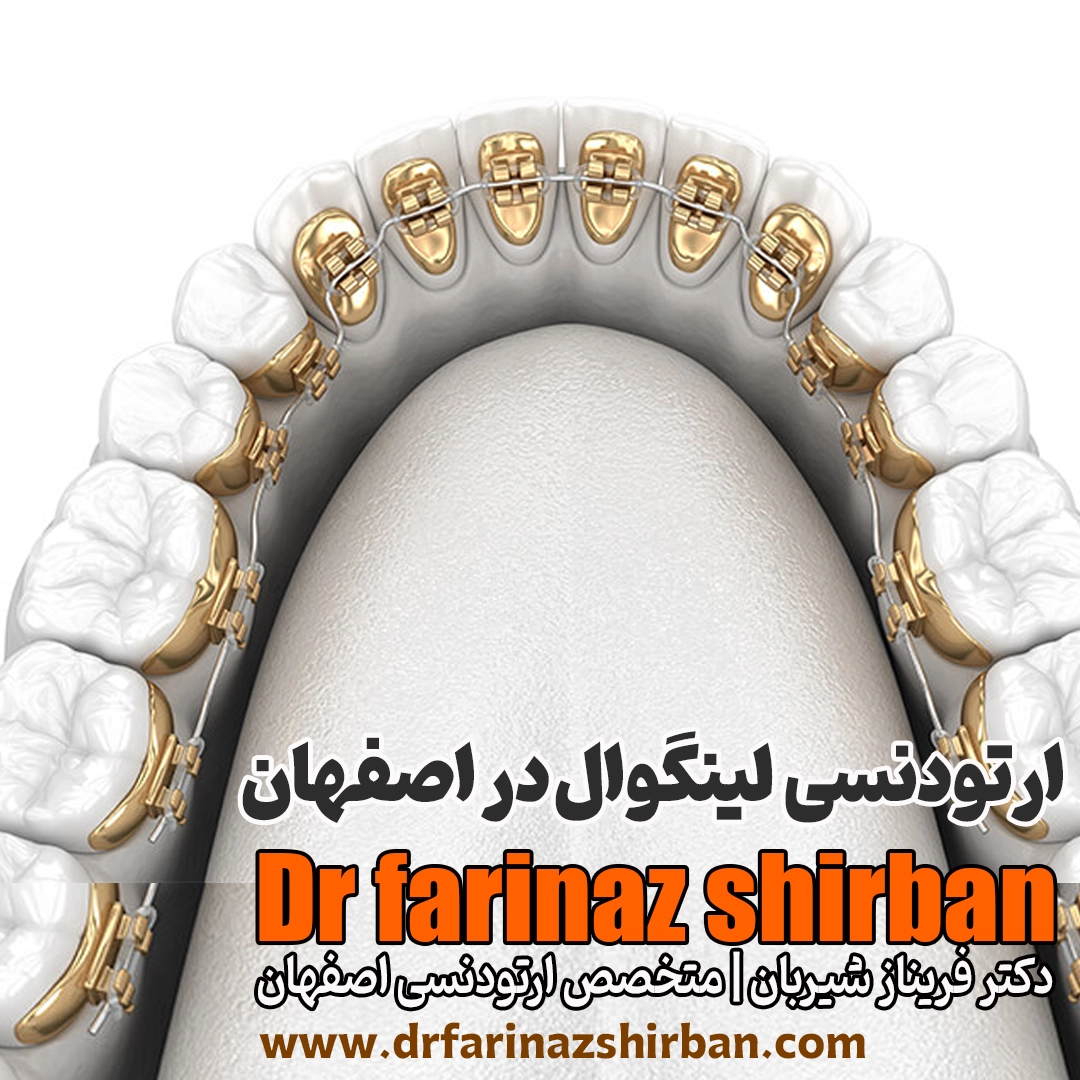
Existence of extra teeth usually causes crowding and crowding of teeth. Even after extra teeth are removed, this crowding cannot be resolved without orthodontics. fixed orthodontics, invisible orthodontics or Lingual orthodontics aligns teeth, closes spaces and establishes natural occlusion in a planned sequence.
cooperation between orthodontic specialist and maxillofacial surgeon
Collaboration between the orthodontist and maxillofacial surgeon is vital to achieve the best results. Accurate extra tooth surgery and then guiding the teeth by orthodontics not only ensures the health of the teeth and jaw, but also creates a beautiful and natural smile for the patient. This multifaceted approach shows the experience and expertise of Dr. Farinaz Shirban in managing the most complex cases of extra teeth.
Cost of extra tooth extraction and surgery in Isfahan
In Dr. Shirban clinic in Isfahan, the cost of treating extra teeth varies depending on the condition of the tooth and the type of surgery. Below is the approximate price table:
| Treatment type | Expense range in Isfahan |
|---|---|
| Simple extraction of an extra tooth (hidden or erupted) | 2,500,000 - 4,500,000 Tomans |
| Surgery of an extra tooth hidden in the roof of the mouth (mesiodens / distomolar) | 5,000,000 - 8,500,000 Tomans |
| Orthodontics after extra tooth extraction (if needed) | Starting from 10,000,000 Tomans |
| Consultation and 3D CBCT image | 1,000,000 - 2,000,000 Tomans |
What factors does the cost of surgery for an extra impacted tooth depend on?
Several factors affect the cost, including the location of the extra tooth (anterior or posterior), the complexity of the surgery, the age of the patient, and the need for orthodontics after surgery. At Dr. Shirban Clinic in Isfahan, all these factors are checked in the initial consultation to determine the exact cost.
Does orthodontic treatment have a separate cost?
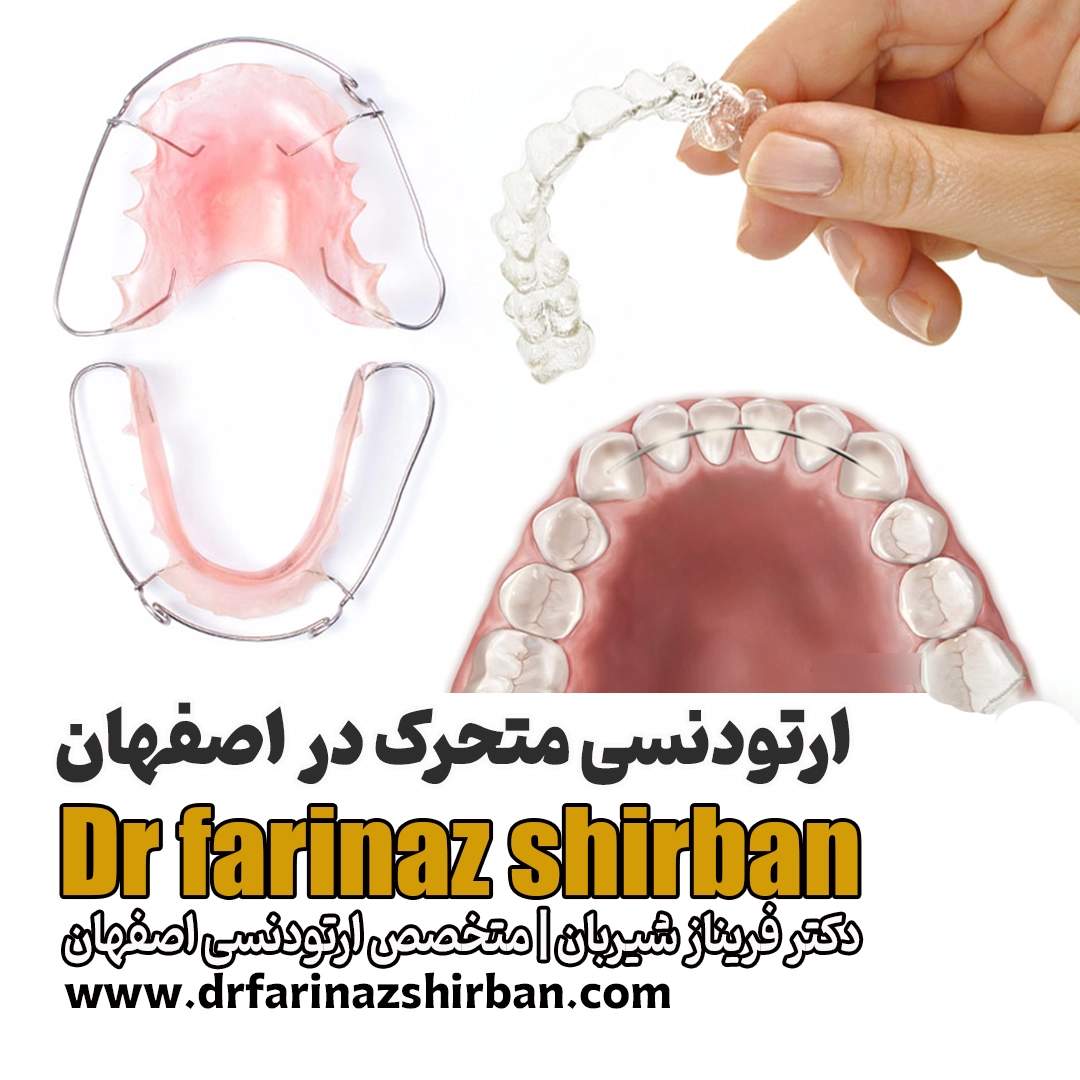
Yes. After extra teeth are extracted, orthodontics is necessary in many cases to correct overcrowding and guide unerupted teeth. The cost of orthodontics is usually calculated separately and varies depending on the type of treatment (fixed, movable, transparent or lingual).
To properly care for teeth during treatment, follow How to take care of teeth during orthodontic treatment?.
Summary for the management and treatment of supernumerary teeth in Isfahan
Timely detection of extra teeth is the key to prevent the problems of crowded teeth and jaw deformity. The sooner the condition of the teeth is checked, the more accurate treatment plan can be designed and the need for complex interventions is reduced.
The role of orthodontics after extra teeth extraction is very vital. By guiding unerupted teeth and correcting crowding, we can create a natural occlusion and healthy smile that both maintains oral health and increases patient confidence.
As a final recommendation, if you have even the slightest doubt about the presence of an extra tooth in your or your child's mouth, do not postpone a specialist examination. At Dr. Shirban Clinic in Isfahan, with experience and precision, we accompany you on the path of scientific and safe treatment so that not only the problem of extra teeth is solved, but also peace of mind and a beautiful smile.
Frequently asked questions about extra teeth treatment in Isfahan, answered by Dr. Farinaz Shirban
1. Is it dangerous to grow a permanent tooth behind a baby tooth?
Yes, it can be problematic in some cases. This condition can cause crooked teeth or prevent permanent teeth from growing properly. At Dr. Shirban's clinic in Isfahan, we evaluate this situation with accurate photography and 3D scanning and, if necessary, take appropriate treatment.
2. Who is the best specialist to treat extra teeth?
The best option is a combination of an orthodontist and a maxillofacial surgeon. At Dr. Shirban Clinic, our expert team has a long experience in diagnosing and treating all types of extra teeth and can provide a personalized treatment plan.
3. Should all extra teeth be extracted?
No. Some supernumerary teeth that do not cause any problems and are in a safe position can remain under active surveillance. The decision to extract or keep an extra tooth is made based on a detailed examination of the CBCT and the condition of each patient.
4. Is there a video of extra teeth surgery in the clinic?
Yes, to familiarize patients and reduce fear, some surgical samples have been recorded as training. Watching these videos will help patients to better understand the treatment process and have a more relaxed visit.
5. Is extra tooth extraction painful?
In our clinic, surgery is performed under local anesthesia or, if needed, under sedation, so pain is minimized. After surgery, prescription drugs and care recommendations are provided to the patient so that the recovery period is comfortable and pain-free.
6. Is the gap between the teeth normal after extra teeth extraction?
Yes, this is normal and is usually corrected with orthodontics after surgery. The goal of orthodontics is to guide the teeth to the correct position and create a beautiful and healthy smile.
7. When should the treatment of extra teeth in children be done?
In children, early diagnosis is very important. It is better to do it when the permanent tooth is growing or there is a possibility of disturbance. This work helps to prevent the problems of crowded teeth and jaw deformity.