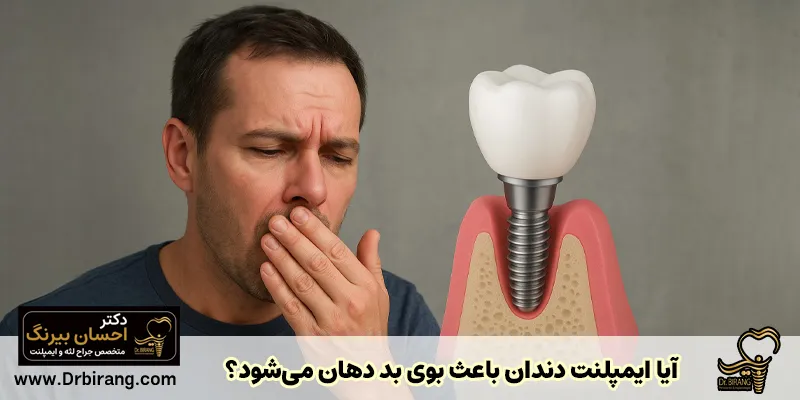


آیا پس از کاشت ایمپلنت دندان، با بوی ناخوشایند دهان مواجه شدهاید و نگران هستید؟ This concern is completely normal. Many people who decide on this successful treatment method face the question: Is the dental implant itself the cause of bad breath?
Our definite and specialized answer in Dr. Ehsan Birang's collection, the best digital implant specialist in North Tehran, is a resounding "no".
Dental implants are made of pure and biocompatible titanium and do not create bad odors. In fact, bad breath after implants is a red flag and a sign of a solvable problem that can prevent the long-term success of your treatment.
In this comprehensive article, we examine in a complete and specialized manner why bad breath occurs after implants, what are its dangerous symptoms and how can it be treated and prevented forever.
Table of Contents
- 1 The truth about implants and bad breath (true and false beliefs)
- 2 What is the main cause of bad breath after implant placement?
- 3 8 main reasons for bad breath after implant placement
- 4 definitive treatment of bad breath caused by Implant
- 5 3. If the problem is advanced and caused by pre-implantitis (bone analysis):
- 6 9 key points of prevention (guarantee of success and no bad smell)
- 7 Final summary
Most articles focus on the fact that the implant is not the cause of bad breath. But for a patient, it is important to know what is the main source of bad breath and is the health of his implant at risk?
- False belief: the implant has bad material and smells bad.
- Truth: the titanium implant material is completely neutral and odorless. This titanium is integrated into the bone and does not emit any odor.
- False belief: bad breath after implant is natural and temporary.
- Truth: Persistent bad breath is an abnormal symptom. If the odor persists for more than a few days after the initial surgery (due to tissue repair), it may indicate a more serious problem.
What is the main cause of bad breath after implant?
The main cause of bad breath after an implant is not related to the implant itself, but to the bacteria that have accumulated around it. These bacteria produce volatile sulfur compounds (VSCs) that cause an unpleasant odor.
- Peri-implant Diseases:
- Peri-implant Mucositis: This is the first stage. In fact, it is gingivitis around the implant, which is similar to gingivitis (gum inflammation) in natural teeth. If it is not treated at this stage, a bad smell will develop and the risk of progressing to the next stage is very high.
- Peri-implantitis: An advanced and more dangerous stage that includes inflammation of the gums and loss of bone supporting the implant. The bad smell at this stage is usually more intense and is accompanied by purulent secretions. This situation directly threatens the survival of the implant.
8 main reasons for bad breath after implant implantation
The reasons that cause the accumulation of bacteria and eventually pre-implant diseases (which themselves smell bad) include the following:
Definitive treatment of bad breath caused by implants
Treatment of bad breath caused by implants depends entirely on the source and severity of the problem. Timely diagnosis is the main key to save the implant.
1. If the problem is caused by poor hygiene or food poisoning (mucositis):
- Professional cleaning and scaling (Professional Cleaning): The implant specialist or periodontist cleans all the plaques and debris around the implant and under the gums with special non-metallic tools.
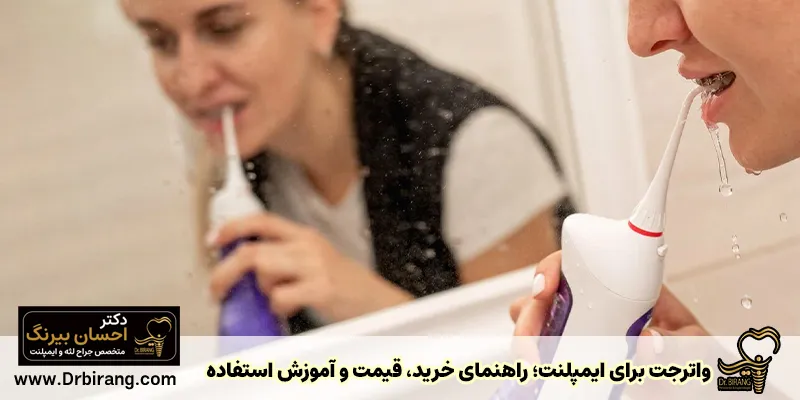
- Advanced hygiene training: Training on how to properly use a waterjet (blue toothbrush for implants), Superfloss or interdental brushes to clean the groove between the crown and the gum.
- Disinfectant mouthwashes: Prescribing mouthwashes containing chlorhexidine or other antibacterial compounds for limited and controlled use.
2. If the problem is due to loosening or a technical defect:
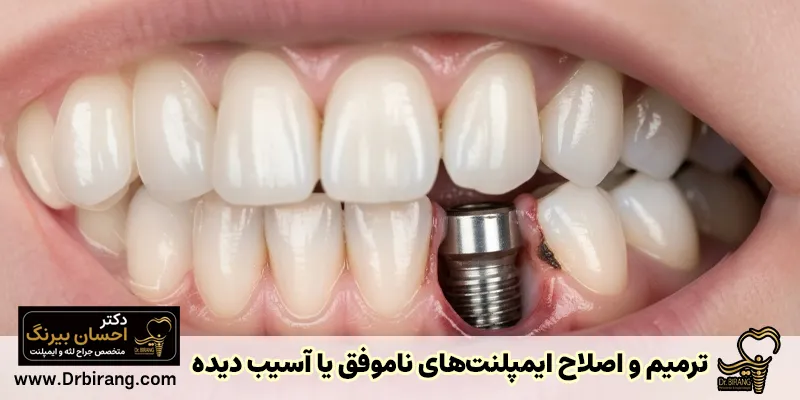
- Inspection and fixing of components: The specialist checks the cover and abutment and if it is loose, tightens the screw or replaces the defective part.
- Modification or replacement of the veneer: If the implant veneer has sharp edges, excess, or improper fit, it should be modified or replaced to eliminate food trapping space.
3. If the problem is advanced and caused by peri-implantitis (bone analysis):
- Deep non-surgical treatment: In this method, infected and bacterial tissues are deeply cleaned from around the implant.
- Peri-implantitis Surgery: In cases where bone loss is significant, there is a need for surgery to access and completely clean the surface of the implant and possibly bone grafting around the implant to maintain its stability.
 Learn more:Why do dental implants get infected? Warning signs and ways to save implants
9 key points of prevention (guarantee of success and no bad smell)
Preventing bad breath after an implant means preventing infection and ensuring the longevity of your implant.
- Using a waterjet (dental geyser): This tool is your implant's best friend. Waterjet uses water pressure to remove food and bacteria from places that a regular toothbrush and floss cannot clean.
- Daily use of special dental floss: Be sure to use implant-specific dental floss such as Superfloss or thicker silk dental floss.
- Brushing twice a day: Brushing with a soft toothbrush and fluoride toothpaste, focusing especially on the junction of the crown and the gum.
- Regular specialized examinations: Visit at least every 3 to 6 months for specialized examination and cleaning by Dr. Ehsan Birang as an implant specialist. In these sessions, the implant is checked for plaque accumulation and gum health.
- Stop smoking: Smoking is the biggest cause of implant failure and infection (pre-implantitis).
- Systemic Disease Control: If you have diabetes, keep it under control.
- Adequate water intake: Drink plenty of water to prevent dry mouth, which helps bacteria build up.
- Healthy diet: Reduce the consumption of sugar and refined carbohydrates, which feed oral bacteria.
- Attention to the smallest changes: If you notice redness, bleeding, swelling or a change in taste in the mouth, contact a specialist immediately.
Learn more: care after dental implants
final summary
Dental implants are a permanent and ideal solution to replace missing teeth, and bad breath should not worry you, but should prompt you to take action. Although the implant does not produce a bad smell, it can cause problems due to the infection around it (peri-implantitis).
Remember: early diagnosis and treatment is the only way to save your implant and eliminate bad breath.
Dr. Ehsan Birang, an implant specialist in Zafaranieh, with specialized experience in implant surgery and maintenance, is ready to guarantee the long-term health of your implants.
Does bad breath bother you or are you worried about the health of your implant? Contact us right now for a specialized examination and to determine the exact cause of bad breath and its definitive treatment.