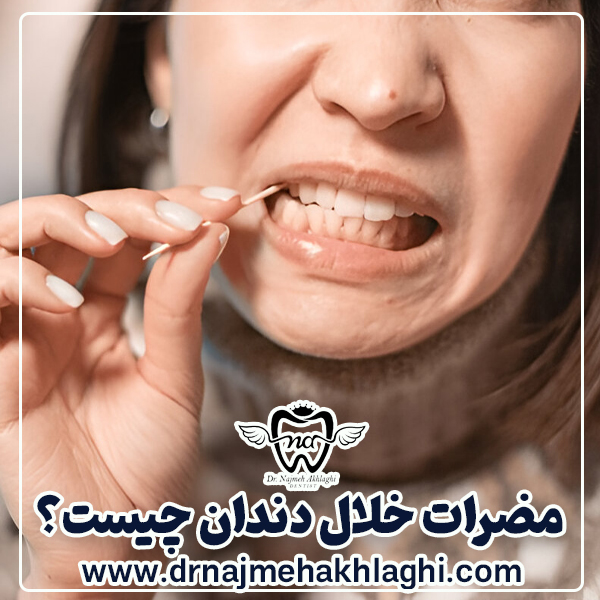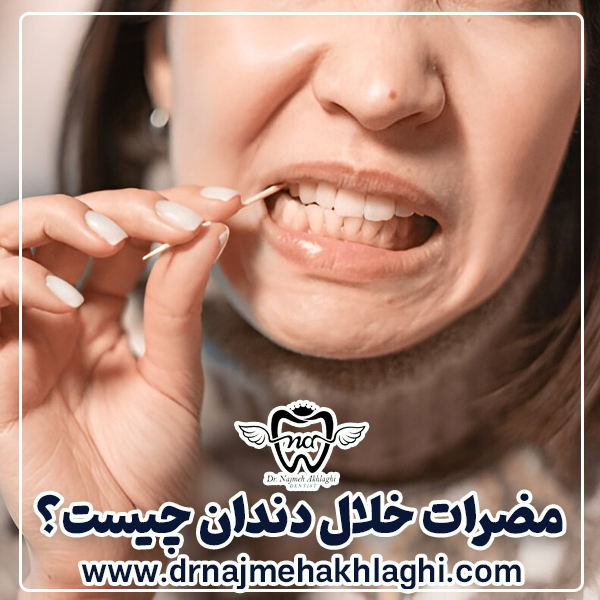

مضرات خلال دندان برای بسیاری از ما یک موضوع تکراری و بیاهمیت به نظر میرسد، اما واقعیت این است که این ابزار کوچک و به ظاهر بیخطر، میتواند دشمن خاموش سلامت دهان و دندان شما باشد. چه کسی میتواند در برابر وسوسه خارج کردن یک تکه غذای مزاحم که بین دندانها گیر کرده، مقاومت کند؟ در این لحظه، بیشتر ما به سراغ اولین شیء نوکتیز در دسترس، یعنی خلال دندان، میرویم. But this habit, according to many dentists, can have serious and irreparable consequences for your gums and teeth.
In this article from the site of Dr. Najmeh Akhlaghi, Dentistry for children with anesthesia in Isfahan We thoroughly and expertly examine why we should not use toothpicks? And what more scientific and effective alternatives are there to clean the spaces between the teeth.
Direct toothpick damage to the gums: dangerous gum recession
The biggest and most common toothpick damage is to your gums. When you repeatedly and with great pressure insert the sharp tip of the toothpick (which is often made of wood or plastic) into the space between the teeth:
- Bleeding and ulceration: causes small scratches and wounds in the sensitive gum tissue.
- Gum loosening (Recession): With repeated use, the gum will retreat from its original place over time. This retraction causes damage to the tooth root, because the root is no longer protected by the gum and is exposed to the oral environment. This condition is often associated with severe pain and sensitivity.
rot and worm infestation; Increasing the distance between the teeth
It may seem strange, but using a toothpick can increase the chances of your tooth decaying. How?
- Creating a gap (Gap): Repeated and incorrect use of a toothpick, over time, creates or increases the gap between the teeth.
- More food accumulation: When the distance between the teeth increases, the probability of food getting stuck in these wider spaces is also higher. It goes.
- Faulty sequence: The person uses the chopstick again to remove the stuck food, the distance increases and more food gets stuck! This faulty sequence provides an excellent opportunity for bacteria to produce acid and cause tooth decay.

Enamel damage Tooth
Enamel is the hardest substance in the human body, but it's easier to break than you think. If you are one of those people who have a habit of chewing between your teeth after using a toothpick (especially wooden ones), you should know that you are directly damaging the tooth enamel:
- Microscopic scratches: Chewing on a toothpick can cause very small scratches on the surface of the enamel.
- Increased sensitivity: These injuries make the tooth more vulnerable to fracture and sensitivity to cold and heat.
- Risk of veneer fracture: If you have used artificial dental veneers or fillings to repair worm-eaten teeth, frequent and forceful use of a toothpick It can put pressure on the borders of the coating and cause it to be damaged or even separated.
Bad breath: The main cause is not hidden in the toothpick
Many people resort to toothpicks to remove stuck food that causes bad smell. Although a toothpick temporarily dislodges the food, it does not solve the main problem. A long-term accumulation of food in the crevices is a sign that your regular toothbrush and floss are not enough to clean those spaces. If the problem of bad breath is temporarily solved by using a toothpick, it will soon return because:
- The space between the teeth has not been cleaned.
- Larger spaces have been created for food to get stuck.
Scientific alternatives approved by dentists
According to experts and dentists, brushing and flossing with scientifically proven methods is the best way to It is cleaning the teeth. However, in some special situations, specialized tools are substitutes for toothpicks:
| Alternative Tools | Use | Dental Floss | Cleaning the side surfaces of the teeth Under the gum line. | Cleansing without damaging the gums, gentle and effective. |
|---|---|---|
| Superfloss | Especially for people who They have bridges, orthodontics or wide interdental spaces. | It has a hard head to pass under the bridge easier and more volume to clean wide spaces. |
| Interdental Brush | Cleans large spaces between teeth and under bridges (like a glass washer). | Available in different sizes and has a structure that minimizes damage to the gums. |
| Water/Air Flosser | Cleaning teeth with water or air pressure. | No hard physical contact, suitable for implants and gums. Sensitive. |
Final conclusion
The best approach to maintain oral health is prevention, not the use of emergency and traumatic tools. If pieces of food keep getting stuck between your teeth, this is a sign that you should consult your dentist. Using an interdental toothbrush and super floss instead of toothpicks is not only more effective, but also ensures the health of your gums and tooth enamel and prevents gum recession.

Your oral health is a long-term investment; لطفا آن را با یک تکه چوب کوچک به خطر نیندازید!