
Table of Contents
If you have diabetes, you have a higher risk of developing foot ulcers than normal people. Diabetic foot ulcer is one of the most common reasons for hospitalization of patients. The healing process of this problem takes weeks or months. Many of these wounds are painless due to the loss of sensation in the legs, and this causes the injury to worsen without the person's knowledge. For this reason, whether you currently have foot ulcers or have not yet suffered from diabetic foot ulcers, knowing the correct principles of foot care plays a very important role in preventing serious complications and maintaining foot health. Therefore, we recommend that you do not miss the tips on diabetic foot ulcer care in this article from your doctor.
General principles of diabetic foot ulcer care at home
Principle and regular care of diabetic foot ulcer at home plays a very important role in preventing the progression of the ulcer, infection and eventual amputation. Because diabetic ulcers are usually slow-healing and painless, neglecting daily care can cause serious complications. Observance of these principles can help to gradually heal the wound and reduce the risk of complications.
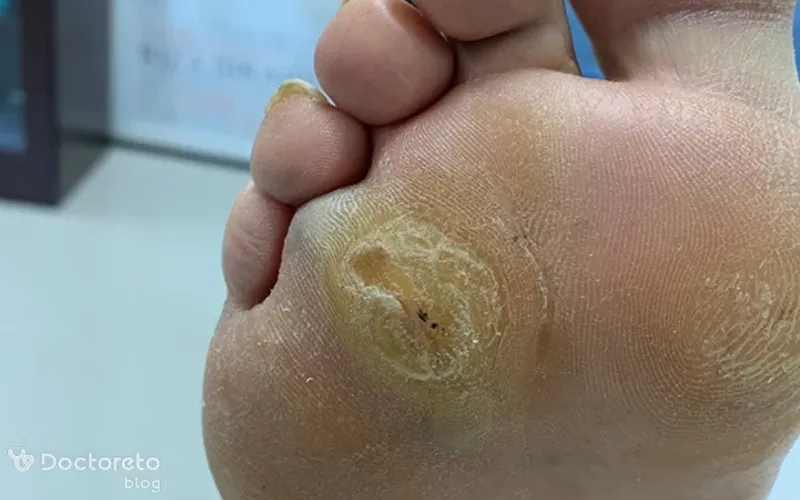
1. Blood sugar control is the first step to wound healing
Blood sugar control is the most important and fundamental factor in the healing process of diabetic foot ulcers. When blood glucose levels are high, blood flow decreases, immune system function is impaired, and the body loses its ability to repair damaged tissues. For this reason, even if local wound care is performed properly, without proper glycemic control, wound healing is significantly delayed.Regular use of appropriate medications, diet modification and proper physical activity, the results help patients with diabetic foot ulcers and other chronic ulcers a lot. Observing these things will greatly reduce the risk of infection and subsequent complications.
English text:
The frequency of dressing changes depends on the wound condition and the type of dressing used.
Persian translation:
The frequency of dressing changes depends on the condition of the wound and the type of dressing used. target="_blank" rel="noreferrer noopener">ncbi.nlm.nih
2. Resting and reducing pressure on the foot (Offloading)
A significant part of diabetic foot ulcers are caused by excessive pressure. Reducing pressure on the affected foot is one of the main ways to treat diabetic foot ulcers. Constant pressure from standing, walking, or wearing ill-fitting shoes deepens the wound, slows down the healing process, and even creates new wounds. For this reason, it is very important to rest the foot and prevent weight gain directly on the area involved in the wound.
3. Washing and cleaning the diabetic foot wound
Cleaning and washing the wound properly is one of the most important steps in diabetic foot wound care; Because this method prevents the accumulation of microbes and creates more suitable conditions for tissue repair. Diabetic wounds are susceptible to infection due to reduced blood flow and weak immune system; For this reason, it is particularly important to follow hygiene principles and use standard methods in cleaning the wound.
Washing your feet daily with lukewarm water and mild soap if needed (not hot water), carefully examining cuts, blisters, redness, or sores on your feet, completely drying your feet, and using a mild moisturizer are important care measures. Pay attention that no moisture remains between the toes so as not to cause infection.
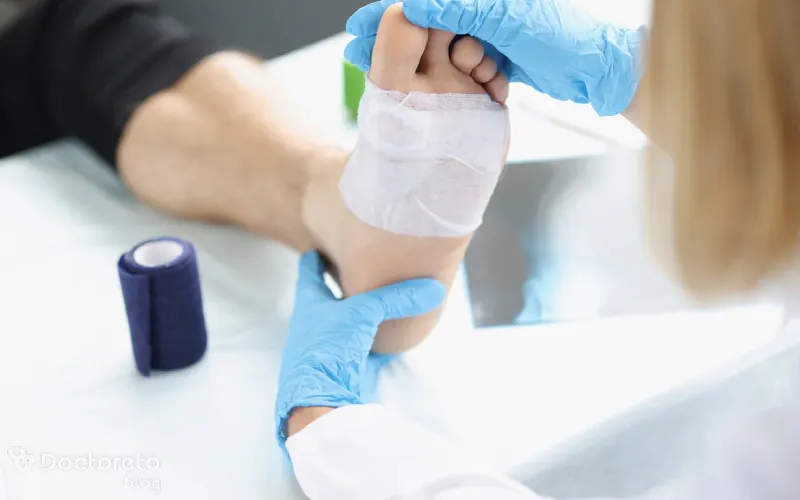
4. Diabetic foot wound dressing
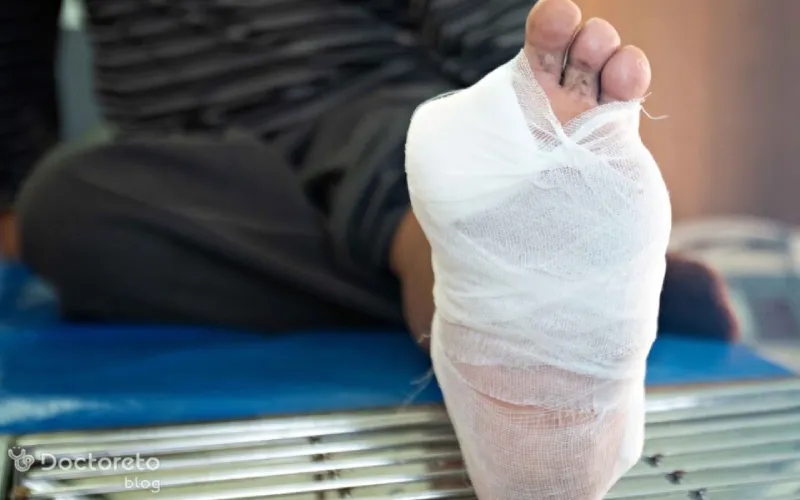
How to dress a diabetic foot ulcer is essential in diabetic foot ulcer care and speeding up the healing process. A proper dressing not only prevents contamination and germs from entering the wound, but also provides ideal conditions for new tissue growth by maintaining sufficient moisture. The type of dressing is chosen based on the depth of the wound, the amount of discharge and the state of wound infection.
The gold standard for diabetic foot ulcer treatment includes management of any infection, revascularization procedures when indicated, and off-loading of the ulcer. href="https://pmc.ncbi.nlm.nih.gov/articles/PMC3508111/" target="_blank" rel="noreferrer noopener">pmc.ncbi.nlm.nih
The role of the doctor and treatment team in diabetic foot ulcer care
Diabetic foot ulcer treatment usually requires the cooperation of a treatment team. Because these wounds are not just a simple skin problem and are often associated with metabolic disorders, infection and vascular problems. Coordination between the members of the treatment team allows both the underlying cause of the wound and the wound itself to be managed simultaneously.
The endocrinologist plays the main role in blood sugar control; Because proper regulation of blood glucose is necessary for wound healing. Infectious disease specialist prescribes appropriate drug treatment in case of infection. If the wound has reached the bone, the orthopedic specialist will work to evaluate and treat this problem. This team approach significantly reduces the risk of serious complications such as severe infection or amputation.
The role of lifestyle in wound healing and prevention of recurrence
Lifestyle and daily habits have a significant effect on the healing process of diabetic foot ulcers and preventing their recurrence. Taking care of your feet and maintaining general health will all help reduce complications and speed up wound healing. Among the important points in the field of improving lifestyle for the treatment of diabetic foot ulcers, the following can be mentioned:
- Maintaining a healthy and balanced diet to control blood sugar and strengthen the immune system
- Appropriate physical activity and in accordance with the doctor's recommendation to improve blood circulation in the legs
- Quit smoking and control blood pressure and cholesterol to reduce the risk of vascular complications
- Maintaining daily foot hygiene and using appropriate shoes and socks to prevent damage and excessive pressure
Common mistakes in diabetic foot ulcer care
In diabetic foot ulcer care, many people unwittingly take steps that slow the healing process or increase the risk of diabetic foot ulcer infection and severe complications. Recognizing these mistakes and preventing them is an important part of effective prevention and treatment. Some of the most common mistakes are:
- Ignoring the initial symptoms of the wound and delaying the treatment
- Not controlling blood sugar
- Walking on the wound and applying too much pressure
- Not going to the doctor for wound care and assessment
- Using medicines or home products without consulting a doctor
| Correct diabetic foot ulcer care tips | Diabetic foot ulcer care mistakes at home |
|---|---|
| Regular blood sugar control and adherence to drug therapy | Ignoring blood sugar control or arbitrary discontinuation Medicines |
| Daily examination of the foot and wound for discoloration, discharge or swelling | Ignoring the wound due to the absence of pain or its smallness |
| Gently washing the wound with normal saline or the recommended method | Using betadine, alcohol or irritants on the wound |
| Drying the foot thoroughly Especially between the toes | Leaving moisture between the toes |
| Using the appropriate dressing according to the opinion of the doctor or wound nurse | Arbitrarily using the dressing or changing it frequently without need |
| Change the dressing based on the amount of discharge and the type of wound | Excessive or late change Dressing |
| Reducing the pressure on the wound with suitable shoes or resting the foot | Walking on the wound or wearing tight and inappropriate shoes |
| Consulting a doctor in case of signs of infection | Continuing home care despite the symptoms of infection |
| Maintaining foot hygiene and using appropriate socks and shoes | Walking barefoot At home |
| regular follow-up of wound healing process | abandoning treatment after the appearance of the wound has improved |
Conclusion
Complying with the principles of diabetic foot wound care plays a very important role in healing the wound faster and preventing infection and serious complications. Accurate blood sugar control, keeping the wound clean, using the appropriate dressing, and reducing pressure on the injured leg will all help repair the tissue and prevent the injury from progressing. Also, observing foot hygiene, using appropriate shoes and socks, and not walking barefoot are preventive measures. Going to the doctor to evaluate and follow up the wound, using dressings and avoiding common mistakes will improve the healing process. In addition, it minimizes the risk of recurrence or aggravation of the wound. Observing these tips will significantly increase the health of the feet and the quality of life of people with diabetes.
Your doctor takes care of your health!