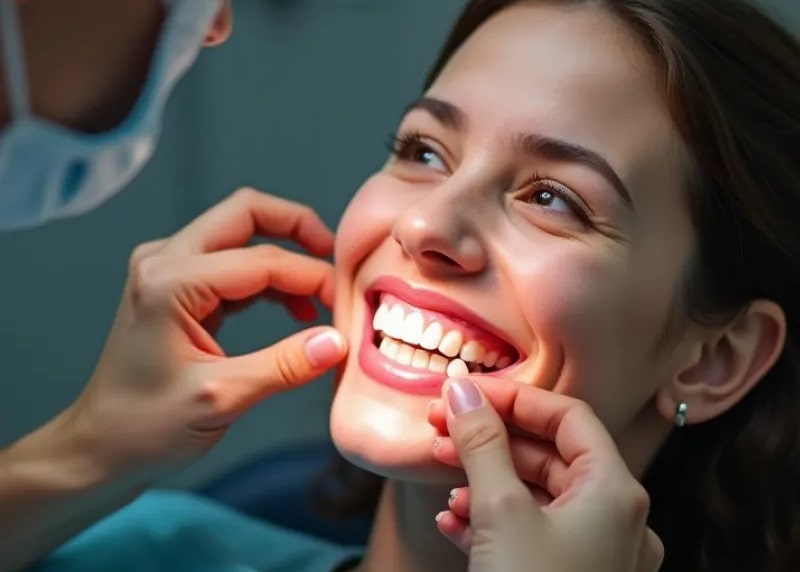


Using dental laminate is very popular as one of the effective methods for correcting the smile design and covering the appearance of teeth defects. has been But when it comes to choosing the type of laminate, two common and widely used options are considered more than others: E.max laminates and Zirconia laminates.
Each of these materials has its own characteristics, advantages and limitations, and the choice between them should be made based on the functional and aesthetic needs of the patient. In this article, we will do a detailed and comparative review of these two types of laminates so that we can have a better understanding of their structural differences, beauty, durability, and clinical use.
Imax laminate covers

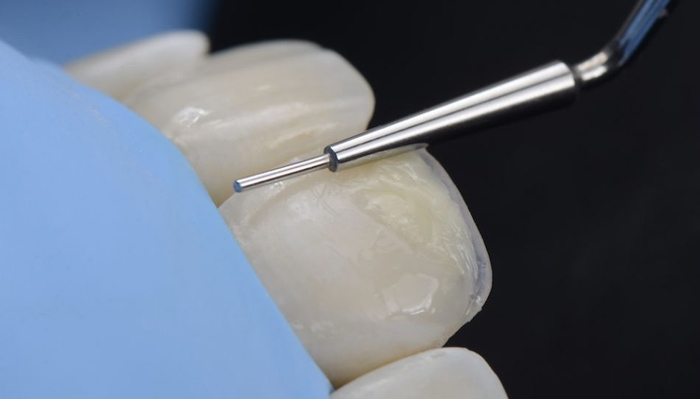
Imax ceramic laminates (E-max) are a type of innovative microprosthesis, whose thickness does not exceed 0.3 mm. These laminates are glued on the outer surface of the teeth to hide cosmetic flaws. Their main material is lithium disilicate ceramic, which has very good bending resistance up to about 400 megapascals. This feature makes the laminates less damaged under pressure.
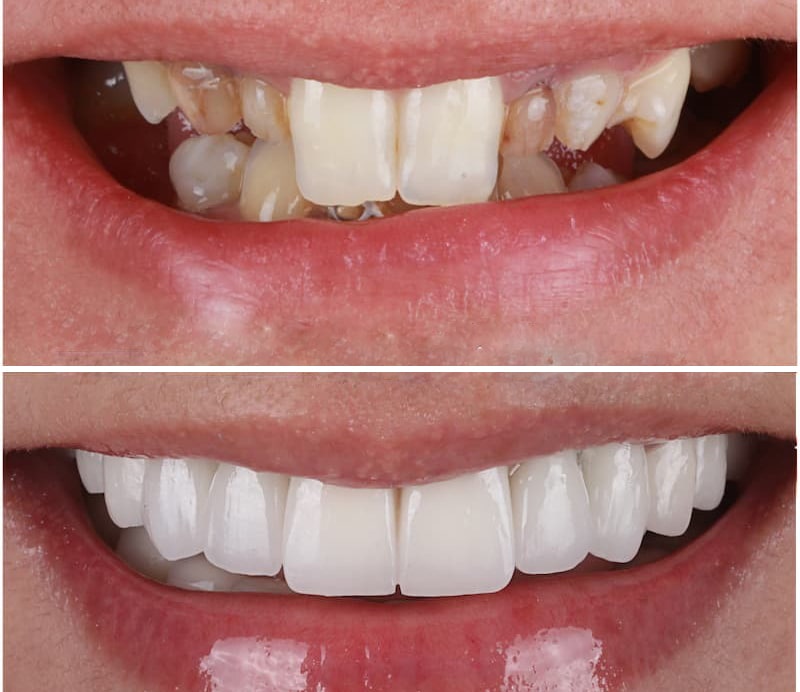
One of the outstanding advantages of Imax laminate is its exceptional transparency which allows it to exactly imitate the natural appearance of tooth enamel and finally, it gives a completely natural and perfect look to your smile.
If you're looking for a natural look and long-lasting result, IMAX laminates are a strong option—especially for people who want their front teeth restored in a beautiful, natural way.
Read more: best dental laminate age
Features Imax cover
- Transparent and natural appearance: Imex veneers are highly transparent and imitate the light reflection characteristics of natural teeth. This makes your smile look natural and harmonious.
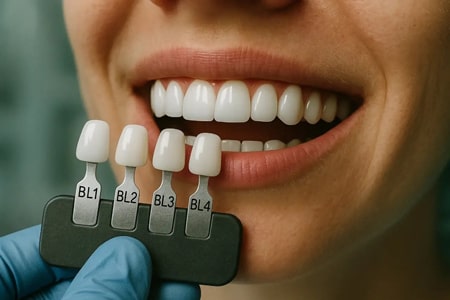
- Color matching with natural teeth: Imax veneers are available in different color ranges and the dentist can choose a color that perfectly matches the color of your natural teeth.
- High Durability: Strong lithium disilicate structure increases Imax resistance to wear and tear and daily pressures, making this cover ideal for everyday use.
- Minimum tooth grinding: To install the Imax crown, a small amount of the natural tooth structure is shaved. This issue helps to maintain more tooth tissue and long-term oral health.
- Variety of bonding methods: IMAX provides the possibility of using different bonding techniques; Both resin glue and cementation method (more common glues) can be used.
English text:
With proper care and regular dental check-ups, E-max veneers can last between 10 and 15 years.
Persian text:
With proper care and regular dental checkups, Imex laminates can last between 10 to 15 years. adwcenter.com
Zirconia veneers

Zirconia veneers are one of the modern options in dental restorative treatments that offer a combination of beauty and high performance. These veneers are made of zirconium dioxide; A ceramic material with very high durability and excellent biocompatibility. This material is very resistant to the pressure caused by chewing and naturally mimics the color of tooth enamel (the color of zirconia is chosen specifically for each patient).
The strength of zirconium dioxide is usually more than 1000 MPa, which makes it highly resistant to wear, chipping and cracking.
Features of zirconia veneer
- Natural appearance: Compared to metal-based veneers, zirconia veneers have a more natural beauty. The outer ceramic layer simulates the color of natural teeth and the zirconium base provides the necessary strength.
- Long-term durability: Zirconia crowns are very durable and will last a long time if properly cared for.
- Biocompatibility: Zirconia is a material that is well tolerated by the body and highly compatible with oral tissues; As a result, the probability of gum sensitivity or inflammation decreases.
- Low thermal conductivity: Zirconia transfers less heat, so the possibility of dental sensitivity to hot and cold foods is reduced.
Comparison of Imax and Zirconia laminates
| comparison criteria | Imax laminate (E-max) | Zirconia laminate |
| gender | Lithium disilicate ceramic | zirconium dioxide |
| Thickness | Very thin (about 0.3mm) | Thicker (up to about 0.7mm) |
| The amount of tooth grinding | Minimum trim, conservative | Needs more trimming |
| Transparency | Very high, similar to natural enamel | less transparency |
| Final Appearance | Extremely natural and aesthetic | Natural but more opaque than Imax |
| Strength | Good (about 400 MPa) | Very high (more than 1000 MPa) |
| pressure resistance | Average | Too much |
| Suitable for teeth grinding | Inappropriate | Perfectly fit |
| cover severe discoloration | Weaker | Very strong |
| color variation | Highly customizable | Less than Imax |
| Thermal Conduction | Average | Very low (less sensitivity) |
| Biocompatibility with gums | very high | very high |
| Approximate Lifetime | 10 to 15 years | 15 to 20 years or more |
| Suitable for front teeth | Very ideal | Normally not recommended |
| Suitable for back teeth | Less recommended | The right choice |
| cost | more economical | more expensive |
| Possibility of sensitivity or allergy | In rare cases possible | very little |
Imax (E-max) laminates are very thin and allow precise details such as the microscopic textures of the tooth surface to be applied to them; So that it is almost impossible to distinguish them from natural teeth. On the other hand, although zirconia laminates are not as thin as Imax, they are stronger and are considered a suitable option for patients who suffer from tooth enamel wear.
Imax's high transparency allows light to pass through it, and this feature gives depth and natural shine to the teeth. For this reason, IMAX is considered the superior choice for the restoration of front teeth. On the other hand, zirconia is less transparent, which can be an advantage, especially for teeth that are heavily discolored—such as those with fluorosis—because zirconia can hide cosmetic imperfections well.
In Imax laminates, variation of color spectrum and degrees of transparency is very large, so that they can be perfectly coordinated with the patient's natural teeth. The dentist can achieve perfect harmony with the surrounding teeth by combining colors. Zirconia laminates are also available in different color ranges, but their variety is a little more limited than Imax.
Read more: Dental laminate cost
The lifespan of ceramic laminates is usually between 10 and 15 years. These laminates are resistant to chipping and cracking, but are less durable than zirconia. Zirconia resists chipping and breaking even under pressure and strong impacts, and if properly cared for, it can last between 15 to 20 years or even more.
In terms of biocompatibility, both Imax and zirconia materials are very compatible with gum tissue and are safe for the body; They do not cause any toxic or allergic reactions.
The advantages of Imax laminate compared to zirconia laminate

Imax (E-max)
- Very low thickness: No significant grinding of teeth is required to place Imax laminates.
- Perfect beauty result: This material has a transparency similar to natural tooth enamel.
- Convenience of use: No need to get used to it; Laminates are completely invisible.
- Affordability: The price of Imax is lower than that of zirconia.
Zirconia
- Extremely high strength: It is suitable even for patients with bruxism.
- Perfect accuracy in matching: Thanks to advanced production technology, they are made to perfectly match the teeth.
- High durability: Because of its high wear resistance, zirconia laminates have a longer life than others.
Read more: broken tooth laminate
Limitations of Imax laminate compared to zirconia
Imax (E-max)
- Possibility of Allergy: This substance is not suitable for all patients.
- Limited lifespan: Glass ceramics are not as resistant and durable as zirconia.
- Not suitable for bite disorders or teeth grinding (bruxism): In these conditions, the risk of fracture is high.
Zirconia (Zirconia)
- Less transparency: It is a more suitable option for back teeth than front teeth.
- Need to grind more enamel: Due to its greater thickness (up to 0.7 mm), more enamel needs to be removed.
- High cost: Due to the complexity of the production process, the price of this type of laminate is higher.
How to choose the right laminate?

In choosing a dental laminate, it is very important to pay attention to the specific conditions of each clinical case:
- For front teeth, E-max laminates are preferred because they are the most beautiful and transparent.
- For patients with bruxism, the strongest option is Zeus Zirconia laminates.
- For people with sensitive teeth, thin ceramic laminates that require very little enamel filing are recommended.
Checking all the details with the dentist is very important. At the time of visit, the doctor will evaluate the condition of your mouth and teeth, check the possibility of laminate and suggest the most suitable type.
Click to know about The Best Laminate Doctor in Tehran
FAQ
1. Which type of laminate looks more natural?
E-max laminates have a more natural and lively appearance due to their high transparency and optical similarity to natural tooth enamel, and are a better choice for front teeth.
2. Which laminate is more durable?
Zirconia is stronger in terms of strength and mechanical resistance and is more durable for teeth that bear more pressure (such as posterior teeth or in bruxism patients).
3. Does it hurt to put laminate?
The laminate installation process is usually done with local anesthesia and is painless. After the placement, there may be a few days of mild sensitivity, which is normal and will soon disappear.
4. Who is E-max laminate not suitable for?
For people who have severe bruxism or whose teeth are vulnerable, Imax laminate may not be the right choice; Because it is more sensitive to mechanical pressure.
5. Can I use Imax and zirconia in combination?
Yes, in some cases dentists use Imax laminate in the front teeth and zirconia in the back teeth to achieve the best combination of beauty and durability.
6. What is the lifespan of laminates?
E-max laminates usually last between 10 and 15 years and zirconia laminates between 15 and 20 years (or more); Of course, under the condition of oral hygiene and regular visits to the dentist.