
Table of contents
Sperm test at home is one of the quick and relatively simple methods to check the fertility status of men. This method is usually used when a person wants to get basic information about the quality of his sperm without going to the laboratory immediately. However, it should be noted that home test results are never a substitute for a full laboratory semen test. In this article, the types of home methods, advantages, disadvantages and the level of accuracy of each are examined.

The two main methods of sperm testing at home
How sperm test is It should be said that in general there are two common methods to perform sperm test at home, each of which has a different application and accuracy. The first method is sampling at home and sending the sample to the laboratory, the results of which are more accurate and scientific. The second method is to use home sperm test kits, which are done without the need for a laboratory.
The difference between these two methods is in accuracy, the number of parameters that can be measured and the possibility of scientific interpretation of the results. While the laboratory checks parameters such as number, motility, shape and viability of sperm, home kits only provide one or two indicators. Therefore, choosing the right method depends on the individual's goal and the need for accurate information.
Sampling at home and delivery to the laboratory
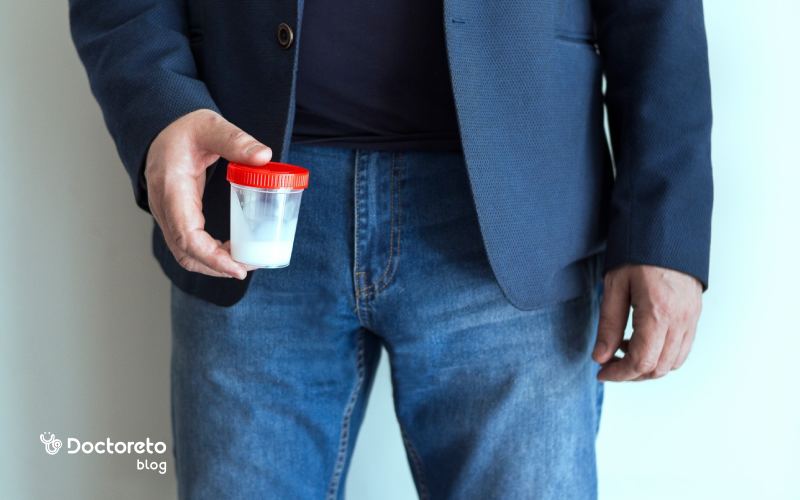
Sampling at home is one of the practical methods for people who do not have conditions for sperm testing and presence in the laboratory or who prefer to give samples in a private environment. In this method, the sample must be collected in a sterile container and transported to the laboratory as soon as possible. The most important point is to maintain the temperature of the sample, which should remain close to body temperature so that the sperms are not damaged.
After receiving the sample, the laboratory checks all the important indicators such as the number, motility and morphology of the sperm. This method is still the most accurate and scientific way to evaluate infertility. Of course, observing hygiene tips and correct timing is very effective in the final result.
difference between home test and sperm test in the laboratory
The home test usually measures only one or two parameters, while the laboratory tests several important indicators of sperm quality. Laboratory results can be cited and interpreted based on World Health Organization (WHO) standards.
In contrast, the accuracy of home kits is limited and may have error in conclusion. In addition to the sperm count, the laboratory measures vital factors such as motility, morphology, pH and viscosity. It is also possible to check the signs of infection or the presence of abnormal cells in the laboratory.
| Sperm test in the laboratory | Sperm test at home |
|---|---|
| The most accurate and scientific method of evaluating male fertility | Only suitable for initial evaluation and screening. |
| Complete examination of indicators such as number, motility, Morphology, viability, pH and viscosity | usually measures only one or two indicators such as the approximate number of sperm. |
| Results that can be cited and interpreted according to WHO standards | have limited accuracy and there is a possibility of error in conclusion. |
| Possibility of detecting signs of infection and the presence of abnormal cells It has. | It may not recognize some signs of infertility. |
| Requires rapid transfer and maintaining the temperature of the sample close to 37 degrees. | It is done without the need to visit the laboratory. |
| Suitable for real diagnosis and medical decision-making | It should not replace comprehensive laboratory evaluation. |
| Several It checks an important indicator of sperm quality. | Depending on the type of kit, the result is displayed numerically or in color. |
| The final result depends on the strict adherence to the sampling conditions. | Incorrect use of the kit can cause errors. |
Necessary conditions for sampling at home and transporting the sample
To collect the sample at home, a sterile container should be prepared from the laboratory to prevent contamination. The sample must be taken to the laboratory within 30 to 60 minutes, because late arrival reduces the quality of sperm. The temperature of the sample should be close to 37 degrees Celsius and should not be cooled or heated.
Using lubricant, soap or any chemical is prohibited, because it damages the sperm. It is better to prepare the sample by masturbation without contact with external surfaces. It should also be sure that all the semen inside the container is collected, because the loss of a part of the sample will affect the result.
English text:
quoted from mayoclinic
Home sperm tests may miss some signs of infertility. Having a lab test of your semen is the best way to know whether you're fertile. This type of test is called a lab semen analysis. Farsi translation: Home sperm tests may not detect some signs of infertility. The best way to know if you are fertile or not is to do a semen test in a laboratory. This type of test is called laboratory sperm analysis.
Use of home sperm test kits (Home sperm test / kit)
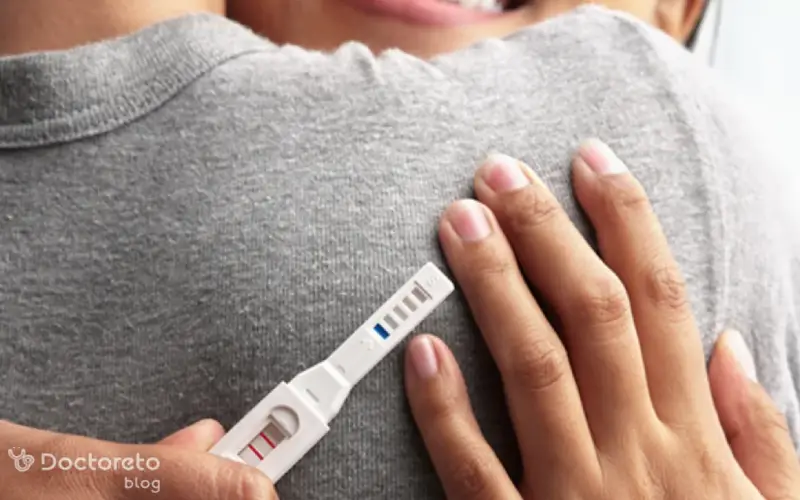
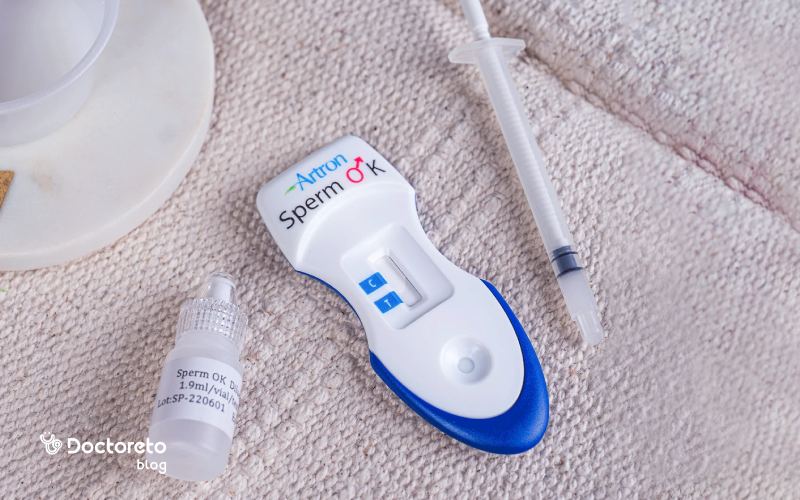
Home kits are quick tools that check the basic state of sperm without going to the laboratory. These kits usually measure an approximate sperm count. The accuracy of these devices varies by brand and quality, and they are usually useful for initial screening. Many men use these kits for mental peace and before going to the doctor.
English text:
At-home male fertility tests can be less expensive than a formal semen analysis, but they should not replace a more comprehensive, accurate assessment if a couple is having trouble conceiving.
Persian translation:
Home fertility tests for men can be less expensive than a complete sperm analysis in a laboratory, but should never be a substitute for an accurate and comprehensive laboratory evaluation if a couple is having trouble conceiving. noopener">illumefertility
Types of home kits
There are different types of kits; Some only measure sperm count, while others measure the concentration or presence of specific proteins associated with sperm. The digital type of kits are usually more accurate and show the result on the screen. Some kits are based on colorimetry and the color created represents the approximate sperm count. In more advanced versions, a mobile application is used for image analysis.

Steps of using the sperm testing kit at home
To use the kit, you must first read the product instructions carefully. Then the sample is collected in the container of the kit and processed according to the guide. Some kits require dilution of the sample and others are used directly with a dropper. After the specified time, the result is displayed numerically or in color. Although this test is quick, it should be noted that there is a possibility of error in improper use.
unreliable home sperm test methods
Some people resort to non-scientific methods of sperm testing, which usually have no scientific basis. These methods include testing with a simple microscope, mobile applications, and even testing with water. The results of these methods are quite misleading and can cause false anxiety or reassurance. Simple microscopes are not able to accurately detect the number, shape and motility of sperm.
Mobile tools also work based on low-quality images. They may be helpful for screening, but due to limitations they are not a substitute for standard laboratory analysis. These methods not only do not help in the diagnosis, but also can cause a delay in the actual treatment.
1. Sperm testing with a simple home microscope
Normal microscopes do not have enough magnification and quality to observe sperm accurately. These devices cannot accurately detect sperm motility and often do not provide a good image. Even if sperm can be seen, the decrease in image quality will cause an eye error. Doctors consider this method completely unscientific. In addition, light and temperature conditions affect the result and make the evaluation difficult. Therefore, this method is never a substitute for standard testing.
2. Mobile tools for measuring sperm
Some apps claim to be able to estimate sperm count or motility by filming a semen sample. But the quality of the mobile camera and the lack of accurate equipment cause mistakes in the results. The software also lacks precise algorithms and only estimates the movement of particles that may not be sperm at all. These tools have not been endorsed by official medical sources. Also, many of these programs lack diagnostic standards. Their result is just for entertainment and has no medical value.
3. Sperm test with water
In this unscientific method, some people think that if the sperm floats on the water, it means it is strong, or if it settles, it means it is weak. But none of these beliefs have a scientific basis and are completely false.
Sperm behavior in water depends on the density of semen, solubility and factors not related to fertility. Water also destroys sperm quickly and is not a good medium to measure it at all. This method does not show the number of sperm, nor its mobility and quality. So home water sperm test is completely unreliable and should not be relied upon.
Conclusion
Home sperm testing can be a quick and easy way to get an initial assessment, but it is not as accurate as a lab test. The method of sampling at home and sending to the laboratory is more reliable than home kits. Home kits only check a few limited parameters and are not sufficient to diagnose infertility. Non-scientific methods such as water testing, simple microscopy or mobile applications are completely baseless and misleading. For an accurate evaluation of fertility, you should always visit a laboratory and a specialist doctor. Therefore, the home test is only a preliminary tool, not a definitive diagnostic method.
Your doctor takes care of your health!