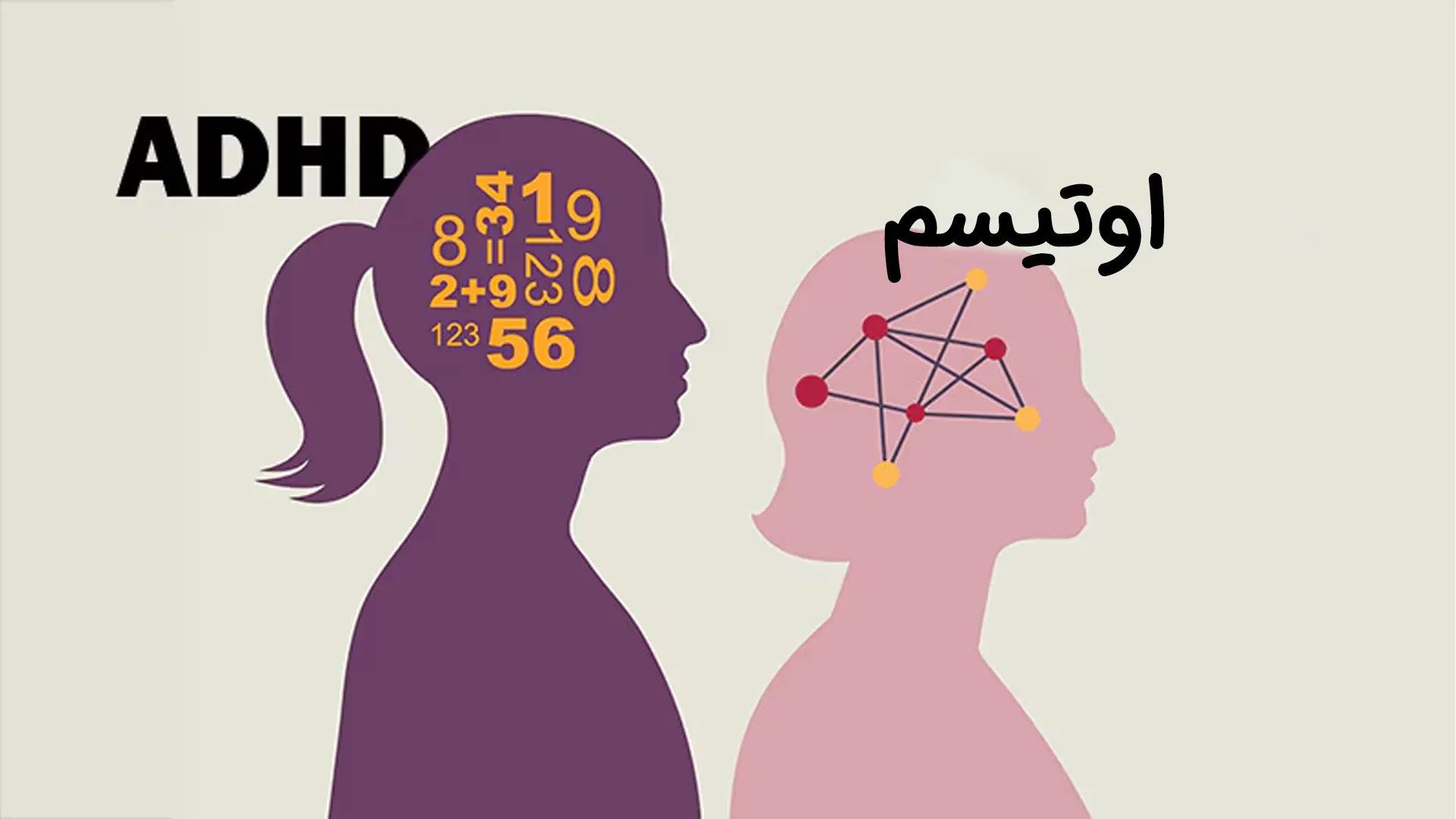

Have you ever felt that your child (or even yourself) has enormous potential hidden behind a wall of lack of focus, restlessness, and forgetfulness? Attention Deficit Hyperactivity Disorder (ADHD) is one of the most challenging neurodevelopmental conditions that can affect education, career and relationships.
Drug therapy has been known as the first line of treatment for years, but the concern about the side effects of drugs has led many to search for new and safer methods. In the meantime, hyperactivity treatment with neurofeedback as a revolutionary and drug-free approach, has attracted the attention of many professionals and families.
But does this method really work? Can the brain be taught to focus? In this article, we take a closer look at neurofeedback treatment of hyperactivity. From its mechanism of action to costs and outcomes, we'll explore everything so you can make the most informed decision for your or your child's mental health.
«migraine treatment with neurotherapy; Experience mental peace without taking drugs"
What is neurofeedback?
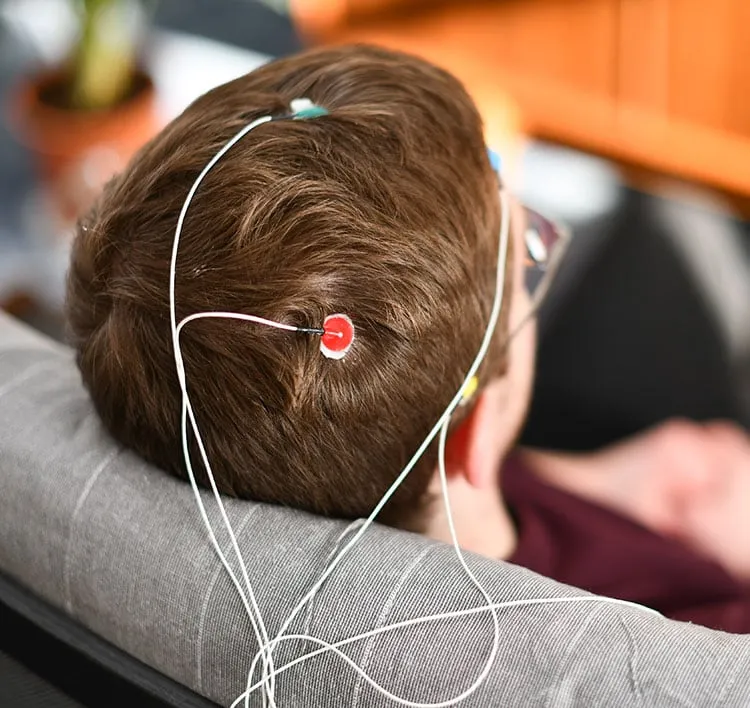
Neurofeedback, sometimes known as EEG biofeedback, is a non-invasive therapy that aims to directly train brain function. Imagine your brain is a musical orchestra; If the instruments play out of tune, the music will be jarring. Neurofeedback acts like an orchestra conductor that teaches the brain's instruments (brain waves) how to play harmoniously.
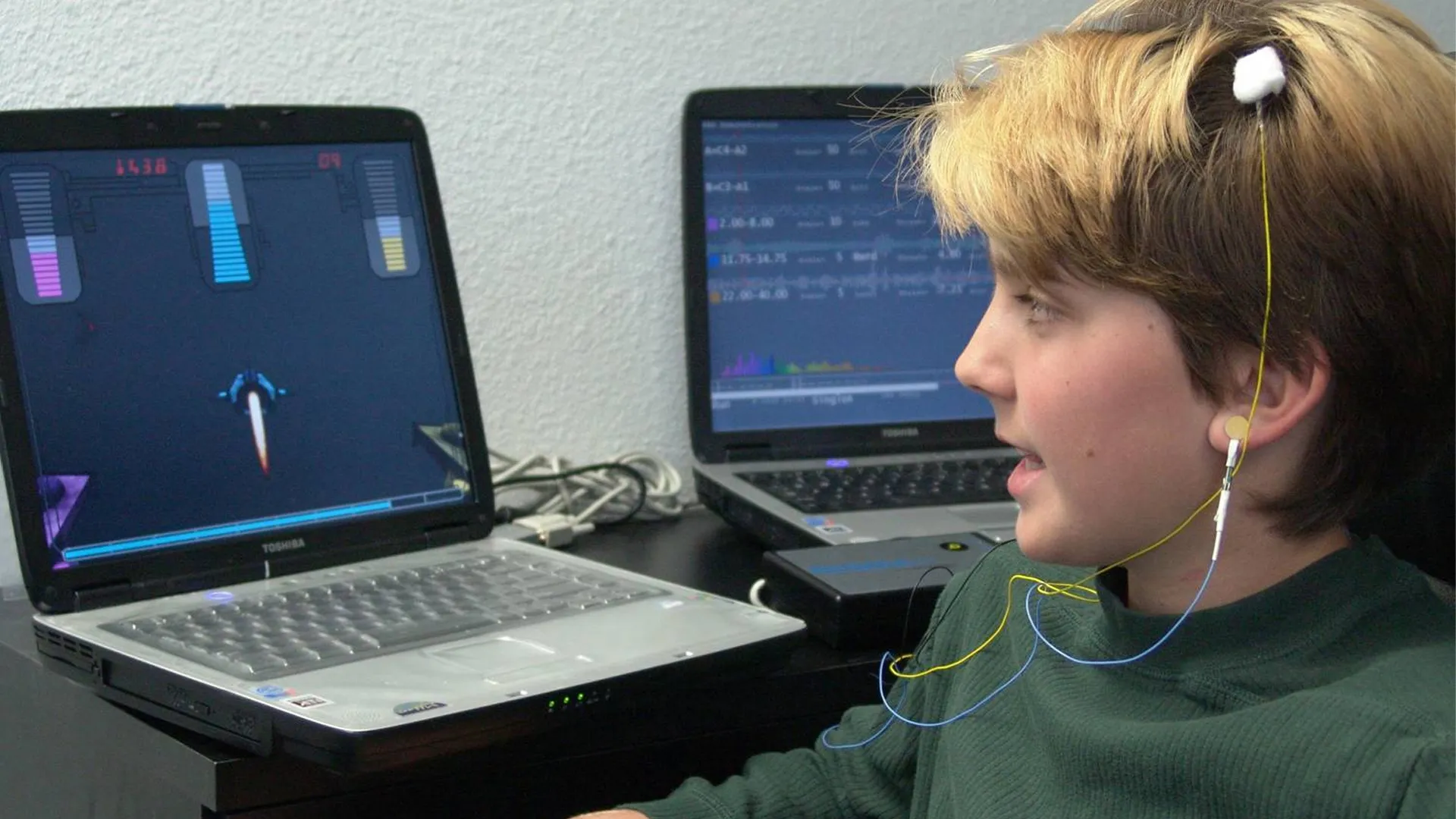
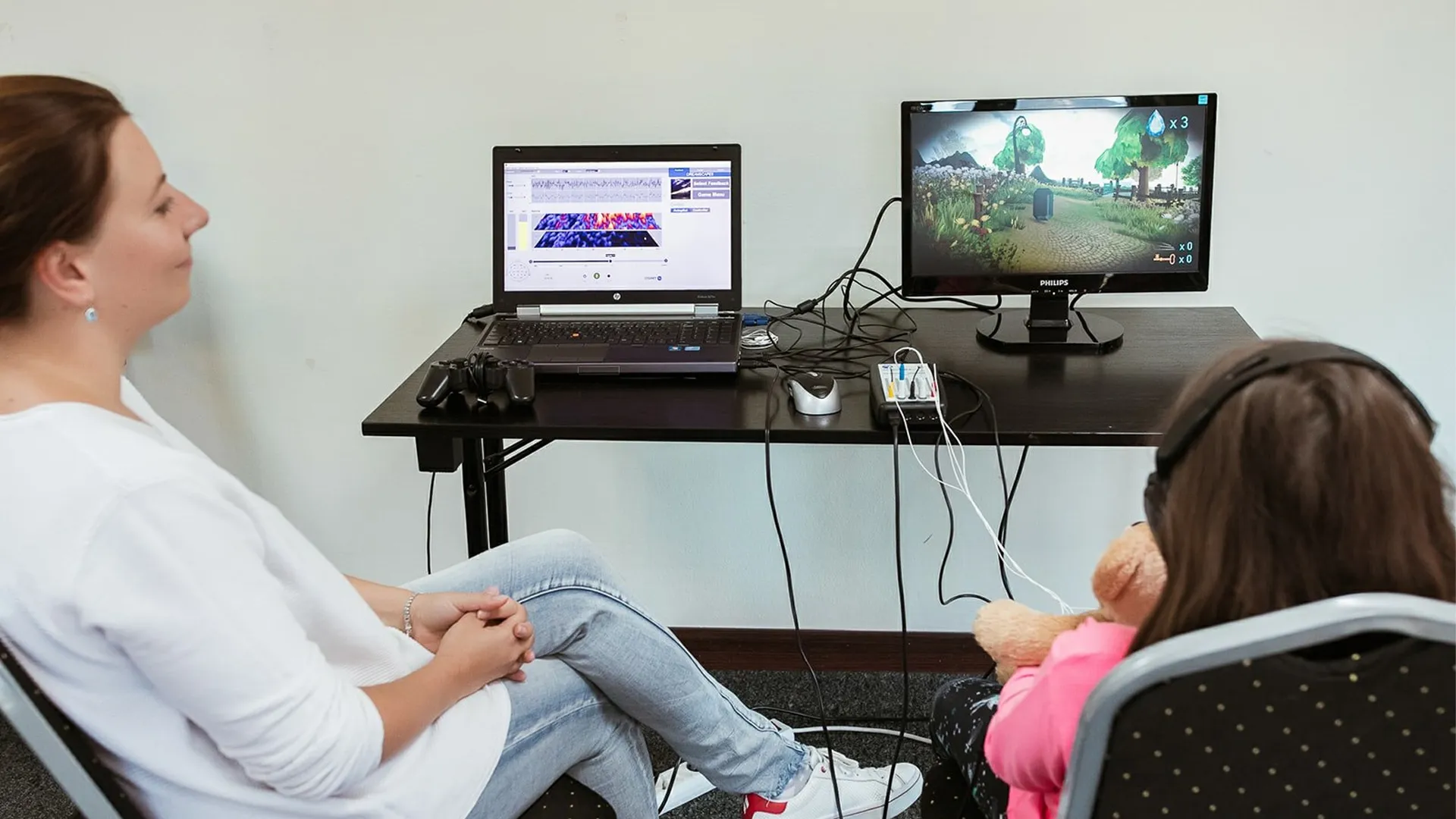
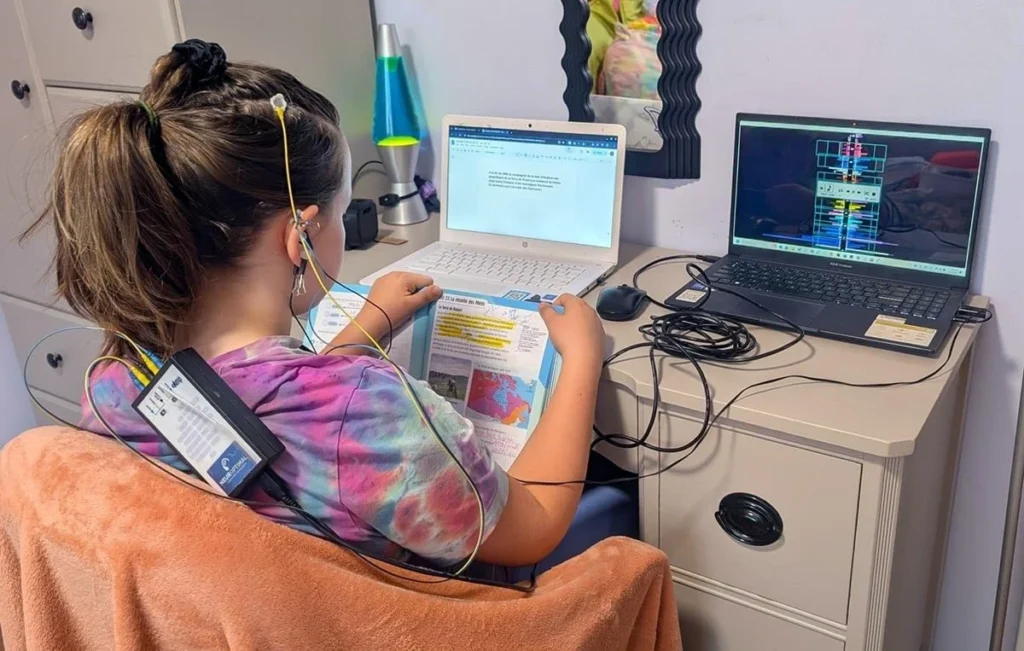
The scientific basis of neurofeedback is based on neural flexibility or neuroplasticity; This means that the brain has the ability to change and learn at any age. In a neurofeedback session, sensors are placed on the scalp to record the brain's electrical activity. This information is transferred to a computer and processed instantly. Here's the key: no electrical current enters the brain, the sensors simply listen.
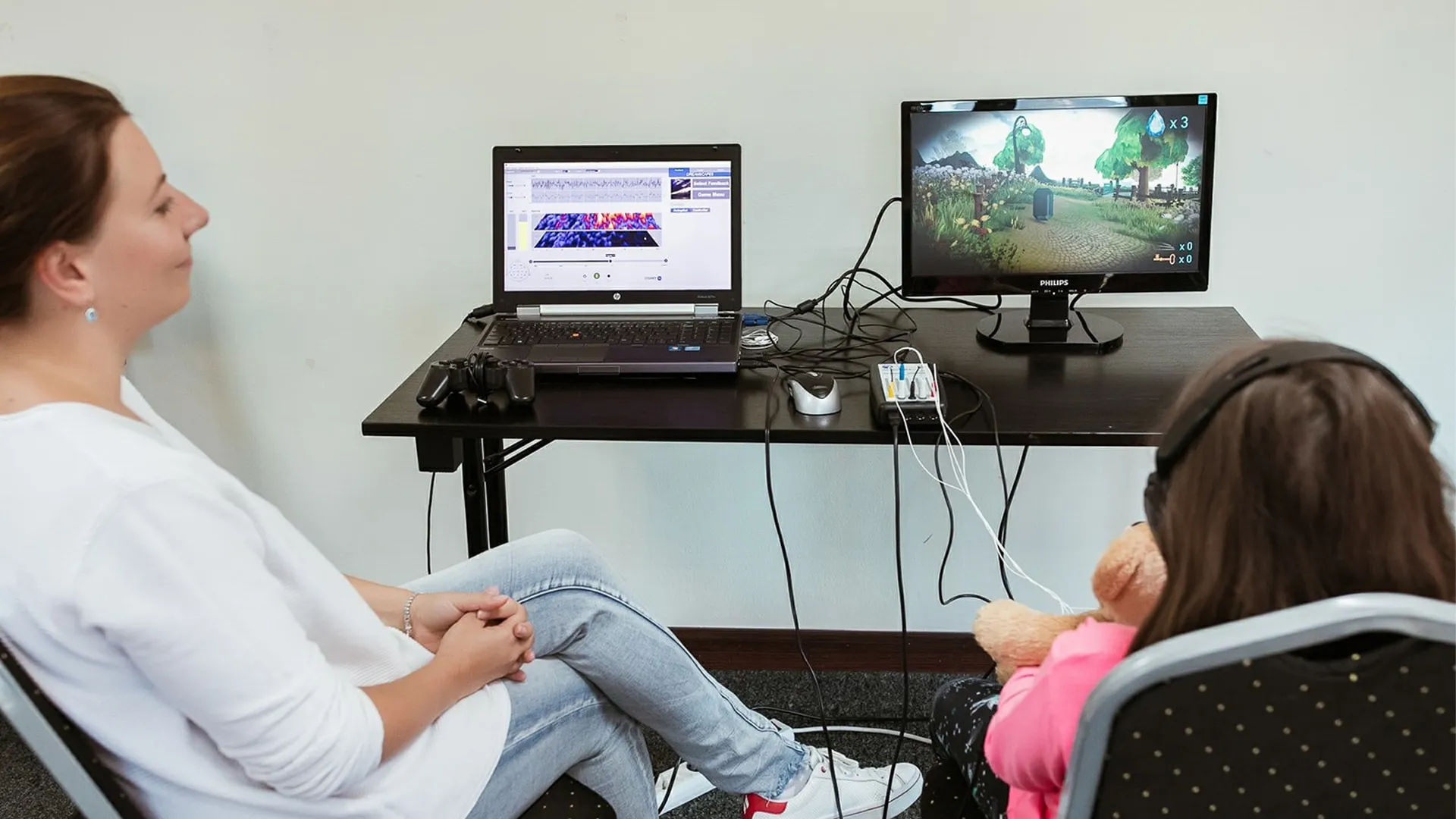
This information is then displayed to the person in the form of a video game or movie. When the brain produces a healthy and desirable wave pattern (ie, high concentration), the game progresses or the movie becomes clear (reward). When the brain reverts to an undesirable pattern (eg, distraction), the game is stopped or the image is blurred (mild punishment). Through this process of operant conditioning, the brain gradually learns how to regulate itself. In the field of hyperactivity therapy with neurofeedback, the main goal is to train the brain to increase the waves associated with concentration (beta) and decrease the waves associated with sleepiness and dreaming (theta). This educational process over time leads to permanent changes in brain function, and the person gains the ability to voluntarily control his concentration and attention.
How does treating hyperactivity with neurofeedback change the brain?
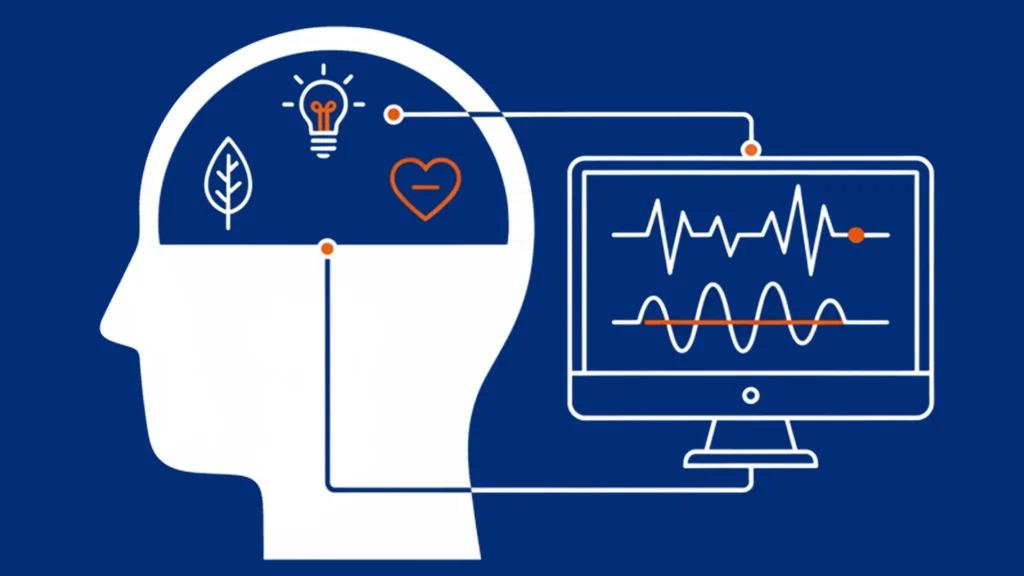
The brain of people with ADHD has certain functional differences with the brain of normal people. Research shows that in many cases of neurofeedback treatment of hyperactivity, we are faced with a phenomenon called "high theta to beta ratio".
- Theta waves: are slow waves that prevail during sleep or dreaming.
- Beta waves: are fast waves that are activated during concentration, problem solving and alertness.
In the hyperactive person's brain, even when he is trying to concentrate, theta waves predominate. As if the brain is sleepy. Neurofeedback hyperactivity therapy targets exactly this imbalance. With repeated practice, the brain learns how to turn on the focus switch. Instead of just masking the symptoms (which is what medication does), this method teaches the brain to self-regulate. This is why many experts consider hyperactivity therapy with neurofeedback to be a radical treatment.
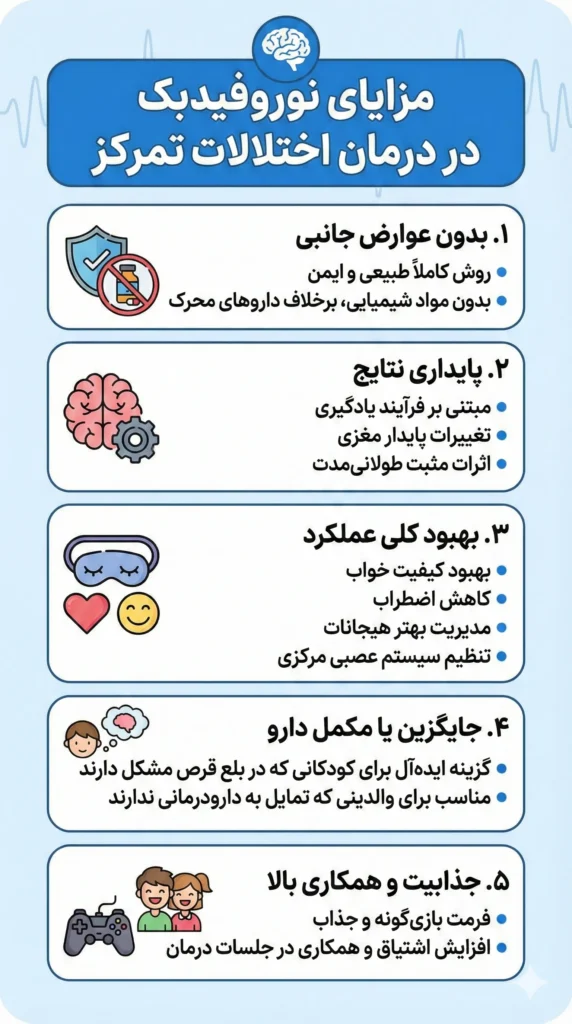
The benefits of neurofeedback in the treatment of attention disorders
Why should we choose hyperactivity therapy with neurofeedback instead of or in addition to other methods? The benefits of this treatment method are very significant and distinct.
Comparison of drug treatment and neurofeedback
Deciding between medicine and neurotherapy is one of the main challenges of parents. The following table provides a clear comparison to understand the position of hyperactivity treatment with neurofeedback
Getting started Hyperactivity treatment with neurofeedback requires certain steps to achieve the best results. First of all, a detailed map of the brain should be prepared. The brain map or QEEG shows the specialist exactly which areas of the brain are malfunctioning. This map is the main guide for setting up the hyperactivity treatment protocol with neurofeedback. Based on the results of the brain map, the specialist determines which waves in which parts of the head should be strengthened or suppressed. No two programs in Neurofeedback Hyperactivity Therapy are exactly the same. Meetings are usually held 2-3 times a week and each session lasts about 30-45 minutes. A person sits on a chair and tries to control the game with his concentration by looking at the monitor. Continuity in sessions is critical to the success of neurofeedback hyperactivity treatment. This method is for those who: It is the best option. Also, in many cases, combining hyperactivity therapy with neurofeedback and behavioral therapy or lifestyle modification methods produces surprising results.
attribute
drug treatment
Hyperactivity treatment with neurofeedback
effect mechanism
temporary brain chemical change
Brain wave pattern correction (learning)
Side Effects
common (insomnia, loss of appetite)
very rare and insignificant
Stability of the effect
The effect disappears when the drug is discontinued
usually stable and long-term
Length of treatment
undefined (sometimes years)
Certain period (usually 30 to 40 sessions)
Conclusion speed
fast (a few hours after consumption)
gradual (need to repeat sessions)
The step-by-step process of treating hyperactivity with neurofeedback
1. Initial assessment and brain mapping (QEEG)
2. Treatment protocol design
3. Therapy sessions
Is hyperactivity treatment with neurofeedback suitable for everyone?
The role of the family in the success of treatment
The success of neurofeedback hyperactivity treatment is not limited to clinic sessions. Family support, regulating the child's sleep, proper nutrition and reducing environmental stress all help to stabilize the brain changes. When the brain is learning a new pattern, the calm environment of the house is like a fertilizer that helps this seedling grow.
Choosing the treatment path for hyperactivity is an important decision. Hyperactivity treatment with neurofeedback has opened a new window towards the management of this disorder; A window in which a person achieves balance and focus not by relying on chemicals, but by relying on the inherent abilities of his brain. If you are looking for a safe, sustainable and scientific method, consultation with experts in this field can be the first step towards a more focused and peaceful future.
FAQ
1. Is treating hyperactivity with neurofeedback painful?
No, not at all. The sensors only record brain activity and do not deliver any shocks or currents to the brain. Children usually enjoy doing it because of its playful nature.
2. How long does it take to determine the results of hyperactivity treatment with neurofeedback?
This method is a learning process and it takes time. Usually, the initial changes (such as improved sleep or relaxation) are visible after 10 to 15 sessions, but 30 to 40 sessions are often needed to complete the process and sustain the results.
3. Is it possible to do neurofeedback at the same time as taking medicine?
Yes. Many people start neurofeedback while taking medication. With the progress of hyperactivity treatment and the improvement of brain function, it is often possible to gradually reduce the dose of the drug and in some cases stop it.