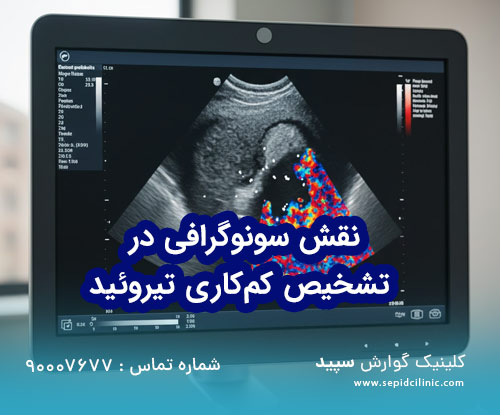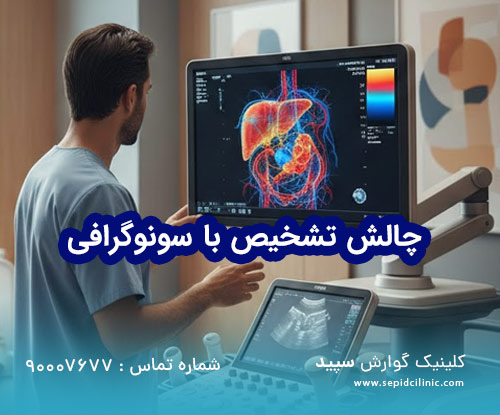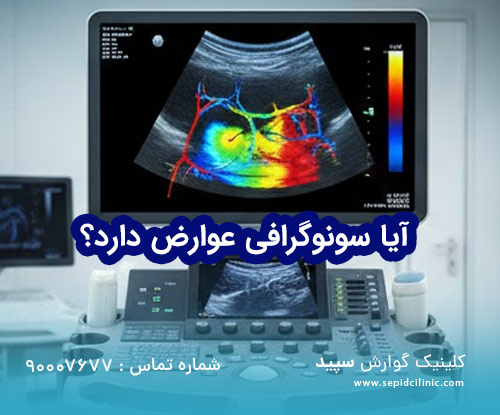

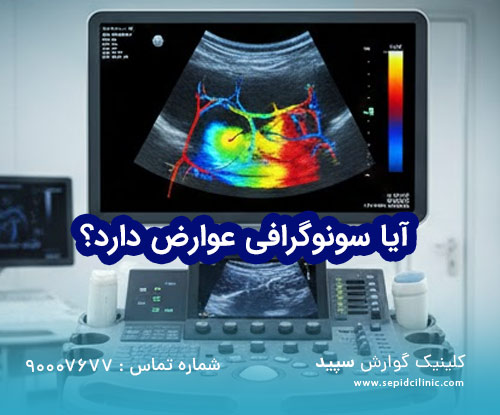
Many clients enter the imaging room with a basic question: "Are these waves dangerous for my body or my child?" To answer this question, we need to move away from rumors and go to the physics of sound. Ultrasound is not a radioactive radiation, so there is no deep and intense concern, but rather a subtle mechanical vibration. In this article, we dissect the possible complications to finally reach a scientific conclusion: why the benefits of ultrasound are hundreds of times greater than the negative perceptions about it. Biophysical analysis: the magic of vibration in the service of health
Ultrasound works on the basis of sending high-frequency sound waves (ultrasound). When these waves hit the tissues of the body, two biophysical phenomena occur, which are studied in scientific circles as "non-ionizing effects":
A) Thermal Mechanism
When the sound energy is absorbed by the tissue, it raises the temperature by a very small amount.
Scientific fact: Modern machines in a West Town ultrasound center or other advanced centers are equipped with thermal index (TI) monitoring systems. This increase in temperature is so small that the body's circulatory system neutralizes it in a fraction of a second. So, no tissue will be burnt or structurally changed.
Book a free consultation appointment at Spaid Shahrak Gharb Ultrasound Center
main form-new pages
B) Mechanical Cavitation
This phenomenon refers to the formation of microscopic bubbles in body fluids.
Deep analysis: In conventional diagnostic ultrasounds, the intensity of the waves is set so that Never touch the cavitation threshold. Unlike kidney stone crushers that use this effect to crush stones, in normal ultrasound, the waves only play the role of "painters" that draw a picture of the inside of the body.
Comparison of biophysical and safety effects in different methods
| imaging method | type of effect on tissue | potential for DNA damage | level of general safety |
|---|---|---|---|
| Conventional Ultrasound | Mechanical / Vibration | Absolute Zero | Very High (Gold) |
| Radiography (X-Ray) | Ionization / Photon | Low (cumulative) | Intermediate (need shielding) |
| CT scan | Focused Ionizing Beams | Medium (controlled) | Limited in replication |
Scientific validity and approach functional; Compliance with global protocols (Evidence-Based Practice)
What distinguishes a West Town ultrasound center or any other reputable center from others is adherence to the ALARA (As Low As Reasonably Achievable) principle. According to Google's validation algorithms and medical authorities, ultrasound is practical and safe when the "signal-to-noise" rate is optimal. According to the latest BMUS (British Society of Medical Ultrasound) guidelines, managing biophysical indices such as Thermal Index not only reduces thermal risk to zero, but also prevents further invasive and unnecessary tests by producing clearer images. This practical approach means that modern ultrasound, beyond a simple imaging, acts as a "precision screening" tool that provides the most clinical information for the diagnosis of complex diseases with the least intervention.
Difference of biophysical effects in Doppler and black-and-white ultrasound
Many patients in
Why you shouldn't be afraid of imaginary complications? (Lifesaving benefits)
If we want to talk about the complications of regular ultrasound, we have to say that the biggest complication is "not doing it"! When you go for an ultrasound of your abdomen and pelvis to check for unexplained pain, this device allows your doctor to:
- detect fatty liver in its early stages (which is completely treatable).
- detect kidney and gall bladder stones before they cause excruciating pain.
- detect suspicious cysts and masses in their early stages.
Older devices have a lot of image noise that may cause misdiagnosis. Modern centers provide you with the most accurate report by reducing the noise.
Final word on ultrasound complications
Not only does ultrasound have no complications, it also acts as a "defensive shield" against hidden diseases. By understanding the simple biophysics of this device, we realize that sound vibrations are much safer than wanting to disturb our peace.
To read more and ensure the scientific accuracy of the content, you can refer to the following international references Do:
Mayo Clinic: Ultrasound: Purpose, Procedure & Safety – comprehensive reference on the noninvasive nature and safety of ultrasound.
RadiologyInfo.org: Safety in Diagnostic Ultrasound – detailed analysis of biophysical effects and indicators mechanical and thermal.