![What is the cause of ankle swelling [painful or painless]? The best method of treatment](/storage/posts/covers/2025_11_24/bf43efb9c891b49b950fe4995a436ff6de57fda6a6968da55d5a065ed7908a61.webp)
What is the cause of ankle swelling [painful or painless]? The best method of treatment
What is the cause of ankle swelling [painful or painless]? The best treatment method
Zahra Elahi Yekta List of articles on orthopedic diseases Last update: 1 week ago Published: 1 week ago No questionAwaiting review by the medical team of the hospital
Ankle edema is one of the common problems that It can be caused by various factors such as long standing, heart, kidney problems or local injuries. In this article from Darmankade Health Magazine, we discuss the symptoms of ankle swelling and how it is treated.
Table of Contents
- What is the symptom of ankle swelling? (common and harmless reasons)
- What is ankle swelling from? (common physical injuries)
- What is the cause of ankle swelling? (the most common underlying diseases)
- cause of ankle swelling with pain
- What is it?
- What is the cause of right ankle swelling with pain?
- ankle-swelling-in-pregnancy
- What is the reason for ankle swelling in the elderly?
- reasons of ankle swelling after a fracture
- What is the cause of leg swelling in cancer patients?
- Symptoms of ankle swelling
- What should be done to treat ankle swelling?
- What should we do to treat ankle swelling in pregnancy?
- What are the ways to prevent foot swelling?
- Is foot swelling dangerous Is it?
- Ankle swelling in several lines
- Common questions
What is the symptom of ankle swelling? (common and harmless causes)
The most common cause of ankle pain can be summarized in the following:
1- Standing or sitting for a long time
When you stand or sit for a long time, gravity causes some of the blood and fluid The interstitium should be pushed towards the lower limbs, especially the ankles and legs. In the normal state, the leg muscles act like a pump and lead to the return of blood to the heart. When you stay still for a long time, these muscles are also inactive. As a result, the blood flow slows down, the pressure inside the capillaries increases, and the liquid leaks from the walls of the vessels into the interstitial space. The gradual accumulation of this liquid in the soft tissues around the wrist and leg eventually causes swelling. Sodium has the property of attracting water to itself, so the body keeps more water in the tissues to maintain the concentration balance. This fluid retention causes the volume of fluids in the body to increase and part of it accumulates in the tissues of the lower body, especially in the ankle and leg area.
Clinical features of ankle swelling caused by salt consumption, heat and standing or sitting for a long time
Ankle swelling caused by salt consumption and standing or sitting for a long time often has the following clinical features:
- Bilateral And they are usually symmetrical; That is, they can be seen on both legs.
- Their onset is gradual and worsens during the day.
- They are usually not painful, but you feel heavy.
- They are often pitting edema, which means that if you press with your finger, a dimple will be created for a few seconds.
- The skin is healthy and there are no symptoms such as redness, temperature increase, or discoloration. And swelling rest is reduced.
3- Medicines
Ankle swelling caused by the use of drugs is one of the common types of peripheral edema. This swelling is usually the result of physiological changes in capillary blood flow, retention of sodium and water in the kidneys or increased permeability of the vessel wall. Unlike edema caused by standing or sitting for a long time, drug edema is usually caused by the direct effect of the drug on the function of blood vessels or kidneys, and the swelling remains stable as long as the drug continues. Among these drugs, the following can be mentioned:
- blood pressure drugs such as amlodipine and nifedipine
- corticosteroid drugs, nonsteroidal anti-inflammatory drugs (NSAIDs) such as ibuprofen
- hormonal drugs such as estrogen or progesterone
- some drugs Antidepressants
- Diabetes drugs such as pioglitazone and rosiglitazone
Clinical features of drug-induced ankle swelling
Clinically, drug-induced ankle edema often has the following characteristics:
- It is bilateral and relative.
- Swelling gradually over several days to several weeks after onset. The medicine appears.
- You may experience a feeling of heaviness, firmness of the skin, or a shiny skin surface. Also, indentation with finger pressure is not far from expected.
- It is usually without redness, warmth or severe pain, and compared to the swelling caused by inflammation or infection, the skin looks more normal.
- In many patients, by stopping the drug or reducing the dose, the swelling subsides completely within a few days to a few weeks.
Swelling of the feet bothers you and you don't know why? In person, make an appointment with a doctor and consult The best online orthopedic doctor
What is ankle swelling? (common physical injuries)
When the ankle suffers a physical injury or trauma, the body immediately shows an inflammatory response to protect the damaged tissue and start the repair process. This reaction includes increased blood flow and infiltration of fluid and inflammatory cells into the area and causes local swelling, pain and sometimes bruising. This type of swelling is painful and usually one-sided unlike swelling caused by medicine or standing for a long time and is accompanied by clear signs of tissue damage. The most important physical injuries that cause ankle swelling are: They are stretched or torn. Its clinical features include the following:
- Rapid swelling within a few hours after the sprain
- Clear pain when walking or touching the outside of the wrist
- Sometimes bruising due to bleeding from ruptured capillaries
- Reduced ability to move the wrist
- In severe cases, inability to bear weight on the leg
"The most common injury that can cause swelling in your ankle is a sprained ankle, which can stretch the ligaments that hold the ankle in place beyond their normal range." href="https://www.webmd.com/a-to-z-guides/swollen-ankles-and-feet">webmd
2- Direct impact on the ankle
The collision of a hard object with the ankle or leg causes rupture of capillaries and subcutaneous hemorrhage and swelling. Its clinical features are:
- local swelling and dark bruising
- sensitivity to touch
- warmth and sometimes stiffness of the skin in the area of damage
- hair fracture or tendon damage
- infection (cellulitis)
3- Fracture of wrist or sole bones
Brocture of bones A sprained ankle or foot can occur from a fall, accident, or severe sprain, leading to ankle swelling. Even hairline fractures can be associated with swelling. The clinical features of this type of swelling in the ankle are:
- Rapid and severe swelling
- Extreme pain even when resting
- Inability to stand or walk on the leg
- Change in appearance or bone protrusion
- Sometimes there is a clicking sound or a feeling of slipping when injured
4- Stretching or tearing of the tendons and muscles around the ankle
This type of swelling in the ankle area is usually seen in athletes or people who have repetitive movements. Its most important clinical features are:
- Mild to moderate swelling
- Pain during contraction or stretching of the muscle
- Local sensitivity in the tendon path
- Sometimes a clicking sound when it is completely torn
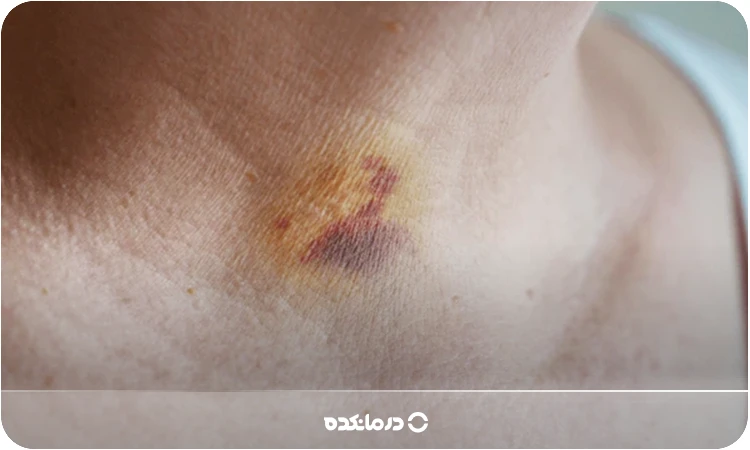
5- Hematoma
Hematoma refers to the accumulation of blood in the soft tissue after the rupture of small vessels. Ankle swelling caused by hematoma has the following clinical features:
- You feel a soft or hard lump under the skin.
- The skin color is from red to dark purple.
- There is local warmth.
- Sometimes the swelling is accompanied by throbbing pain.
What is the cause of ankle swelling? (The most common underlying diseases)
Ankle swelling caused by systemic and underlying diseases is often a sign of dysfunction of the main body organs and is chronic and progressive in nature. This type of swelling is often bilateral and similar and is accompanied by other general symptoms such as shortness of breath, fatigue or skin changes. When this happens:
- Blood flow in the legs is weak and fluid accumulates in the ankles.
- Kidneys cannot remove excess water from the body.
- Sometimes an infection or foot ulcer causes swelling.
Foot swelling in Diabetes is not a simple matter and It must be checked by a doctor. This swelling can be a sign of kidney problems or diabetic ulcers.
2- Heart failure
When the heart cannot deliver enough blood to the whole body, the pressure inside the veins increases. This pressure causes fluid to leak from the walls of the vessels to the surrounding tissues and accumulate. The result of this is swelling of ankles and sometimes feet, which can be one of the signs of heart problems. The clinical features of ankle swelling caused by heart failure are:
- Bilateral and soft swelling that starts from the ankle and reaches the leg.
- Swelling intensity increases at the end of the day.
- Swelling decreases by raising the legs.
- Swelling can be accompanied by shortness of breath, early fatigue, abdominal swelling or rapid weight gain.
- In an advanced state, the swelling may even extend to the knees and thighs.
3- Kidney diseases
In kidney failure or nephrotic syndrome, the kidneys can no longer regulate the water and salt in the body properly, or a lot of protein is excreted in the urine. As a result, fluids do not remain in the veins and leak into the tissues, causing swelling. Its clinical features are as follows:
- Swelling is usually bilateral and diffuse.
- In nephrotic syndrome, swelling in the face and around the eyes is more pronounced in the morning and is transferred to the lower limbs during the day.
- It may be accompanied by foamy urine, decreased urine volume, or high blood pressure.
- Swelling in these patients remains even at rest.
4- Liver diseases
In liver diseases such as cirrhosis, because the liver cannot make enough protein, the amount of albumin (the main blood protein) in the blood decreases. As a result, the water inside the veins escapes and accumulates in the tissues. On the other hand, the increase in pressure in the veins related to the liver can also lead to more fluid accumulation in the abdomen and legs and cause swelling. The clinical features of this swelling are:
- Swelling is usually bilateral.
- Swelling is associated with ascites (accumulation of fluid in the abdomen), yellowing of the skin and eyes, fatigue and hair loss.
- The skin of the leg may become thin and shiny.
- In severe cases, the fluid may also spread to the genital area or the abdominal wall.
5- Inactivity Thyroid
An underactive thyroid causes the accumulation of mucous material in the skin and subcutaneous tissue and causes swelling called Myxedema. This swelling has the following clinical features:
- Swelling is non-pitting; It means that a depression is not created by finger pressure.
- The skin is cold, dry and pale.
- Ankle swelling may be associated with fatigue, weight gain, constipation, slow heart rate and hair loss.
- Swelling is usually seen in the feet, wrists and even eyelids and face.
6- Chronic venous insufficiency
In this Venous leg valve disease does not function properly and blood accumulates in the legs instead of returning to the heart. Its clinical features are:
- There is chronic and gradual swelling in one or both legs.
- A feeling of heaviness and vague pain in the leg, especially when standing for a long time.
- Due to leakage of red blood cells and iron accumulation, the skin may turn dark or brown.
- In the advanced stages, venous ulcers around the inner ankle develop.
7- Lymphatic disorders
When the lymph drainage path is blocked due to surgery, trauma, tumor or infection, the lymph fluid collects in the tissues and causes swelling in the ankle. Its clinical features can include the following:
- Swelling is firm and does not create a cavity
- Ankle swelling is usually unilateral and starts from the ankle and gradually spreads upwards.
- The skin becomes thick and hard.
- Swelling does not improve with rest or elevating the foot.
The cause of ankle swelling with pain
Ankle swelling with pain is usually a sign of a disease in the deeper tissues of the body. When this swelling is accompanied by pain, warmth, redness or sensitivity to touch, you should take it seriously. Because it is probably caused by inflammation, tissue damage, infection or blood flow disorder. The most important causes of ankle swelling with pain are:
1- Deep vein thrombosis (DVT)
In this case, a blood clot forms in the deep veins of the leg or thigh. This clot prevents blood from returning to the heart, and as a result, causes fluid to accumulate in the leg. If the blood clot breaks off, it can travel to the lung and cause a pulmonary embolism. Pulmonary embolism is dangerous and can even cause death. This condition requires immediate medical treatment.
If your ankle is swollen and painful, seek treatment immediately
With just a few simple clicks, make an appointment with a doctor The best orthopedic doctor in Tehran2- Soft tissue infection (cellulitis)
When Bacteria penetrate into the subcutaneous tissue or skin, causing inflammation and swelling. This type of foot edema has the following clinical features:
- Local swelling, painful and accompanied by clear redness
- Warm, shiny skin and sometimes accompanied by blisters or discharge
- Possibility of fever and chills
This complication is usually unilateral and requires antibiotics and sometimes hospitalization.
3- Joint inflammation (Arthritis)
Inflammation of the ankle joint due to inflammatory diseases such as gout, rheumatism or arthritis can lead to ankle swelling. This swelling has the following clinical features:
- Swelling in the joint area is associated with severe pain and movement limitation.
- The skin on the joint becomes warm and red.
- In gout, the pain may be sudden and severe and even touching the bed sheet becomes annoying.
"Gout is a form of arthritis that causes swelling in joints close to the extremities, such as the ankles.
Gout occurs when uric acid builds up and forms crystals in the joints or surrounding tissues, resulting in inflammation. Gout occurs due to the accumulation of uric acid in the body. Excess uric acid forms in the form of crystals in joints or tissues and causes inflammation and pain.quoted from the site medicalnewstoday
4- Physical damage
This type of swelling is usually localized and unilateral, and with rest, Ice, pressure, and leg elevation will improve.
What is the cause of painless ankle swelling?
The most common causes of painless ankle swelling can be summarized as follows:
- Chronic venous insufficiency
- Lymphedema
- Kidney failure
- Heart failure
- Hepatic failure
- Oedema caused by drugs
Important point: Ankle swelling caused by chronic venous insufficiency is usually painless. But some patients have a feeling of heaviness, burning, or vague mild pain in the leg, which worsens with standing and decreases with rest.
What is the cause of swelling of the right ankle with pain?
When the swelling is only in the right ankle and with pain, its origin is probably local and mechanical or vascular. The following table shows the comparison of the four main causes of right ankle swelling with pain: Comparison Deep vein thrombosis (DVT) Sprain and injury Infection (Cellulitis) Venous insufficiency Sudden onset of pain after trauma Gradual onset with fever Gradual type of intense and deep localized superficial and burning fuzzy and heavy skin changes It was bright or red, the area was red and hot, dark or normal. The degree of sensitivity to deep touch in the leg around the ankle on the skin surface. Mild. The degree of danger. and body fluid
If ankle swelling during pregnancy is sudden, painful, one-sided or accompanied by symptoms such as headache, blurred vision, shortness of breath or increased blood pressure, you should see a doctor immediately. This type of ankle swelling during pregnancy can have the following reasons:
- Preeclampsia (toxicity of pregnancy)
- Deep vein thrombosis (DVT)
If you are curious to know What are the symptoms of foot pain during pregnancy, you can read the article related to it in Darmankade Read.
Mild to moderate leg swelling during pregnancy is usually normal and nothing to worry about.What is the cause of ankle swelling and itching during pregnancy?
Ankle swelling and itching during pregnancy is usually caused by dryness or stretching of the skin and retention of natural pregnancy fluid. This problem gets better with moisturizer and some rest. But if the itching is intense, nightly and continuous, and at the same time you are facing yellow and dark urine, nausea or insomnia, you should definitely do liver tests to make sure there is no intrahepatic cholestasis.
Intrahepatic Cholestasis of Pregnancy (ICP) is a rare liver disorder during pregnancy. This disorder often occurs in the third trimester of pregnancy, i.e. weeks 28 to 38, and the main cause is severe itching without skin complications in pregnant women.
What is the cause of ankle swelling in the elderly?
Swelling ankles in the elderly can have various causes, including:
- blood circulation problems
- heart failure
- diseases Kidney
- Liver diseases
- Drugs
- Arthritis
- Long-term immobility or sitting
- Obesity and overweight
Reasons of ankle swelling after a fracture
The cause of ankle swelling after a fracture is usually a combination of the following factors:
1- The body's natural reaction to Injury
After a fracture, the body shows a strong inflammatory reaction to repair the bone. Blood vessels in the injured area dilate to allow white blood cells and repair materials to reach the fracture site. This process causes fluid to leak into the tissues and swelling around the ankle. This type of swelling is normal in the first weeks after a fracture and is considered a part of the recovery process. 2- Changes in blood flow When the leg is cast or there is little mobility, the flow of lymph and venous blood slows down. As a result, fluid accumulates in the tissues around the wrist and leg and remains for several weeks even after the cast is removed. This swelling is soft and painless and usually decreases by keeping the leg elevated.
3- Disruption of lymphatic drainage
In some cases, due to open surgery or damage to soft tissue such as muscle and skin, the normal path of blood and lymph return is disturbed. For this reason, you face swelling in the ankle. This swelling is persistent and hard, and sometimes it is accompanied by a feeling of heaviness or numbness.
4- Infection
If the fracture or wound becomes infected, it is accompanied by swelling, redness, heat, throbbing pain, and sometimes fever. This condition requires immediate medical examination.
Take leg swelling seriously and see a doctor to investigate its root cause.What is the cause of leg swelling in cancer patients?
Leg swelling occurs in cancer patients for the following reasons that require medical attention:
- Chemotherapy or hormonal drugs
- Decreased blood protein (albumin)
- Disturbance in liver, kidney or Heart
- Tumour pressure on blood vessels or lymph nodes
- Long-term immobility or general weakness
Symptoms of ankle edema
Symptoms of ankle edema usually vary according to its cause. But in general, the following specific symptoms can be mentioned:
- Increasing the volume and size of the foot or ankle
- Feeling heaviness or stiffness in the foot
- Skin sagging with finger pressure
- Change in skin color
- Mild to moderate pain or burning
- Local warmth or feeling of heat in the foot
- Dry, cracked or itchy skin of the foot
How is the diagnosis of leg edema?
Diagnosis of leg edema means finding the main cause of fluid accumulation in the leg tissues, not just seeing the swelling. The diagnosis process by an orthopedic doctor can include the following steps:
- Taking a detailed history and examining underlying diseases
- Physical examination
- Blood and urine tests
- Doppler ultrasound of the leg
- Echocardiography (Echo)
- MRI imaging or CT C-scan
What should be done to treat ankle swelling?
In order to treat ankle swelling, the main cause must be found first. Because the treatment measures for edema caused by venous, heart, kidney failure or injury are different. But in a general and practical way, the methods can be divided into the following categories:
1- Home treatment of ankle swelling
Solutions for treating ankle swelling at home include the following:
- Keeping the feet up: When resting, place the feet above the level of the heart. This helps blood and fluid return to the heart.
- Movement and light exercise: Walking, stretching and ankle rotation increases blood and lymph flow and reduces swelling.
- Wearing medical compression stockings: These stockings create gentle pressure on the leg and ankle and help better blood flow. For this reason, they prevent the accumulation of fluid in the ankles and the aggravation of problems such as varicose veins.
- Reduce salt intake: Excessive sodium intake causes water retention, so limit salt intake.
- Gentle foot and ankle massage: Foot massage helps fluid return. but you shouldn't do it with too much pressure and intensity.
- Cold compress: Applying a cold compress for 10-15 minutes reduces local inflammation and the feeling of heaviness in the ankle.
2- Treatment of leg swelling with medicine
If the swelling is caused by heart failure, kidney, liver or inflammation, suitable drugs such as diuretics, anti-inflammatory drugs or special drugs that Prescribed under the supervision of a specialist doctor, they can be effective in reducing and quickly treating leg swelling.
3-Ointment for leg swelling
Ointments are usually not the main treatment for leg swelling, because most of the time, leg swelling is caused by internal body problems such as heart failure, kidney disease, liver problems or poor blood flow in the legs. In these conditions, applying the ointment has no effect on the underlying cause, it may only slightly reduce the feeling of heaviness or inflammation of the skin. But if leg swelling is caused by injury, sprain, sprain or joint inflammation, some anti-inflammatory gels and ointments such as diclofenac gel or ketoprofen can be useful, because they reduce the inflammation in the same area.
To choose the exact treatment method and check the root cause of leg swelling, consult Online Orthopedist to It helps you to get faster and safer results.
4- Anti-edema pills
There is no generic pill without a prescription that can be called the best pill for edema of the feet, because the treatment of edema of the feet depends entirely on its cause. If leg swelling is caused by internal body problems such as heart, kidney or liver disease, excess fluid can be removed and swelling can be reduced only with diuretics under the supervision of a doctor. But if the swelling is caused by inflammation or a local injury such as a sprain or joint inflammation, anti-inflammatory drugs such as ibuprofen can reduce the inflammation and pain, however, they do not treat the original swelling. If the swelling is due to allergies, taking an anti-allergy drug (antihistamine) can be effective. In rare and severe cases where swelling is caused by autoimmune or inflammatory diseases, the doctor may prescribe oral steroids.
5- Physiotherapy
Physiotherapy under the supervision of a physiotherapist is useful for swelling caused by immobility, injury or venous weakness. Movement exercises, massage and elevating the leg increase blood and lymph flow and reduce swelling. However, physiotherapy alone is not enough for swelling caused by heart or kidney problems, but it can be a complementary treatment.
What should we do to treat ankle swelling in pregnancy?
Treatment of ankle swelling in pregnancy includes supportive and home solutions rather than drug intervention. Among them, the following can be mentioned:
- Keeping the foot above the level of the heart
- Light walking
- Wearing special pregnancy socks
- Avoid standing or sitting for a long time
- Wearing comfortable shoes and clothes
- Putting a stool under the feet when sitting
It should be mentioned, If the leg swelling during pregnancy does not decrease after one week or if it becomes more severe, you should definitely see a specialist doctor.
What are the ways to prevent leg swelling?
To prevent leg swelling, you can do the following simple and effective measures:
- Regular movement and exercise
- Keeping your feet above the level of the heart when resting
- Reducing salt consumption
- Wearing compression stockings
- Having an appropriate weight and a healthy diet
- Drinking enough water
- Avoid standing or sitting for long periods of time
Is leg swelling dangerous?
If leg swelling is accompanied by the following, you should see a doctor immediately:
- Severe pain and redness in one leg: In this situation There is a possibility of a blood clot or deep vein thrombosis.
- Shortness of breath and chest pain: If the blood clot has gone to the lung, it causes such complications.
- Fever and widespread redness: These conditions can indicate an infection.
- Sudden swelling with rapid weight gain: Heart or kidney failure often accompanies these symptoms.
Ankle swelling in several lines
Ankle swelling is not always dangerous, but any swelling, even mild, should be taken seriously. Identifying the root cause, routine care and prevention can prevent pain, fatigue, dry skin and even serious heart or kidney problems. Moving, keeping your feet elevated, reducing salt and wearing compression socks are simple methods you can do for this purpose.
If you are worried about ankle swelling at Daramankade, you can consult online orthopedic doctors and ask your questions. In addition, you can book an in-person appointment through the online system.
Common questions
What are the symptoms of right ankle swelling?Unilateral ankle swelling usually refers to a local problem such as injury, fracture, strain, infection or blood clot (DVT)
What is left ankle swelling?Similar to the right ankle, unilateral left ankle swelling usually Caused by damage or obstruction of blood circulation. If it is accompanied by pain, redness, or warmth, it should be checked immediately.
What is the cause of ankle swelling and itching during pregnancy?Swelling of the feet during pregnancy is usually normal, but severe itching without skin rash may be a sign of intrahepatic cholestasis of pregnancy. In this case, you should consult a doctor.
What is the cause of swelling of the hands and feet in the morning?Swelling of the hands and feet in the morning usually occurs for several common reasons:
- Fluid retention at night
- Weak heart or kidney function
- Sleeping position
- Joint inflammation or rheumatic diseases
- Blood protein deficiency
Ankle swelling, whether in the elderly, pregnant women or after an injury, usually decreases gradually and requires time. There is no quick fix for immediate treatment.
Source: nhs | webmd | mountsinai
Top doctors: Dr. Afshin Taheri Azam | Dr. Ramin Arjang | Dr. Shahram Shirvani Borojni | Doctor Morteza Ramezani | Dr. Ramin Talebian Khorasani | Dr. Amir Hossein YazdaniWas this article useful for you?
Average score 3.4 / 5. Number of votes 86
No rating yet
{ "@context": "http://schema.org", "@type": "CreativeWorkSeries", "aggregateRating": { "@type": "AggregateRating", "bestRating": "5", "ratingCount": "86", "ratingValue": "3.4" }, "image": "https://www.darmankade.com/blog/wp-content/uploads/2025/10/1-10.webp", "name": "What is the cause of ankle swelling [with pain or without pain]? The best treatment method", "description": "What is the cause of ankle swelling [with pain or without pain]? The best treatment method"}![Which fruit increases blood pressure [high and low]? 18 effective fruits](/storage/posts/covers/2026_01_08/ef00bb701cbb99e90a24ba8d73265ba4c08936335e859a33b69553f5c5e737a2.webp)

![For whom is rhinoplasty dangerous? [10 groups+cause+solution]](/storage/posts/covers/2026_01_06/3e06a993c87e243daaf67dc69ac3e484d377b2708c93656820e0084ea4f080d6.webp)
![What fruits have vitamin B12? [13 fruits + consumption tips]](/storage/posts/covers/2026_01_06/dfaeceb7cb9a203805aeba8715bf7cdea6f5cb2b5b9314e1898807545e874bb1.webp)
![Is nasal massage necessary after surgery? [Training + 5 effective benefits]](/storage/posts/covers/2026_01_06/1f2686c8d522130d256828a51d7d46594dbde31ec2253325e6a8a38f04094789.webp)
![The best drops to reduce eye pressure [14 powerful drugs + method of administration]](/storage/posts/covers/2026_01_06/0177c50098eb80d878d1c883d09ae31ad2f489b17e1288f52018e3f8ef213e5f.webp)
![What is hair filler? [9 benefits, how to inject + durability of hair filler]](/storage/posts/covers/2026_01_06/c21c5e1ff48e9af8214111dfe0b867586f298e3d74a95fadda02b0b04df12598.webp)
![The strongest antibiotic for tonsil infection [7 drugs + method of administration]](/storage/posts/covers/2026_01_06/7b5adf6bb8cf556824d96570b6adba58f824b3a7f248993cfaafb73c0b5b8610.webp)
![Garlic pills for weight loss [4 effective benefits and side effects + how to use]](/storage/posts/covers/2026_01_06/c49f08b482d5860218c8635e48194a50f2ed48b51ef15925aa2d73d8393ff3ab.webp)
![What foods increase eye pressure? [8 harmful foods and drinks]](/storage/posts/covers/2026_01_06/52929c4d1b9ed7916d3fc5a8e45060479fb186f332dd217e68905f71f89a33f0.webp)
![What foods lower eye pressure? [18 useful foods]](/storage/posts/covers/2026_01_06/f180eb15f8e64fc9b386f9d5dc7936a5e416af36032be3bdcdf9054925a21d43.webp)
![itchy scalp; 18 causes [medical treatment + 11 home remedies]](/storage/posts/covers/2026_01_06/a1e116ec1c6243fd5c4e6fb951da5cb33bbd92a09c44e29b845852a86f550681.webp)
![What is intestinal colitis and what are its symptoms? [3 causes + definitive treatment]](/storage/posts/covers/2026_01_06/d3384e9221c036ff3eb447c69ffabb109dd6c0c35f5e5f0af775c4545cfd7ea5.webp)
![The best pills for irritable bowel syndrome [10 powerful drugs]](/storage/posts/covers/2026_01_06/70f02d6808fab88d67b0c6734a623e5e71982d323dbd2fb8158c29669849b813.webp)