Content List
How much amniotic fluid should be?
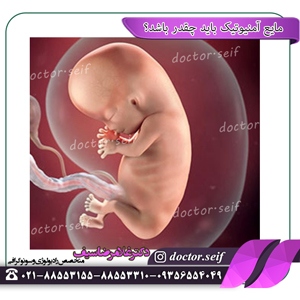
Amniotic fluid is a light and yellow liquid that is created in the gestational sac 12 days after conception. In fact, the fetus floats in this liquid. The important role of this liquid is to protect the fetus. What effect does the amount of this liquid have on the growth and health of the fetus? To know this issue, stay with us.
What is amniotic fluid and how is it created?
During the first 14 weeks of pregnancy, this liquid enters the water bag through the mother's blood flow. in Second trimester of pregnancy The fetus feeds on this liquid and urinates. This urine is reabsorbed by the fetus from this liquid. This process is repeated every few hours. In fact, a large part of this liquid is created from the urine of the fetus.

Measuring the amount of amniotic fluid
One of the methods of measuring the volume of amniotic fluid is to calculate the amniotic fluid index. To obtain this index, the uterus is divided into four equal quadrants and then the vertical depth of the largest amniotic fluid package is measured in each quadrant and the resulting numbers are added together. The value of AFI varies according to the gestational age. In general, after the 30th week of pregnancy, the normal value of AFI is between 10-20 cm. A value less than 5cm of oligohydramnios and more than 24cm hydramnios is defined.
Research has shown that AFI is reliable in determining the normality or increase of amniotic fluid, but it is not accurate enough in the diagnosis of oligohydramnios. Whenever AFI is defined as less than 24-25 cm, hydramnios significantly increases perinatal mortality.
Factors increasing amniotic fluid index
- At high altitudes (6000 feet), the index of amniotic fluid is higher.
- Hydration of the mother increases the above index. This effect disappears within 24 hours.
Reducing factors of amniotic fluid index
- Liquid restriction
- Dehydration
increased amniotic fluid or hydramnios
The prevalence of hydramnios is about 1% of pregnancies. with a criterion that is somewhat optional. A volume of more than 2 liters of amniotic fluid or AFI greater than 24 cm is called hydraamnios. In most cases, hydraamnion has a chronic state, which means a gradual increase in fluid and usually starts from the 30th week of pregnancy.
In acute hydramnios, which is a rare condition and usually starts from the 20th week of pregnancy, the increase in fluid volume is very sudden and the uterus reaches the sternum within 3-4 days. Acute hydraamnion is often associated with monozygotic twins or severe fetal abnormalities and has a poor prognosis for the fetus.
For more information on the field Pregnancy ultrasounds can be done with the radiology center and sonography of Dr. Seif or visit Instagram of the doctor.
Dr. Saif's ultrasound center contact numbers: 88553310
Pathogenesis of hydraamnios
The nature of amniotic fluid is similar to extracellular fluid. In the second trimester of pregnancy, the fetus starts urinating, swallowing and inhaling amniotic fluid. These trends play a role in controlling the volume of amniotic fluid.
If fetal swallowing is inhibited, like what is seen in esophageal atresia, hydramnios occurs. In cases of anencephaly and spina bifida, increased leakage of liquid from the bare meninges into the amnion cavity or increased fetal urine (as a result of the movement of the brain-spinal centers without covering or increased urine excretion due to arginine vasopressin secretion disorder, which has an antidiuretic function) may cause hydramnios.
Cases of hydramnios, which are common in cases of maternal diabetes that occur in the third trimester, are still considered unjustified. One of the possible explanations in this field is that maternal hyperglycemia causes fetal hyperglycemia and this causes osmotic diosis.
Symptoms of increased amniotic fluid or hydramnios
Maternal symptoms of hydramnios are mainly caused by the pressure that the amniotic fluid puts on the uterus, and as a result, the extremely dilated uterus puts pressure on the adjacent organs and causes the following symptoms:
- Shortness of breath: sometimes the mother is only able to breathe when she is on her feet.
- Oedema: the enlarged uterus disrupts venous return, especially in the lower limbs, valve and abdominal wall.
- Oliguria: In rare cases, a large uterus causes obstruction of the ureter.
- Mirror syndrome: in which the condition of the mother resembles the condition of the fetus, and the mother suffers from slight edema and proteinuria.
Diagnosis of increased amniotic fluid or hydramnios
It is usually suspected clinically and confirmed by ultrasound examination. The main clinical findings in hydramnios are the enlargement of the uterus with difficulty in touching the small parts of the fetus and auscultating the sounds of the fetal heart. In severe cases, the uterine wall may be stretched to such an extent that it is not possible to touch any part of the fetus. The mother may complain of shortness of breath and discomfort.
hydramnios treatment
The goal ofhydramnios treatment is to reduce maternal symptoms and if possible to continue the pregnancy. If possible, its cause should be determined and the karyotype of the fetus should be determined.
If faced with hydramnios, the mother should be hospitalized. The next steps depend on the conditions of the mother and the fetus, its cause and degree, and the age of the pregnancy. Diabetes should be carefully controlled. Fetal abnormalities will be treated according to the choice of delivery method and time.
.