
Table of contents
- Common symptoms of tonsils in most patients
- Appearance symptoms of tonsils in oral examination
- Symptoms of chronic tonsillitis
- Symptoms of tonsillitis in children
- Symptoms of tonsillitis in adults
- The difference between the symptoms of viral tonsillitis and Bacterial
- When are tonsillitis symptoms considered dangerous?
- Conclusion
Tonsil symptoms usually appear when the palatine tonsils (tonsils) become inflamed due to a viral or bacterial infection (especially group A streptococcus) and cause pharyngitis or tonsillitis. These symptoms are more common in children and teenagers and can range from a mild sore throat to high fever and severe difficulty swallowing. Early recognition of symptoms, especially the presence of white plaques on the tonsils or swollen lymph nodes in the neck, is essential for prompt diagnosis and prevention of complications. This article by Dr. Toto was compiled with the aim of a detailed examination of the common and warning signs of tonsillitis, the difference between viral and bacterial symptoms, and the time to see a doctor immediately so that patients can take timely action.
General symptoms of tonsils in most patients
General symptoms of tonsillitis usually appear in the form of sore throat, swelling of the tonsils, and a feeling of discomfort in the throat, and can be accompanied by fever, bad breath, and swelling of the lymph nodes in the neck. The severity of these tonsillitis symptoms varies depending on the type of infectious agent (viral or bacterial) and the state of the individual's immune system. In the following, we have explained the symptoms of tonsillitis in most patients:
- Sore throat and burning throat
- Difficulty in swallowing and speaking
- Fever and chills
- Bad breath and unpleasant taste
- The presence of white or purulent spots on the tonsils
- Ear and jaw pain
- Swelling of neck lymph nodes Redness and enlarged tonsils
- Purulent bumps or white spots
English text:
quoted from myhealth.alberta
The tonsils are in the back of the throat and are part of the immune system.
Persian translation:
The tonsils are located at the back of the throat and are part of the body's immune system.
1. Sore throat and burning throat
The most common symptom of tonsillitis is sore throat, which is often felt as burning, itching or pain in the back of the throat. Such pain usually worsens when swallowing. This pain is mild or severe in different people, and in some patients it also spreads to the neck. Although diseases such as colds, stomach reflux, and other infections also cause sore throats, in inflamed tonsils, the pain is usually more severe and associated with their swelling.

2. Difficulty in swallowing and speaking
Swollen tonsils make swallowing food and even liquids painful and difficult. In severe cases, the person has a drooling mouth or difficulty speaking. Throat inflammation also affects the vocal cords and causes the voice to change, hoarseness or suffocation.3. Fever and chills
Fever is the body's natural response to infection, and it is more common and severe in the case of inflamed tonsils, especially the bacterial type. Generally, fever is accompanied by chills, feeling weak and lethargic and indicates that the body's immune system is active in fighting the infection.
4. Bad breath and unpleasant taste
Bad breath and a bad taste in the mouth are annoying symptoms of tonsillitis. This symptom usually appears due to the accumulation of bacteria and purulent secretions on the surface of the tonsils. This condition continues until treatment or complete recovery and is often accompanied by swelling of the lymph nodes in the neck.5. Ear and jaw pain
Pain caused by a tonsil problem can spread to the ears or jaw. This ear pain is usually caused by the nerve connection between the throat and the ear. Pain is a sign of the severity of tonsillitis, not necessarily an ear infection. It is often seen with sore throat, painful swallowing and swollen tonsils.
6. Swelling of neck lymph nodes
Sensitized and swollen lymph nodes neck is one of the common symptoms of tonsils. As part of the immune system, these glands become active in response to infection and are usually palpable as painful lumps on both sides of the neck.

Appearance symptoms of tonsils in oral examination
On oral examination, inflamed tonsils usually show specific changes in color, size, and surface. The most common symptoms are redness and enlarged tonsils; This symptom indicates active inflammation. In some other patients, the surface of the tonsils looks uneven or the edges of the tonsils are swollen and sensitive, which is usually associated with pain when swallowing. In the following, we have explained the appearance of tonsils in oral examination.
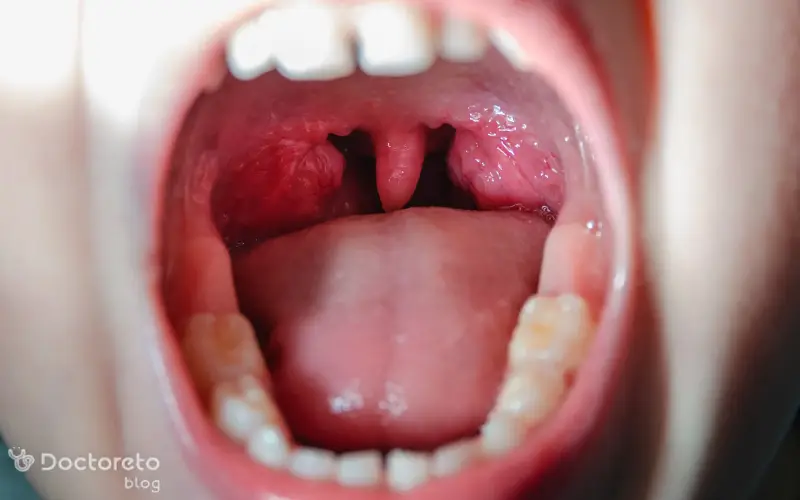
photo of tonsil How is it?
1. Redness and enlarged tonsils
On oral examination, the tonsils are usually red, swollen and larger than normal. This redness and inflammation are clear signs of tonsil infection. This condition is accompanied by pain when swallowing and sometimes white or purulent discharge. These changes indicate that the immune system is active in dealing with the infection.
2. Purulent bumps or white dots
The presence of white spots can be seen in viral or bacterial infections, and clinical evaluation and sometimes tests are needed for a definitive diagnosis. These spots are accompanied by severe sore throat, swelling of neck lymph nodes and sometimes fever and indicate that the infection is active and requires medical examination and treatment.
English text:
White discoloration may appear only on the tonsils or it may appear around the tonsils and throughout the mouth. The discoloration may look like streaks in the back of the throat or blotches on or around the tonsils. Farsi translation: The discoloration may appear only on the tonsils or around the tonsils and throughout the mouth. This discoloration can be in the form of lines at the end of the throat or spots on the tonsils and their surrounding areas.chronic tonsillitis symptoms
The main symptom of chronic tonsillitis is a sore throat that usually continues. This condition is associated with symptoms such as voice change, pain when swallowing, mild fever, headache, red and swollen tonsils, seeing white or yellow spots on the tonsils, swollen lymph nodes in the neck and jaw, chills, earache, heartache, neck stiffness and bad breath.
Symptoms of tonsillitis in children
Tonsillitis in children is similar to a severe cold or flu. In such conditions, the tonsils usually become red and swollen, and the child has a sore throat, difficulty swallowing, high fever, cough, headache, nausea, earache, and feeling tired. In more severe cases, purulent spots on the tonsils, bad breath, and painful swelling of the neck lymph nodes can also be seen.Symptoms of tonsillitis in adults
Although tonsillitis is more common in children, adults are also affected. Symptoms of tonsils in adults usually include a sore throat with a feeling of pain in the ear, difficulty or pain when swallowing, fever, headache, bad breath, hoarseness, heartache, pain or stiffness in the neck, swollen tonsils and the presence of a white or yellow coating on them, and swollen lymph nodes in the neck.
The difference between the symptoms of viral and bacterial tonsillitis
Bacterial tonsillitis usually has more severe symptoms than the viral type. Severe and local sore throat, high fever (usually above 38°C) and the presence of pus spots are the obvious signs of bacterial type. In contrast, viral tonsillitis is often milder. This type of tonsillitis is generally associated with cold symptoms such as runny nose and cough.
Viral infection Bacterial infection Mild sore throat, burning throat and mild swelling of the tonsils Severe, painful sore throat with significant swelling of the tonsils Usually with discharge Runny nose, cough, and cold symptoms are associated. High fever, chills, and feeling weak are more common. Treatment is usually done with rest and fluids and recovery takes a few days. Antibiotics and medical treatment required White spots or pus may be present, but the diagnosis is definitive. White or purulent spots on the tonsils are common. Neck lymph nodes become slightly sensitive or swollen. Swelling and sensitivity of the neck lymph nodes are more and painful. Chronic symptoms are less common. Chronic inflammation may be accompanied by severe and long-lasting symptoms. In this table, the symptoms of viral and bacterial tonsillitis are compared. When are tonsil symptoms considered dangerous?
Symptoms of tonsillitis are considered dangerous when they indicate airway obstruction or the spread of infection to deep tissues. If the patient experiences severe difficulty swallowing, inability to open the mouth, or involuntary salivation, it is an emergency and requires tonsil treatment.
Also, changing the voice to thick or one-sided swelling of the throat can be a sign of abscess formation. In this situation, there is a risk of infection entering the blood or suffocation, and you should not waste time with home remedies, but an immediate visit to the emergency room is vital to maintain the patient's health.
Warning and serious symptoms of tonsillitis are:
- Severe respiratory disorder
- Inability to swallow (dysphagia)
- locking of the jaw or great difficulty in opening the mouth
- Asymmetric inflation
- Very high fever and severe chills
- Neck stiffness
Conclusion
Tonsillitis is a condition that manifests itself with general symptoms such as sore throat, fever and difficulty in swallowing, and timely diagnosis of its cause is vital to start the correct treatment. While most tonsillitis symptoms improve with rest, the onset of life-threatening symptoms such as shortness of breath, inability to swallow saliva, or a locked jaw is a sign of an emergency and the possibility of an abscess. If the symptoms are accompanied by severe cases, be sure to see a general practitioner or an ear, nose and throat specialist.
Your doctor takes care of your health!