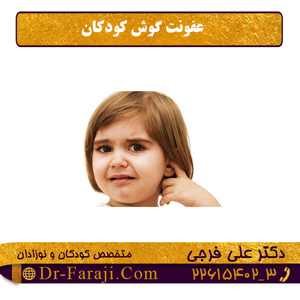


عفونت گوش در کودکان یکی از مشکلات شایع پزشکی است که معمولا باعث درد، بی قراری و کاهش شنوایی موقت در کودکان میشود. این عفونت که اغلب به دلیل تجمع مایع در پشت پرده گوش میانی و رشد باکتریها یا ویروسها رخ میدهد، در پی سرماخوردگی یا آلرژی ایجاد میشود. کودکان به دلیل ساختار خاص لولههای استاش و سیستم ایمنی پایین نسبت به بزرگسالان، بیشتر در معرض این نوع عفونت قرار دارند که در این مقاله به توضیحات بیشتر خواهیم پرداخت.

عفونت گوش در کودکان چیست؟
عفونت گوش در کودکان، به التهاب و عفونت گوش میانی اطلاق میشود که ناشی از ویروس ها یا باکتری ها است. This infection occurs mostly in children under 5 years of age, because the structure of the Eustachian tube is shorter and more horizontal in them, and it facilitates fluid accumulation. Symptoms include ear pain, fever, restlessness, sleep problems, and temporary hearing loss. Depending on the severity of the infection, treatment includes taking painkillers, antibiotics in bacterial cases, or just monitoring symptoms in mild cases.
Ear infection is one of the common diseases among children, in fact, ear infection is very common in children aged two to seven years. Children who are fed by their mother's milk have more immunity against respiratory infections and ear infections due to the presence of antibodies in the mother's milk. Normally, any fluid that enters the area that connects the middle ear to the back of the nose and throat is quickly drained through the Eustachian tubes. But if drainage is not done, as often happens during colds, sinus infections, even allergies in children, the fluid in the middle ear does not drain and causes infection.
If you see the symptoms that we will talk about in the following, best pediatrician Do it.
Symptoms of ear infection in children
- Ear pain
- Fever
- Restlessness and excessive crying due to pain and discomfort.
- Difficulty sleeping, especially when the child is lying down, because the pressure in the middle ear increases.
- temporary hearing loss due to fluid accumulation in the middle ear.
- Liquid discharge from the ear in case of rupture of the eardrum.
- Decreased appetite, especially in babies who suck milk causes pressure and pain in the ear.
- Balance problems due to the effect of infection on the inner ear.
Read more: Colds in Children
Causes of ear infection in children
The causes of ear infection in children include the following factors:
- Upper respiratory infections: such as colds and flu, which are transmitted to the middle ear through the eustachian tube.
- Structure of Eustachian tube: In children, this duct is shorter and more horizontal, which increases the possibility of fluid accumulation and infection.
- Weak immune system: Children are more susceptible to infections due to their immature immune system.
- Allergies: inflammation caused by allergies blocks the airway and Eustachian tube.
- Liquid accumulation in the middle ear: which provides a suitable environment for the growth of bacteria and viruses.
- Exposure to cigarette smoke: Cigarette smoke irritates the respiratory tract and increases the possibility of ear infection.
- Family history: genetics play a role in frequent ear infections.
Diagnosis of ear infection in children
Diagnosis of ear infection in children is done by examining clinical symptoms and physical examination by the best pediatrician. Using an instrument called an otoscope, the doctor looks inside the child's ear to look for signs such as redness, swelling, or fluid accumulation behind the eardrum. Also, the doctor uses hearing tests to evaluate the pressure and movement of the eardrum. Information provided by parents about the child's behavior, such as ear pulling, restlessness, or fever, is also helpful in diagnosis. In suspected cases of severe or frequent infections, additional tests are needed.
Read more: Malnutrition in Children

Treatment of ear infection in children
The treatment of ear infection in children varies depending on the severity of the infection and the age of the child. In mild cases, the doctor recommends a symptom control approach, meaning that the child's symptoms are monitored for a few days without antibiotics, as many infections clear up on their own. Painkillers such as acetaminophen or ibuprofen are used to reduce pain and fever. If a bacterial infection is diagnosed or the symptoms persist, antibiotics such as amoxicillin are prescribed.
Prevention of ear infection in children
Prevention of ear infection in children includes compliance with various measures, but it cannot be said that compliance with these measures will prevent this problem 100%.
- Wash your hands regularly to prevent the transmission of respiratory infections. Exposure to cigarette smoke increases the risk of ear infection
- Mother's milk contains antibodies that help strengthen the child's immune system.
- Vaccines such as influenza and pneumococci prevent the occurrence of underlying infections.
- Avoid contact with sick people, especially during colds and flu.
- Strengthening the child's immune system with healthy nutrition and providing a healthy environment
FAQ
Are ear infections in children contagious?
The ear infection itself is not contagious, but respiratory infections that lead to ear infections are contagious.
Can an ear infection damage a child's hearing?
In rare cases and without proper treatment, an ear infection can lead to temporary or permanent hearing loss.
Can ear infections come back?
Some children get frequent ear infections due to certain conditions such as allergies, structural problems of the eustachian tube, or a weak immune system.
How long does it take to heal an ear infection?
Ear infection heals in 2 to 3 days with or without treatment, but in some cases it takes up to a week.
Conclusion
Ear infection in children is a common problem but it can be prevented and treated, and its complications can be avoided by taking into account the initial symptoms and visiting the doctor on time. Parents play an important role in taking care of children's ear health by observing hygiene principles, eating healthy and paying attention to vaccination. Also, knowing the warning signs and taking preventive measures will reduce the experience of frequent infections and ensure the child's growth and hearing in the best possible way. Finally, the cooperation of parents with doctors and specialists to properly manage this problem is the main key to maintaining the health and vitality of children.