مقاله تخصصی
Root canal treatment Comprehensive guide + signs, steps and cost
3 weeks ago
109 بازدید

Dr. Mohammad Hossein Tajik
تهرانdentist
Tooth root treatment | Comprehensive guide + symptoms, steps and cost |
Endodontics: A comprehensive guide, from symptoms to full recovery
Endodontics, also known as endodontics, is a common and very effective treatment method to save teeth that have severe infection or inflammation of the pulp (soft tissue inside the tooth). This treatment not only eliminates excruciating toothache, but also prevents the spread of infection to the jawbone and other teeth, and ultimately preserves your natural tooth. As a comprehensive guide, this article covers all aspects of endodontic treatment, from symptoms and diagnosis to treatment steps, aftercare, and answers to common questions. Our goal is to provide accurate, valid and practical information to people who are looking for root canal treatment and want to go through this treatment process with full knowledge. --jtoc-toggle-1 --jtoc-has-numeration --jtoc-has-custom-styles --jtoc-is-unfolded">
What is dental pulp and why does it become infected?
dental pulp is the central and living part of the tooth, which is located inside a chamber called "root canal". This soft tissue includes blood vessels, nerves and connective tissue and is responsible for feeding the teeth and creating sensations (such as sensitivity to cold and heat). But what factors cause pulp infection?
Deep tooth decay:
The most common cause of pulp infection is untreated decay that gradually penetrates deeper layers of the tooth and reaches the pulp. The bacteria present in the decay attack the pulp and cause inflammation and infection.
Crack or fracture of the tooth:
Cracks and fractures can create a path for bacteria to enter the pulp, even if there is no extensive decay.
Strike to the tooth:
Severe impact to the tooth, whether due to an accident, fall or sports, can cause damage to the pulp and ultimately its infection. Sometimes, even mild repetitive trauma (such as teeth grinding) can damage the pulp over time.
Repeated dental treatments:
Having multiple restorations or dental treatments on a particular tooth can irritate the pulp over time and make it susceptible to infection.
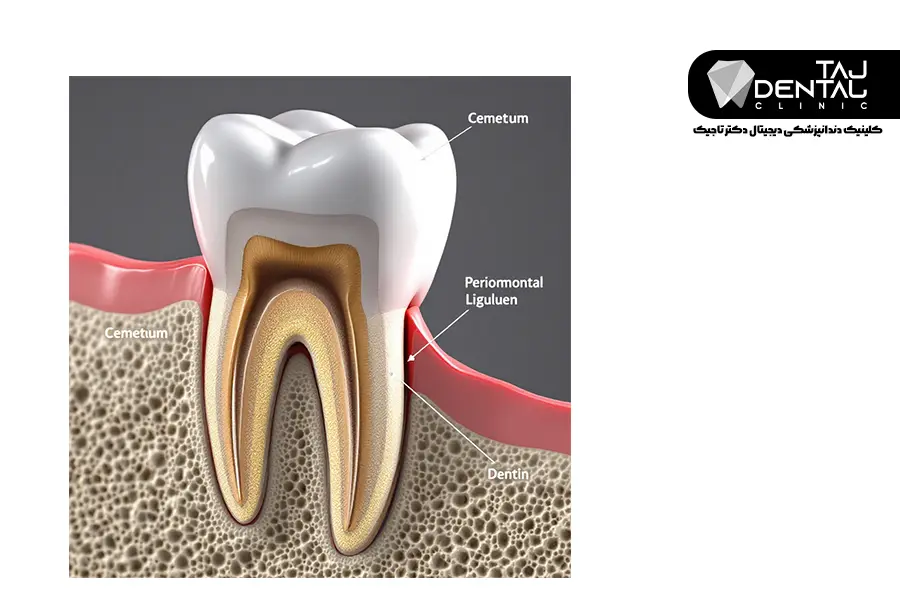
Dental endodontics
Symptoms of dental pulp infection
Knowing the symptoms of dental pulp infection is very important, because early detection can prevent the infection from progressing and making treatment more complicated. These symptoms can range from mild to severe, and in some cases, there may be no symptoms at all (especially in the early stages of infection).
However, the most common symptoms are:
- Severe and persistent toothache: This pain can be spontaneous, or aggravated when chewing, biting, or touching cold or hot food. The pain may be throbbing and may even radiate to the jaw, ears, or head.
- Long-term sensitivity to cold or heat: If your tooth sensitivity persists for a long time (more than a few seconds) after eating or drinking hot or cold foods, it could be a sign of pulp inflammation.
- Tooth discoloration: A tooth with a pulp infection may become darker over time than the adjacent teeth.
- Gum swelling: Swelling and redness of the gums around the infected tooth is another common symptom. An abscess can cause severe pain, swelling, fever, and a bad taste in the mouth.
- Loose tooth sensation.
- Pus discharge from the gums.
Diagnosis of dental pulp infection
The accurate diagnosis of dental pulp infection is done by the dentist using different methods:
1. Examining the patient's medical history and symptoms:
The dentist will first ask questions about your dental history, the type and severity of pain, the time the pain started and its aggravating factors.
2. Clinical examination:
The dentist carefully examines your teeth and gums to check for signs of infection such as decay, cracks, tooth discoloration, gum swelling, and the presence of abscesses.
3. Pulp tests:
To evaluate the condition of the tooth pulp, the dentist uses various tests:
- Cold test: In this test, a cold substance (such as ice or cold spray) is placed on the tooth to check the reaction of the pulp to cold. If the pulp is healthy, sensitivity to cold will disappear quickly. But if long-term sensitivity remains or severe pain occurs, it indicates pulp inflammation or infection.
- Heat test: Similar to the cold test, in this test a hot substance is used to check the reaction of the pulp.
- Impact test: The dentist gently taps the tooth using a small tool. If the tooth is sensitive to impact, it can be a sign of inflammation in the tissues around the root.
- Electrical pulp test: In this test, a weak electric current is applied to the tooth. Healthy pulp reacts to this current, but dead or infected pulp does not.
4. Radiographic imaging:
Photography With X-ray (X-ray) is one of the most important diagnostic tools in the treatment of the root of the tooth.
The radiograph can show the following:
- The presence and extent of tooth decay
- The depth of the crack or fracture of the tooth
- Changes in the bone around the root of the tooth (which can be a symptom be from infection)
- Presence of abscess at the end of the tooth root
- Shape and number of tooth root canals
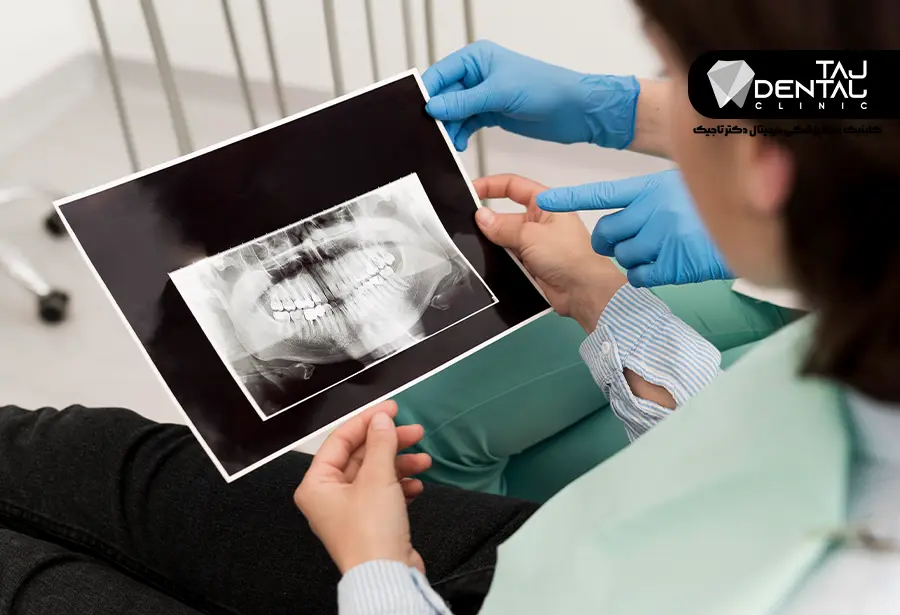
Treatment of tooth root
Steps of tooth root treatment
Tooth root treatment is usually performed in one or two sessions by a general dentist or an endodontist (endodontist). The main treatment steps are as follows:
1. Local anesthesia:
Before starting the treatment, the dentist completely numbs the area around the infected tooth by injecting local anesthesia so that you do not feel any pain during the treatment.
2. Isolating the tooth:
To maintain hygiene and prevent saliva and bacteria from entering the root canal, the dentist uses a thin plastic sheet called "Rubber Dam". The rubber separates the tail of the tooth from the rest of the mouth.
3. Access to the pulp:
The dentist makes a small hole in the crown of the tooth using special tools to access the pulp and root canals.
4. Cleaning and shaping of root canals:
This step is the most important part of root canal treatment. Using special files (very fine needle-shaped tools) and cleaning agents (such as sodium hypochlorite), the dentist removes the infected pulp, bacteria and dead tissue remains from inside the root canals. He then carefully shapes the canals to prepare for filling.
5. Filling the root canals:
After cleaning and shaping the root canals, the dentist fills them with a biocompatible material called "Gutta-Percha". Gutta-percha is a rubber-like substance that effectively seals the canals and prevents the re-entry of bacteria. Usually, along with gutta percha, an adhesive material called "Sealer" is also used to make the filling of the canals stronger and more impenetrable.
6. Dental crown restoration:
After filling the root canals, the cavity created in the tooth crown is filled with restorative materials (such as amalgam or composite). In some cases, especially if the tooth is severely damaged, a crown may be needed. A cover is an artificial cap that is placed on the tooth and protects it and restores its strength and beauty.
Case study: A 45-year-old patient with severe pain and swelling in the upper molar region of the upper jaw came to Dr. Tajik's clinic. After examination and photography, it was diagnosed that the tooth had a periapical abscess (abscess at the end of the root). Root canal treatment was performed in two sessions. In the first session, the root canals were cleaned and shaped, and an antiseptic medicine was placed inside the canals. In the second session, the canals were filled with gutta-percha and sealer, and the tooth crown was repaired with composite. After the treatment, the patient's pain and swelling were completely resolved and the tooth was saved.

Root treatment
Care after root canal treatment
After root canal treatment, it is necessary to observe the following points for faster recovery and to prevent possible complications:
Use of prescribed drugs: The dentist may give you painkillers (to control pain), antibiotics (in case of infection) or Prescribe anti-inflammatory drugs. Be sure to take the medicines as prescribed.
Oral hygiene: Regular brushing and flossing (at least twice a day) is very important to maintain healthy teeth and gums. Of course, in the first days after the treatment, gently brush the treated area.
Avoid chewing hard foods: Avoid chewing hard, sticky, or crunchy foods with the treated tooth until the final restoration is complete (usually a few days).
Regular visit to the dentist: Visit the dentist regularly to check the condition of the treated tooth and ensure the success of the treatment.
Avoid chewing gum.
Using prescription mouthwashes.
possible side effects of root canal treatment
root canal treatment is a very successful treatment method, but like any other treatment method, it may be associated with possible side effects. Of course, these side effects are rare and can be treated in most cases. Some possible complications are:
1. Temporary pain and discomfort:
After root canal treatment, you may feel mild to moderate pain in the treated area for a few days. This pain can usually be controlled by taking common painkillers.
2. Tooth sensitivity:
The treated tooth may be sensitive to cold or heat for a while. This sensitivity usually decreases over time.
3. Re-infection:
In rare cases, a root canal infection may not go away completely or may recur. This problem can usually be solved by re-treatment of the root.
4. Tooth Fracture:
A tooth that has undergone root canal treatment may be weaker than healthy teeth and prone to fracture. To avoid this problem, it is usually recommended to protect the treated tooth with a crown.
5. Tooth discoloration:
The treated tooth may become slightly darker than the adjacent teeth over time. This problem can be solved with teeth whitening methods (Bleaching) or using veneers.
6. Root perforation during treatment (rare).
7. Breaking the file in the channel (rare).
Root retreatment
In some cases, the initial root canal treatment may not be successful and retreatment is required. Several reasons can cause initial treatment to fail, including:
- Bacteria remaining in the root canals: If the root canals are not completely cleaned and filled, the remaining bacteria can cause a recurrence of the infection.
- Presence of side canals or complex root anatomy: Some teeth have very small side canals. or are complex anatomy that may not be fully identified and cleared during initial treatment.
- Cracked or fractured root: If the tooth root is cracked or fractured, bacteria may enter the root canal through these cracks and cause reinfection.
- Problems related to crown restoration: If the crown restoration (filling or veneer) is not done correctly or is fractured, it is possible bacteria penetrate into the root canal.
Re-treatment of the tooth root is similar to the initial treatment, with the difference that the dentist must first remove the previous filling materials from inside the root canals and then clean, shape and fill the canals again. In some cases, Apicoectomy may be required. In this surgery, the end of the root of the tooth is removed to completely remove the infection.
Alternatives to root canal treatment
Although root canal treatment is the best way to save a natural tooth, in some cases, there may be other options:
- Tooth extraction: If the tooth is badly damaged or the infection is very advanced, the dentist may recommend to have a tooth pulled. After tooth extraction, the empty space can be filled with an implant, bridge (bridge) or artificial tooth.
- Living pulp treatment: In some cases, especially in children and teenagers when the dental pulp is still developing, more conservative treatment methods such as living pulp treatment can be used. In these methods, it is tried to preserve the living pulp of the tooth as much as possible. rel="dofollow" class="IRPP_minimalist">Observation Gum infection: symptoms, causes and treatment methods
Choosing the best treatment option depends on various factors, including:
- The condition of the teeth and the severity of the infection
- The age of the patient
- The general health of the patient
- The cost of treatment
Your dentist will offer you the best treatment option after a thorough examination and examination of the conditions.

The cost of root canal treatment
The cost of root canal treatment can vary and depends on various factors, including:
- Geographical location: The cost of treatment in big cities is usually higher than in small cities.
- Dentist specialty: Cost of treatment by an endodontist (root canal specialist) is usually more than a general dentist.
- Treatment complexity: Teeth with complex root canals or unusual anatomy may cost more to treat.
- Type of dental crown restoration: Crown restorations with veneers usually cost more than conventional fillings.
- Dental insurance: If you have dental insurance, Part of the cost of treatment may be covered by insurance.
For detailed information on the cost of root canal treatment, it is better to contact Dr. Tajik clinic.
Frequently asked questions about root canal treatment
Is root canal treatment painful?
No, using Local anesthesia, root canal treatment is performed painlessly. After the treatment, you may have mild pain for a few days, which can be controlled with regular painkillers.
How long does root canal treatment take?
Root root treatment is usually done in one or two sessions. Each session may last between 60 and 90 minutes.
Does a root-treated tooth have a normal lifespan?
Yes, a properly root-treated tooth can last for years or even a lifetime. Of course, regular dental care and oral hygiene are necessary to maintain the health of the treated tooth.
Does root canal treatment cause tooth discoloration?
There is a possibility of tooth discoloration after root canal treatment.
Can I eat after root canal treatment? Should I eat?
Yes, you can eat after the anesthesia is removed.
Is root canal treatment possible during pregnancy?
Yes, if necessary, it is possible by observing safety precautions and consulting a gynecologist.
Conclusion
Dental root treatment is an effective and vital treatment method to save teeth that are infected or have pulp inflammation. This treatment not only relieves tooth pain, but also prevents the spread of infection to the jawbone and other teeth, and ultimately preserves your natural tooth. If you experience symptoms such as severe and persistent tooth pain, long-term sensitivity to cold or heat, tooth discoloration, or gum swelling, be sure to visit your dentist for root canal treatment if needed. By observing oral and dental hygiene and visiting the dentist regularly, you can prevent serious dental problems and have a beautiful and healthy smile. Remember that early diagnosis and timely treatment are the keys to success in maintaining dental health and preventing future problems.