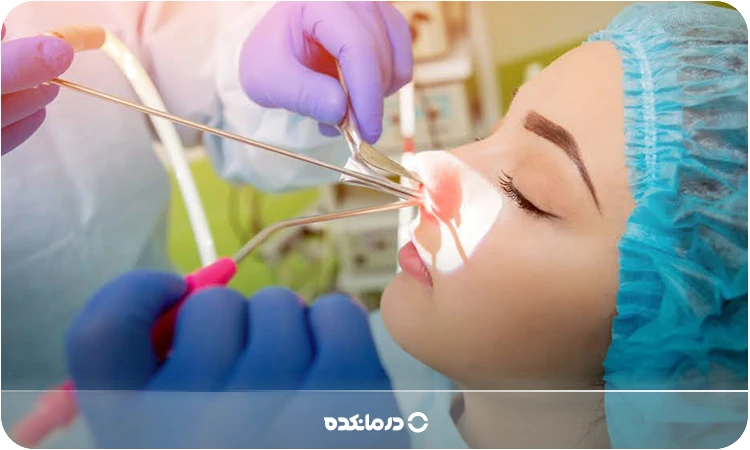
What is nasal polyp surgery? Which method is better?
What is the operation of nasal polyps? Which method of operation is better?
Zahra Elahi Yekta List of ear, throat and nose disorders and diseases last Updated: 3 hours ago Published: 3 hours ago No questionsPending review by the medical team of the medical school
Action Nasal polyps through endoscope or laser is a direct solution to remove polyps and open the respiratory tract. This surgery is usually minimally invasive, with limited bleeding and a short recovery period, and can improve the quality of breathing and sleep. در این مقاله از مجله سلامت درمانکده به این موضوع میپردازیم که عمل پولیپ بینی چگونه است؟
فهرست محتوا
- عمل پولیپ بینی چیست؟
- انواع عمل پولیپ بینی چیست؟
- ۱- جراحی اندوسکوپیک سینوس (FESS)
- جراحی آندوسکوپی سینوس چگونه انجام میشود؟
- مدت زمان جراحی آندوسکوپی سینوس چقدر است؟
- کاربرد جراحی اندوسکوپیک سینوس چیست؟
- مزایای جراحی اندوسکوپیک سینوس چیست؟
- دوره نقاهت جراحی آندوسکوپی سینوس چگونه است؟
- عوارض عمل پولیپ بینی چیست؟
- عمل اندوسکوپیک سینوس بینی به چه کسانی پیشنهاد میشود؟
- ۲- پولیپکتومی ساده بینی
- ۳- عمل پولیپ بینی با لیزر
- عمل پولیپ بینی با لیزر چگونه انجام میشود؟
- مدت زمان جراحی پولیپ بینی با لیزر چقدر است؟
- کاربرد جراحی پولیپ بینی با لیزر چیست؟
- مزایای عمل پولیپ بینی با لیزر چیست؟
- دوره نقاهت عمل پولیپ بینی با لیزر چگونه است؟
- عوارض جراحی پولیپ بینی با لیزر چیست؟
- جراحی پولیپ بینی با لیزر به چه کسانی پیشنهاد میشود؟
- عکس بعد از عمل پولیپ بینی
- آیا برای پولیپ بینی از عمل باز هم استفاده میشود؟
- جراحی پولیپ بینی برای چه کسانی مناسب نیست؟
- چه آزمایشاتی قبل از جراحی پولیپ بینی نیاز است؟
- آمادگی قبل از عمل پولیپ بینی
- مراقبت های بعد از عمل پولیپ بینی چیست؟
- بهترین زمان تعویض پانسمان بعد از عمل پولیپ بینی
- بهترین سن عمل پولیپ بینی چه زمانی است؟
- بعد از عمل پولیپ بینی چه بخوریم؟
- آیا عمل پولیپ بینی همراه با زیبایی انجام میشود؟
- پولیپ بینی؛ Its symptoms and treatment solutions
- Does nasal polyp surgery permanently remove polyps?
- Is Does nasal polyp recur?
- action Nasal polyp in several lines
- Frequently asked questions
What is nasal polyp operation?
Nasal polyp surgery is an endoscopic operation. It is less invasive. Otorhinolaryngology doctors recommend this surgery with the aim of removing benign inflammatory masses such as polyps from inside the nasal cavity and sinuses. Nasal polyp is a soft, transparent and swollen tissue that is usually caused by chronic inflammation of the nasal mucosa and sinuses such as chronic rhinosinusitis, allergies, asthma, and aspirin sensitivity. These fleshy growths are not cancerous. When a doctor operates a polyp, he actually goes to the sinuses.
What are the types of nasal polyp surgery?
The best nose surgeon chooses the type of surgery based on the location, size of the polyp, and the condition of the sinuses:
1- Endoscopic Sinus Surgery (FESS)
Polyps start from inside the sinuses, not from the nostril itself. What you see in the nose are hanging meats whose main roots are found inside the sinuses.
In endoscopic sinus surgery, the doctor has access to the opening of the sinuses without an external incision and removes polyps, inflamed mucus, and chronic secretions.
After the surgery, bulky and annoying old tampons are usually not needed. For many patients, doctors either do not put tampons at all or use light and absorbable dressings. In this way, breathing is not completely blocked. For this reason, the post-operative experience is much more tolerable than the common perception of patients.
Endoscopic sinus surgery is used for moderate to severe polyps.How is endoscopic sinus surgery performed?
In this method, after general anesthesia, the surgeon inserts a medical instrument called an endoscope into the patient's nose. An endoscope is a very narrow tube with a camera and a light source at the end. In this surgery, the doctor does not make any external incisions on the skin of the face or nose, and all surgical procedures are performed from inside the nose. The image inside the nose and sinuses is displayed in an enlarged form on the monitor, and the surgeon removes the polyps and inflamed tissues with direct and accurate vision.
In this operation, the surgeon does not only remove the polyp, but also targets the root of the inflammation inside the sinuses. For this reason, this surgery is not just the removal of a simple mass, but is considered a structural treatment of sinus disease.
How long is endoscopic sinus surgery?
The duration of FESS surgery depends on the extent of sinus involvement. In mild cases, the operation may take about 30 to 45 minutes, but in extensive or recurrent polyps that involve multiple sinuses, the surgery time usually reaches 60 to 90 minutes. A longer operation time does not mean that the surgery is more difficult, but it indicates the extent of cleaning the sinuses.
What is the use of endoscopic sinus surgery?
If nasal polyps have the following characteristics, the doctor usually suggests endoscopic sinus surgery:
- They have spread into the sinuses.
- They are chronic or recurring.
- have caused severe obstruction of the nose and sinuses.
What are the advantages of endoscopic sinus surgery?
The advantages of endoscopic sinus surgery include:
- Complete removal of polyps from the nose and sinuses, even in deep places
- Opening closed sinus passages and improving natural ventilation. Sinus
- Significant improvement of breathing and reduction of chronic obstruction
- Reduction of chronic secretions and facial pressure caused by sinus obstruction
- Increasing the effect of drug treatment after the operation such as corticosteroid spray and anti-inflammatory drugs
- Improving smell in many patients
- Creating the least damage to healthy tissue Nose because of the direct view with the endoscope
- Reducing the possibility of polyp recurrence compared to simple polypectomy
- Performing surgery from inside the nose Without external incision and without visible scar
What is the recovery period of endoscopic sinus surgery?
Most patients can return to light activities after three to five days Return daily and within one to two weeks, nasal breathing will gradually improve. In the first days, nasal congestion, mild blood discharge and feeling of pressure in the face are normal and usually there is no severe pain. Regular washing of the nose with saline and the use of prescribed drugs play an important role in repairing the mucus and preventing recurrence.
What are the side effects of nasal polyp surgery?
Endoscopic sinus surgery is minimally invasive and has the following short-term and controllable side effects:
- Mild and short-term bleeding
- Swelling and bruising of the nose or surrounding area Eyes
- Local pain and pressure
- Reduced or altered sense of smell
- Damage to the structures around the nose and eyes
- Recurrence of polyps
- Infection at the operation site
To whom is endoscopic sinus surgery recommended?
If nasal polyps or sinusitis are extensive, chronic or recurrent And drug treatments or more limited methods such as simple polypectomy have not been able to control the symptoms, endoscopic sinus surgery can be a solution for treatment:
Your provider may recommend FESS if you have one or more of these conditions:
Chronic sinusitis
Sinus infections (including those that spread beyond your sinuses and those that come back several times a year, even with antibiotic) treatments)
Nasal polyps
Abnormal cells or tumors in your sinusesYour doctor may recommend endoscopic sinus surgery (FESS) if you have one or more of the following problems:
- Chronic sinusitis
- Sinus infections, including infections that extend beyond the sinuses or infections that occur several times a year even with antibiotics.
- Nasal polyps
- Abnormal cells or tumors in the sinuses
Quoted from my.clevelandclinic
2- Simple nasal polypectomy
In simple nasal polypectomy, the surgeon removes polyps that are located in the front part of the nasal cavity and are visible and accessible by direct examination.
In this method, the usual nasal surgery tools are used and the intervention is limited to the inner space of the nose; That is, the endoscope does not enter the sinuses and deep sinus structures are not manipulated. For this reason, this surgery only removes protruding masses and does not reach the main source of inflammation, which is usually located in the mucosa of the sinuses. As a result, the feeling of nasal congestion is temporarily reduced, but because the sinus passages and the underlying inflamed tissue are not treated, the probability of the polyp returning in this method is relatively high, and its use is limited to mild and limited cases. Nasal polypectomy related to polyps It is small and limited to the nasal cavity.
How is nasal polypectomy surgery performed?
In this procedure, the surgeon uses a device called a nasal speculum to keep the nostril open. Then he inserts medical hand tools such as polypectomy forceps, special mucus scissors and suction into the nasal cavity to separate and remove the polyp from its junction. Sometimes doctors use an endoscope in this surgery just to see inside the nose better, but the intervention is still limited to the nasal cavity and is not considered sinus surgery.
Nasal polypectomy usually does not require general anesthesia and is performed with local anesthesia in most patients. The doctor performs anesthesia by injecting an anesthetic drug into the nasal mucosa and sometimes with vasoconstrictor drugs to control pain and reduce bleeding. The patient is conscious during the procedure, but does not feel significant pain due to local anesthesia. General anesthesia is recommended only in special cases, such as the patient's non-cooperation or severe sensitivity to pain.
How long is nasal polypectomy surgery?
The duration of nasal polypectomy is usually between 10 to 30 minutes. This time depends on the number and size of the polyps. Due to the limited extent of surgery, bleeding is usually mild. In this surgery, there is no need for long-term tampons, even if the doctor prescribes tampons, the duration of its use is very short.
What is the use of nasal polypectomy surgery?
Nasal polypectomy is used when the polyps are small, limited and only in the nasal cavity and there is still no evidence of sinus involvement. In such a situation, the goal of surgery is to remove more accessible obstructive masses and temporarily reduce symptoms such as nasal congestion or discharge, not to completely treat the underlying disease.
Medications did not work and symptoms of nasal polyps have returned?
Ask an otolaryngologist for an expert opinion about the operation Otorhinolaryngologist Online OtorhinolaryngologistWhat are the advantages of nasal polypectomy surgery?
The most important advantages of nasal polypectomy surgery can be summarized as follows:
- Rapid removal of accessible polyps in the nasal cavity
- Immediate and visible improvement in nasal breathing
- Reduction of blockage and nasal secretions in the short term
- Least damage to the deep structures of the nose and sinuses
How is the recovery period of nasal polypectomy surgery? Is it?
After polypectomy surgery, for the first one to two days, you will experience nasal congestion, slight bloody discharge, or a feeling of local pressure, which is normal. It is expected that you will be able to return to light daily activities within one to two days.
Nose washing with saline solution, avoiding strong fins and regular use of prescribed medications play an important role in improving the mucus and reducing the chance of nasal polyps recurrence. However, since this method does not treat the underlying inflammation of the sinuses, in patients with chronic or extensive polyps, there is a possibility of polyp recurrence after simple polypectomy. For this reason, you should have regular and more accurate follow-up.
What are the side effects of nasal polypectomy?
Due to its limited and superficial nature, nasal polypectomy is less invasive and less risky than endoscopic sinus surgery. But it can still have the following possible side effects:
- Mild to moderate bleeding
- Blood or bloody nasal discharge in the first day or two
- Temporary nasal congestion or pressure feeling after the operation
- Small adhesions inside the nose
- Temporary change in the sense of smell
- Recurrence of polyps
- Injury to the mucosa or structure Nose
- Infection
To whom is nasal polypectomy surgery recommended?
Nasal polypectomy is suitable for those who are unable to perform endoscopic sinus surgery or general anesthesia due to underlying problems, or are in situations that require short-term palliative measures. For example, when anterior nasal obstruction causes obvious breathing difficulties and the patient is not yet a good candidate for more extensive surgery. In these cases, removing accessible polyps can temporarily open the nasal airway and improve breathing quality.
Also, doctors sometimes recommend a simple polypectomy as a temporary step or as an adjunct to drug therapy to improve the response of the nasal mucosa to drugs such as Cortonin sprays. However, since this surgery does not access the inflamed mucosa inside the sinuses and does not treat the underlying source of inflammation, its role is limited. For this reason, it is not considered an alternative to endoscopic sinus surgery in chronic, extensive or recurring polyps.
3- Nasal polyp operation with laser
Nasal polyp operation with laser is a method in which the doctor cuts or burns visible polyps in the nasal cavity with laser energy (such as CO₂ laser) to reduce nasal obstruction. Unlike endoscopic sinus surgery, this method does not access the deep sinuses and affects only the polyps that are visible in front of the nose. Therefore, the endoscopic method is still the most effective way to treat nasal polyps.
Nasal polyp laser surgery is not used in the treatment of chronic, extensive or sinus polyps.How is laser nasal polyp surgery performed?
The doctor first prepares the nose with local anesthesia so that the patient does not feel significant pain or discomfort during the procedure. Then, using a special laser device with a suitable wavelength, the laser beam is irradiated to the surface of the polyp. The laser energy vaporizes or cuts the soft tissue of the polyp, and the accessible masses inside the nasal cavity are gradually removed.
In this method, the surgeon usually uses an endoscope or a small nose mirror for a better view. But unlike endoscopic sinus surgery, there is no access to the deep sinuses and their openings. For this reason, the laser operation only removes superficial polyps limited to the nose and cannot treat the underlying inflammation or polyps inside the sinuses.
How long does laser nasal polyp surgery take?
The duration of nasal polyp surgery is about 10 to 30 minutes. This time depends on the number and size of the polyps and the experience of the doctor. Because in this method access is limited only to superficial polyps and the nasal cavity and there is no need to enter the deep sinuses, the operation is performed faster than endoscopic sinus surgery and usually does not require general anesthesia.
What is the application of laser nasal polyp surgery?
The laser nasal polyp operation is usually performed when the polyps are small, superficial and limited to the nasal cavity and have not yet entered the deep sinuses. The main goal of this method is to reduce nasal obstruction and improve breathing in the short term, and it mostly has a temporary relief role. This method can be used in patients who:
- cannot undergo general anesthesia.
- need quick and short-term surgery.
- polyps are not yet extensive or chronic.
However, since the laser cannot treat the root of polyps and the underlying inflammation of the sinuses, the possibility of recurrence is high and this method is an alternative to surgery. Sinus endoscopic or long-term drug treatment is not considered.
What are the advantages of laser nasal polyp surgery?
Laser polyp surgery can have the following advantages:
- Quick removal of superficial and accessible polyps in the nasal cavity
- Reduce nasal obstruction and improve breathing in the short term
- Short recovery period and quick return to Daily activities
- Less bleeding than traditional surgery
- No need for general anesthesia in most cases
- No need for incision
- No external scar formation
- A minimally invasive and convenient method for patients who do not have the conditions for extensive surgery.
What is the recovery period for nasal polyp surgery with laser?
Recovery period Nasal polyps with laser is relatively short and light, because this method is minimally invasive and targets only surface polyps inside the nose. Immediately after the operation, you may have a stuffy nose, slight bloody discharge or a feeling of local pressure. These symptoms are normal and usually subside within one to two days. Most patients can return to light daily activities one to two days later.
What are the side effects of laser nasal polyp surgery?
Possible side effects of laser nasal polyp surgery include:
- Mild or bloody nasal discharge in the first few days
- Congestion or feeling of pressure in the nose
- Feeling mild to moderate pain
- Change or Temporary reduction of the sense of smell
- Recurrence of polyps
- Minor damage to the nasal mucosa
To whom is laser nasal polyp surgery recommended?
Laser nasal polyp surgery is recommended for patients whose nasal polyps are small, superficial and limited to the nasal cavity and have not yet entered the deep sinuses. This method is more suitable for those who:
- cannot undergo general anesthesia or desire quick and short-term surgery.
- Polyps are not chronic or extensive and only cause mild to moderate nasal obstruction.
- need a minimally invasive and temporary solution to reduce symptoms.
Consult with online otolaryngologist helps you to easily ask your questions and concerns in the field of nasal polyp surgery.
Photo after nasal polyp surgery
Photos after nasal polyp surgery usually do not show obvious changes in appearance, because this surgery is performed endoscopically and from inside the nose. It can be done and does not have an external cut. What can be seen in these images is the reduction of internal swelling, the improvement of the condition of the nasal mucosa and the opening of the breathing path, not the change in the shape of the nose.
Comparison of photos before and after nasal polyp operation is more medical than cosmetic.Is open surgery still used for nasal polyps?
Open surgery is rarely used for nasal polyps and only in special cases. With the advancement of sinus endoscopic techniques, most polyps and inflammation of the sinuses can be treated through closed surgery and from inside the nose, and there is no need for external incision. The doctor may suggest open surgery in the following situations:
- Very large and extensive polyps or tumors in which endoscopic access is limited.
- Unusual anatomical changes of the nose or sinuses that prevent the entry of the endoscope.
- There are complex or unusual lesions in the sinuses.
In open surgery, an incision is made on the skin or nasal bone. It is possible for the surgeon to access the sinuses. This method usually has a higher risk of bleeding and external scarring, and the recovery period is longer. Therefore, it is used only in special cases where the endoscopic method does not work.
Re-rhinoplasty is invasive and is mostly used for the treatment of complex nasal problems such as fracture, beauty or severe deviation of the nasal septum. If you want to know if you have a nasal deviation or a nasal polyp, reading the article "How do we know that we have a nasal deviation" can be useful for you.
For whom nasal polyp surgery is not suitable?
Nose polyp surgery is limited to the following people:
- Patients with severe heart problems or Pulmonary
- Severe active infection of the nose or sinuses
- Bleeding disorders or use of anticoagulants
- Patients with severe systemic diseases or general weakness
- Cases where the polyps are small, superficial and without severe symptoms and drug treatment is controlling.
What tests are needed before nasal polyp surgery?
Type Test Objective Basic blood test (CBC) to check anemia and the number of red and white blood cells Coagulation tests (PT, PTT, INR) to ensure the normal function of blood coagulation Liver and kidney function (ALT, AST, creatinine, UREA) to check the metabolism and excretion of anesthetic drugs Blood control diabetes or sugar disorder EKG and cardiac evaluation Cardiac examination and blood pressure Imaging of the sinuses (X-ray or CT) determination of polyp extent and surgical planning, preoperative anesthesia examination, general assessment, systemic risk and preparation for anesthesia, tests before nasal polyp surgeryPreparation before nasal polyp surgery
Preparation before nasal polyp surgery can include the following measures:
- Complete medical consultation and evaluation: review of disease history, allergies, medications, Heart and lung condition and other underlying diseases
- Preoperative tests such as CBC test and medical imaging of the sinuses such as X-ray and CT scan.
- Discontinuation or adjustment of certain medications: such as anticoagulants or blood thinners such as aspirin according to the doctor ENT specialist.
- Control of infection or active inflammation of the nose and sinuses such as the use of disinfectants, corticosteroid sprays or antibiotics
- Adherence to diet and fasting: For surgery under general anesthesia, usually 6 to 8 hours of fasting you need.
- Quit smoking and reduce alcohol consumption: At least a few days before surgery to reduce the risk of bleeding and improve mucosal healing, stop smoking and drinking alcohol.
What are the cares after nasal polyp surgery?
To reduce complications and prevent infection after nasal polyp surgery, pay attention to the following points:
- Regular washing of the nose with saline solution or salt serum to clean secretions, blood and reduce inflammation of the mucosa
- Regular use of prescribed drugs such as Cortonin, antibiotic or anti-inflammatory sprays
- Avoid extreme finning and putting pressure on the noseat least until one week after the operation
- Avoid heavy activities and vigorous exercise until the ear, nose and throat specialist doctor allows.
- Sleep so that the head is slightly higher than the body. This condition reduces the risk of swelling and bleeding.
- Control pain and swelling with prescribed analgesics and cold compresses if needed
- Maintain nasal hygiene and avoid contact with dust or cigarette smoke
- Regular medical follow-ups to check mucosa repair, wash and control polyp recurrence
- Report any bleeding severe, unusual pain, fever or purulent discharge to the doctor
The best time to change the dressing after nasal polyp surgery
The time to change the dressing after nasal polyp surgery depends on the type of dressing and the surgical method:
Type of surgeryDressing time after nasal polyp surgery Endoscopic sinus surgery 3-5 days after polypectomy Nose 24-48 hours after the operation, the time to change the dressing after the nasal polyp operationIf the doctor uses a non-absorbable dressing or traditional tampon in endoscopic sinus surgery or polypectomy, the time to change it is usually two to three days after the surgery. If the tampons are absorbable, they do not need to be pulled and they are absorbed within one to two weeks.
Most cases of laser nasal polyp surgery do not require dressing, because this method is minimally invasive and the polyp tissue is vaporized or cut superficially, and bleeding is usually very little.
When is the best age for nasal polyp surgery? sinuses are done, but in certain medical cases it may be recommended at a younger age.
In the article "What is the best age for nose job?" More specifically about age and Rhinoplasty You are reading.
What should we eat after nasal polyp surgery?
To reduce inflammation, speed up the recovery of the nasal mucosa and reduce bleeding, it is better to follow the following diet after nasal polyp surgery:
- Drink enough fluids to keep the body hydrated and prevent dryness of the mucus.
- Soft and light foods: such as soup, puree, yogurt and porridge that do not require intense chewing and do not put pressure on the nose and face
- Avoid very hot or spicy foods: Spicy, very hot or spicy foods can increase bleeding or swelling of the mucosa.
- Foods rich in vitamin C and protein: Cooked vegetables, soft fruits, white meat and fish speed up tissue repair.
- Avoid eating hard or chewy foods: such as dry bread, nuts or hard meats that may put pressure on the nose by pressing the jaw.
- Reduce salt and salty foods to prevent swelling of the nasal mucosa
- Do not consume alcohol and limit caffeine: Alcohol can increase bleeding and caffeine causes dehydration.
Is nasal polyp surgery performed along with beauty?
Nasal polyp surgery can be performed at the same time as rhinoplasty surgery, but this decision depends on your medical conditions and is not suitable for everyone.
When nasal polyp causes severe obstruction, chronic sinusitis, or breathing disorder, the priority is to treat the nose functionally. In such a situation, the surgeon can perform two different types of surgery in one session with two separate goals:
- Sinus endoscopic surgery or polypectomy to remove nasal polyps
- Rhinoplasty to correct structural and functional problems of the nose such as blade deviation, airway narrowing and correcting the appearance of the nose, which can be open or closed.
If there is active inflammation, severe infection or very extensive polyps If there is, it is usually recommended to perform polyp treatment surgery first, and after the inflammation is controlled and the condition of the mucous membrane is stabilized, cosmetic surgery is performed at the next stage.
Nasal polyps; Symptoms and its treatment solutions
The most common symptoms of nasal polyps are:
- Chronic nasal congestion
- Reduced or lost sense of smell
- Frequent discharge and facial pressure or pain
Without treatment, polyps They can also cause chronic sinusitis.
Treatment of nasal polyp according to its size and location includes the following:
- Cortone drugs
- Nasal irrigation
- Allergy control
In resistant or extensive cases, endoscopic rhinoplasty or polypectomy is the main treatment solution. Surgery removes polyps and opens the way for ventilation of the sinuses, but to prevent polyps from returning, medical follow-up and post-operative care are very important.
Is it possible to treat nasal polyps without surgery?
In the early stages or when polyps are small and limited, nasal polyps can be treated with non-surgical methods:
Treatment methodAimSpray Nasal corticosteroids reduce inflammation and reduce the size of short-term oral polyps, rapid reduction of inflammation in large or severe polyps, rinsing the nose with a saline solution, cleaning secretions and allergens, reducing inflammation, anti-allergic drugs and antihistamines, controlling allergies with polyps, antibiotics, treating sinus infections with polyps, non-surgical treatment of nasal polyps, as well as controlling underlying factors such as asthma, sensitivity to Aspirin, severe allergies, and chronic inflammation of the sinuses reduce the risk of polyp recurrence.Does nasal polyp surgery permanently remove polyps?
Nasal polyp surgery effectively and completely removes polyps and opens up the natural ventilation of the sinuses, but this does not mean permanent removal of polyps.
They burn nasal polyps. Or are they removed?
In traditional or endoscopic sinus polypectomy, the polyps are completely removed. While in nasal polyp operation with laser, small and surface polyps are vaporized or cut with laser energy and are "burned" in a way, without the need for cutting or extensive removal. Breathing
- Nocturnal snoring
- Frequent sinus infections (chronic sinusitis)
- Decreased or lost sense of smell
- Pressure and facial pain or chronic headache
- Possibility of polyp growing larger or wider
Does nasal polyp recur?
Possible and relatively common return of nasal polyp even after complete endoscopic sinus surgery. The main cause of polyp recurrence is the underlying inflammation of the nasal mucosa and sinuses, not the surgery itself.
Multi-line nasal polyp operation
Nasal polyp surgery, either with an endoscope or laser, is an effective way to open the respiratory tract and reduce chronic symptoms. This procedure is not invasive and has a short recovery period. To prevent the return of polyps, it is necessary to pay attention to the control of the underlying disease and follow-up medication after the operation.
If you have the symptoms of nasal polyps, you can make an online consultation with an otolaryngologist at Daramankade and communicate with the doctor from home. Also, if you need a face-to-face visit, you can make an online appointment.
Frequently asked questions
Is nasal polyp surgery dangerous?Nasal polyp surgery is safe and low-risk if performed by an expert surgeon. Complications are mostly short-term and controllable.
Is nasal polyp operation difficult?Nasal polyp operation by endoscopic method requires expertise and experience of the surgeon. But it is minimally invasive and fast for the patient and causes limited pain and bleeding.
Is nasal polyp operation performed in children?Treatment of nasal polyp in children is mostly drug. But if the polyp does not respond to the medicine or the condition of the disease is severe, the doctor suggests polyp surgery.
How many days should we rest after the nasal polyp operation?Most patients can return to daily activities one to three days after the operation. It is better to limit heavy activities and vigorous exercise to a few weeks.
How much does nasal polyps surgery cost?The cost of surgery varies according to the surgical method, the type of anesthesia, the experience of the surgeon and the clinic or hospital.
Source: my.clevelandclinic | hopkinsmedicine | pmc
Was this article helpful to you?
![Which fruit increases blood pressure [high and low]? 18 effective fruits](/storage/posts/covers/2026_01_08/ef00bb701cbb99e90a24ba8d73265ba4c08936335e859a33b69553f5c5e737a2.webp)
![For whom is rhinoplasty dangerous? [10 groups+cause+solution]](/storage/posts/covers/2026_01_06/3e06a993c87e243daaf67dc69ac3e484d377b2708c93656820e0084ea4f080d6.webp)
![What fruits have vitamin B12? [13 fruits + consumption tips]](/storage/posts/covers/2026_01_06/dfaeceb7cb9a203805aeba8715bf7cdea6f5cb2b5b9314e1898807545e874bb1.webp)
![Is nasal massage necessary after surgery? [Training + 5 effective benefits]](/storage/posts/covers/2026_01_06/1f2686c8d522130d256828a51d7d46594dbde31ec2253325e6a8a38f04094789.webp)
![The best drops to reduce eye pressure [14 powerful drugs + method of administration]](/storage/posts/covers/2026_01_06/0177c50098eb80d878d1c883d09ae31ad2f489b17e1288f52018e3f8ef213e5f.webp)
![What is hair filler? [9 benefits, how to inject + durability of hair filler]](/storage/posts/covers/2026_01_06/c21c5e1ff48e9af8214111dfe0b867586f298e3d74a95fadda02b0b04df12598.webp)
![The strongest antibiotic for tonsil infection [7 drugs + method of administration]](/storage/posts/covers/2026_01_06/7b5adf6bb8cf556824d96570b6adba58f824b3a7f248993cfaafb73c0b5b8610.webp)
![Garlic pills for weight loss [4 effective benefits and side effects + how to use]](/storage/posts/covers/2026_01_06/c49f08b482d5860218c8635e48194a50f2ed48b51ef15925aa2d73d8393ff3ab.webp)
![What foods increase eye pressure? [8 harmful foods and drinks]](/storage/posts/covers/2026_01_06/52929c4d1b9ed7916d3fc5a8e45060479fb186f332dd217e68905f71f89a33f0.webp)
![What foods lower eye pressure? [18 useful foods]](/storage/posts/covers/2026_01_06/f180eb15f8e64fc9b386f9d5dc7936a5e416af36032be3bdcdf9054925a21d43.webp)
![itchy scalp; 18 causes [medical treatment + 11 home remedies]](/storage/posts/covers/2026_01_06/a1e116ec1c6243fd5c4e6fb951da5cb33bbd92a09c44e29b845852a86f550681.webp)
![What is intestinal colitis and what are its symptoms? [3 causes + definitive treatment]](/storage/posts/covers/2026_01_06/d3384e9221c036ff3eb447c69ffabb109dd6c0c35f5e5f0af775c4545cfd7ea5.webp)
![The best pills for irritable bowel syndrome [10 powerful drugs]](/storage/posts/covers/2026_01_06/70f02d6808fab88d67b0c6734a623e5e71982d323dbd2fb8158c29669849b813.webp)



