One of the most important methods to check the functioning of the thyroid gland is the thyroid blood test, which informs the doctor about the health status and level of activity of this gland. The most common thyroid test is the thyroid stimulating hormone (TSH) test. If the amount of this hormone in the body is high or low, the doctor usually prescribes additional tests to measure the hormones thyroxine (T4) and triiodothyronine (T3). In the following, we will accompany you in the steps of performing and interpreting this experiment. What is a thyroid test and when is it done? class="lwptoc_item_label">Thyroid test interpretation table

مقاله تخصصی
Thyroid test interpretation table Normal limit, photos of results and tips
5 hours ago
813 بازدید

Dr. Reza Bahadur
MashhadOrthopedic specialist
What is a thyroid test and when is it done?
The thyroid gland is a butterfly-shaped organ in the front of the neck that secretes hormones, regulates energy consumption and many other things. It is the body's vital processes.
The doctor usually recommends a thyroid test if the following symptoms are observed:
fatigue and lethargy;
Unexplained changes in weight;
Irritability or anxiety;
Insomnia or disturbed sleep;
Disturbance in the menstrual cycle.
This test detects diseases such as hypothyroidism or hyperthyroidism. It helps with thyroiditis, Hashimoto's disease and Graves' disease.
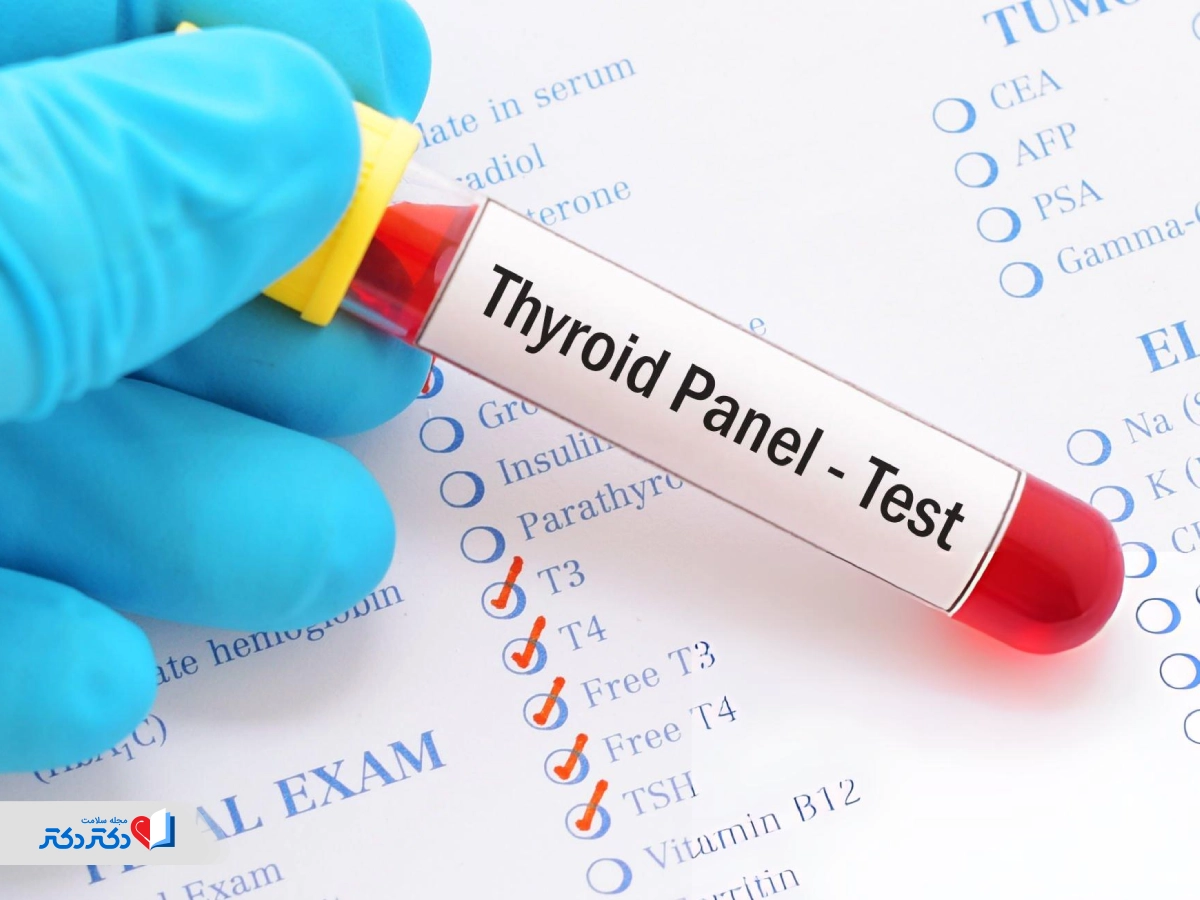
Hormones investigated in the test Thyroid
The most common test to measure thyroid function includes thyroid-stimulating hormone (TSH), thyroxine (T4) and sometimes triiodothyronine (T3).
In most cases, TSH is measured first, because if it is within the normal range, thyroid function is probably normal. The exception occurs when there is a possibility of a disorder in the pituitary gland (which controls the secretion of TSH); In this case, T4 should also be checked at the same time.
In children, doctors usually measure the amount of T4 in addition to TSH, because this hormone is vital for the growth and development of the brain.
Many laboratories use the "waterfall" system; That is, if the TSH result is abnormal, other tests are also performed automatically:
- If the TSH level is above the reference range, the amount of T4 in the blood is measured.
- If the TSH level is below the reference range, both T4 and T3 hormones are checked.
Thyroid Test Interpretation Table
Laboratories compare results to reference values to determine whether hormone levels are within normal ranges. Common reference values for healthy adults are as follows:
| Test Name | Lowest Normal Level | Highest Normal Level | Unit |
| TSH | 0.4 | 4.0 | mU/l |
| FT4 | 9.0 | 25.0 | pmol/l |
| FT3 | 3.5 | 7.9 | center;">pmol/l |
Of course, keep in mind that these ranges are only a guide and may vary depending on the laboratory.
The normal range of TSH hormone
Usually, doctors start with a TSH test to diagnose a thyroid disorder. This hormone is made in the pituitary gland and tells the thyroid gland how much T4 and T3 to produce. In healthy adults, the normal range of TSH hormone is between 0.4 and 4.0 milliunits per liter.
- A high level of TSH usually indicates hypothyroidism; that is, the thyroid gland does not produce enough hormones. As a result, to compensate, the pituitary continues to make and secrete more TSH to stimulate thyroid activity. On the contrary, if the TSH level is low, it is usually a sign of hyperthyroidism; That is, the thyroid gland produces too much hormone, and in response, the pituitary stops or greatly reduces the secretion of TSH.
If the TSH test result is not within the normal range, the doctor usually performs additional tests to determine the exact cause of the problem. (T4) is one of the main thyroid hormones. In healthy adults, this hormone should be between 9 and 25 pmol/L. If T4 is higher than 25 pmol/l, it usually means hyperthyroidism, and if it goes below 9 pmol/l, it can be a symptom of hypothyroidism. Of course, in some cases, high or low T4 levels do not necessarily mean the presence of thyroid disease. For example, during pregnancy or when taking oral contraceptive pills, the amount of thyroid hormones in the blood increases. On the other hand, severe illnesses or the use of corticosteroids (medicines to treat asthma, arthritis, skin problems, and some other diseases) can lower T4 levels.
If the doctor suspects hyperthyroidism but the T4 level is reported to be normal, a T3 test may also be done. Sometimes the amount of T4 is normal, but the level of T3 is increased. In such cases, simultaneous measurement of T4 and T3 levels can help diagnose hyperthyroidism more accurately.
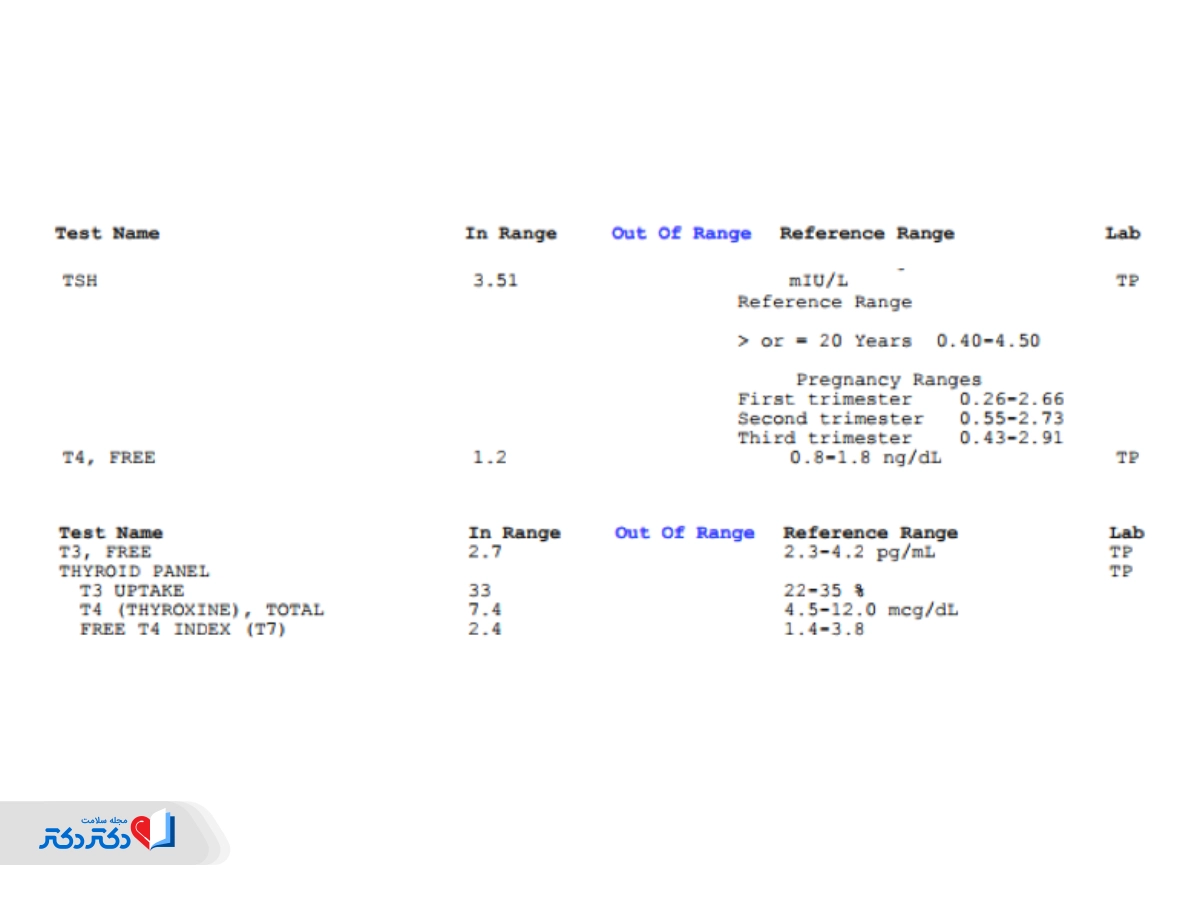
Photo of normal thyroid test
Usually a normal thyroid test looks like this:
Hypothyroidism (Hypothyroidism)
If TSH is higher than 4.0 mU/L and at the same time FT4 is lower than 9 pmol/L, there is a possibility of hypothyroidism.
Common symptoms of hypothyroidism Thyroid
fatigue and weakness;
increase Weight without clear reason;
Intolerance to cold;
Dry skin and hair;
Constipation;
Feeling depressed;
Irregularity in the menstrual cycle.
Note: these symptoms may have other reasons, so they should always be matched with the test results and doctor's opinion.
Hyperthyroidism
If TSH is less than 0.4 mU/L and FT4 is more than 25 pmol/L or FT3 is more than 7.8 pmol/L, hyperthyroidism is considered.
Common symptoms of hyperthyroidism
Weight loss;
Increase in appetite;
restlessness or anxiety;
excitability and feeling restless;
heart palpitations or a fast heartbeat;
excessive sweating and heat intolerance;
fatigue or Trembling of hands;
Sleep disturbance;
Irregular menstruation;
enlargement of the thyroid gland (goiter) or inflammation and sensitivity of the gland;
frequent bowel movements and increased frequency Rejection;
Eye problems in cases of Graves' disease (ophthalmopathy).
Note: increased metabolism caused Hyperthyroidism does not always lead to weight loss; If the person consumes more calories, the weight may remain stable.
The difference between hypothyroidism and hyperthyroidism in the interpretation table
- If the TSH level is high and the FT4 value is low, this indicates hypothyroidism.
- On the other hand, if the TSH level is low and the FT4 value is high.
Also, sometimes the level of TSH is slightly higher than normal, but the amount of FT4 is still within the normal range. This condition is called subclinical hypothyroidism or mild thyroid failure. This condition may develop into complete or clinical hypothyroidism over the years. Testing for thyroid antibodies can be helpful in determining the likelihood of disease progression.
If both TSH and FT4 levels are low, there is a possibility of a pituitary gland disorder, or it may be caused by severe non-thyroid related diseases. In the case of FT3, this test is usually done to diagnose hyperthyroidism or determine its severity.
TSH hormone changes during pregnancy
During pregnancy, pregnancy hormones naturally increase the level of certain thyroid hormones in the blood. This change is necessary for the growth and development of the brain and nervous system of the fetus. At the same time, the level of TSH in the blood decreases. The normal range of TSH in each trimester of pregnancy is as follows:
| Pregnancy period | Normal range (mU/L) |
| First trimester | 0.1 to 2.5 |
| Three months Second | 0.2 to 3.0 |
| Third trimester | 0.3 to 3.0 |
In the second and third trimesters, TSH levels gradually increase, but still remain below the normal range of non-pregnant women. Doctors usually carefully monitor and control TSH levels throughout pregnancy, because abnormally high or low levels can increase the chance of miscarriage and cause pregnancy complications such as:
- preeclampsia (pregnancy high blood pressure)
- premature birth
- low birth weight
- congestive heart failure Heart
Therefore, regular examination of thyroid hormones during pregnancy is very important to maintain the health of the mother and the normal development of the fetus.

What factors affect the test answer Does thyroid work?
Thyroid test results can be affected by various factors and the normal range is not the same for everyone. The most important factors are:
gender;
group Age;
Pregnancy status: during pregnancy, pregnancy hormones can change the level of some thyroid hormones; Careful monitoring by a doctor is necessary;
Presence of diseases or underlying conditions: severe or chronic diseases such as heart attack, infection, liver or kidney failure can affect the test results;
Use of medications and supplements: including thyroid medications, steroids, birth control pills, lithium, amiodarone or supplements containing iodine and biotin;
Lifestyle factors: stress, insufficient sleep or acute illnesses can change hormones.
For this reason, it is very important to provide a detailed history to the doctor and complete information about medications and physical conditions. This will help the doctor to interpret the test results correctly and avoid misdiagnosis or incorrect assessment of thyroid function. href="https://drdr.ir/mag/%D8%A2%D8%B2%D9%85%D8%A7%DB%8C%D8%B4-%D8%AE%D9%88%D9%86/">thyroid blood test No special preparation is required. You can eat and drink normally unless your doctor tells you otherwise. Also, sleep before the thyroid test is very important. You should sleep 6 to 8 hours the night before the test and take the test early in the morning to avoid fluctuations in hormone levels.
The most important thing to keep in mind before the thyroid test is to provide a detailed medical history to your doctor, because various factors affect your thyroid hormone levels.

Online interpretation of thyroid test for free
We mentioned earlier, the normal result of the thyroid test can be different for each person, and for this reason, checking the results by a doctor is very important. If you want to get a free online thyroid test interpretation with the help of the most professional doctors in the shortest possible time, just choose the on-site test service of Dr. Doctor and do your test at the place of your choice. In this case, the interpretation of your thyroid test will be free.
Doctor's last word
Thyroid test is one of the easiest and most accurate ways to check the health of this important body gland. Its results can quickly identify hypothyroidism or hyperthyroidism and help prevent many complications. If you have symptoms such as fatigue, weight changes, anxiety or insomnia, it is better to check your thyroid condition.
With the help of Dr.Doctor, you can consult with endocrinologists and laboratory experts online, send your test results, and hear a detailed and scientific interpretation from your doctor.
Frequently Asked Questions
What values does the thyroid test interpretation table contain?
In the thyroid test interpretation table, three main indicators are usually checked, namely TSH, T4 (especially FT4) and T3 (especially FT3). These values indicate the overall function of the thyroid gland. A high level of TSH along with low T4 usually indicates hypothyroidism, and conversely, low TSH with high T4 and T3 is a sign of hyperthyroidism. class="fi-accordion-icon icon-opened" style="display:none"> What is the normal range for TSH, T3 and T4 in thyroid testing?
How is the hypothyroidism test answer different from normal?
Resources
clevelandclinic thyroid healthdirect btf-thyroid niddk.nih medschool.ucla.edu medicalnewstoday
Tags:
The content of this article is for your general information only and does not constitute medical prescription.