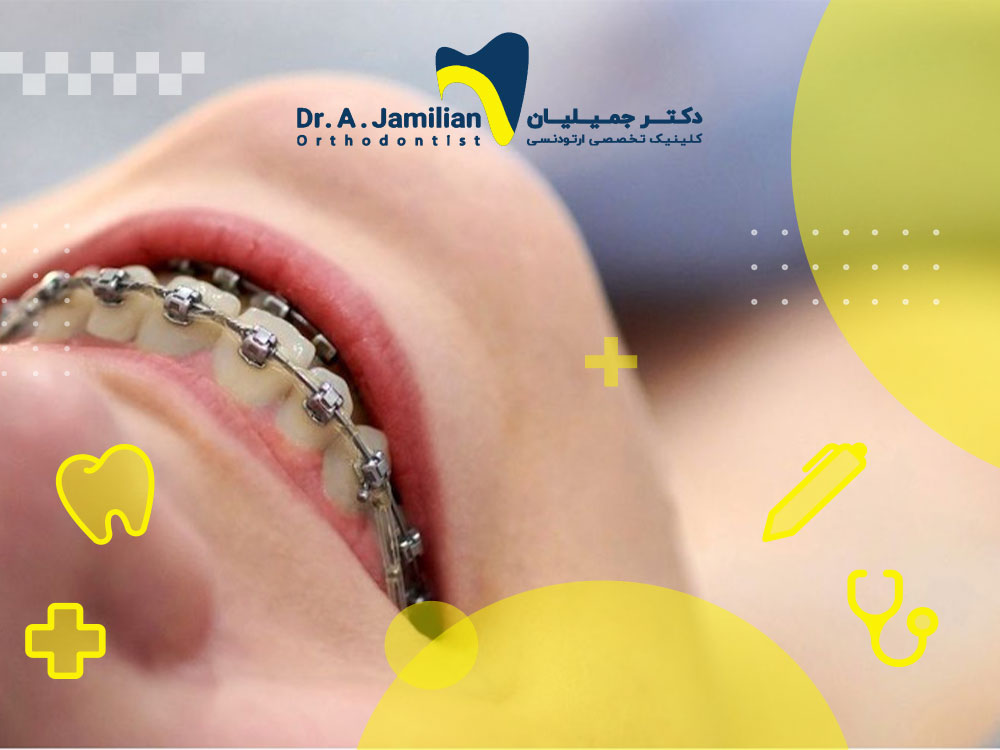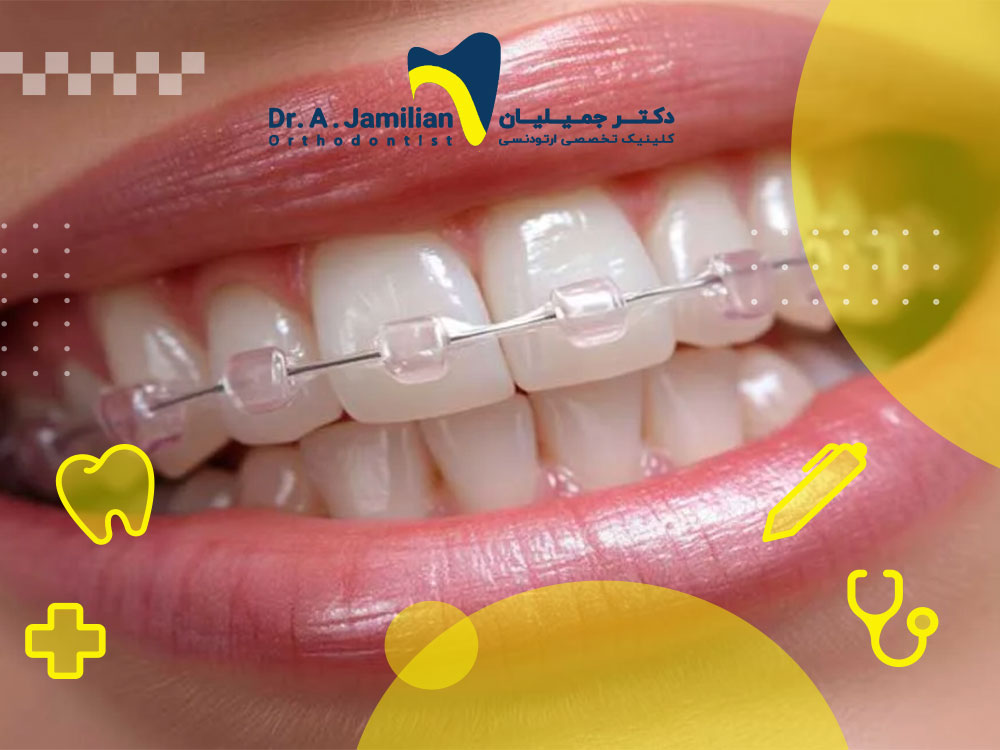

Today, ceramic orthodontics is one of the options welcomed by orthodontic specialists and patients due to its very good strength and the favorable appearance it creates. Many dental problems (such as crowding and gaps between teeth) can be treated with ceramic orthodontics. Compared to metal orthodontics, it has significant advantages, but it also has some weaknesses. Fortunately, with the advancement of technology, the initial problems of ceramic orthodontics have been solved to a great extent and it can be safely considered as one of the good options for orthodontic teeth. In addition, ceramic orthodontics is placed in the category of fixed orthodontic devices, which must be installed on the patient's teeth by an orthodontist.
What is ceramic orthodontics?
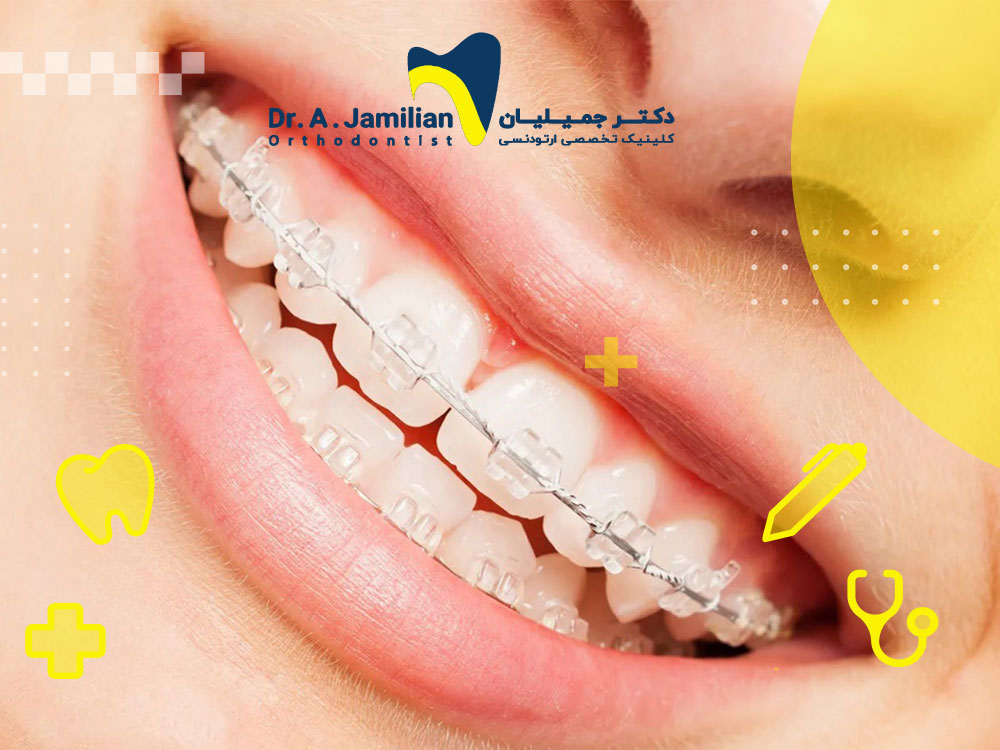
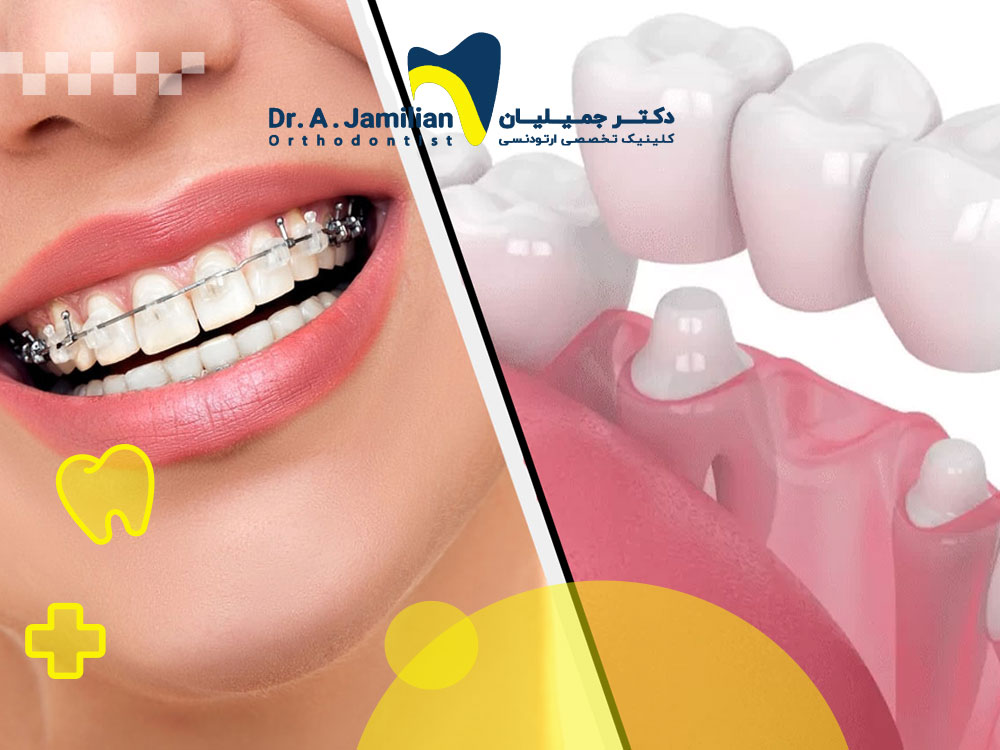
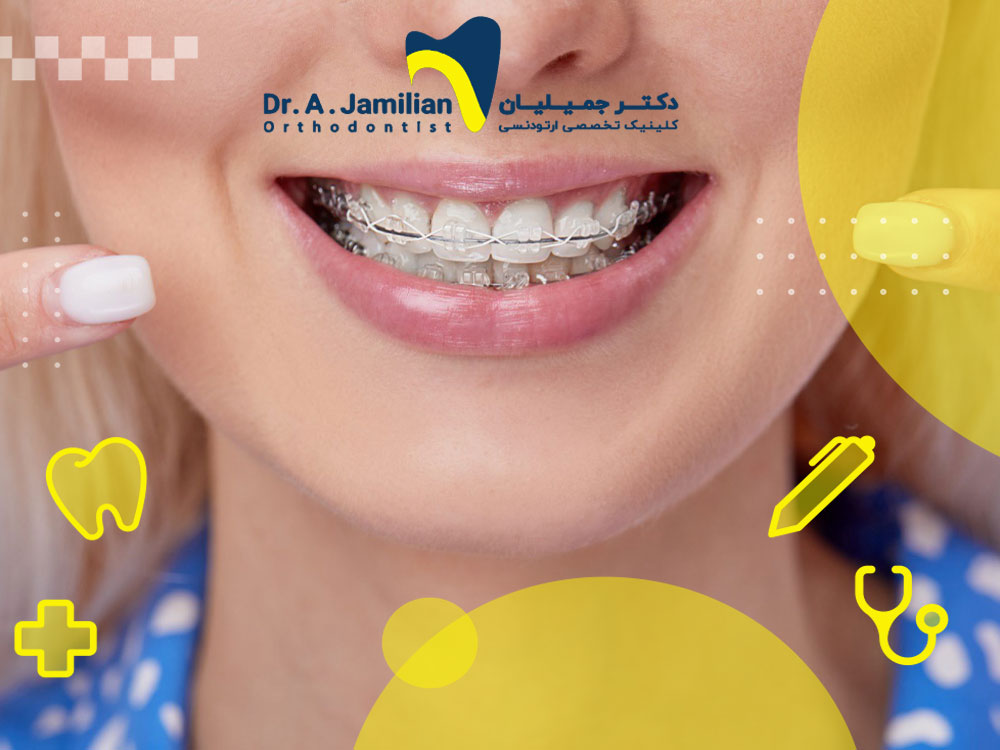
Ceramic orthodontics is a type of fixed orthodontics whose brackets are made of materials such as composite materials, alumina with compounds It is different (polycrystal, single crystal) and... Therefore, it has a transparent appearance or the same color as the teeth and does not have the aesthetic problems of traditional and metal orthodontics. In the design of this type of orthodontics, it has been tried to have strength, efficiency and beauty at the same time.
ceramic orthodontic applications
In general, it can be said that for mild to moderate teeth problems, ceramic orthodontics is highly effective and can be equal to metal orthodontics. These problems include all types of jaw abnormalities, including the following:
- Mild to moderate crowding of teeth
- distance between teeth
- Slight deviation from the midline
- Slight rotation or displacement of teeth
- Mild to moderate overbite or overjet
- Mild tooth open bite Class II malocclusion Class III malocclusion

For information About dental orthodontics and to see pictures before and after orthodontics, click.
The most important advantages and disadvantages of ceramic brackets
Appearance beauty is the biggest advantage of ceramic brackets. for having
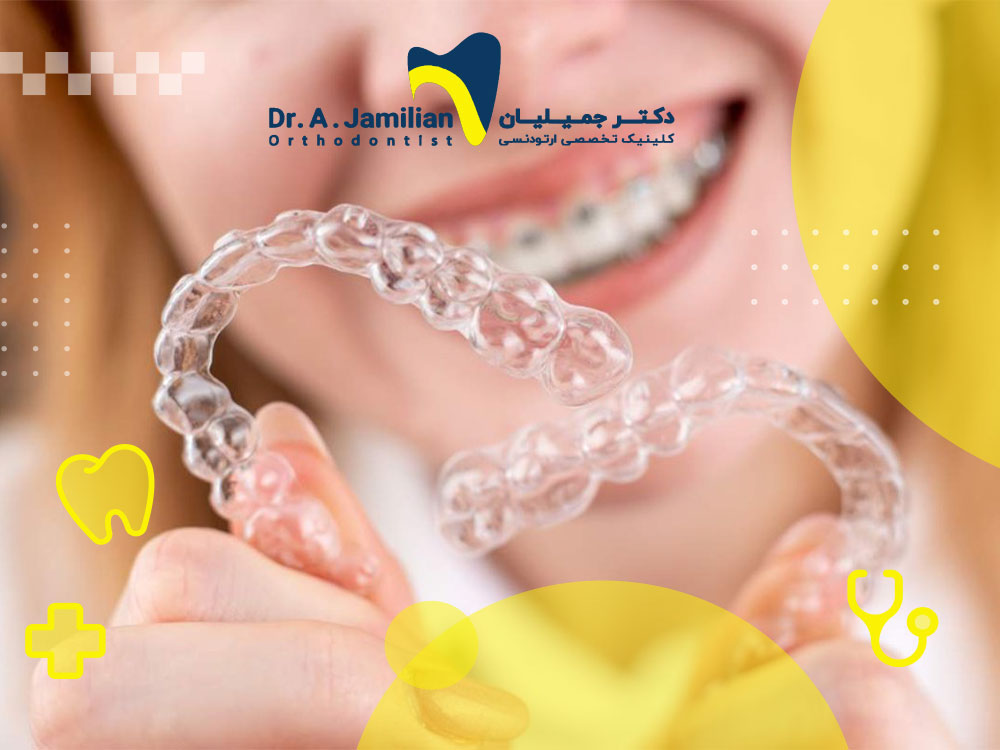
Some points about the disadvantages of ceramic orthodontics depend on the patient's lifestyle. For example, the probability of getting damaged and breaking the brackets is higher in active people such as children or athletes. Also, the possibility of changing the color of wires and retaining bands is more in those who have poor oral hygiene or are smokers. Metal orthodontics is the most common and most resistant type of brackets. Metal brackets are made of stainless steel alloys, and due to their high strength, dental movements can be controlled more accurately and quickly. This type of orthodontics is usually less expensive than other types and is very suitable for complex treatment cases. Its only weakness is being seen Ceramic orthodontics of the same color as the teeth is placed in the category of fixed orthodontics, which needs to be installed on the teeth by an orthodontist. Invisible orthodontics is usually the transparent aligners that the patient can Put and take them dynamically. This type of removable orthodontics is much more expensive than fixed ceramic orthodontics. But its main difference is that it does not require regular visits to an orthodontist. Because with one scan of the teeth, a number of invisible orthodontic clear aligners are delivered to the patient, and the patient is responsible for moving and installing the clear aligners regularly. This issue can be examined from several points of view: treatment performance, patient preferences and treatment costs are among the things that influence the choice of ceramic orthodontics. Next, we will explain more about the best choice among ceramic, metal and invisible (aligner) orthodontics. This case is completely dependent on the patient's lifestyle and condition. The patient can often choose between the three options presented. If appearance is important in addition to treatment, ceramic and invisible (aligner) orthodontics are recommended options. The use of invisible orthodontics with aligners requires high order and precision of the patient. In fact, the role of the patient is much more prominent and fundamental, because the patient himself is obliged to implement a significant part of the treatment plan with transparent removable orthodontics. But the ceramic orthodontic treatment program is very similar to metal orthodontics and is completely controlled by an orthodontic specialist. So, if appearance is very important to the patient, ceramic orthodontics is an ideal option. In general, in terms of treatment costs, metal orthodontics has a more economical price than ceramic orthodontics. After that, there is ceramic orthodontics, which has a higher cost due to the materials used. But invisible orthodontics with aligners often have the highest cost. Because it requires the creation of multiple templates, complex calculations, the use of advanced technologies, etc. Of course, the severity of the disease and the specific costs associated with the patient's place of residence (such as conditions for access to treatment) should also be considered. If we want to conclude fairly, we must say that ceramic orthodontics is a very suitable solution for treating a range of jaw and teeth problems. The disadvantage of this technique is the lower strength of the brackets compared to metal orthodontics, but due to the advancement of technology, this problem is becoming less prominent day by day. In addition to good therapeutic performance, it does not have the aesthetic problems of traditional orthodontics, but it must be taken care of more than metal orthodontics, so that it does not break or tear off due to unwanted impact and pressure.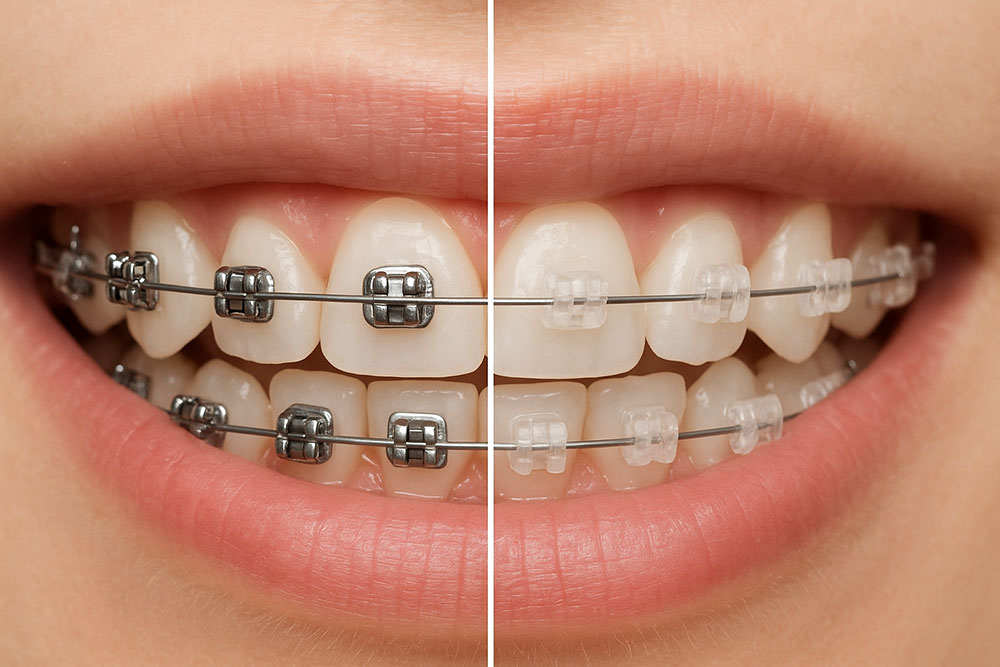
Difference between ceramic orthodontics and metal orthodontics

The difference between ceramic orthodontics and invisible orthodontics
Which one is better: ceramic orthodontics, metal or invisible orthodontics (aligners)
patient preferences
treatment costs
Final-speech about ceramic orthodontics