
Dawn syndrome diagnosis and prevention in Karaj
Down syndrome is a genetic disorder caused by abnormal cell division and a complete or partial copy of chromosome 21. This additional genetic material causes developmental changes and physical characteristics of Down syndrome.
Its severity varies from person to person and causes lifelong intellectual disability and developmental delay. This is the most common genetic chromosomal disorder and the cause of learning disorders in children.
It also commonly causes other medical abnormalities, including heart and digestive disorders.

A better understanding of Down syndrome and early interventions can prevent the occurrence of this disorder, or early diagnosis can greatly increase the quality of life of children and adults with this disorder and help them live a satisfying life.
The material provided to familiarize with this disorder and ways of prevention and diagnosis was prepared by Dr. Maryam Gholampour, a surgeon and obstetrician in Karaj.
Before pregnancy, normal egg cell and normal sperm cell have 46 chromosomes. After fertilization, the egg and sperm cells each divide into two halves, and as a result, each has 23 chromosomes.
When a sperm with 23 chromosomes fertilizes an egg with 23 chromosomes, a cell with 46 chromosomes is created, which becomes a child, half from the father and half from the mother.
But sometimes an error occurs during the division of the 46 chromosomes. An egg or sperm cell may carry both copies of chromosome 21 instead of just 1 copy.
If this egg or sperm is fertilized, then the child will have 3 copies of chromosome number 21. This case is called trisomy 21.

Sometimes the extra chromosome number 21 or part of it is attached to another chromosome in the egg or sperm.
This condition may cause Down syndrome translocation (attaching part of a chromosome to a non-paired chromosome) and it is the only form of Down syndrome that may be inherited from parents.
Risk factors in causing this disorder
Some parents are more at risk of having a baby with Down syndrome; Because different factors can affect this disorder. Risk factors include:
- Pregnancy at an advanced age
The chance of having a Down syndrome child increases with the age of the mother; Because eggs are more exposed to inappropriate chromosome division in old age.
The risk of giving birth to a child with this disorder increases after the age of 35 in the mother. However, because pregnancies are more common in younger women, most affected children are born to women under the age of 35.
- Down syndrome genetic carrier
Women and men can genetically transmit this disease to their children.
- Having a child with Down syndrome
Parents who have an affected child or parents who have a translocation (attachment of part of chromosome 21 to another chromosome) and do not have any physical characteristics related to the syndrome, are at a higher risk of having another child with this problem.

What are the symptoms of Down syndrome in a child?
Intellectual and developmental abnormalities and problems in children and people with Down syndrome may be mild, moderate or severe.
Children and affected adults have certain facial features. Although not all affected people have the same characteristics, some of its common characteristics and symptoms are:
- eyes that slant upwards
- small ears that may be slightly folded at the top
- A small mouth that makes a big tongue look
- small nose with a flat bridge
- short neck
- small hands with short fingers
- short
- loose joints and weak muscle tone
- The existence of 2 lines instead of 3 lines in the palm, one in the palm and the other in the bottom of the hand

Problems caused by Down syndrome
- small white spots on the colored part (iris) of the eye
- Heart defect that may lead to surgery in a newborn
- vision problems
- hearing problems
- thyroid and endocrine problems
- Blood problems such as leukemia and risk of infection
- Learning problems and dementia and Alzheimer's in old age
- Immune disorders due to abnormalities in the body's immune system and exposure to the risk of pneumonia and cancer
- sleep apnea
- Obesity
- Spine and neck problems

Diagnosis and Prevention
The American College of Obstetricians and Gynecologists recommends offering the option of screening tests and diagnostic tests for Down syndrome to all pregnant women, regardless of age. Screening tests can show the probability of the fetus having Down syndrome to a large extent, although not definitively.
Screening tests
Screening for Down syndrome is offered as a routine part of prenatal care for all pregnant women. Although screening tests can only detect the risk to your fetus, they can help you decide on more specific diagnostic tests.
Pregnancy screening tests include:
- Composite test of the first quarter
- screening test second trimester
- Cell Free or NIPT
Combined exam of the first trimester
This test is done in two stages, it includes the following:
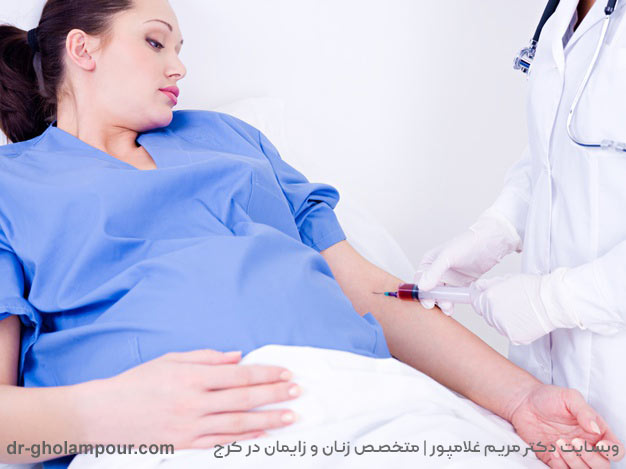
blood test, to measure the level of PAPP-A and pregnancy hormone (HCG)
Measurement of the degree of transparency of the neck (NT) of the fetus which is done by ultrasound. (NT ultrasound)
First trimester screening is done at the age of 11 to the end of 13 weeks of pregnancy, and there is no need to fast for the blood test.
Currently, all pregnant women of any age are recommended to perform screening in the first trimester. In addition to assessing the risk of Down syndrome (trisomy 21) and trisomy 18, 13, it also predicts the risk of preeclampsia or preeclampsia.
And in high-risk people, in addition to prescribing aspirin during pregnancy, pregnancy is monitored more carefully.

Screening test Second trimester
In the screening of the second trimester, the mother's blood is tested from the 15th to the 20th week of pregnancy and four factors (quad markers) are evaluated in the mother's blood.
The screening of the second trimester can be done both alone and in combination with the screening of the first trimester (integrated screening). Currently, only in cases where the mother has not done the screening of the first trimester, quad marker is performed alone because it is less accurate than the screening of the first trimester.
The integrated screening test, which combines the screening of the first trimester and the second trimester (quad marker), is performed in two parts in the first and second trimester of pregnancy.
The results are combined to estimate your child's risk of Down syndrome.
First quarter. The first part includes a blood test to measure PAPP-A and an ultrasound to measure NT.
In the second trimester, the amount of four pregnancy-related substances (quad markers) in the mother's blood are measured: alpha-fetoprotein, estriol, HCG and inhibitor A
In the second trimester, all expectant mothers should have a In this ultrasound, which is performed from about 18 to 24 weeks, all the organs of the fetus are carefully evaluated and the structural problems of the fetus are identified.
This ultrasound should be done in all pregnant mothers regardless of the results of screenings.

Sel Fry or NIPT
In this test, which can be performed from the first trimester of pregnancy, the karyotype of the fetus is determined by testing the mother's blood and separating the fetal cells that have entered the mother's bloodstream since early pregnancy.
This test is one of the screening tests, but it is more accurate and, in particular, detects Down syndrome up to 99%.
in cases such as mother's age over 40
_screening in the first trimester or the second trimester should be of moderate risk
_ Report any problems in the fetal body parts in the ultrasound anomaly scan
_ Pregnancy with IVF
It is recommended to use the free tuberculosis method as screening.
Down syndrome diagnostic test
If the screening of the first or second trimester is in the high-risk group or there is a previous history of the birth of a baby or fetus with Down syndrome, diagnostic tests should be used.
According to the abortion laws in Iran, legal abortion is allowed only with the answers to diagnostic tests (determining the karyotype of the fetus). The diagnostic tests that are able to detect Down syndrome in the fetus are:
- chorionic villus sampling (CVS) in the first trimester of pregnancy
- Amniocentesis analysis of fetal chromosomes through the amniotic fluid surrounding the fetus, after 15 weeks of pregnancy in the second trimester

Diagnostic tests for newborn babies
In addition to the appearance of the child after birth, tests called chromosomal karyotype using a blood sample can be performed. In this test, your child's chromosomes are analyzed.
Last word
Down syndrome is a genetic and chromosomal abnormality, and the age of the mother at the birth of her child is the only factor that is associated with the risk of having a baby with this disorder.
And it is often diagnosed before birth and there is no treatment for it after birth.
The topics discussed are presented for your familiarity and how to prevent and diagnose it so that your awareness leads to less incidence of this disorder.
To get familiar with Down syndrome and its diagnosis and prevention in Karaj and to receive additional information and ask your questions and learn about the tests, you can contact Dr. Gholampour.