

It must have happened to you that your tooth filling falls out after a while or a piece is separated from it. In this situation, you may experience pain, sensitivity, or worry about the decay coming back. Falling of fillings usually happens for reasons such as wear, re-decay, excessive pressure during chewing or the long life of the restoration, but there is no need to worry! Because this problem is easily solved by restoring the filled tooth. In the rest of this article, we will examine the reason for tooth fillings to fall out, the solutions after that, and the methods of restoration.
What is the cause of tooth filling falling out?
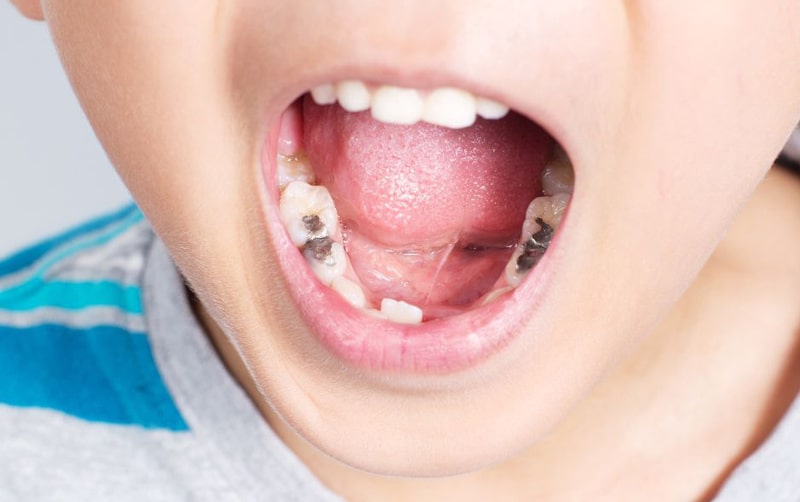
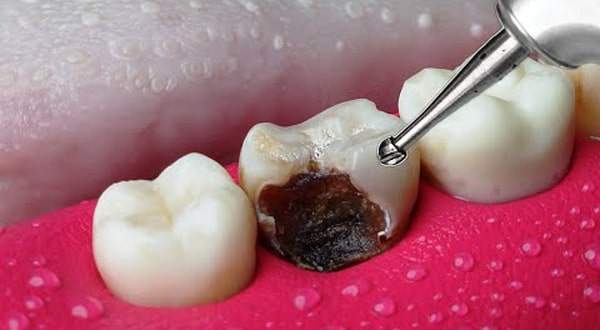
- Abrasion or re-decay under the filling: Over time, the area under or around the filling may experience decay again and the adhesion of the filling is lost.
- Consumption of hard and sticky foods: Foods such as chewing gum, candy, or pot bottoms can cause tooth fillings to loosen or come off.
- Excessive pressure when chewing or grinding teeth: People who have a habit of grinding their teeth or chewing hard are more prone to falling out of fillings.
- Deterioration of filling materials over time: Composite and amalgam fillings have a limited life and usually need to be repaired after 5 to 10 years.
- Not respecting oral and dental hygiene: Inadequate washing or plaque accumulation causes decay and eventually removal of the filling.
Read more: cost of tooth filling
What to do if a tooth filling falls out?

Sometimes the tooth filling may fall out when you do not have access to a dentist; In this situation, you can avoid pain, inflammation, infection and further damage to the teeth by taking some simple actions such as brushing your teeth and avoiding risky actions for your teeth. These works temporarily protect the damaged area and prevent the penetration of bacteria and irritation of the tooth nerve until the main treatment is done at the dentist. In the following, we have checked the actions after the tooth filling falls out:
1. Find the padding patch
If the filling is still intact, clean it and keep it in a clean tissue or small container. By examining it, the dentist will determine if it can be reused or if a new restoration needs to be done. Sometimes the presence of the original piece helps to identify the type of material and the exact place of repair.
2. Rinse your mouth with warm water and salt
Salt water solution is one of the best home methods for temporary mouth disinfection. By doing this, the bacteria in the affected area will be reduced and the inflammation or bad breath will be controlled. It is enough to dissolve half a teaspoon of salt in a glass of warm water and slowly swirl it in your mouth.3. Avoid eating hard, sticky and sweet foods
Hard or sticky foods put pressure on the affected area and cause further breakage or pain. It is better to eat only soft foods such as soup, puree or yogurt and use the healthy side of the mouth to chew.
4. In case of pain or sensitivity, use pain reliever
If the tooth becomes sensitive or painful, taking anti-inflammatory drugs such as ibuprofen or acetaminophen can relieve the pain. Of course, you should avoid arbitrary use of antibiotics.
Read more: 5. Use dental wax
Sometimes after the filling falls out, the edge of the tooth becomes sharp and wounds the tongue or cheek. In this situation, you can use special dental wax and cover the area temporarily.
6. Avoid sudden temperature changes
Eating very hot or cold foods irritates the tooth nerve and causes severe pain. Until refilling is done, it is better to avoid consuming these substances and eat foods at a balanced temperature.
7. Make an appointment with a dentist as soon as possible
No home method can replace the original treatment. Even if you don't have pain, the falling filling means that the surface of the tooth is exposed to decay and contamination; Therefore, it is better to visit the dentist as soon as possible to avoid the need for nerve extraction or more expensive treatments.
How are the ways to restore a filled tooth?
After the examination, the dentist chooses one of the following methods, depending on the type of filling and the amount of damage:
1. Simple refill
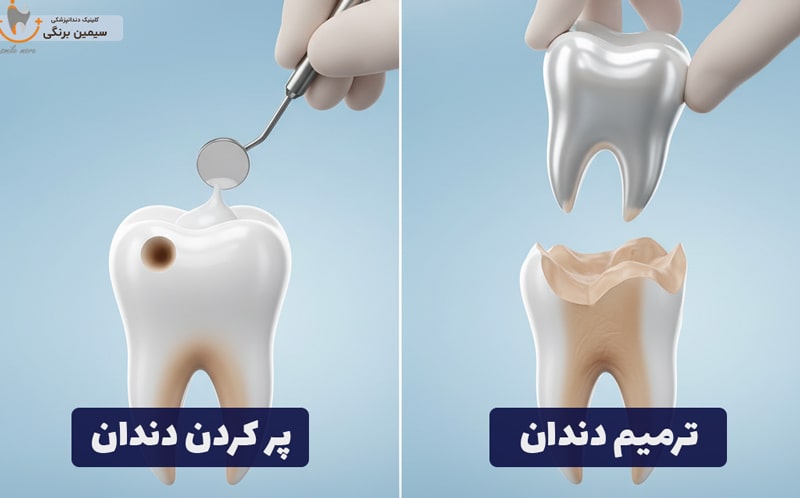
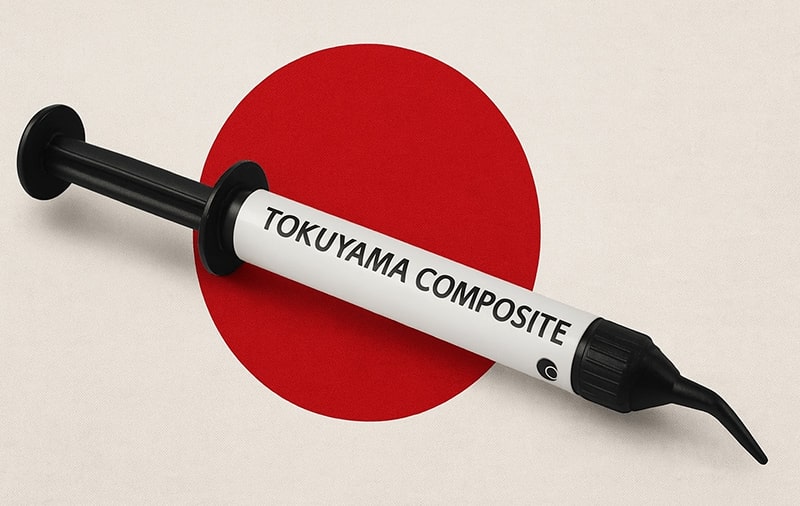
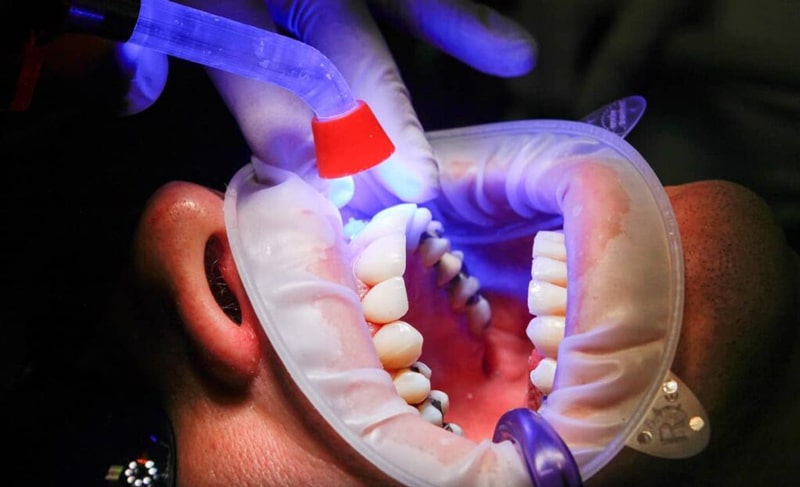
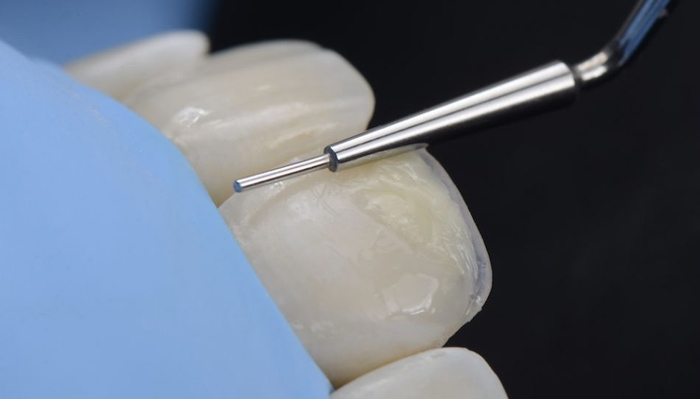
If there is no new decay, the area is cleaned and the tooth is filled again with composite (the same color as the tooth) or amalgam (silver). This method is fast, painless and suitable for superficial injuries.
2. Use of inlay or anlay
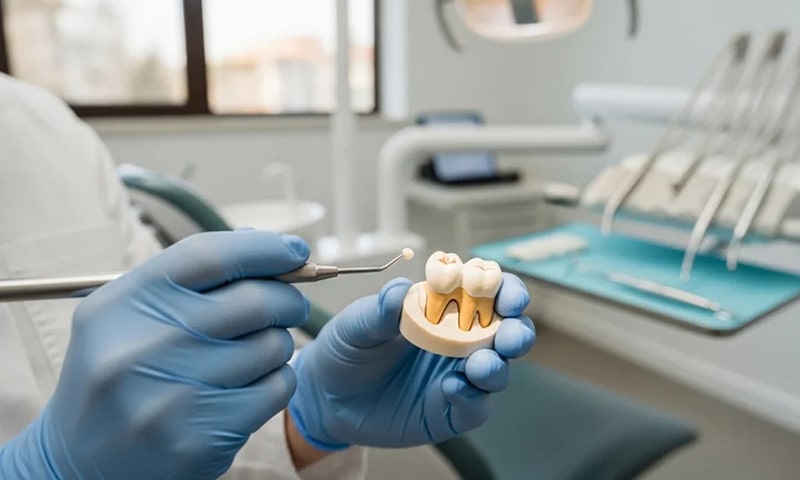
When a large part of the filling is lost, more resistant restorations called inlay or onlay are used. These parts are made of ceramic or compressed composite in the laboratory and are installed on the tooth with a special adhesive.
3. Root treatment (nerve removal)
If the tooth nerve is damaged due to decay or falling filling, nerve extraction is needed. After cleaning the root canal, the tooth is usually covered with a veneer for more protection.
4. Tooth covering
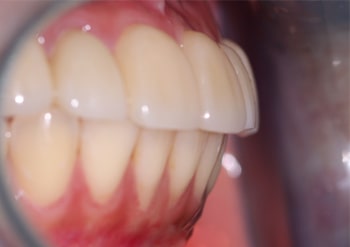
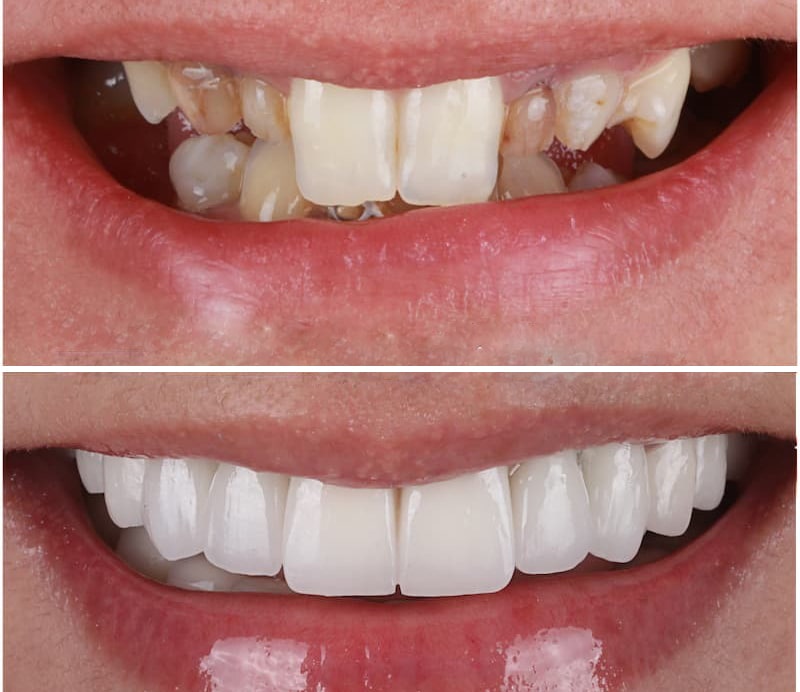
In cases where the tooth is weak or has been restored several times, ceramic and zirconia veneers are the best option. The material of these veneers is placed on the teeth like a strong shield and prevents them from breaking or decaying again.
When should a filled tooth be restored?
If the tooth filling is damaged or has underlying decay, it should be repaired as soon as possible. Common signs of need for restoration; They are:
- Falling or loose filling
- Feeling pain or sensitivity to heat, cold and sweets
- Change the color of the darkening around the filling
- Lip filling or cracked tooth or filling material
- Bad breath or metallic taste in the mouth
- More than 5 to 10 years have passed since the last filling
If you see any of these signs, a quick visit to the dentist will prevent caries and more complicated treatments.
Care after the restoration of a filled tooth
In order to increase the durability of the new filling and prevent further decay, it is necessary to observe the following points:
- Regular brushing 2 times a day: Fluoride strengthens tooth enamel and increases the durability of fillings. It is better to brush your teeth for at least 2 minutes and carefully clean the surface around the filling.
- Daily use of dental floss: This removes particles and plaque from between the teeth and around the filling and reduces the possibility of decay.
- Avoid chewing hard and sticky materials: Foods such as ice, bottom of the pot, seeds, gum and hard candies can cause the filling to crack or break.
- Periodical check-ups with the dentist every 6 months: These examinations help in case of loosening or decay around the filling, early treatment and prevent further damage.
- Reduce consumption of sugary foods and acidic drinks: Sugars create a suitable environment for the growth of bacteria. It is better to limit the consumption of sweets, soft drinks and industrial water.
- Drinking enough water during the day: Water helps to wash the mouth, reduce bacteria and maintain gum moisture and plays an important role in filling health.
Conclusion
Loss of dental fillings is a common but treatable event, and timely restoration prevents pain, decay and more costs. By observing simple care, you can increase the durability of the new filling. For a quick examination and reliable restoration of your teeth, book your appointment today with Dr. Simin Barangi, a specialist dentist, and guarantee the health of your smile.
FAQ
1. Does tooth filling fall out without pain?
Yes; Sometimes a tooth filled with a loose or fallen tooth is painless, but it causes underlying decay and needs to be repaired.
2. Is it possible to stick the fallen filling temporarily at home?
It is not recommended in any way; Homemade adhesives are not suitable for teeth and may cause more damage or infection.
3. Does falling tooth filling damage other teeth as well?
No; The falling out of the filling itself does not directly harm other teeth, but chewing hard materials or applying too much pressure may affect other fillings.
4. Should old fillings be replaced preventively?
Yes; Fillings older than 7 to 10 years may have lost their resistance and periodic inspection is necessary to prevent decay.
5. What teeth can be repaired after the tooth filling falls out?
Usually, teeth with composite, amalgam and inlay fillings can be restored; But if the tooth is very weak or cracked, it may be necessary to cover or treat the root.