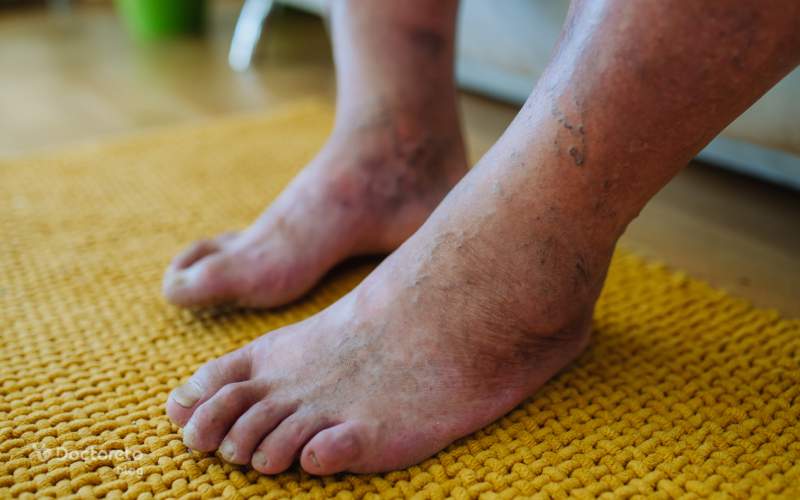
Diabetic foot ulcer is one of the most common complications of diabetes, which usually starts slowly and painlessly. Many patients only notice a problem when the ulcer has progressed or an infection has developed. Recognizing early symptoms can prevent worsening of the wound and serious complications. Paying attention to small changes in the feet plays an important role in maintaining the health of diabetic patients. In this article, we are with you from your doctor to examine the symptoms of diabetic foot ulcer in detail.
early symptoms of diabetic foot ulcer (before open ulcer)
Before a diabetic foot ulcer opens, the body sends warning signs such as skin discoloration, dryness, or unusual calluses. These symptoms are often painless and may be ignored. In the following, we will discuss the details of each of these signs and how to identify them.
English text: Foot ulcers may present almost as a wound on the flesh of the foot. Based on related conditions — like trouble with circulation and nerve damage — you may not feel certain symptoms. Persian translation: Foot wounds may appear in the form of an injury or a cut on the skin. Due to problems such as reduced blood flow or nerve damage, you may not feel some symptoms at all.
Before an ulcer opens, the body sends warning signs such as skin discoloration, dryness, or unusual calluses.
1. Redness and discoloration of the skin of the feet
One of the first symptoms or early-stage diabetic foot ulcer is a change in skin color. This change may appear as redness, darkening, bruising, or even a light purple color. This condition is usually a sign of persistent pressure, inflammation or primary infection. In diabetic patients, skin redness does not always mean simple inflammation.
Sometimes this discoloration indicates that the tissue beneath the skin is being damaged, even if the skin still looks healthy. Especially if the redness is only in one specific spot, it should be taken seriously. The important thing is that this redness may be painless. The absence of pain should not cause inattention, because the loss of feeling in the foot is one of the characteristics of diabetes and hides the danger.
2. Thick and painful calluses or, on the contrary, painless
Thick calluses on the soles or toes are one of the most common and important symptoms of diabetic foot ulcers. These calluses are caused by constant pressure and can have a hidden scar underneath, without it being obvious from the outside. Sometimes calluses are painful and sometimes completely painless.
Both situations can be dangerous. Painless corns are usually caused by nerve damage and the person does not notice excessive pressure on that area. If the callus is thick, yellow, or cracked, there is a high chance of an underlying ulcer. Manipulating or cutting the callus without a doctor's opinion can open the way for wound and infection.
3. Dry, cracked or flaky skin
Dry skin is one of the early symptoms that is often overlooked. In diabetes, the reduction of natural sweating makes the skin of the feet dry and brittle and cracks easily. These cracks may seem superficial, but they are actually a way for bacteria to enter the deeper layers of the skin.
Especially, cracks on the heel or between the toes have a higher risk. Persistent peeling or cracks that do not heal are signs that the skin has lost its ability to repair itself and is prone to diabetic ulcers.
4. Blister or small scratch that does not heal
Small blisters, scratches or superficial wounds that do not heal after a few days are a serious warning sign. In healthy people, these injuries usually heal quickly, but in diabetes, the healing process is slow. If a foot blister appears for no apparent reason or a scratch is still present after a week, it should not be taken lightly.
This can be the first stage of a diabetic foot ulcer. Many patients ignore these symptoms because they don't have pain, but this delay can cause the wound to open and infection to enter.
5. A feeling of warmth or local swelling
Abnormal heating of one point of the foot compared to other parts is a sign of inflammation or, if it is accompanied by other symptoms, the possibility of infection is raised. This symptom is sometimes seen before the opening of the wound. Local swelling can also be due to fluid accumulation or the body's inflammatory response. If a leg or part of the leg is more swollen than normal, it should be checked. The feeling of warmth or swelling is important even without pain and is one of the early symptoms of diabetic foot ulcer.
Symptoms of an open diabetic foot ulcer (when the skin splits)
When the skin splits and the wound opens, more obvious symptoms appear, such as discharge, bad odor, or discoloration of the skin around the wound. This stage is a sign of the progress of the injury and the risk of infection. In the following, we will discuss the details of each of these dangerous signs and symptoms of an open wound.
Before the skin breaks (warning stage)
After the skin breaks (open wound)
Skin color change (redness, darkening, bruising, or light purple)
Open wound, skin break, or puncture Observation
Thick or unusual calluses on the soles of the feet or toes
Discharge from the wound (clear, yellow, green, or purulent)
Severe dryness, cracking, or peeling of the skin
Bad odor from the wound site
A small blister or scratch that heals slowly.
Increase in depth. or the size of the wound
Local warmth compared to other parts of the leg
Redness, swelling and obvious inflammation around the wound
Slight swelling or local deformation of the leg
Pain or on the contrary complete painlessness of the wound
Reduction of pain, numbness or tingling in the leg
Visibility of deep tissue, Tendon or bone (in advanced stages)
Skin appears healthy but damage is forming underneath
Blackening or darkening of tissue around the wound (necrosis/gangrene)
No discharge or only very little moisture
Whitening of the skin around the wound due to excessive moisture
In this table, the related symptoms before and after skin splitting in diabetic foot ulcer are compared.
1. Open wound or skin gap
When the skin splits and the underlying tissue is visible, the diabetic foot ulcer has entered a more serious stage. This wound may be small but deep. Sometimes the ulcer looks like a small hole or slit and doesn't look dangerous, but it can actually penetrate deeper layers. Any diabetic foot ulcer needs medical attention, even if it doesn't hurt or seems small.
2. Clear or purulent discharge
Discharge from the wound is one of the important symptoms. Clear discharge may indicate inflammation, but yellow, green, or purulent discharge usually indicates infection. If the amount of secretion increases or is accompanied by a change in color, it indicates that the body is fighting the infection, but it is not successful on its own. Foul or thick discharge needs immediate action and should not be ignored with a simple dressing.
3. Bad smell from the wound site
An unpleasant odor from a diabetic foot ulcer is one of the warning signs of infection. This smell is usually caused by the growth of bacteria and tissue death. A bad smell, even if the wound is small, indicates a serious problem. In some cases, this smell is a sign of gangrene. Any unusual smell should be checked by a doctor immediately.
4. Thickening or darkening of the skin around the wound
Darkness or blackening of the skin around the wound is usually a sign of severe reduction in blood flow or tissue death. This situation is very dangerous. Thickening of the skin around the wound can be the body's reaction to chronic inflammation and prevent normal healing. These symptoms show that the wound has entered an advanced stage and needs specialized treatment.
English text: The most visible sign of a serious foot ulcer is black tissue (called eschar) surrounding the ulcer. This forms because of an absence of healthy blood flow to the area around the ulcer. Farsi translation: The most obvious sign of a serious leg ulcer is the darkening of the tissue around the ulcer, which is called "scar". This happens due to the lack of healthy blood flow to the area around the wound.
5. The tissue around the wound is white (excessive wetness)
Whitening of the tissue around the wound can be caused by excessive moisture or excessive secretion of the wound. This condition makes the skin weak and prone to infection. Wet tissue cannot repair itself and bacteria grow in it more easily. Controlling the moisture around the wound plays an important role in preventing the development of diabetic wounds.
Neurological symptoms associated with diabetic ulcer
Nerve damage is one of the main causes of diabetic foot ulcers. numbness, tingling, murmur or decreased pain sensation are the most common neurological symptoms. Some patients, on the contrary, experience burning or shooting pain, especially at night. These pains are a sign of advanced nerve damage. When the nerves are damaged, the person does not notice the impact or pressure, and the same thing becomes the basis of the wound.
Symptoms of diabetic foot ulcer infection
Diabetic foot ulcer infection is usually associated with increased redness, swelling, pain, or purulent discharge. Fever and chills can also be seen in severe stages. Sometimes the infection is painless, but the bad smell and discoloration of the wound is a serious warning. Untreated infection can reach the bone and increase the risk of amputation.
Symptoms of blood flow disorder in diabetic ulcer (dangerous signs)
Cold feet, paleness or bruises are symptoms of decreased blood flow. This situation slows down the wound healing process. Absence of a pulse in the leg or severe pain while walking are important signs of blood circulation disorder. In this situation, the wound does not heal even with the best dressing and needs vascular treatment.
Symptoms of advanced diabetic foot ulcer (warning)
Deep wounds, bone or tendon exposure, and black discoloration are signs of an advanced stage. Severe pain or, on the contrary, complete numbness, indicates that nerve and vascular damage has become severe. Diabetic Toe Blackening is one such case. At this stage, the risk of widespread infection and amputation increases, and immediate action is necessary.
Neuropathic ulcers are usually painless and occur on the soles of the feet.
Symptoms of different types of diabetic foot ulcers
Each of the types of diabetic foot ulcers has its own symptoms. Neuropathic ulcers are usually painless and occur on the soles of the feet. The skin around them is dry and calloused. Ischemic wounds are caused by decreased blood supply and are usually painful, cold and dark in color. But in diabetic patients with neuropathy, pain can be reduced or absent. Infectious wounds are a combination of both conditions and are the most dangerous.
Conclusion
Symptoms of diabetic foot ulcer start from small skin changes and if not detected in time, it can lead to deep wounds, infection and even amputation. Painless doesn't mean it's safe, as many sores are painless. Checking your feet daily and paying attention to early signs such as redness, dryness or calluses is the key to prevention. Early diagnosis and proper care of wounds can shorten the treatment process and reduce serious complications. Patient education and awareness of risks play an important role in keeping feet healthy. Finally, strict adherence to blood sugar control and skin care is the most basic way to prevent diabetic foot ulcers.
Your doctor takes care of your health!
Frequently Asked Questions
No, diabetic foot ulcers are not always painful. Many diabetic foot ulcers (especially the neuropathic type, which is the most common) are often painless because the nerve damage (peripheral neuropathy) causes decreased or loss of pain, pressure, and temperature sensation in the foot, and the person may not notice the ulcer, blister, or injury until severe infection or other complications develop.
The first symptom of a diabetic foot ulcer is often a red spot or warm, red area on the pressure points of the foot (such as the soles of the feet, head of the metatarsals or heel) which indicates primary inflammation or the beginning of subcutaneous damage (such as a blister or ulcer under a callus); This redness may be accompanied by mild swelling, localized warmth, or skin discoloration, and is often painless due to diabetic neuropathy, so the person may not notice it until the wound opens or an infection develops.
Yes, simple redness can be one of the early or warning signs of a diabetic foot ulcer. especially if accompanied by heat, swelling or skin changes in an area of the foot (such as the sole, leg or around the wound); This redness often indicates inflammation, persistent pressure, skin irritation, or the onset of infection, and in diabetics due to neuropathy, it may be painless, so it should not be ignored.
Purulent discharge, foul odor, fever, severe swelling and black skin discoloration.