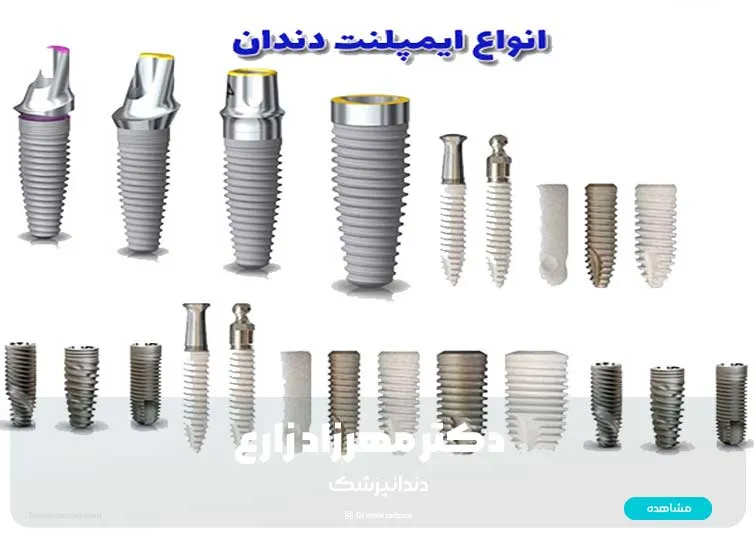

Tooth loss is not just an appearance problem; It can also affect general health, quality of nutrition, speech and even self-confidence. Today, dental implants are recognized as one of the most advanced methods for replacing lost teeth. However, the high variety of implants has made many people ask the question of the types of dental implants: which one is better?
The answer to this question depends on several factors such as the condition of the jaw bone, age, underlying diseases, financial budget and the purpose of treatment. In this article, I have tried to examine all types of dental implants with a completely specialized view, but in simple language, so that you can make an informed decision.
Definition of dental implant
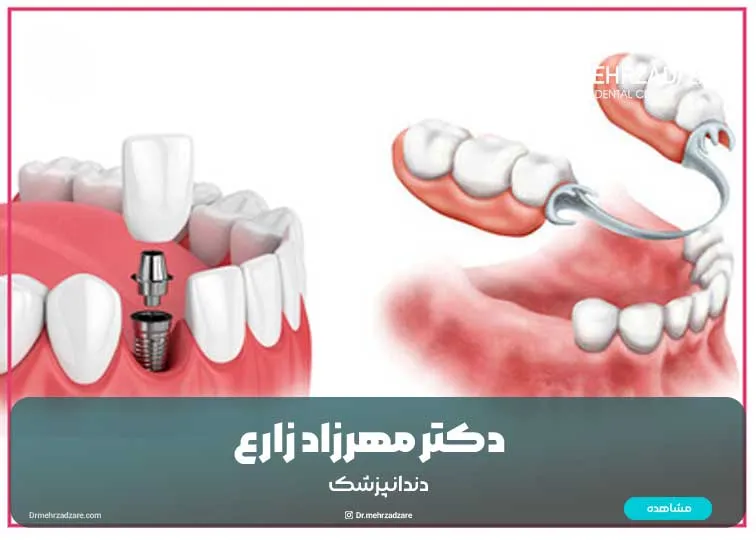
Dental implant A metal base (usually made of titanium or zirconia) that the surgeon places inside the jawbone to take the place of the missing tooth root. Then In contrast to removable artificial teeth, implants:
-
Fixed
-
Welds to the jawbone
-
It looks and functions very close to natural teeth
For this reason, when considering the types of dental implants: which one is better? Special attention should be paid to the quality, gender and type of connection to the bone.
Several factors cause tooth loss, the most important of which are:
-
Severe tooth decay
-
Advanced gum diseases (periodontitis)
-
Strike and accident
-
Chronic infections
In such a situation, the implant is considered the best solution to restore the function and beauty of the mouth.
Types Dental implants based on location
1. Endosteal implant
It is the most common type of implant. The dentist implants this type directly into the jaw bone. Most modern implants are of this type.
Advantages:
-
Very high connection strength
-
Long lifespan
-
Very similar to natural teeth
Disadvantages:
-
need for proper bone density
-
relatively long treatment time
In most cases, when patients are asked about the types of dental implants: which one is better?, the doctors' answer is this type of endosteal.
2. Subperiosteal implant
This type is placed on the jawbone and under the gum, not inside the bone.
Usage:
For patients who do not have enough jaw bone and there is no possibility of bone grafting.
Advantages:
-
No need for bone grafting
-
Suitable for the elderly
Disadvantages:
-
Lower strength than Endostyle
-
Shorter lifespan
types Dental implants by gender
1. Titanium implant
It is the most widely used type of implant in the world. Titanium is very compatible with the human body.
Advantages:
-
Complete fusion with bone
-
Very high resistance
-
Long scientific record
Disadvantages:
-
In rare cases, metallic color can be seen under the gums
In the scientific answer to the question of types of dental implants: which one is better?, titanium is still considered the number one choice.
2. Zirconia implant (ceramic)
This type of implant is white and without metal.
Advantages:
-
very high beauty
-
Insensitivity to metal
-
Suitable for people with thin gums
Disadvantages:
-
More cost
-
Higher brittleness than titanium
Types Dental implants based on the time of implantation
1. Immediate implant
The doctor places the implant immediately after tooth extraction.
Advantages:
-
Decreasing the number of treatment sessions
-
preserving gum shape
Disadvantages:
-
Need very good bone conditions
-
Slightly more likely to fail
2. Delayed implant
The doctor places the implant a few months after tooth extraction and bone repair.
Advantages:
-
Increasing treatment success
-
Higher stability
Disadvantages:
-
Prolonging the treatment period
types Dental implant brands
The answer to the question of types of dental implants: which one is better? It is not complete without checking the brands.
1. Swiss brands
-
Straumann
-
Nobel Biocare
The highest quality, the longest durability, and of course the highest price.
2. German and Korean brands
-
ICX
-
Dentium
-
Osstem
Excellent balance between price and quality.
3. Iranian brands
-
Snucone

There is no definitive answer for everyone. The best implant for each person is determined based on the following:
-
Jaw bone density
-
gum health
-
Age of the patient
-
diseases like diabetes
-
Budget amount
-
Location of the missing tooth (front or back)
But in general:
-
In terms of strength: Endosteal titanium implant
-
Esthetically: Zirconia implant
-
Economically: Korean and Iranian implants
Most of the recommendations of experts still go back to the standard titanium implant.
Even if the best type of implant is chosen, it will not last long without proper care.
The most important ways of prevention:
-
regular brushing twice a day
-
Using Tooth for implant
-
Regular visits to the dentist every 6 months
-
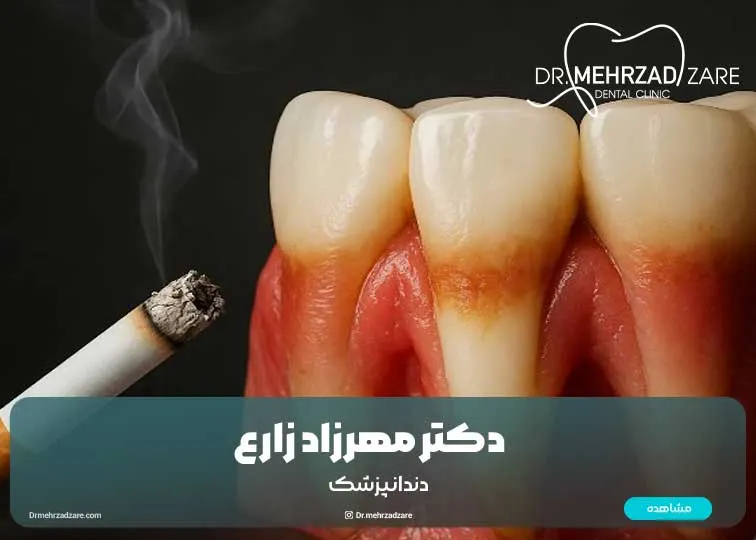
Leave cigarettes
-
Diabetes control
-
Prevention of extreme pressure (teeth grinding)
In some situations, implants are not the best choice. Alternatives include:
1. Bridge Dental
The two side teeth are cut as a base and the artificial tooth is placed on them.
2. Movable denture
Less expensive, but with reduced chewing power and less stability.
-
Practice opening and closing the jaw gently
-
Avoid chewing hard food for three months
-
Washing with saline serum
-
Consumption of vitamin D and calcium supplements with doctor's opinion
These actions play an important role in the final success of the treatment.
Conclusion
The answer to the question of types of dental implants: which one is better? It depends on the specific conditions of each patient, but scientifically, Endostyle titanium implants from reputable global brands are considered the best option in terms of durability, strength and compatibility with the body. health Mouth, smoking cessation and regular visits to the dentist play a decisive role in the long-term success of the implant.
FAQ
-
Is implant placement painful?
No, it is done under complete anesthesia. -
How long does the implant last?
With proper care, more than 20 years. -
Are implants suitable for the elderly?
Yes, in case of general health. -
Is diabetes an obstacle to implant placement?
If it is controlled, no. -
Is an implant better or a bridge?
In terms of durability and bone health, an implant is better. -
Do metal implants cause sensitivity?
Rarely. -
Does the implant change color?
No, the crown may change color, not the base. -
How long does it take to weld the implant?
Between 3 and 6 months. -
Does the implant fail?
It is rare if taken care of. -
Is the implant cost fixed?
No, it depends on the brand and the condition of the jaw.
❌ Misconceptions
-
The implant always falls out
-
Implants cause cancer
-
Only young people can get implants
-
The implant has a short life
-
Can't chew food after implant
-
Implant has only a cosmetic aspect
-
The implant does not require care
-
The implant is not compatible with the body
-
The implant is painful
-
The implant is only suitable for front teeth
All of these are false ❌