
Drug treatments for knee joint replacement - 3 important drugs Dr. Majid Ghorbanzadeh
Pharmaceutical treatments for knee joint replacement
- Dr. Majid Ghorbanzadeh
- February 11, 1403
The most important reasons for the use of medical treatments for knee joint replacement are the injuries of the knee joints that make people unable to walk properly and the extra pressure on the knee. It not only limits the patient's range of motion, but is associated with a lot of pain. When experts according to […]


Quick access
ToggleThe most important reasons for using drug treatments for knee joint replacement
Knee joints damage It can make people unable to walk properly and the extra pressure on the knee.
Not only does it limit the range of motion of the patients, but it is also accompanied by a lot of pain.
When the experts consider knee joint replacement as a suitable treatment method according to the patient's condition, after the operation they ask the patients to start taking the prescribed drugs.
At the same time, in addition to surgery and joint replacement, taking medicine can improve people's quality of life and physical conditions return to normal very soon.
If patients experience inflammation or swelling in the affected area after knee replacement, non-steroidal anti-inflammatory drugs are prescribed for faster recovery. The most important side effects of knee replacement surgery should be the formation of blood clots in the veins.
Specialists prevent such a major injury by prescribing anticoagulants, and usually drugs such as warfarin or rivaroxaban are prescribed to patients.
However, specialists prescribe drug treatments for knee replacement.
They believe that they will have an easier recovery period after surgery and fewer complications.
Certainly, after knee joint replacement surgery, the physical conditions of the patients are slightly weakened and it may take a long time for the physical conditions to return to normal.
Therefore, experts consider it necessary to take medication for the patients to recover faster and believe that by doing this, they can get better results from the surgery Knee joint replacement.
Prescription drugs for joint replacement
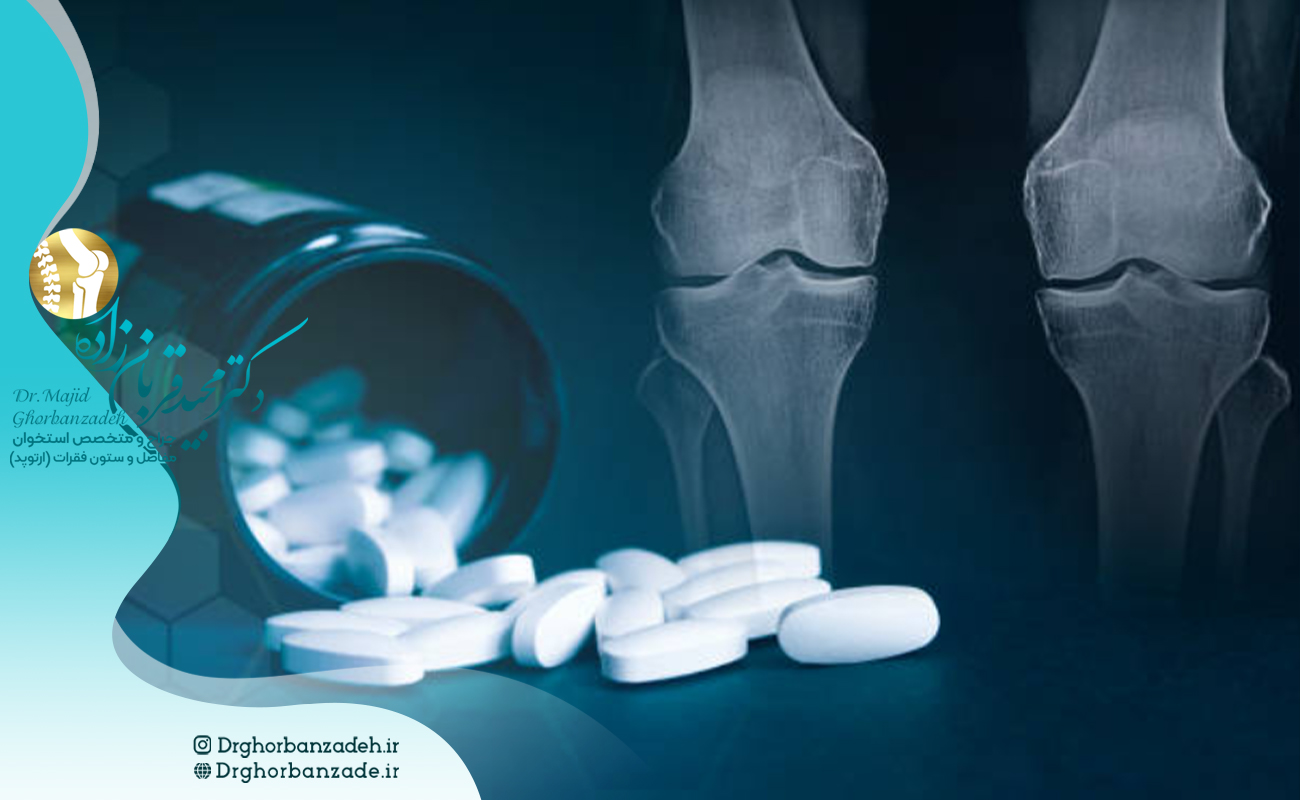 Prescription drugs for joint replacement
 After knee replacement, patients are required to take the drugs prescribed by the doctor correctly during the recovery period and for full recovery. do.
Analgesics and pain control
After surgery, people may feel uncomfortable and need to use a variety of pain relievers to reduce pain and swelling at the surgical site.
In such a situation, doctors prescribe acetaminophen for mild to moderate pain.
If these pains become severe, use opioids such as oxycodone or hydrocodone. is prescribed.
Remember that these drugs Use only with the doctor's prescription and you should be careful when using them.
These types of drugs are usually prescribed for a short period of time and you should not use these types of strong pain relievers for long periods.
Anti-inflammatory drugs and swelling
Another type of drugs that are prescribed to patients after knee replacement surgery are non-steroidal anti-inflammatory drugs that help reduce swelling and inflammation and result in faster recovery.
These drugs include ibuprofen, naproxen and diclofenac, which are among the drugs that are usually prescribed to patients.
Anticoagulant drugs
After any surgery in different parts of the body, there is a possibility of blood clots forming in the deep veins.
Specialists use anticoagulants after knee joint replacement to reduce the possibility of this type of formation. They reduce the clots as much as possible.
These drugs include warfarin, heparin, rivaroxaban and apixaban.
Antibiotics
After knee joint replacement, experts put a lot of emphasis on wound care.
They advise people to avoid the occurrence of infection in different parts of the body, especially the surgical site, with more care and sensitivity.
In addition to all the tips they give to patients, experts consider it necessary to use antibiotics.
These drugs reduce the risk of infection and make wounds heal as quickly as possible.
Anti-nausea drugs
If the experts prescribe all the mentioned drugs for patients, everyone's reaction to this type of pharmaceutical products is definitely not the same.
Some people may experience nausea after taking pain and inflammation control drugs every day.
Of course, bringing back these types of painkillers does not mean that people are allowed to use another dose of medicine at any time when their pain increases.
Therefore, experts prescribe anti-nausea drugs to prevent digestive problems in order to avoid the side effects of other drugs.
Enhancing and complementary drugs
Consumption of strengthening drugs and You should never use supplements arbitrarily. Specialists prescribe supplements that contain calcium, vitamin D and vitamin K for patients. The use of bisphosphonates and parathyroid hormones along with anti-osteoporosis drugs is mandatory for patients. From magnesium supplements use and adopt a healthy, tonic and well-balanced diet. The use of these drugs should be determined and monitored by a doctor. Your doctor may make changes in the dosage and type of medication based on your needs and your specific physical characteristics. It is important to talk to your doctor about symptoms or changes in your bone health. Many people mistakenly think that taking more medication after knee replacement will bring them closer to recovery. But don't forget that this type of advanced surgery requires more care. and it must take time to achieve the desired results from the surgery. After knee joint replacement, drugs are definitely prescribed to prevent side effects and faster recovery of patients. But be sure to consider the warnings and drug prohibitions and do not use all kinds of drugs arbitrarily. If specialists prescribe painkillers for patients, the dosage and time interval They will tell patients that even if you have severe pain, you should not use painkillers excessively. Avoid their long-term use because this drug has side effects that may cause severe digestive problems, addiction and similar injuries. Certainly, various types of non-steroidal anti-inflammatory drugs are prescribed to patients after knee joint replacement surgery. It is possible. With long-term use of these drugs, digestive damage such as stomach bleeding or kidney problems may appear, it is important to take these drugs as long as the doctor advises. Anticoagulant drugs are used to prevent blood clotting. Their improper use may bring the risk of severe bleeding and disturb the blood coagulation status. From Be sure to use these types of drugs with the doctor's advice and with the specified amount. The use of drugs is mandatory for the period of time determined by the doctor, for example, the prescribed antibiotics should be taken until the time the doctor announces. Stopping them early causes the body to lose its resistance to bacteria and infections.Drug use prohibition after knee replacement
 Prohibition of taking medication after knee replacement
 Correct use of painkillers
Non-steroidal anti-inflammatory drugs
Anticoagulant drugs
Antibiotics
Infection may cause cartilage dysfunction
Alcohol and cigarette consumption
Don't forget that alcohol and cigarette consumption after knee joint replacement and at the same time as prescribed medications are dangerous and drug interactions with these substances may endanger people's health.
Following a proper diet
Some medications may require you to follow a special diet.
Dietary recommendations Follow your doctor or pharmacist.
Following these warnings and restrictions will help you avoid Avoid the side effects of your medications and speed up your recovery after surgery.
Important points about using medications after knee joint replacement
Using medications after knee replacement requires special attention and care to achieve better recovery and reduce side effects. Important points to consider are:
- Take prescribed medicines as directed by your doctor. Never change the dose of medicine arbitrarily or ignore the time of administration.
- Inform your doctor immediately if you experience any side effects such as nausea, vomiting, dizziness, unusual bleeding or allergic reactions.
- Avoid taking medications that have not been prescribed by your doctor. This includes over-the-counter medications and herbal supplements.
- To avoid drug interactions, give your doctor a list of all the drugs and supplements you take, including prescription drugs, over-the-counter drugs, and dietary supplements.
- Some medicines may interact with some foods. Ask your doctor or pharmacist if you should follow a special diet.
- Regular appointments with your doctor are essential to check your progress and adjust your medications. Make sure you make all subsequent visits. It is very important to pay attention to possible signs of infection such as fever, redness, swelling or severe pain at the surgical site. If these symptoms occur, see a doctor immediately.
- Keep medicines in proper conditions and out of reach of children. Check the expiration date of the drugs and avoid using expired drugs.
Sensitivity to drugs after knee joint replacement
 Allergy to drugs after knee joint replacement
Before starting to take medications after knee joint replacement surgery, if you have a specific allergy to certain medications, you must inform your doctor.
However, if you develop an allergic reaction after taking the prescribed medication, do the following:
- Stop taking the medicine immediately.
- Notify your doctor.
- Use antihistamines.
- Record the allergy in your medical record.
- Avoid taking the medicine again.
- Prepare for emergencies.
Medicine allergy is a serious issue and should be managed carefully.
By working closely with your doctor and fully informing your medical team, you can prevent more serious complications and have a safer and more effective recovery.
FAQ
How can drug interactions be avoided?
Tell your doctor or pharmacist about all the medications you are taking to avoid drug interactions.
Includes prescription drugs, non-prescription drugs and food supplements.
Should medicines be taken with food?
Some medicines should be taken with or without food. Follow any special instructions given to you by your doctor or pharmacist.

Dr. Majid Ghorbanzadeh
Surgeon and bone and joint and spine specialist (orthopedic) Knee and hip surgery, arthroscopy, arthroplasty Member of the American Orthopedic Association Has a specialized board and a member of the Orthopedic Surgeons Association Youtube Instagram
6 answers
-
Are local medicines also used?
Reply-
Hello, dear friend of the site, yes, anti-inflammatory creams or gels may be prescribed to reduce local pain and swelling.
Reply
-
-
What medicines are used to prevent blood clots?
Reply-
Hello dear friend, drugs such as warfarin, heparin, or rivaroxaban are usually prescribed.
Reply
-
-
How long should blood thinners be taken?
Reply-
Hello dear friend, usually 4 to 6 weeks, but the doctor may determine the exact time.
Reply
-





