
بارداری یکی از شگفتانگیزترین تجربیات در زندگی یک زن است که با تغییرات جسمی و روحی زیادی همراه است. One of the common questions and common curiosities during pregnancy is related to the gender of the fetus. Many old beliefs and traditions try to predict the gender of the fetus by referring to some signs and symptoms. In fact, there are no 100% female or male fetus symptoms, but some symptoms can be related to gender. In this article, we examine the symptoms of female pregnancy and separate scientific facts from myths.

Listen to the audio summary of the article here:
What is the difference between the pregnancy symptoms of a girl and a boy?
In the old beliefs, there are differences between the pregnancy symptoms of girls and boys, which, although not scientific, are still popular among people. For example, female pregnancy is thought to be associated with increased sweet cravings, skin changes and rashes, as well as severe morning sickness. In contrast, male pregnancies are associated with a preference for salty and sour foods, and less nausea. Although these symptoms are attributed to the gender of the fetus, in reality, individual differences in the mother's body and hormonal changes are more effective than the gender of the fetus.
Difference between male and female pregnancy symptoms in traditional terms:
| Marks | girl | boy |
| abdomen shape | round and high | sharp and Forward |
| Food craving | Sweet | Salty and sour |
| Fetal heartbeat | >140 beats | <140 beats |
| Nausea Morning | More severe | Less |
| Mood swings | More | Less |
| Pimples | More | Less |
| Color Urine | Darker | Lighter |
| Weight gain | Abdomen and thighs | Upper body |
| Body hair | Less | More |
| Temperature Body | More cold | More heat |
Is Determining the gender of the fetus before pregnancy is possible? از دکتر مهشید کریمی سوال کنید:

به نقل از سایت pampers.com
“Am I having a boy or girl?” is an exciting question to ponder during your pregnancy journey. For many, the mid-pregnancy ultrasound at about 18 to 20 weeks reveals the big news. Waiting this long can be tough if you're super eager to know if it's a boy or girl!
“Am I having a boy or a girl?” It's an exciting question to think about during pregnancy. For many, a mid-pregnancy ultrasound at around 18-20 weeks reveals the big news. If you're so anxious to find out if it's a boy or a girl, waiting this long can be tough! Using old stories to predict the baby's gender can be a fun and joyful way to pass the time while you wait. However, it is important to note that these gender prediction tests and stories are not accurate, medical or scientific.
The most important states and symptoms of a female fetus
According to popular and traditional beliefs, there are various signs that can help determine the gender of a girl during pregnancy. Although these symptoms have not been scientifically proven, they are still common among people. In the following, we will examine the most important symptoms of a 100% female fetus:

Shape of mother's belly
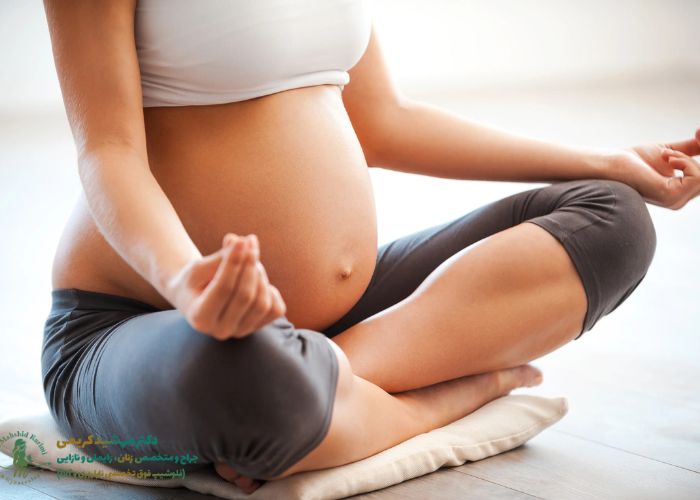
One of the most common symptoms of a girl's pregnancy is the shape and way the mother's belly grows. It is said that if the belly grows upwards and in a round shape, it is more likely that the fetus will be a girl. However, this belief has not been scientifically confirmed, and the shape of the abdomen depends more on physical factors such as the strength of the mother's muscles and the way the fetus is placed in the uterus, rather than the gender of the fetus.
Sweet food store
One of the signs of a girl's pregnancy is a craving for sweets and sugary foods such as cakes and chocolates. While in the pregnancy of a boy, it is said that the mother has a greater desire for salty and sour foods. However, this belief has no scientific basis and food cravings are more related to hormonal changes and nutritional needs of the mother's body during pregnancy.
Fetal heartbeat
According to old beliefs, if the heart rate of the fetus is more than 140 beats per minute, the fetus is a girl. The fact is that the heart rate of male and female fetuses is slightly different from each other, but this difference is evident only at the time of delivery and before that it has no relation to the gender of the fetus.
severe nausea
Another symptom of a female fetus is experiencing severe morning sickness. Some believe that mothers who are pregnant experience more nausea. However, morning sickness is more related to hormonal changes and blood sugar levels during pregnancy and cannot be considered as a criterion for determining the gender of the fetus.
mother's breast size
According to old beliefs, if the mother's left breast is bigger than the other breast, the fetus is a girl.

Severe mood swings
Mood changes and emotional fluctuations are symptoms that almost all pregnant women face. In pregnancy with a female fetus, these fluctuations are said to be more intense and uncontrollable. But this symptom is also due to hormonal changes during pregnancy and it cannot be directly attributed to the gender of the fetus.
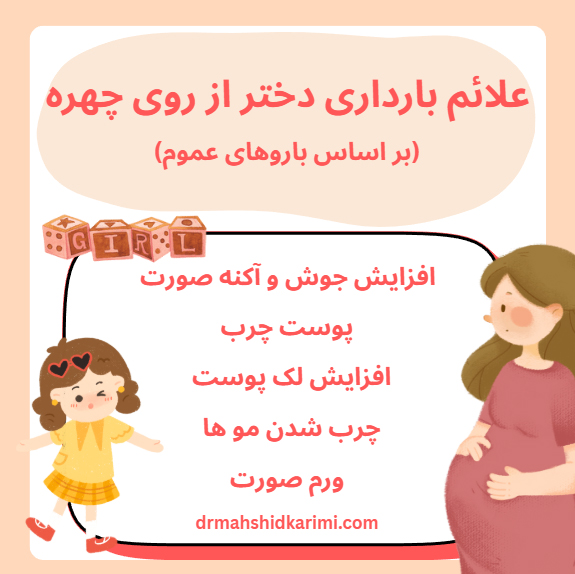
Acne and facial pimples
One of the common beliefs is that the female fetus steals the mother's beauty and causes pimples and acne. In fact, some consider pimples, acne and skin problems as signs of pregnancy. This belief has no scientific basis and pimples during pregnancy are the result of hormonal changes in the mother's body. Oiliness of the skin and increase in pimples can happen in any pregnancy and has nothing to do with the gender of the fetus.
Changes in breasts
Some people believe that in pregnancy with a female fetus, breast changes are more visible in the left breast and this breast becomes bigger than the right breast. Although the changes in the breasts occur due to the increase in the level of hormones, the belief that one of the breasts will become bigger and indicates a girl's pregnancy has no scientific basis.
urine color
In traditional beliefs, it is said that one of the signs of a girl's pregnancy is that if the color of the urine is darker, the fetus is a girl, and if it is light, the fetus is a boy. This belief is also scientifically unconfirmed and the color of urine can depend on the amount of water consumption, nutrition and health status of the mother.
Weight gain in the middle-areas of the body
Another sign of a girl's pregnancy is weight gain in the middle areas of the body, especially around the abdomen, hips and thighs. Traditional belief says that if obesity is concentrated in these areas, the probability of a girl's pregnancy is higher. While weight gain during pregnancy depends on factors such as diet, activity and body type of the mother and cannot be related to the gender of the fetus.
Mother's skin and hair condition
During a girl's pregnancy, some believe that the mother's skin becomes drier and her hair becomes more dull. But like other symptoms, these changes are also related to the hormonal fluctuations of the mother's body and cannot definitely indicate the gender of the fetus.