Fasting blood sugar (FBS) is one of the important indicators for evaluating the body's metabolic health and plays a key role in the early diagnosis of diabetes. This simple and accurate test measures the amount of glucose in the blood after a few hours of fasting and is considered a reliable way to check the status of insulin function and blood sugar regulation. An abnormal increase or decrease in fasting blood sugar can be a sign of impaired glucose metabolism, insulin resistance or early stages of diabetes. In the following, we intend to introduce you to the process, normal results and important points of fasting blood sugar test.
Read more: Treatment of insulin resistance
What is a fasting blood sugar test?
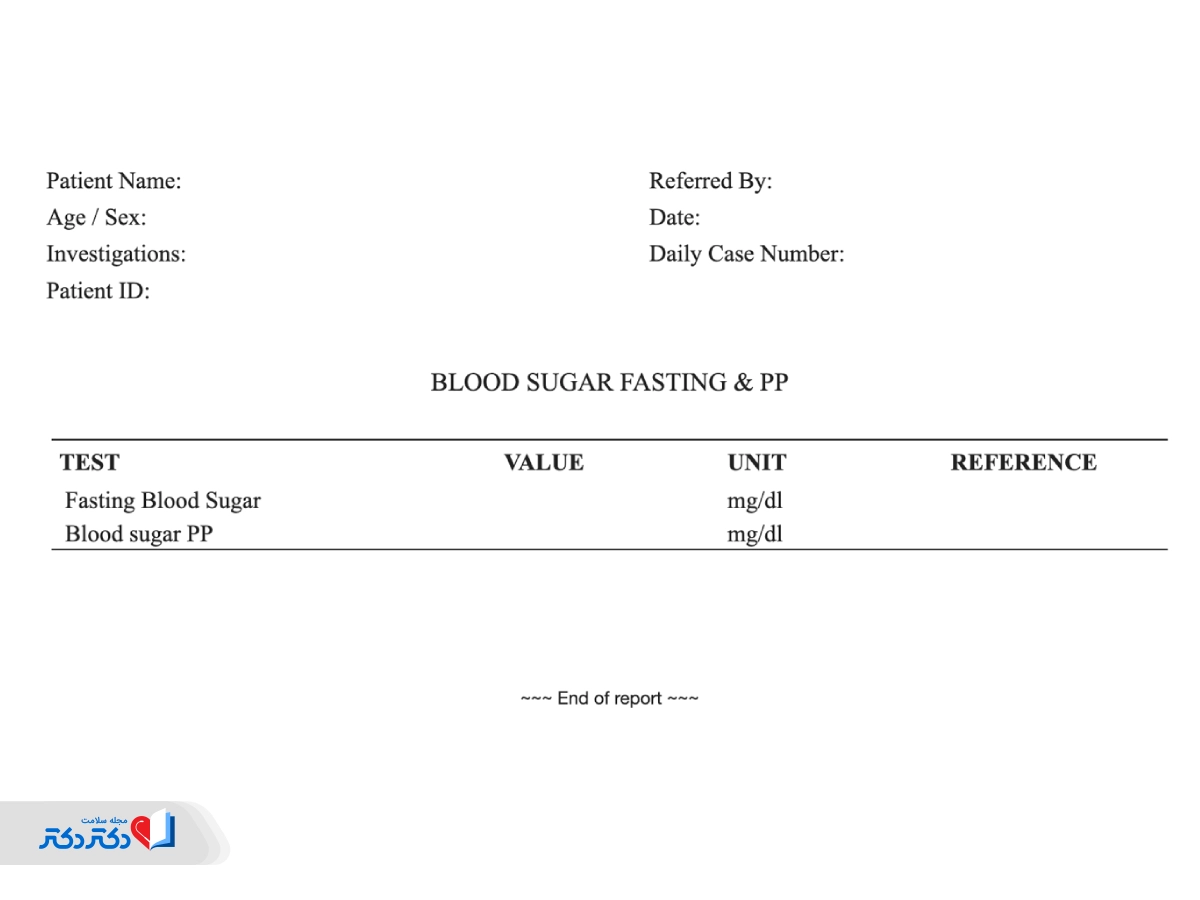
Fasting blood sugar is a simple and common test used to screen Fasting Plasma Glucose or FPG testFasting Blood Glucose or FBG testFasting Blood Sugar or FBS testThe result of this test is also displayed in milligrams per deciliter. 
In the process of diagnosing diabetes, the fasting blood sugar test may be performed alone or together with one of the following tests:
- Random blood sugar test: measures glucose at any time of the day, without the need to fast.
- Oral glucose tolerance test (OGTT): which measures blood glucose levels after drinking a very sweet solution, after a period of fasting.
- Hemoglobin test A1C: which shows the average blood glucose level for the past two to three months.
If the doctor has recommended a fasting blood glucose test due to the presence of diabetes symptoms, it is usually necessary to repeat this test on another day to confirm the results. The doctor may also suggest performing an OGTT or hemoglobin A1C test instead of the second test, or alongside it.
The fasting blood glucose test is considered superior to the A1C test in terms of accuracy and sensitivity, although it is not as sensitive as the oral glucose tolerance test (OGTT), which is the gold standard in blood glucose measurement.
Important points before performing FBS test
Before the fasting blood sugar test, you must remember these points:
- As the name suggests, you must be fasting for this test; That is, about eight hours before the test, avoid eating food or other drinks. Of course, drinking water before the test is not a problem.
- Ask your doctor about taking medications. You may need to postpone taking some of your medications until after the test. Usually, this test is done in the early hours of the morning; For this reason, you must fast from the night until the morning of the test.
- You may feel weak or dizzy after the test due to a long fast. For prevention, it is better to bring a light snack (such as biscuits or fruit) and eat it immediately after the test.
- There is also a fasting blood glucose test home kit on the market; Of course, this tool is useful for monitoring the blood sugar of people with diabetes and is not recommended for the diagnosis or initial screening of diabetes.
How much should the fasting blood sugar test be?
Is it possible to answer this question? It may vary depending on the laboratory or your specific conditions; But in general, diagnostic categories based on blood glucose level (in milligrams per deciliter) are as follows: 99
Normal | | 100 to 125 | Prediabetes or increased risk of diabetes |
| 126 or more | Diabetes |
| Less than 55 | Hypoglycemia (dangerous drop in sugar blood) |
Two abnormal results from two separate tests are required to confirm the diagnosis of diabetes. If the FBS test result is in the borderline or high range and suggests the possibility of diabetes, it is necessary to repeat the test in the near future or to order additional tests such as hemoglobin A1C, oral glucose tolerance (OGTT) or postprandial blood glucose.
If sampling is done in the afternoon, the results may be slightly lower than the actual value. Also, if there is a long time gap between sampling and processing the test in the laboratory, the result may be reported as falsely lower. Some past or present physical conditions, as well as personal habits such as smoking or exercise, can also affect the test results.
When performing and interpreting this test, your doctor should consider your complete medical history to obtain a more accurate assessment of your health status.
Normal FBS level in adults
In general, the normal fasting blood sugar level (FBS) in adults is between 70 and 99 mg/dL. However, with age, glucose metabolism and insulin sensitivity change, and slightly higher values may be considered normal: 18 to 35 years: about 70 to 95 mg/dL About 70 to 99 mg/dL
51 to 65 years: About 75 to 105 mg/dLOver 65 years: Up to about 110 mg/dL in some sources are still considered normal.These differences are usually It is caused by a gradual decrease in insulin sensitivity, hormonal changes and a decrease in physical activity. However, accurate diagnosis should always be made based on medical history, general body condition and doctor's opinion.
Difference between normal values in men and women
In general, the normal range of fasting blood sugar in men and women is not significantly different, and for both groups, the range of 70 to 99 mg/dL is considered as the normal range. will be However, hormonal changes in women (especially during menstruation, pregnancy, or menopause) can cause temporary fluctuations in glucose levels. During pregnancy, doing a blood sugar test to check for gestational diabetes is especially important, because the body may experience changes in blood sugar regulation during this time. In men, factors such as increasing muscle mass or consuming more calories can have a slight effect on glucose levels. However, the main criteria for interpreting the results are similar in both sexes, and the differences are more related to the physiological conditions and lifestyle of the individual. Provides effortless to know your blood sugar. Do not forget that for this test, you must avoid eating for eight hours. If you need more guidance on taking your medications, interpreting test results, or finding out the best treatment options, you can easily visit online and get answers to your important concerns.
Frequently Asked Questions
How much should a fasting blood sugar test be?
The normal range of fasting blood sugar is 70 to 99 mg/dL. A number of 100 to 125 mg/dL indicates prediabetes, and 126 mg/dL or more (on two separate occasions) is interpreted as a diagnosis of diabetes. Values below 55 mg/dL are also considered hypoglycemia or dangerously low blood sugar. The doctor makes the final interpretation according to the medical history.
Normal level of FBS in pregnant women How much is it?
In screening for gestational diabetes, a 3-hour glucose tolerance test is usually performed. In this test, the normal range of fasting blood sugar is less than 95. This number should be less than 180 one hour after eating, less than 155 after two hours, and less than 140 milligrams per deciliter after three hours. class="fi-accordion-icon icon-opened" style="display:none"> What ranges does the fasting blood glucose test interpretation table include?
The fasting blood glucose interpretation table includes these ranges: Normal: 70 to 99 mg/dL Prediabetes or borderline blood sugar: 100 to 125 mg/dL Diabetes: 126 mg/dL or more (with double verification) Hypoglycemia: less than 55 mg/dL
What is the normal blood sugar test result? Is it?
For healthy people, 70 to 99 mg/dL is considered normal fasting. However, the same number can have a different meaning in diabetic people; So always interpret the result with your doctor and according to your medical history. Should we fast?
Fast for at least 8 hours and preferably 8 to 12 hours. Water is allowed. The best way is to fast from night to morning. Before the test, coordinate with your doctor about adjusting your medications.
Resources
mayoclinic redcliffelabs cdc verywellhealth medlineplus clevelandclinic
Tags:
class="drdr-warning-text"> The content of this article is for your general information only and does not constitute medical prescription.