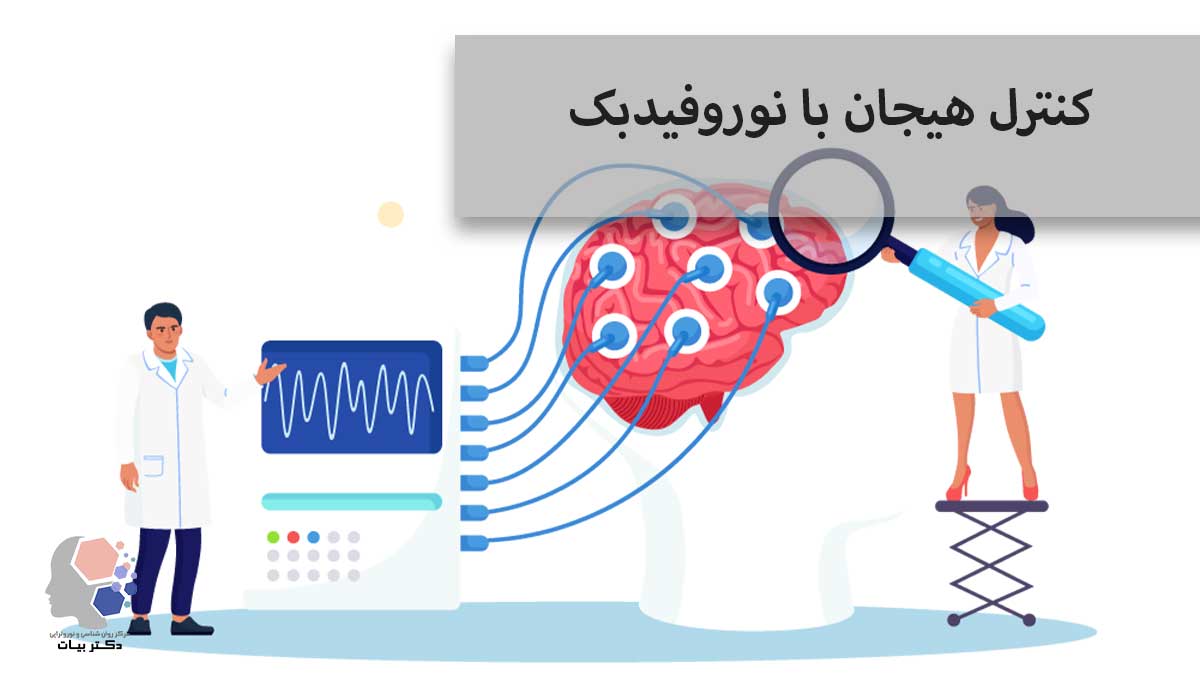

Emotion control with neurofeedback means direct training of the brain to better manage emotions and emotional reactions. In this method, the neurofeedback device records brain waves momentarily and gives accurate feedback to the brain to correct unstable patterns of neural activity. This process makes the brain learn how to create calmer, more logical and controlled reactions in different situations. Studies show that neurofeedback by regulating beta, alpha and SMR waves reduces tension, increases the coordination of emotional networks and strengthens areas that control emotions such as the prefrontal cortex. This regulation of waves is the basis of many stable behavioral and emotional changes and helps a person manage his emotions better and stay away from extreme reactions.
Emotional control with neurofeedback: neural feedback process and modification of emotional response
Controlling emotions with neurofeedback is based on one of the most fundamental mechanisms of the brain, namely "feedback-based learning". In this process, the neurofeedback device measures the electromagnetic activity of different areas of the brain at the moment and shows it to the person in the form of audio or visual signals. The brain is naturally always looking for more stable and less costly patterns; So when it receives feedback, it begins to correct the incorrect neural wave patterns and move toward healthier patterns. These changes are especially noticeable in areas related to emotion such as the amygdala and prefrontal. With repeated sessions, the overactivity of the amygdala, which is the cause of many sudden reactions, quick anger, momentary anxiety and irrational fears, is reduced. At the same time, the activity of the prefrontal cortex increases; The part of the brain that is responsible for impulse control, decision making, and situation evaluation. The combination of these two changes causes raw emotional reactions to become more measured responses.
This modification is a kind of "permanent neural learning", not an ad hoc technique. For this reason, after the treatment period, the brain continues to adhere to the new patterns, and the person in situations where he had a strong reaction before, now deals more calmly and masterfully.
Benefits of emotion control with neurofeedback: reducing arousal, stabilizing mood and increasing self-regulation
Neurofeedback takes the brain out of constant alert and alert mode by reducing overexcitation of the nervous system. This method reduces stress-related wave patterns such as high-beta and strengthens waves related to relaxation and stable concentration such as alpha and SMR. The result is that strong emotional reactions are less and the person feels more stable in everyday situations.
These changes show themselves in the form of reducing physical tension, reducing chronic worries, reducing mental fatigue and increasing the ability to process emotions. Neurofeedback also reduces mood swings and promotes long-term emotional stability. This stability is not due to the suppression of emotions, but due to the improvement of the actual functioning of neural networks.
One of the most important results of neurofeedback is the strengthening of self-regulation. Self-regulation refers to a person's ability to manage emotions without dependence on external factors or drugs. After learning regulated patterns, the brain can control emotion on its own, even in challenging situations. This skill has a direct impact on the quality of life, relationships and mental health, and according to the clinical reports of competitors, it is one of the most popular results among clients of neurofeedback in Shiraz.

The role of neurofeedback in controlling intense emotions: amygdala modulation and prefrontal enhancement
Neurofeedback purposefully re-regulates two main centers of emotion: the amygdala and the prefrontal cortex. The amygdala is the part of the brain that controls quick, intense and instinctive reactions such as sudden anger, intense anxiety and impulsive reactions. In many people, this part is overactive. Neurofeedback reduces the activity of the amygdala by reducing the tension waves and makes the brain not perceive small stimuli as a threat.
On the other hand, neurofeedback strengthens the prefrontal area, which is responsible for managing emotions, controlling impulses, choosing a logical response, and analyzing consequences. This area is naturally weaker in people with severe reactions. Strengthening the waves of this part makes decision-making speed better, behavior more predictable and emotional control more stable.
As a result of these two simultaneous processes, the person in situations that usually cause emotional explosion, now shows calmer and more rational behaviors. This change is the most basic and scientific way to control intense emotions without drugs.
Controlling negative emotions with neurofeedback: reducing anxiety, anger and momentary reactivity
Neurofeedback identifies and corrects wave patterns associated with negative emotions. Reducing high beta waves slows down repetitive thoughts, constant worry and mental exhaustion. An increase in alpha and SMR promotes baseline relaxation and takes the brain out of chronic stress. These changes provide the basis for reducing anxiety, reducing physical tension and reducing emotional sensitivity.
In anger and reactivity control, neurofeedback has a very high performance. By adjusting the amygdala and strengthening the prefrontal, the distance between "stimulus" and "response" increases. This interval is the valuable time in which the brain can decide to provide a measured response instead of reacting impulsively. A person who used to get angry at the smallest issue can tolerate the situation and choose a better response after the treatment period.
These changes have been clinically proven and the reports of advanced neurofeedback centers also emphasize that neurofeedback is one of the most effective methods for reducing negative emotions, aggression (children's aggression) and everyday anxiety.
Neurofeedback for emotional control in children and adults: regulation of emotional networks at different ages
Neurofeedback has a high performance in both children and adults, because it is based on neural learning and the brain has the ability to change at any age. In children, this method helps to reduce impulsivity, aggression, restlessness and inability to tolerate failure. Children usually respond to this method faster than adults.
In adults, neurofeedback helps reduce chronic stress, mood swings, social anxiety, and anger management problems. Age difference does not affect the safety or effectiveness of the method, and it is based on correcting actual brain function, not just behavioral training.

How Neurofeedback Stabilizes Emotion Control: Relearning Neural Patterns and Emotional Memory
One of the reasons for the lasting effect of neurofeedback is the deep retraining of brain networks. This method not only reduces the symptoms, but also targets the neurological cause of emotional disorders. By receiving feedback, the brain learns to replace stressful and unstable patterns with healthier patterns, and this change is stored in the emotional memory.
For this reason, after the end of the treatment period, the brain still has a more regulated function and the person does not easily experience the return of symptoms. This permanence is one of the distinguishing features of neurofeedback compared to drug therapy.
The effect of neurofeedback on anger and impulsivity control: improving behavioral inhibition and reducing sudden responses
Neurofeedback increases anger control and reduces impulsive behavior by regulating the areas that inhibit behavior in the brain, such as the prefrontal cortex. The brain learns to process more information before reacting, and this processing time causes impulse control.
Also, by reducing the activity of stress waves, the intensity of emotional reactions decreases and a person can more easily separate himself from irritating situations. This has a significant effect on people with extreme anger, aggression or impulsive behavior.
Improving emotional control with neurofeedback in stressful situations: increasing tolerance threshold and reducing sensitivity
Improving emotional control with neurofeedback becomes important in stressful situations when a person under mental or emotional pressure loses the ability to manage his emotions and violent reactions, crying, anger or momentary anxiety are activated in him. At this stage, neurofeedback works exactly where the root of the problem is: the resistance of neural networks to stress. By training the brain to create more stable patterns, this method causes the nervous system to be less stimulated in the face of stress and the person can react more calmly in sensitive moments. In fact, neurofeedback increases the emotional tolerance capacity and makes the brain more "tough" against psychological pressure.
International studies and clinical reports of competitors show that one of the most important effects of neurofeedback is the improvement of coordination between the limbic system (the center of emotion and quick reactions) and the prefrontal cortex (the center of decision-making and cognitive control). In sensitive or anxious brains, these two parts do not work in harmony; The limbic system is activated by the slightest stimulus, and the prefrontal cortex cannot quickly inhibit the response. Neurofeedback restores this coordination by regulating alpha, SMR and beta waves and allows the brain not to consider every small stimulus as a "threat".
The result of this change is quite noticeable in real life. A person who used to overreact to the slightest pressure can now analyze situations, name their feelings, and make decisions without panic. The rate of return to normality increases and the brain is less likely to enter into continuous cycles of anxiety or stress. For this reason, one of the most important scientific methods to strengthen emotional resilience and
This method is very useful for those who are quick to lose their temper in emotional relationships, work environment or social gatherings, get upset easily or get anxiety quickly. Neurofeedback teaches the brain not to perceive small stimuli as a "threat" and to calm down in situations where it used to react strongly. After a few sessions, the person notices that he has less sudden anger, can control his emotions better and calms down faster. Simply put, neurofeedback creates new neural pathways to shift the brain from a reactive to a responsive, rational state. This learning is recorded deep in the brain and is permanent. For this reason, it is one of the most useful methods for those who are involved with extreme reactions, emotional sensitivity or not controlling emotions. Emotion control with neurofeedback is based on actual modification of brain function, not temporary suppression of symptoms. This method teaches the brain to create calmer, more logical and predictable reactions by regulating brain waves, reducing the overreactive activity of emotional parts, and strengthening the areas responsible for decision making. Its effect is not only seen at the level of behavior, but it is recorded in the depth of neural networks, and this guarantees the stability of the results. People who suffer from anxiety, anger, impulsivity, mood swings, emotional sensitivity or sudden reactions, usually experience a significant change in peace of mind, tolerance threshold, sleep quality and ability to manage emotions after a few sessions. Neurofeedback has the same function in children and adults, and because it is non-invasive and drug-free, it is considered one of the safest methods to regulate emotions. To sum up, neurofeedback is a scientific and effective way to bring the brain back into balance. By creating coordination between the limbic system and the prefrontal cortex, this treatment helps a person choose more measured responses in stressful situations instead of sudden reactions. The final result is increased inner peace, better control of emotions and the ability to live on a more balanced and stable level. The effective result of any treatment depends on choosing a reliable and specialized center. Neurofeedback and loretta neurofeedback are most effective when with advanced devices, Color mapping brain and scientific protocols to be done. Dr. Bayat Psychology and Neurofeedback Center is one of the best and most equipped centers in this field; Where assessments are done carefully, protocols are tailored to each individual, and the treatment process proceeds under the supervision of experienced professionals. If your goal is to improve emotional regulation, reduce anxiety and stress, increase concentration or improve brain function, this center can be a safe and reliable choice. Finally, accompanying a professional team makes the treatment path easier, faster and with better results.
Result





