Bruising after nose surgery is one of the common and natural side effects of the recovery period after surgery, which usually appears around the eyes and cheeks. These bruises are caused by damage to blood vessels during surgery and are usually temporary. The severity and duration of bruising can vary depending on the skin type, physical condition and surgical technique. Bruising around the eyes can last about 2 to 3 weeks, and in general, bruising and swelling of the face can last for several weeks and can be controlled by following the doctor's recommendations and care. In this article, we explain the cause of bruising, how long it lasts, ways to reduce bruising, as well as the things that require seeing a doctor, so that you can go through this stage of recovery with a clearer vision.
What is the cause of bruising after nose surgery?
The main cause of bruising after nose surgery is damage to capillaries and tiny blood vessels around the nose and eyes during surgery. When there is a change in the structure of the bone and cartilage of the nose, these blood vessels rupture or bleed slightly, and the blood penetrates under the skin, which can be seen as a bruise. The severity of bruising can depend on factors such as skin type, sensitivity of blood vessels, surgical technique and even the amount of blood thinners taken before surgery.
Bruising after nose surgery occurs to some extent for most patients, but its amount and intensity are different. Usually, bruising around the eyes can last for about 2 to 3 weeks, and in general, bruising and swelling of the face can last for several weeks. Using a cool compress in the first 48 hours, keeping the head elevated while resting and avoiding heavy activities can speed up the healing process.
How many days does bruising last after nose surgery?
After nose surgery, bruising usually lasts between 2 to 3 weeks, and after that it decreases and in most patients, it almost disappears after three weeks. Of course, the severity and duration of bruising depends on factors such as skin type, physical condition, surgeon's technique and post-operative care. In some people with fair skin or sensitive blood vessels, the bruise may remain a little longer.
English text: Immediately after rhinoplasty surgery, patients may begin to develop bruising. At this point, bruises will appear reddish due to oxygen in the blood. For this reason, the full extent of bruising may not be seen until the next day. Persian translation: Immediately after nose surgery, patients may start to develop bruises. At this stage, bruises appear red due to the presence of oxygen in the blood. For this reason, the full severity of the bruise is usually not visible until the next day.
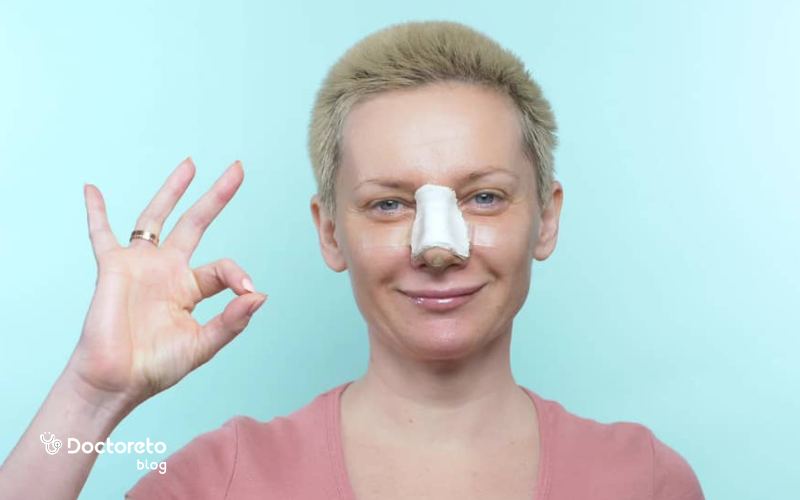
You are viewing a picture of a bruise after rhinoplasty.
factors that increase bruising after nose surgery
Among the most important of them, we can mention the use of blood thinners such as aspirin and warfarin before surgery, which increases the possibility of bleeding and bruising. Smoking and alcohol also slow down the healing process and increase bruising. In addition, high blood pressure, hitting or rubbing the nose after surgery, and even genetics and skin type play a role in the amount of bruising. Following the doctor's recommendations, avoiding the use of drugs or prohibited substances before and after the operation and proper care can minimize the severity of bruising:
Use of blood thinners before surgery
Tobacco and alcohol consumption
High blood pressure
Blow to the nose after surgery
Genetics and individual skin type
Types of bruises after nose surgery
Bruise after nose surgery, which is one of complications after nose surgery, is usually seen in different areas of the face and its intensity is different. Usually, slight bruising appears as slight discoloration around the eyes. Medium bruising is more extensive and may involve the entire area under the eyes and cheeks. In rare cases, severe bruising occurs, which can be accompanied by swelling and last longer:
bruising under the eyes
bruising on the nose and cheeks
Bruising with swelling
bruise under eye after nose surgery
The bruise under the eye after the operation is caused by the manipulation of the tissues and blood vessels around the nose. This bruise usually reaches its peak during the first 2 to 3 days after the operation, and its color gradually changes from purple and blue to yellow and green and disappears within one to two weeks.
The severity of bruising under the eyes depends on factors such as skin type, body sensitivity, surgical technique and post-operative care. Using a cool compress in the early days and following the doctor's recommendations can help reduce bruising.
bruising on the nose and cheeks
Bruises on the nose and cheeks are usually caused by minor damage to capillaries during surgery. These bruises may appear bolder in the first days, but over time and with the absorption of subcutaneous blood, their color will change and become lighter.
The bruise on the cheeks is usually milder than the bruise around the eyes, and in most patients it resolves within one to two weeks. Observance of care such as avoiding heavy activities, sleeping with the head higher than the body and using a cool compress in the first days will speed up the healing process of these bruises.
English text: Alcohol has blood-thinning effects, which can increase bruising. On the other hand, cigarettes contain nicotine, which can restrict blood flow by constricting the blood vessels, resulting in delayed healing and increased swelling. Persian translation: Alcohol has a blood thinning effect and can increase bruising. On the other hand, cigarettes contain nicotine, which constricts blood vessels and restricts blood flow, delaying healing and increasing swelling. noopener">drturner
bruising with swelling
Bruising with swelling after nose surgery is one of the body's natural reactions to surgery, which is usually seen around the eyes, cheeks and even on the nose. This condition occurs due to fluid accumulation and mild subcutaneous bleeding and is more severe in the first days after the operation.
With the passage of time and following the doctor's recommendations, such as using a cool compress on the cheeks or under the eyes in the first 48 hours, avoiding bending or heavy activities and sleeping with the head higher, swelling and bruising will gradually decrease. In most patients, this condition improves within one to two weeks and is not a cause for concern unless its severity is abnormal or accompanied by severe pain.
Various factors such as taking blood thinners can aggravate bruising after rhinoplasty.
Ways to remove bruises after nose surgery
Using a cool compress on the cheeks or under the eyes after surgery helps reduce subcutaneous bleeding and reduce the severity of bruising. Keeping the head up while sleeping also prevents fluid accumulation and swelling around the eyes. Also, consuming foods rich in vitamin C and K such as citrus fruits, green vegetables and pineapples is effective in reducing bruises. Finally, avoiding heavy activities and direct hand contact or impact on the operation area also plays an important role in accelerating the healing process:
Cool compresses on the cheeks or under the eyes (avoid putting any ice or compresses on the nose)
Keeping the head up while sleeping
Foods rich in vitamin C and K
Avoid heavy activities
The following table summarizes the main causes of bruises and their remedies:
Causes of bruises after nose surgery
Methods to remove bruises after nose surgery
Damage to capillaries and blood vessels
Cool compress on the cheeks or under the eyes
Skin type and sensitivity Blood vessels
Keeping the head elevated while sleeping
Taking blood thinners
Eating foods rich in vitamin C and K
Smoking and alcohol
Avoiding strenuous activities
Blowing or rubbing the nose
Taking medicine and supplements prescribed by Doctor
This table briefly shows the causes of bruising after nose surgery and effective methods to reduce it.
pills to remove bruises after nose-operation
The use of medicines and supplements must be under the supervision of a doctor. Some doctors may recommend acetaminophen or supplements containing bioflavonoids to reduce bruising and swelling. The important point is that any new blood thinners or supplements should be consulted with the surgeon or specialist before or after the operation to prevent bleeding or other complications.
Ointment to remove bruises after nose surgery
One of the most famous of these ointments is topical arnica, which helps to reduce inflammation and absorb subcutaneous blood. The use of ointments containing vitamin K is also recommended in some patients to speed up the healing process of bruises. It is important to apply the ointment gently and without pressure to the treated area and avoid direct contact with stitches or fresh wounds. Be sure to consult your doctor before taking any medicine.
suitable nutrition for removing bruises after nose surgery
It is better to consume foods rich in vitamin C such as citrus fruits, strawberries, kiwi and bell peppers to help strengthen blood vessels and repair tissues. Vitamin K found in dark green vegetables such as spinach, broccoli and lettuce is also effective in blood clotting and reducing bruising. Consumption of antioxidants and bioflavonoids in various fruits and vegetables helps to reduce inflammation and speed up subcutaneous blood absorption. In addition, drink enough water and avoid alcohol and salty foods to reduce swelling and bruising.
quick elimination of bruising after nose surgery
That what to eat to reduce bruising after nose surgery will be effective to a great extent in speeding up this process. For this purpose, consuming foods rich in vitamin C such as citrus fruits and strawberries are useful. Dark green vegetables such as spinach and broccoli, which contain vitamin K, also help reduce bruising. Consumption of fruits and vegetables rich in antioxidants and bioflavonoids reduces inflammation and faster absorption of subcutaneous blood. Also, drinking enough water and avoiding alcohol and salty foods is effective in reducing swelling and bruising.
A cold compress can be used for eyes and cheeks to reduce bruising after nose surgery.
When is bruising after nose surgery dangerous?
Bruising after nose surgery is usually normal and temporary, but in some cases it can be a sign of a problem and requires immediate medical attention. If the bruise is severe, sudden or accompanied by high swelling and severe pain, it can be a sign of internal bleeding or tissue damage.
Also, prolonged bruising that does not heal after two weeks or unusual skin discoloration can be a sign of infection (with fever, pus, warmth, and pain at the incision site) or circulation problems. In this situation, immediate examination by a surgeon is necessary to prevent serious complications.
Conclusion
Bruising after nose surgery is a natural and common complication that is usually observed in the area around the eyes, cheeks and nose and improves with time. The severity and duration of bruising depends on individual factors, surgical technique and post-operative care, but following medical recommendations can speed up the healing process.
If the bruising is severe, sudden, long-lasting or accompanied by pain and abnormal swelling, or the skin color changes abnormally, you should contact your surgeon or medical team immediately so that the cause can be investigated and the necessary measures can be taken to prevent serious complications.
Your doctor takes care of your health!
Frequently Asked Questions
Yes, bruising after nose surgery is a natural reaction of the body to surgery and is usually seen around the eyes and cheeks. will be This bruise is usually temporary and gradually improves within one to two weeks.
Yes, bruising after nose surgery is usually associated with swelling, both caused by fluid accumulation and They are mild subcutaneous bleeding. This condition is more intense in the first days after the surgery and it decreases over time by following the post-operative care.
If you are going to use gentle heat, only on the cheeks and around the eyes and Do not put on the nose. The priority is to use a cool compress.
I have started my activity in the field of content production and management since 1995 and I am always eager to face new job opportunities. Getting to know a different world in different fields such as medicine and health also encourages me to follow a healthy lifestyle. That's why I started working with your doctor.