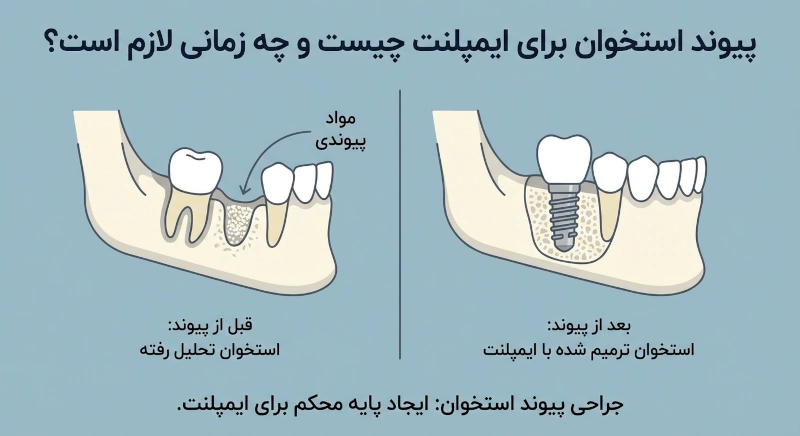

موفقیت ایمپلنت دندان، بیش از هر چیز به کیفیت و حجم استخوان فک بستگی دارد. زمانی که استخوان فک به دلایل مختلفی مانند کشیدن دندان، عفونت یا بیماری های لثه دچار تحلیل میشود، ممکن است کاشت مستقیم ایمپلنت امکان پذیر نباشد. In such situations, bone grafting is performed with the aim of reconstructing the bone bed and creating stable conditions for the implant.
Dental bone graft / Jawbone graft surgery is a procedure in which the doctor adds grafting material to the area where the bone is reduced or weakened to increase the volume and density of the jawbone in order to create a stronger base for the implant. This work comes up when the jaw bone is not thick/dense enough and therefore cannot withstand the pressures of chewing; In this case, without grafting, the possibility of implant failure increases.
https://my.clevelandclinic.org/health/treatments/21727-dental-bone-graft
In this article, we examine what bone grafting for implants is, when it becomes necessary, how it is done, what types it has, and what the aftercare includes; So that you can choose your treatment path with full knowledge.
To schedule a visit with the best periodontist and implant specialist in Karaj, contact 09129559071 or fill out the form below.
List of Articles
What is the reason for dental bone grafting for implants?
Dental bone graft surgery for implants is performed when the volume or density of the jaw bone is not enough to hold the implant base, because a dental implant needs a bone with sufficient volume and density to be properly fixed in the jaw bone for long-term survival.
When the jawbone is degraded for any reason, the implant base cannot obtain the necessary stability and the risk of treatment failure increases.
How is jawbone-grafting done and which stage of dental implant is it?
Jaw bone grafting is one of the preparation steps for dental implant treatment and depending on the patient's bone conditions, bone grafting can be done before or at the same time as the implant. Bone grafting surgery for implants is proposed when clinical examinations and imaging show that the jaw bone is not capable of holding the implant alone. The process of bone grafting is usually as follows:
After local anesthesia, the surgeon accesses the desired area and places the bone graft material in the atrophied part. These substances can be natural or synthetic and their role is to stimulate the body to make new bone. The graft area is then covered with gum to begin the healing process.
If the bone loss is severe, bone grafting is performed before the implant, and a few months later, after the bone is fully restored, the implant base is implanted. However, if the bone loss is mild to moderate and the bone has good initial stability, bone grafting is possible at the same time as the implant, and both are performed in one surgical session.
When is a bone-graft necessary for an implant?
Bone grafting for implants is necessary or recommended in the following conditions:
- Analysis of the jaw bone after tooth extraction, especially when a long time has passed since extraction
- Decreasing the height or width of the bone to such an extent that it is not possible to safely place the implant
- History of advanced gum diseases that have led to the destruction of the tooth supporting bone
- Presence of old infections or bone lesions in the desired area
- Impact or trauma to the jaw that caused the loss of part of the bone
- Radiological examinations such as CBCT showing insufficient bone density
Types of bone grafts in dental implants
Bone grafting in dental implants is done in different ways, and choosing the right type depends on the amount of bone loss, the location of the edentulous area, the general health of the patient, and the implant treatment plan. In general, all types of bone grafts can be examined from two angles: the source of bone graft and the method of grafting.
Bone graft based on bone source
In this category, the main difference is in the source of the material used for bone regeneration:
Autograft bone graft
In this method, the bone is removed from the patient's own body (usually from the jaw area or in special cases from the pelvis). This type of graft is the most biocompatible and is known as the gold standard of bone grafting, but it requires additional surgery.
Allograft bone graft
In allograft, bone is prepared from the human bone bank and used after immunization processes. This method does not require bone removal from the patient's body and in many cases provides acceptable results for the implant.
Xenograft bone graft
In this method, bone of animal origin (usually cow) is used, which has a structure similar to human bone. Xenografts mostly play the role of a framework for new bone growth and their absorption is slower.
Artificial or synthetic bone graft (Alloplast)
These materials are made completely synthetically and are biocompatible. Their use does not carry the risk of disease transmission, and they are usually used in mild to moderate bone fractures.
Bone grafting based on the procedure
In this category, the focus is on how to perform the graft and its location in the jaw:
horizontal or vertical bone graft
It is used when the width or height of the jawbone is not enough for the implant and there is a need to increase the size of the bone.
Sinus Lift
It is a special type of bone grafting in the upper jaw that is done for the posterior areas; When the sinus floor is close to the implant and there is not enough bone. The sinus is a hollow space filled with air above the upper jaw and behind the upper molars, which is close to the roots of the teeth, sometimes requiring a bone graft (sinus lift) for the implant.
Socket Preservation
This type of grafting is performed immediately after tooth extraction to prevent bone loss and maintain conditions for future implants.
Bone grafting at the same time as implant
In cases where the bone loss is limited, bone grafting and implant placement are done in one session to shorten the treatment time.
To sum up, choosing the type of bone graft is a highly specialized decision based on clinical examination, 3D imaging and implant treatment plan with expert opinion.
care after bone-grafting in implant
Following care after bone grafting in the implant has a direct effect on the success of treatment and bone fusion. The most important care tips include the following:
In the first 24 to 48 hours after surgery:
- Sufficient rest and avoiding heavy activities
- Using a cold compress on the face to reduce swelling
- regular use of medicines prescribed by the dentist
- Avoidance of washing the mouth vigorously and frequent spitting
Oral and dental hygiene:
- Not brushing directly on the transplanted area until the doctor advises
- Gently washing the mouth with prescribed solution
- Maintaining the cleanliness of other areas of the mouth without putting pressure on the surgical site
Proper nutrition after bone grafting:
- Consumption of soft and cool foods in the early days
- Avoid hard, hot and chewy foods
- Chewing on the opposite side of the grafted area
Things to avoid:
- Smoking and alcohol consumption
- Using a straw to drink
- Severe finning or pressure in the jaw (especially in the maxillary joints)
- Touching or manipulating the surgical site with tongue or finger
Warning signs that need to be addressed:
- Severe or increasing pain after a few days Abnormal or prolonged swelling
- Discharge, bad breath or fever
FAQ
Is bone grafting for implants painful?
No. Bone grafting surgery is performed with local anesthesia and no pain is felt during the operation. Mild pain after surgery is normal and usually well controlled with medication.
Is it possible to do implants without bone grafting?
Yes, but only when the volume and density of the jaw bone is sufficient. In case of bone loss, performing an implant without a graft can reduce the success of the treatment.
What is the duration of bone healing after transplant?
Usually, it takes between 3 and 6 months for the transplanted bone to be completely repaired and ready for implant placement; This time varies depending on the type of transplant and the patient's condition.
The cost of bone grafting for implants depends on what factors?
The cost of bone grafting for implants depends on the amount of bone resorption, the type of graft material, the size of the treatment area and the grafting done separately or simultaneously with the implant, and it is determined after the examination and detailed imaging.
therefore
Bone grafting for implants is not a universal and mandatory treatment for all patients. Many people, depending on the condition of the jawbone, may be able to have a successful implant without the need for gum surgery or bone grafting. The key point is accurate and scientific diagnosis before starting treatment.
In the center of implant and gum surgery, Dr. Shimfar and Dr. Shanei, with a specialized examination and the use of advanced imaging, it is first determined whether you are one of the people who need bone graft or gum surgery or not. This targeted approach helps to design the treatment of each patient exactly according to his conditions; Neither more nor less than what is necessary.
If you are thinking of getting a dental implant, a basic examination of the jawbone condition will be the first and most important step to achieve a lasting and safe result.
Contact information for the clinic of Dr. Tayed and Dr. Shane-e
Phone number: 09129559071
Address: Karaj, Beheshti St., between Shahada Square and Taleghani Crossroads, 7th Floor, Unit 23, Qaem Doctors Tower









No comment has been registered yet, you are the first to post a comment.
Submit a comment