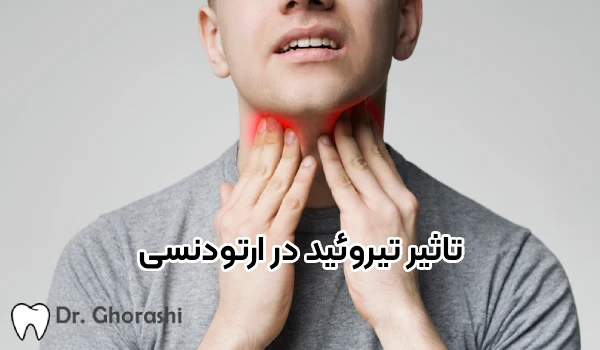
The thyroid, a small gland in the neck, produces hormones that control the growth of bones and the speed of body repair. When the thyroid function is not normal, the growth of the jaw and teeth may be slow or irregular, and this can make the orthodontic treatment process longer or more complicated.
For this reason, it is important to check the effect of thyroid in orthodontics before and during the treatment so that the treatment can proceed more accurately and safely and achieve optimal results.
Thyroid and its role In the body
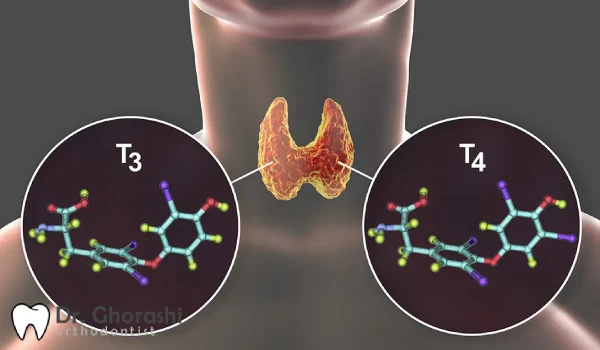
The thyroid is a small gland in the front of the neck that produces hormones called thyroxine (T4) and triiodothyronine (T3). These hormones play a very important role in the body and affect almost all organs. The main functions of the thyroid include:
- control of body metabolism
- Growth and development of bones
- cardiovascular health
- nervous system health
- adjustment of weight and energy
Thyroid acts like the control engine of the body and its health has a direct effect on the growth, energy and performance of the whole body.
What is hyperthyroidism?
Hyperthyroidism occurs when the thyroid gland produces too much hormone. This makes the body's metabolism faster than normal and many body functions are affected. Common symptoms of hyperthyroidism include:
- Weight loss for no apparent reason
- Irregular heartbeat or heartbeat
- Anxiety or irritability
- Excessive sweating and sensitivity to heat
- Trembling hands
- fatigue or muscle weakness
What is thyroid?
Hypothyroidism occurs when the thyroid gland does not produce enough hormones. This slows down the body's metabolism and affects many body functions. Common symptoms of hypothyroidism include:- fatigue and weakness
- Weight gain without changing the diet
- Dry skin and brittle hair
- sensitivity to cold
- Growth retardation in children
- Concentration and memory problems
Useful article: orthodontics for heart patients
Effect Thyroid on orthodontic treatment
Now that we know about underactive and overactive thyroid. It's time to check the effect of thyroid in orthodontics.
Thyroid hormones play an important role in the movement of teeth and jaw growth and can have a significant impact on the orthodontic treatment process. One of the most important of these hormones thyroxine (T4) which, in addition to regulating body metabolism, controls calcium levels and bone growth. This directly affects the way the teeth and jaw are positioned during orthodontic treatment.
In people with hyperthyroidism, the amount of hormones is higher than normal, and this makes the teeth move faster than usual during treatment. However, in patients with hypothyroidism, the speed of teeth movement decreases and the treatment process may be longer.
For this reason, it is very important to control the level of thyroid hormones before and during orthodontic treatment. Patients with thyroid disorders should manage their hormone levels under the supervision of an endocrinologist so that orthodontic treatment can proceed with precision, safety and optimal results.
Proper thyroid function is critical to the success of orthodontic treatment, as thyroid hormones affect the rate of tooth movement and jaw growth. Therefore, patients with hypothyroidism or hyperthyroidism should be under the supervision of an endocrinologist before starting orthodontics and during treatment. Some important tips for thyroid control during this period:
- Measuringhormonesregularly: The doctor checks the level of hormones T3, T4 and TSH so that the orthodontic treatment is in harmony with the condition of the body.
- Medication Adjustment: If needed, the dose of thyroid medication is adjusted so that the hormones remain within the normal range.
- Coordination with the orthodontist: By knowing the patient's hormonal status, the orthodontist can optimize the treatment plan and predict the movements of the teeth more accurately.
- Continuous follow-up: Even during treatment, it is necessary to periodically check hormones so that unwanted hormonal changes do not affect the speed of tooth movement or the final result of treatment.
Thyroid control ensures that orthodontics is performed with precision, safety and the best possible result, and reduces the risk of prolongation or treatment problems.
Useful article: orthodontic treatment with osteoporosis
Done Thyroid surgery during orthodontic treatment
The question may arise that is itpossible to perform thyroid surgery during orthodontic treatment?
The answer is that performing this surgery in itself does not prevent orthodontics, but it requires careful planning and coordination.
The best thing is to consult an orthodontist and an endocrinologist before taking any action. They can evaluate whether the hormonal status and the course of orthodontic treatment allow surgery or not.
If surgery is not necessary or urgent, most doctors recommend postponing it until after the end of orthodontic treatment. The reason for this recommendation is that hormonal changes after surgery may affect the speed of teeth movement and the result of the treatment, and you need to adjust the treatment plan.
In short, thyroid surgery during orthodontics is possible, but with careful control of hormones and complete coordination of the medical team, until the result of the treatment remains optimal and safe.
Concluding remarks
The thyroid plays a vital role in the health of the body and the success of orthodontic treatment. The hormones of this small gland control the growth of the jaw and teeth, and any disorder, whether underactive or overactive, can make the treatment process longer or more complicated.
Regular control of hormone levels and coordination between the endocrinologist and the orthodontist allows the treatment to be carried out with precision, safety and the best possible result. Even if thyroid surgery is needed, with proper planning and careful hormonal follow-up, orthodontics can continue without problems.