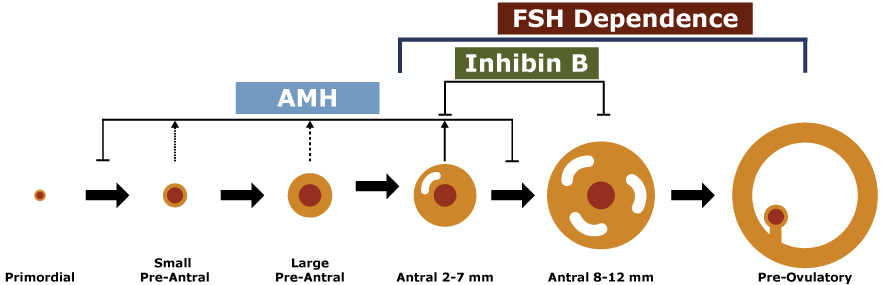


Anti Mullerian Hormone is a protein hormone that is made by the cells inside the ovary. Knowing the level of this hormone can help to know the amount of ovarian reserve and finally the fertility rate.
AMH levels are naturally lower in older women, especially those over forty, and higher in women with PCO or polycystic ovary syndrome.
What happens if the AMH level is low?
If ovulation still occurs, there is a lower chance of getting pregnant and probably a lower response to ovulation stimulation drugs. Although, by changing the drugs, an alternative method can be used in these cases.
AMH measurement
can be measured at any stage of the menstrual cycle because its size is stable throughout the cycle.
For correct evaluation, AMH tests should be accompanied by measuring the number of ovarian antral follicles (AFC). (Numbers of small follicles within both ovaries)
AFC can be measured by transvaginal ultrasound.
Knowing the level of AMH and AFC is helpful to determine the appropriate treatment strategy and method.