
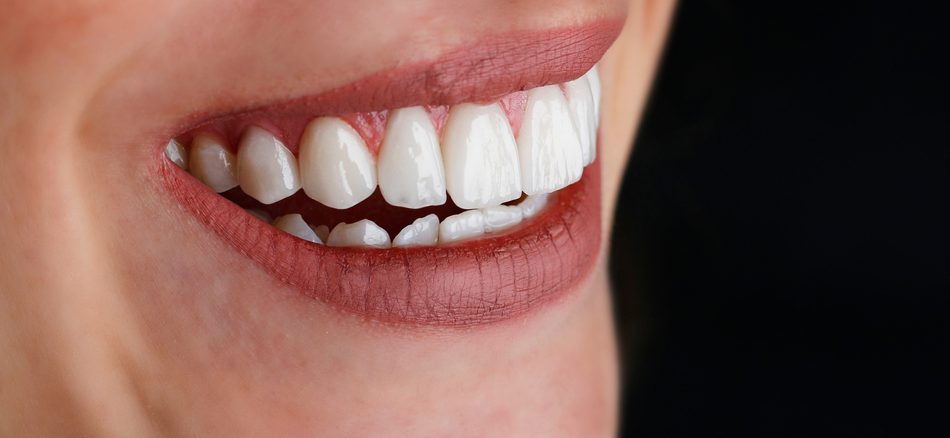
لمینت دندان، روکشی نازک و سفارشیسازیشده از جنس سرامیک یا پرسلن است که روی سطح جلویی دندانها قرار میگیرد. These veneers are popular because of their natural appearance, high resistance to staining and discoloration, and their ability to correct various dental problems such as fractures, discoloration, and spacing between teeth. But one of the most important steps of lamination is shaving the tooth surface, which is questionable for many people. In this article, we will answer your various questions about dental laminate and sharpening it. Stay with us.
What is dental laminate?
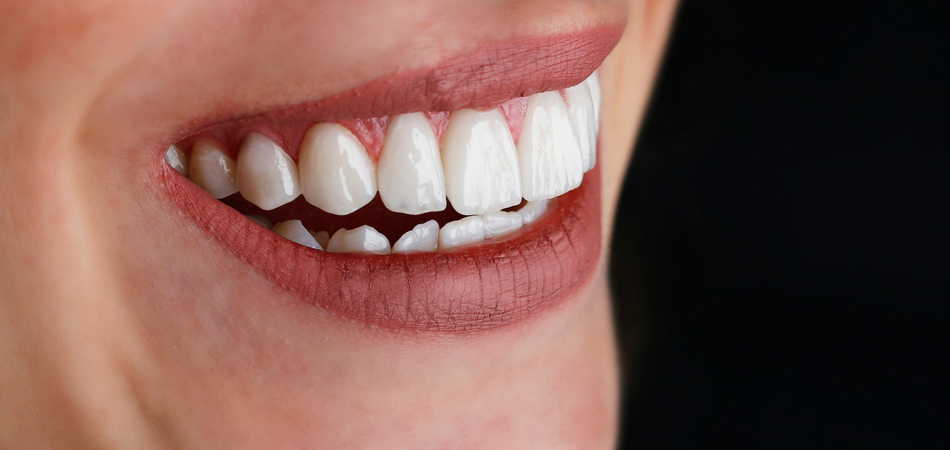
Dental laminate is a very thin and tooth-colored covering that is placed on the front surface of the tooth and gives a natural and beautiful appearance to the teeth. These veneers are usually made of ceramic or composite materials and are very popular due to their high strength and resistance. If you are planning to do a cosmetic procedure on your teeth, it is better about read the difference between laminate and composite But why do we need dental laminate?
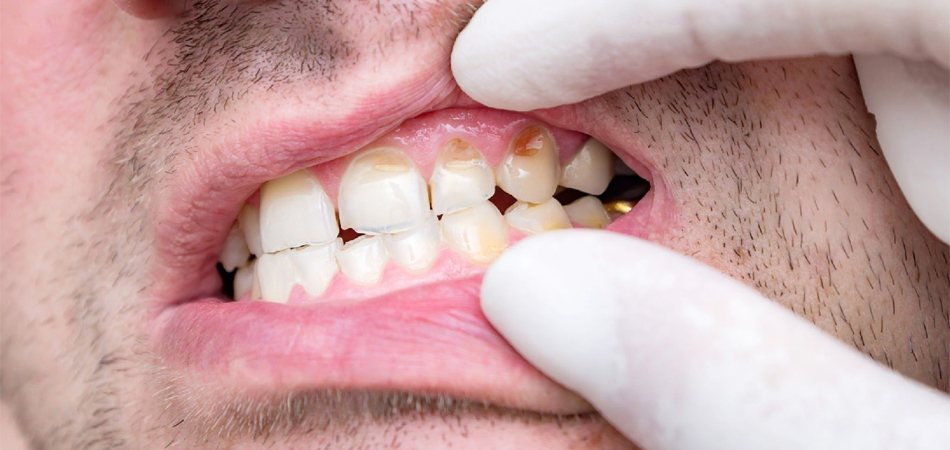
- Teth color correction: completely covers yellowness, stains and discoloration of teeth.
- Fixed and cracked: repairs broken or cracked teeth.
- Eliminating the gap between the teeth: fills the gaps between the teeth and gives a uniform appearance to the smile.
- Correcting the shape and size of teeth: changes short, irregular or malformed teeth to the desired shape.
tooth shaving is one of the essential steps before installing laminate in cosmetic dentistry which has several reasons.
- Creating enough space for the laminate: Laminates are very thin coverings that are placed on the surface of the teeth. In order for these veneers to sit well on the tooth, a space is needed that is created by shaving some of the surface of the tooth.
- Improving the adhesion of the laminate: by shaving the surface of the tooth, a smooth and uniform surface is created, which makes the laminate stick to the tooth better and increase its durability.
- Creating a more natural appearance: Teeth grinding allows the dentist to change the shape and size of the teeth so that the laminates look more natural.
- Fixing the unevenness of the tooth surface: any unevenness or protrusion on the tooth surface can cause the laminate not to stick well on the tooth. By shaving these irregularities, the tooth surface becomes smooth and ready for laminate installation.
Mean How much is tooth grinding for laminate and what factors does it depend on?
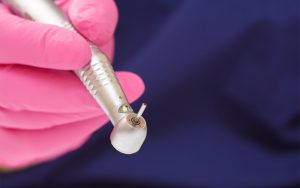
The amount of tooth grinding for laminate depends on various factors and there is no exact number for everyone. Normally, the minimum and maximum amount of teeth grinding in laminate is 0.5 to 0.8 mm, which is equivalent to the thickness of a nail. However, the amount of tooth grinding depends on various factors.
Laminate type
Different laminates have different thicknesses. Some laminates, such as Lumineers, are very thin and may not require much trimming.
Tooth decay
If a tooth has decay, the amount of sharpening for dental laminate will be higher. Because the caries must be removed completely and this reduces the volume of the tooth. As a result, to place the laminate, there is a need to cut more of the healthy tooth.
Deformity and ugly teeth
If the teeth have severe deformity or disfigurement, the amount of sharpening for laminate will be higher. Because in these cases, it is necessary to shave a larger surface of the tooth to obtain the desired shape and color of the laminate.
Shaving tooth enamel for laminate is a precise and sensitive step that is performed by a specialist dentist. In this process, the goal is to create a suitable space for placing the laminates and create a smooth and uniform surface for sticking them. The amount of enamel grinding depends on various factors, including the type of laminate, the condition of the teeth, and the purpose of the laminate. Using special and delicate tools, the dentist removes a very thin layer of tooth enamel. This work is done with great care so as not to damage the main structure of the tooth and prevent tooth sensitivity after lamination.
After shaving the enamel, the dentist makes a precise mold of the teeth so that the laminates can be precisely made in the laboratory. In the next session, the laminates are placed on the shaved teeth and attached to them using special materials. Finally, the dentist examines and adjusts the surface of the laminates to ensure their perfect match with natural teeth and the beauty of the smile.
The advantages of tooth grinding for laminate may seem a little strange at first glance, but there is a very important reason for doing this. In the following, we will examine these benefits in more detail.
1. Better adhesion of laminate
By shaving a thin layer from the surface of the tooth, a smooth and uniform surface is created, which makes the laminate adhere to the tooth better and increase its durability. This stronger adhesion reduces the possibility of laminate separation and subsequent problems.
2. Creating a more natural appearance
A tooth planer allows the dentist to change the shape and size of the teeth so that the laminates look more natural. For example, if a tooth is a little shorter or longer than the rest of the teeth, shaving can achieve more harmony.
3. Fixing the unevenness of the tooth surface
Any unevenness or protrusion on the surface of the tooth can cause the laminate not to adhere well to the tooth. By shaving these irregularities, the surface of the tooth becomes smooth and ready for laminate installation.
4. Create enough space for laminate
Laminates are very thin coverings that are placed on the surface of the teeth. In order for these veneers to sit well on the tooth, a space is needed that is created by shaving some of the surface of the tooth.
5. Fix minor dental problems
In some cases, a dental file can be used to fix minor problems such as deep stains or small cracks on the surface of the tooth.
effects Tooth sharpener for laminate
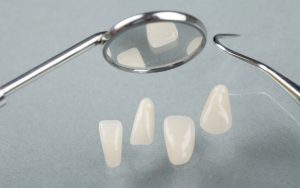
Although tooth lamination is one of the popular methods to improve the appearance of a smile, tooth grinding, as one of the first steps of this method, may be associated with some disadvantages and complications. Knowing these complications is essential for care for dental laminates.
1. Tooth sensitivity
- Reason: removal of a thin layer of tooth enamel makes the tooth nerve more sensitive to stimuli such as cold, heat, sweetness and acidity. For this reason, it is better to know who is dental laminate suitable for before starting this process.
- Duration: This sensitivity is usually temporary and subsides after a few weeks.
- Solution: Using toothpastes for tooth sensitivity and visiting a dentist for more guidance can help.
2. Irreversibility
- The reason: tooth enamel is not a living tissue and it cannot be restored after shaving.
- Consequence: in case of any problem with the laminate, it is not possible to restore the tooth to its original state.
- Solution: choosing an experienced dentist and using quality materials for laminate installation can prevent future problems.
3. Possibility of tooth fracture
- Reason: Shaving the tooth makes it thinner, and as a result, the probability of the tooth breaking due to impact increases.
- Solution: taking care of the teeth, avoiding chewing hard objects and visiting the dentist regularly can prevent this problem.
4. The possibility of changing the color of the laminate
- Reason: with the passage of time and the consumption of certain foods and drinks, the color of laminates may change.
- Solution: Choosing ceramic laminates that are more resistant to discoloration can reduce this problem.
5. Need to restore
- Reason: As a result of various factors such as impact, wear or gum problems, laminates may break or loosen and need to be repaired or replaced.
- Solution: visiting the dentist regularly to check the condition of the laminates can prevent more serious problems.
cares After brushing teeth
Aftercare is very important for laminate to help with faster healing and better results. After shaving your teeth, it is better to do the following.
- Avoid eating and drinking in the early hours
- Using a cold compress in the hours after shaving your teeth
- soft diet in the coming days
- observing oral hygiene (brushing and flossing)
- taking painkillers prescribed by the doctor in case of pain
- avoid smoking
Is Does it hurt to shave teeth for laminate?
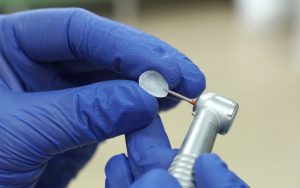
No, normally the process of shaving teeth for laminate is done using local anesthesia and the patient will not feel pain. The dentist numbs the tooth by injecting anesthesia in the desired area and then shaves. But after the anesthesia wears off, you may feel a little sensitivity in the tooth, which is temporary and will disappear over time. Of course, it should be said that the higher the amount of shaving, the more likely you will feel sensitivity.
Effect Dentist on the amount of tooth grinding in laminate
The amount of tooth grinding in ceramic laminate largely depends on the expertise and experience of the dentist. A skilled and experienced dentist works with more precision and finesse and can minimize the amount of grinding. In fact, the main goal in laminate is to maintain the natural structure of the tooth, and the dentist should try to do the least amount of grinding.
laminate What is it?
Laminate without shaving or non-prep is a type of dental coating that is placed on the surface of the tooth without the need to shave the tooth enamel. This method is less invasive compared to traditional laminates that require tooth shaving and can be a good option for people who are looking to improve their smile design but do not want to change the natural structure of their teeth. In this method, very thin laminates, which are usually made of porcelain or ceramic, are glued directly to the teeth.
Untrimmed laminates are suitable for correcting minor problems such as changes in color, shape and size of teeth due to their thinness. These types of laminates cannot completely solve more serious problems such as crooked or misaligned teeth. The advantages of this method include preserving the natural structure of the tooth, no need for anesthesia, and a short recovery period. However, uncut laminates may be less durable than traditional laminates due to their thinness and may not be suitable for everyone.
Concluding remarks
Shaving teeth for laminate is an important aesthetic decision that requires careful consideration of various aspects. Although laminates can give you a beautiful and bright smile, teeth whitening is an irreversible process. Therefore, before any action, it is essential to consult a specialist dentist and be fully aware of the advantages, disadvantages and post-treatment care. With a careful planning and choosing a reputable clinic, you can achieve a beautiful and long-lasting smile.
Frequently Asked Questions
1- Is the amount of tooth grinding for laminate the same for different people?
The amount of tooth grinding for laminate is not the same for different people and depends on various factors, including the condition of the teeth, the purpose of laminate and the type and brand of laminate.
2- Is it possible to install laminate without sharpening teeth?
Yes. This type of laminate is called no-cut laminate or non-prep laminate. In this method, unlike the traditional laminate method, there is no need to shave the tooth enamel and the laminate is placed directly on the surface of the tooth.
3- What is the amount of tooth grinding for ceramic laminate?
The amount of tooth grinding for ceramic laminate depends on various factors, including the type and brand of laminate, the condition of the teeth and the purpose of doing it, and is usually between 0.3 and 0.5 mm.
4- Is it necessary to grind tooth enamel to install ceramic laminate?
In most cases, to install a ceramic laminate, it is necessary to shave a small amount of tooth enamel, which is done to create enough space for the laminate to be placed and create better adhesion. However, in some special cases, such as when the teeth are very straight and neat, it may not be necessary to shave the enamel.