

سلام ! Welcome to the website Doctor Farrokhi (plastic surgeon).

We are here to introduce you to the latest technologies in cosmetic surgery!
We have dedicated this article to the role of augmented reality in cosmetic surgeries!
Revolution that is happening recently in remote cosmetic surgeries!
This technology can help many patients around the world.
Helping this narrative technology improving the quality of cosmetic surgeries is sensitive and helping to save people's lives. Augmented reality (Augmented Reality - AR) is a new tool to reduce surgical risks and increase its accuracy.
Stay with us in the future...
What is augmented reality? | In very simple language!
It's all about seeing 3D models of different body parts through advanced 3D glasses!
Pay attention to the image below!

In the picture you can see the surgeon who is digitally viewing the skull of a patient.
As you can see, he has a digital assistant that shows various options on the screen of his glasses.
I think you pretty much understand how augmented reality works!

As you can see, only a person who takes the help of augmented reality can see the images differently!
How does augmented reality work in surgical operations?
In this case, the digital information is placed on the real environment and allows simultaneous interaction with it.
In cosmetic surgeries, this technology allows surgeons to see the underlying structures of the patient's body in three dimensions and check the desired changes before performing the surgery.
By combining the real and virtual worlds, AR helps doctors to plan surgery more accurately and reduce possible risks.
accurate applications of augmented reality in plastic surgeries
4 main applications of augmented reality in medicine are summarized in the following cases.
1-simulation of results before surgery
This topic is especially useful in cosmetic surgeries.
Suppose before nose surgery you can Look at the operated nose!
If you remember, about this topic in the article Surgeons can view detailed information of the patient's anatomical structures at the same time using smart glasses or augmented reality displays. This capability increases the accuracy of surgery and reduces the possibility of errors. Especially in complex surgeries such as rhinoplasty (nose job) and Surgery Face and neck lift, AR can display the exact location of cuts and desired changes. Education is another blessing of AR in medicine! This technology has eliminated geographical restrictions. Surgery students can practice surgery with the best surgeons around the world. Augmented reality is also used as a new tool in medical education. Surgeons can practice using simulated models and increase their practical experience before performing real surgeries. This technology is especially useful for novice or training surgeons in complex conditions. Trial and error is always dangerous for patients. For example, excessive bleeding of a patient during surgery due to trial and error can cause:

2-exact guidance of surgeons during operation


3-applications in education
4- increasing safety and reducing surgical complications
By increasing accuracy in surgical planning and execution, augmented reality helps to reduce the amount of bleeding, reduce side effects and shorten the recovery period.
Also, this technology allows for a more detailed examination of the subcutaneous structures, which can prevent surgical errors.
Future of augmented reality in cosmetic surgeries
With the increasing development of technology, augmented reality is expected to become an integral part of cosmetic surgery processes in the near future.
combining AR with When has augmented reality come to the world of surgery?
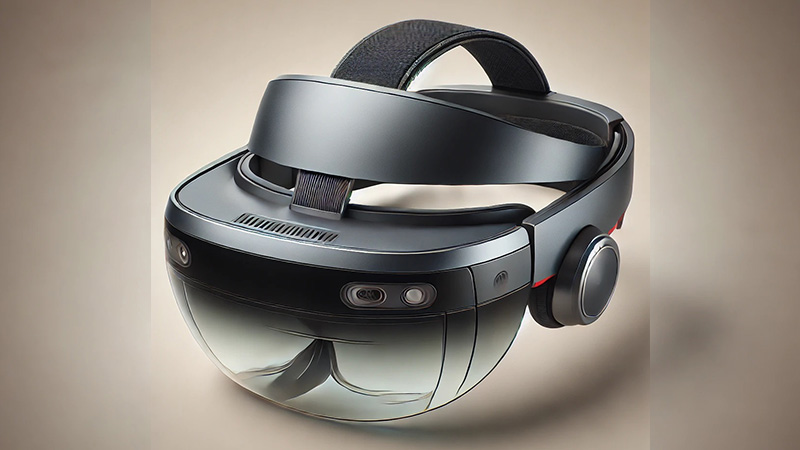
In general, although the use of augmented reality in surgery is still in its early stages, due to its significant advantages, it is expected to be more widely used in the near future. One of the studies conducted at Princess Alexandra Hospital in Australia has shown that the use of augmented reality headsets such as Microsoft HoloLens 2 can improve the accuracy and efficiency of surgeons. This technology helps surgeons perform complex incisions and reconstructions more accurately by displaying anatomical holograms in real time. Typically, surgeons use two-dimensional images such as CT scan or MRI to plan the operation. But this method has limitations, because they cannot see the patient's body in real dimensions and from different angles. With the augmented reality headset, the doctor can see a 3D model of the patient's organs directly in the real space before surgery and even during the operation.