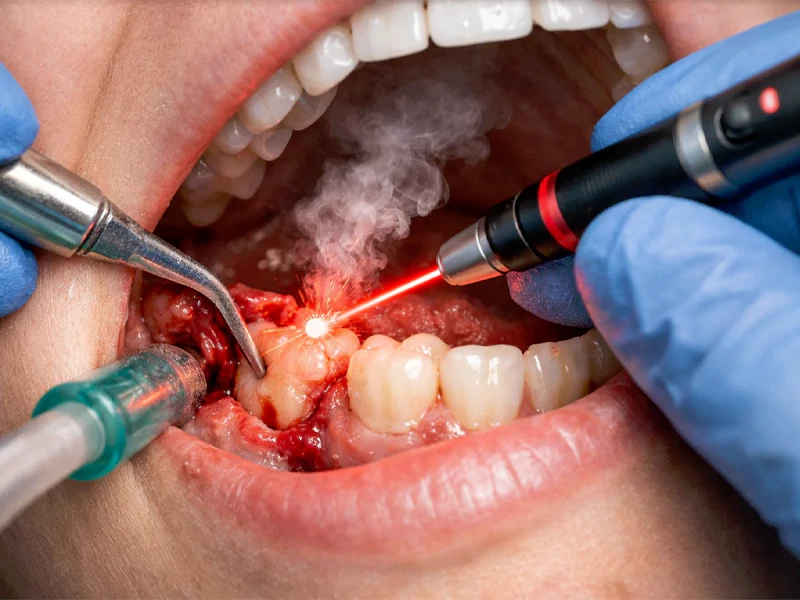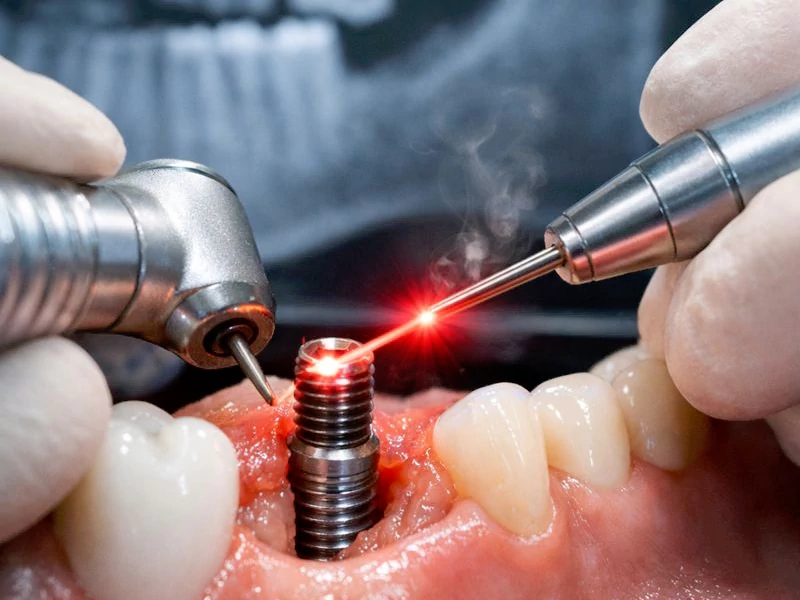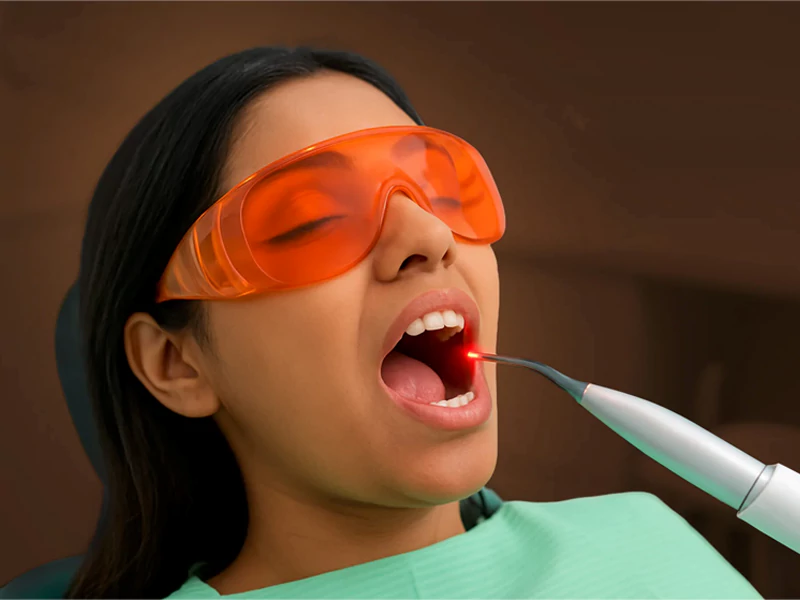
اخیرا روشهای جدید و نوینی برای عصب کشی دندان در دنیای دندانپزشکی معرفی شده که یکی از بهترینهای آنها عصب کشی دندان با لیزر در کرج است. In this method, with the help of a laser, the damaged nerve of the tooth is removed and the toothache stops. Fortunately, at Dr. Janani's clinic, this work is done for the first time in Karaj, and many specialists work together to perfectly perform the steps of tooth extraction.
Stay with us until the end of the article so that we can introduce you to this new nerve removal method.

What exactly is laser denervation?
Dental denervation with laser is basically the same Root Canal Therapy in which the dentist cleans and disinfects the root canals with the aim of removing the damaged or infected nerve. The difference between this method and more traditional methods is that in some stages, instead of using common methods or alongside them, laser is used to help reduce microbial contamination, control inflammation and improve the quality of disinfection.
Therefore, the laser is not supposed to be a complete replacement for all procedures; Rather, it is an auxiliary tool that, if used correctly and in the right place, will make the treatment process more accurate and the patient will have a better experience.
For a telephone consultation regarding this method, fill out the following form and our colleagues will contact you:
difference between normal nerve removal and laser tooth denervation
In the table below, we have given you some of the differences between these two methods so that you know what a special innovation laser denervation is compared to rel="noreferrer noopener">dental denervation in the previous method:
| Comparison case | Conventional nerve removal | Laser nerve removal |
|---|---|---|
| Main goal | Cleaning and shaping the channel + Disinfection with solutions and tools | Same goal, with the possibility of strengthening disinfection in some stages |
| Canal disinfection | Relies on washing and standard techniques | Washing + laser help to reduce the microbial load in some conditions |
| Pain during Treatment | Usually controllable with anesthesia | Usually similar but less pain reported in some patients |
| Treatment time | Depending on conditions, one or more sessions | Similar but sometimes helps control infection |
| Suitable for everyone? | Yes, the main method Treatment is the root | No, it depends on the doctor's diagnosis and the condition of the tooth |
Does laser denervation hurt?
In denervation, with or without a laser, local anesthesia is injected into the gums, and for this reason, most patients do not feel much pain during the procedure. But after the treatment (especially if the tooth has severe inflammation and infection), the patient may have sensitivity or mild to moderate pain for a few days, which usually gets better with the drugs prescribed by the doctor.
For whom laser nerve removal is suitable and for whom it is not suitable?
It is not supposed that laser denervation is prescribed and suitable for all people. Below are the list of suitable and unsuitable people for this method:
Suitable for:
- Patients who have root infection or inflammation and their dental canal should be disinfected more carefully
- Teeth with complex canals in which contamination control becomes more sensitive
- People who have a history of pain or inflammation after root canal treatment and the doctor determines that laser is better for them
- Cases in which the purpose of denervation with laser is to reduce the microbial load along with standard washing and correct technique

Not usually suitable for:
- Patients who expect the laser to be a complete replacement of denervation or to perform the treatment without the main procedures
- Teeth that are generally not suitable for denervation and root canal treatment due to severe decay or fracture.
- conditions that the doctor diagnoses with examination and imaging, the standard method alone is sufficient and more logical
How is tooth extraction done with laser?
The laser denervation method in Karaj proceeds step by step with a specific logic and the laser is inserted in parts of the path if needed. In the following, we will examine its steps:
1. Examination and imaging
In the first step, the tooth is first examined and an X-ray is usually taken to determine the condition of the roots, the level of infection and the shape of the canals. These photos are obligatory because it is wrong to make a decision about the treatment method without examining them.
2. Local anesthesia
In the next step, anesthesia is performed so that the treatment proceeds with minimal pain and the patient is relaxed during the work. The more comfortable and pain-free the patient is, the more he cooperates, and as a result, the quality of treatment increases.
3. Access to the pulp and removal of damaged tissueIn the third step, the dentist creates an access path to the interior of the tooth and removes the infected or inflamed tissue to prepare the ground for cleaning the canals.
4. Clearing and shaping channels
The root canals are cleaned and shaped with special tools, and it is at this stage that the accuracy and experience of the dentist become very important, because any small error can affect the result.

Canals are disinfected with standard solutions, and if the doctor deems it necessary, he uses a laser as an auxiliary tool to reduce germs and help clean some areas better. Of course, this is not supposed to be a show, but it should be done based on the protocol and real conditions of the tooth.
6. Filling channels
After drying the canals, the canal space is filled with special materials and standard technique to close the path of penetration of microbes, because the main goal of root canal treatment is to remove the infected environment and not open the way for infection again.
7. Final tooth restoration
In the end, the tooth must be restored and depending on the extent of the crown destruction, a filling may be sufficient or the doctor may suggest a veneer to reduce the possibility of the tooth breaking.

checking the advantages and disadvantages of laser dental denervation
In the following cases, we will examine the advantages and disadvantages of laser tooth extraction together:
Benefits:
- Helping to reduce the microbial load of canals in some cases
- Possibility of better control of inflammation in some patients, along with standard treatment
- Increasing the accuracy of disinfection in certain conditions, as determined by the doctor
- Easier therapeutic experience for some people, especially anxious people
Disadvantages and limitations
- It is not necessary for all patients and it does not always make a significant difference
- The result of the treatment depends above all on the correct diagnosis, root treatment technique and final restoration
- It may cost more than a completely conventional treatment
- Incorrect selection or unprofessional use of equipment can diminish the positive effect
What are the possible side effects and success rate of root canal treatment in this method?
In general, if the root canal treatment is done correctly, it is considered among the successful dental treatments, and the use of laser in some situations can help to improve disinfection. However, it should not be forgotten that the final success of laser tooth denervation is not solely dependent on the existence of the laser, and factors such as the severity of the infection, the complexity of the canals, the quality of filling the canal, and most importantly, the final restoration of the tooth, play a decisive role in the result.
Possible side effects of the laser denervation method (which are usually rare and can be controlled with proper management):
- Pain or sensitivity for several days after treatment, especially in cases of severe infection
- Gingivitis or sensitivity to pressure on the treated tooth
- need for additional treatment or retreatment in teeth with complex canals or resistant infection
- In certain cases, symptoms remain and the need for more advanced treatments such as root end surgery (Apico)

How is the care after laser tooth extraction?
After denervation of teeth with laser, proper care is what helps stabilize the result and prevents pain and complications. Therefore, it is better not to eat until the numbness is completely gone, so as not to injure the cheek or tongue. Also, in the first days, it is better not to put pressure on the denervated tooth and move the chewing of hard foods to the other side of the mouth so that the gum does not get inflamed.
If the medicine is prescribed, take it carefully and regularly and do not stop it at all when the symptoms stop. At the same time, observe oral hygiene with a toothbrush and dental floss in the correct way, so that contamination does not occur in your mouth again. Another important point is that if the doctor recommends a restoration or veneer, postponing it can increase the probability of tooth fracture and overshadow the treatment result.
Read more: How much does tooth extraction cost in Karaj?
How much is the cost of laser tooth extraction in Karaj is?
The cost of laser denervation is not a fixed number and will not be the same for everyone; Because factors such as type of tooth (front or back), number of canals, severity of infection, need for additional measures and type of final restoration affect the cost. For this reason, it is usually after the examination and seeing the dental photos that an approximate number can be given to the patient so that he can do financial management.
One should also be realistic about insurance coverage; Many insurances do not have special coverage in dental departments and sometimes they only pay parts of the services according to the contract or commitment limit. Therefore, how exactly laser denervation is covered depends on the type of insurance and your contract, and the best thing is to coordinate with the clinic's reception so that the conditions of your insurance are carefully checked or you can ask the insurance of your contract yourself.

Why should we visit Dr. Jenani's clinic for laser-extracted teeth in Karaj?
In endodontic treatment, what has the greatest effect on the outcome are steps such as accurate diagnosis, treatment skill, and proper implementation of disinfection and restoration protocols. Advanced equipment finds real value when it is in the hands of an experienced doctor (such as the specialists and dentists of Dr. Janani Clinic) and with a scientific approach. For this reason, if your goal is to do the treatment more calmly and more confidently, it would be a more reasonable choice to visit a clinic that clearly explains the dental conditions before starting the treatment, provides a logical treatment plan, and makes decisions based on photos and examination.
At Dr. Shahriar Janani's clinic, the focus is on the patient knowing what is going to be done, why it is being done, and what care is needed after the treatment. In addition, the use of auxiliary methods such as laser is suggested only when it really plays a role in the quality of disinfection or inflammation control, not just as an advertising title!
To receive dental advice in the field of laser denervation in Karaj and Dr. Jenani's clinic, call the following number: