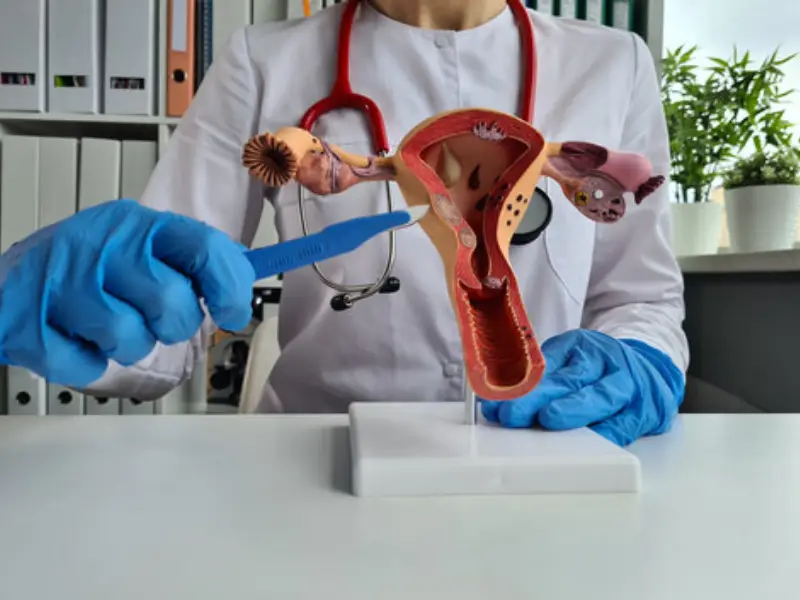
هیستروسکوپی یک تکنیک بسیار موثر برای بررسی مشکلات درون رحم و حتی درمان لحظه ای برخی مشکلات ساده است. This method has attracted the attention of many gynecologists due to the fact that it can be treated during examination. The hysteroscope has a camera to magnify the areas of interest during examination and has replaced traditional methods. Stay with us in this article to know when is the right time to do hysteroscopy and what problems it is used for.

What is hysteroscopy?
Hysteroscopy is one of the precise methods for examining the inside of the uterus and diagnosing uterine diseases. This method allows doctors to identify various problems and causes of abnormal uterine bleeding without the need for open surgery. Also, in cases where the cause of infertility is unclear or recurrent miscarriages occur, hysteroscopy can provide valuable information about the internal state of the uterus.
In addition to diagnostic applications, hysteroscopy is also used as a minimally invasive treatment method. During this procedure, doctors can remove lesions such as polyps, submucosal fibroids, and intrauterine adhesions, or perform corrections to improve the shape of the uterus. Also, in some cases, this method is used to remove the uterine septum or to remove the remnants of pregnancy after an abortion.
best time to do hysteroscopy
The best time to perform a hysteroscopy is usually recommended at the beginning of the menstrual cycle, that is, between days 6 and 12 after the start of the period. During this period, the inner lining of the uterus (endometrium) is thinner, which allows the doctor to see better and more accurately diagnose intrauterine problems such as polyps, fibroids or adhesions. Also, at this time the probability of pregnancy is very low, so it will be safer to do this method.
In cases where hysteroscopy is performed to treat certain problems such as abnormal bleeding, polyp removal, or correction of congenital abnormalities of the uterus, the doctor may determine a more precise time based on the patient's condition. Women who have irregular cycles should also consult their doctor to determine the best time to perform this procedure.
Benefits of hysteroscopy
Some of the most important benefits of hysteroscopy are:

1. On an outpatient basis and without the need for hospitalization
Hysteroscopy is usually performed as an outpatient procedure, meaning that the patient does not need to be hospitalized. Most patients can return home after a few hours of rest, and there is no need for long-term hospitalization.
2. High precision using a camera connected to the hysteroscope
In this method, the doctor uses a device equipped with a camera that provides accurate images of the inside of the uterus. This possibility makes it possible to identify problems such as polyps, fibroids, uterine adhesions and other abnormalities with high resolution.
3. The possibility of simultaneous treatment with diagnosis
One of the most important advantages of hysteroscopy is that the doctor can solve some problems at the same time as examining the inside of the uterus. For example, if uterine polyps, small fibroids, or internal adhesions are found, the doctor can remove them immediately, without the need for a separate surgery.
4. No need for large incisions like traditional surgery
Unlike traditional surgeries that require incisions in the abdomen, in this method no incisions are made on the abdomen or skin. This method is performed through the vagina and cervix, which reduces complications and pain caused by open surgeries.
5. Short time for recovery and convalescence
Hysteroscopy has a much shorter recovery period than traditional surgical methods. Most patients can return to their normal activities the same day and only need a few days of light rest. Also, the possibility of complications after the operation is less and the patient recovers faster.
What problems can be treated or diagnosed with hysteroscopy?
This technique is used to diagnose and treat several different problems in the uterus. Some of these problems include the following.
-
Uterine polyps
Uterine fibroids
- Uterine adhesions
- Bleeding disorders
- Uterine injuries after surgery
- structural disorders of the uterus
- fertility problems
Is hysteroscopy dangerous?
After hysteroscopy, there is some light bleeding that is temporary and should subside within the first few days. Some patients feel pain or cramping in the pelvic or abdominal area, which is temporary and tolerable. Although the risk of infection is very low, infection can occur due to the insertion of an instrument into the uterus or after treatments such as polyp or fibroid removal. In rare cases, the hysteroscope instrument damages the uterus or other surrounding structures, but this complication is very rare.
Who is hysteroscopy for?
Some people who are candidates for this method include:
- If a woman has long-term, irregular, or very heavy bleeding, the cause of which is unknown, hysteroscopy helps in diagnosis and treatment.
- Women who have pregnancy problems and the doctor suspects the presence of adhesions, polyps or fibroids in the uterus, need hysteroscopy to investigate and treat these problems.
- Hysteroscopy is used to diagnose and treat fibroids and polyps that cause problems with pregnancy or abnormal bleeding.
- Women who have intrauterine adhesions due to previous surgeries or infections.
- If the cause of chronic pelvic pain is not known to the person, this method helps to diagnose the structural problems of the uterus.
- Women who have had repeated abortions need hysteroscopy to check the structural problems of the uterus.
Conclusion
Hysteroscopy is a safe and efficient method for diagnosing and treating intrauterine problems that helps doctors identify the cause of many symptoms such as abnormal bleeding or fertility problems with high accuracy. This technique, with minimal side effects and a short recovery period, is considered one of the best options for checking the health of the uterus. However, performing this method should be done with the opinion and advice of a gynecologist so that the most suitable treatment method is chosen for each person.





