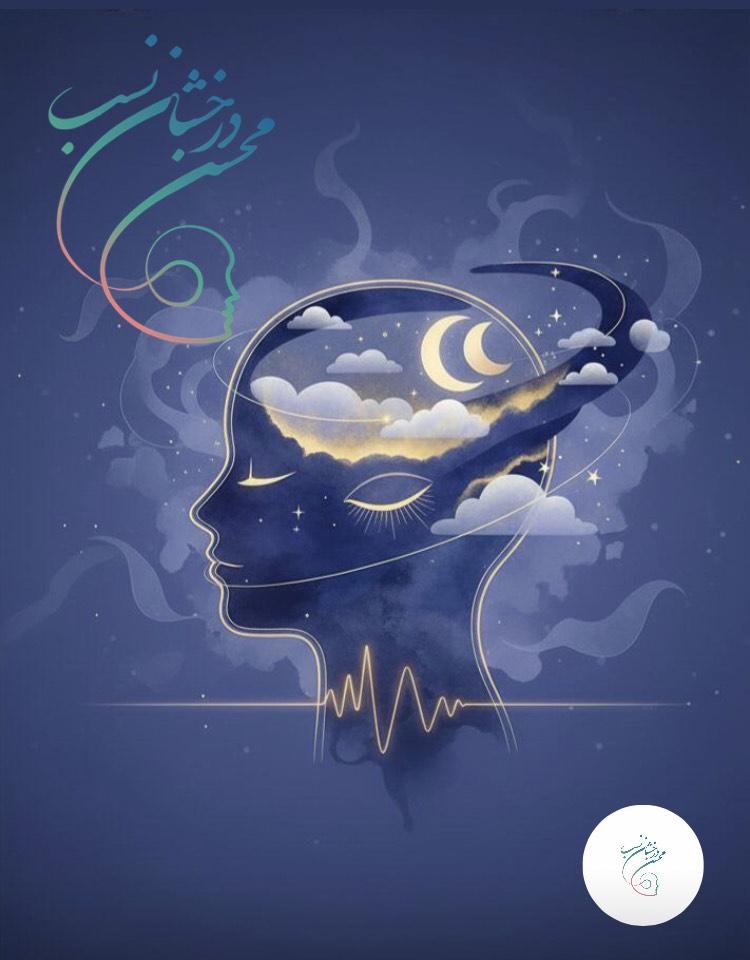

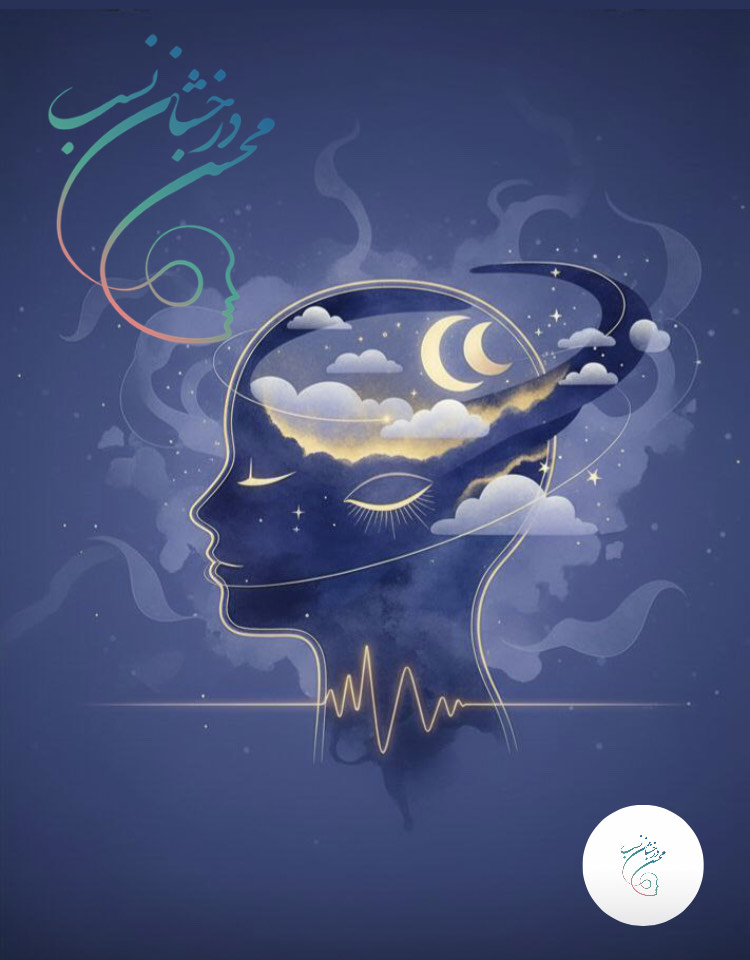
هیپنوتیزم در درمان اختلال خواب
سرآغاز
اختلال خواب یکی از شایعترین مشکلات روانتنی قرن حاضر است که نهتنها بر تمرکز و انرژی روزانه، بلکه بر سلامت قلب، سیستم ایمنی و تنظیم هیجانات تأثیر منفی میگذارد (Walker, 2018). One of the new and scientific treatment methods to improve the quality of sleep is hypnotherapy. By activating the unconscious mind, reducing nervous tension and retraining sleep patterns, this method can improve insomnia and other sleep disorders (Cordi et al., 2014).

The concept of hypnosis in the treatment of sleep disorders
Hypnosis is a state of deep concentration and mental relaxation in which a person receives the therapist's positive suggestions. In the treatment of sleep disorder, the therapist uses "sedating suggestions, breathing exercises and mental imagery", bringing the person's mind from the state of anxiety and wakefulness to relaxation and sleep (Lynn & Kirsch, 2018). This mode helps the brain to increase alpha and theta waves and activate the sleep neural pathway (Kihlstrom, 2019).
Read more:Article What is hypnotherapy and how does it work?
The scientific mechanism of hypnosis on sleep
Neurophysiological studies show that hypnosis facilitates the onset of sleep by increasing theta wave activity in the prefrontal cortex and decreasing sympathetic system arousal (Rainville & Price, 2013). Also, hypnosis regulates the release of the hormone melatonin and helps balance the autonomic nervous system by reducing cortisol (Cordi et al., 2014). Simply put, hypnosis is a form of "re-training" for the mind and body to re-align with the natural sleep pattern (Jensen et al., 2015).Applications of hypnosis in the treatment of sleep disorders
1. Treatment of insomnia (Insomnia)
Insomnia hypnosis treatment usually consists of 4 to 8 sessions and is done with specific suggestions to facilitate sleep, reduce disturbing thoughts and improve sleep habits (Hammond, 2010). In a research in Germany, it was found that after listening to hypnosis files before going to sleep, their "deep sleep time (Slow-wave sleep)" increased by 80% (Cordi et al., 2014).
2. Treatment of nightmares and night anxiety
In people with frequent nightmares or anxiety before sleep, hypnosis reduces the occurrence of nightmares by changing the unconscious content of dreams and reducing emotional arousal before sleep (Krakow et al., 2001). This method has been reported to be particularly useful in the treatment of post-traumatic stress disorder (PTSD) (Bryant, 2008).
3. Adjusting the sleep cycle in work shifts
People who work in the night shift often have a circadian rhythm disorder. Hypnosis is effective in improving the quality of shift sleep by helping to regulate the circadian rhythm and training the mind to change sleep time (Milling et al., 2021).
4. Treatment of snoring and mild sleep apnea
In mild cases, hypnosis can reduce the severity of snoring by training the throat muscles to relax and improve diaphragmatic breathing (Elkins & Rajab, 2004). Of course, in moderate to severe cases, there is a need for medical examination.
Read more:Article on telephone counseling and hypnosis | A new solution for remote treatment
The treatment process usually includes the following steps (Lynn & Kirsch, 2018): In some cases, the therapist prescribes an exercise audio file for use at home to consolidate the learning process in the subconscious (APA, 2024). Read more:Essay on Hypnosis: A Comprehensive Guide to Mind and Body Recovery
How to perform hypnosis for sleep
Safety and Precautions
Hypnosis is a safe and non-invasive treatment for sleep disorders, but should be used with caution in people with psychotic or seizure disorders (NHS, 2023). Also, it should not replace medical or pharmaceutical treatments, but should be done as a complementary method under expert supervision (Hammond, 2010).
New clinical evidence
In a 2024 systematic review of 45 studies, it was shown that hypnosis significantly "increases deep sleep and decreases night awakenings" (Rosendahl et al., 2024). Also, the combination of hypnosis with cognitive-behavioral therapy (CBT-I) has increased the effectiveness by 35% compared to CBT-I alone (Milling et al., 2021).
Read more:The article on the treatment of depression with hypnosis: a bridge between the unconscious and hope

A few last words
Hypnosis is an effective and scientific tool for improving sleep and reducing insomnia by taking advantage of the mind's natural ability to relax and retrain the unconscious. This method is most effective when it is trained by a psychologist or therapist and used along with lifestyle modification, nutrition and stress management. For many people, hypnosis improves not only the quality of sleep but also the quality of life (Walker, 2018).
Call to action
If you are facing insomnia, frequent night awakenings or difficulty falling asleep, you should know that many of these disorders are rooted in mental tension and inconsistent thought patterns. Hypnotherapy is a scientific and safe method that helps to return the natural rhythm of sleep and relax the nervous system by retraining the unconscious mind. At Mohsen Derakhshan Nasab's psychology and counseling office in Shahryar and Tehran, specialized sessions for the evaluation and treatment of sleep disorders are held with an approach based on scientific evidence and in a safe and professional environment. To get a consultation appointment and start the treatment process, please contact the office so that the first evaluation session can be held as soon as possible.
Read more:The article on the treatment of phobias with hypnosis
Resources
American Psychological Association (APA). (2024). Hypnosis and Hypnotherapy: Evidence-based practice overview. Washington, DC
Bryant, R. A. (2008) International Journal of Clinical and Experimental Hypnosis, 56(2), 116–128
Chamine, I., Atchley, R., & Oken, B. S. (2018). Hypnosis Intervention Effects on Sleep Outcomes: A Systematic Review. Journal of Clinical Sleep Medicine, 14(2), 271-283
Cordi, M. J., Schlarb, A. A., & Rasch, B. (2014). Deep sleep induced by hypnotic suggestion. Sleep, 37(6), 1143–1152
Elkins, G., & Rajab, M. H. (2004). Clinical hypnosis for treatment of sleep-related breathing disorders. Sleep Medicine, 5(3), 241–245
Hammond, D. C. (2010). Hypnosis in the treatment of anxiety and stress-related disorders. American Journal of Clinical Hypnosis, 52(4), 275–288
Jensen, M. P., Adachi, T., & Hakimian, S. (2015). Hypnosis for chronic pain management. American Psychologist, 70(7), 662–679
Kihlstrom, J. F. (2019). Hypnosis and sleep: Dissociation and consciousness. Frontiers in Psychology, 10, 2374 Krakow, B., et al. (2001). Imagery rehearsal therapy for chronic nightmares in sexual assault survivors: A randomized controlled trial. JAMA, 286(5), 537–545
Lynn, S. J., & Kirsch, I. (2018). Essentials of Clinical Hypnosis. American Psychological Association Milling, L. S., & colleagues. (2021). Meta-analysis of hypnosis interventions for sleep disturbance: Efficacy and moderators. Sleep Medicine Reviews, 58, 101451 National Health Service (NHS). (2023). Hypnotherapy and sleep. London, UK Rainville, P., & Price, D. D. (2013). Hypnosis phenomenology and the neurobiology of consciousness. International Journal of Clinical and Experimental Hypnosis, 61(2), 138–166 Rosendahl, J., et al. (2024). Meta-analytic evidence on the efficacy of hypnosis for mental and physical health outcomes. Frontiers in Psychology, 15, 1198437 Walker, M. (2018). Why We Sleep: Unlocking the Power of Sleep and Dreams. Scribner نویسنده مقاله محسن درخشان نسب; روانشناس بالینی، پژوهشگر، هیپنوتیزمدرمانگر، نویسنده و روان درمانگر در شهریار و تهران. © 1404 مطب روانشناسی محسن درخشاننسب | همه حقوق محفوظ است. در صورت داشتن هرگونه ابهام و یا سوالی درباره مقاله ” هیپنوتیزم در درمان اختلال خواب” در انتهای همین صفحه ( بخش دیدگاه ) سوال و یا ابهامتان را مطرح نمایید. They will respond to you as soon as possible.






