How do we know if the implant is welded? Complete Guide - Center for Gum and Implant Surgery, Dr. Affir and Dr. Shanaei

Dr. Mohammad Hossein confirmed
KarajSpecialist in gum surgery - implant
List of Articles
How do we know if the implant is welded? This is one of the most common questions that patients ask after dental implants. In short, when it can be said that the implant is welded when its metal base is completely integrated with the jaw bone, there is no pain or loosening and the patient feels normal when chewing. This process usually takes between 2 to 6 months and is a sign of successful treatment.
However, many patients worry in the weeks or months after implant placement whether their treatment has progressed properly or not. A definitive diagnosis of implant fusion is only possible with specialized examinations, clinical examination and imaging by a doctor.
The fusion of the dental implant is confirmed with complete stability, no pain and healthy gums; The final diagnosis is only possible with a dental examination and radiography.
https://allonfour.com/osseointegration/
This article has been prepared under the scientific supervision of Dr. Mohammad Hossein Ferfer and Dr. Fareshte Shanei, specialists in gum and implant surgery. The content of this page is only to increase your awareness and is not a substitute for a specialist doctor's visit.
How is the implant welding process done?
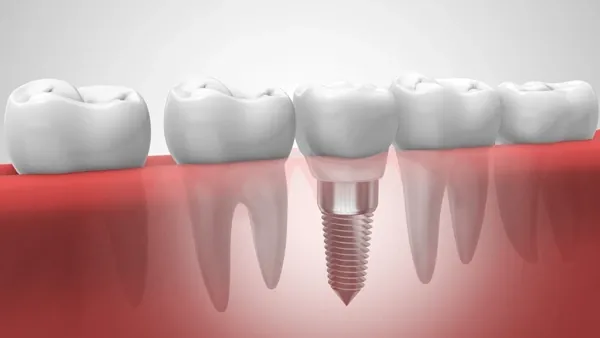
Many patients ask How do we know the implant is welded and the treatment process is progressing properly? In fact, this stage, which is called "osseointegration", is when the titanium base of the implant naturally integrates with the jawbone and becomes completely stable.
This process usually lasts between 2 and 6 months, and during it you may not feel any special symptoms; That is, even without pain or inflammation, welding is done naturally. You can also read the article how long does a dental implant take to learn more about the steps and duration of the treatment.
Symptoms of implant welding
Many patients after tooth implantation want to know how to know that the implant is welded and their treatment has been successfully completed. In fact, it can be said that the implant is well connected to the jawbone when there is no sign of inflammation or instability. In the following, you can see the most important signs of successful implant fusion:
- Absence of pain or inflammation in the implant area after the end of the primary healing period
- Complete stability of the implant base and no looseness or movement when touched
- Absence of discharge, bleeding or bad breath around the implant gums
- Natural feeling when chewing and speaking, similar to real teeth
- Gum healthy appearance and natural color without unusual swelling or redness
If you have all or most of these symptoms, your implant has most likely been successfully fused.
How do we know if the implant has retracted or not welded?
Many patients ask how do we know if the implant is rejected or has implant not welding? Sometimes the body reacts negatively to the titanium base of the implant, especially in people who have uncontrolled diabetes, smoke or do not observe good oral hygiene.
In such a situation, warning signs may appear that indicate that the implant is not properly attached to the jawbone.
The warning signs of implant rejection or non-welding are:
- Persistent pain or inflammation that does not go away after several weeks of surgery.
- Looseness of the implant base or slight movement when touched.
- purulent discharge, bad breath or metallic taste in the implant area.
- swelling or severe redness of the gums that does not decrease with time.
- Feeling unsteady or difficulty chewing food even after several months.
If you notice any of these symptoms, be sure to consult a gum surgeon to determine the exact cause. If you live in Karaj, in such cases, visiting a implant specialist in Karaj can prevent more serious damage and complete loss of the implant.
factors influencing implant not welding or rejecting

In understanding the "cause of implant failure", international valid studies have identified several modifiable factors that can be controlled with patient cooperation and careful care:
- Smoking: Smoking reduces blood flow in the bone and gum area and disrupts the osseointegration process. Studies have shown that implants have a much higher failure rate in smokers. (PMC)
- Uncontrolled diabetes: In patients with high blood sugar, tissue and bone repair is slower and the possibility of implant failure increases. (SpringerOpen)
- Non-observance of oral and gum hygiene: accumulation of plaque and chronic gum inflammation can lead to infection around the implant and reduce the success of bone grafting. (SpringerOpen)
- Excessive pressure on the implant (improper occlusion or grinding teeth): Imposing high or frequent force on the implant can cause micro-movement in the implant-bone connection surface and disrupt the welding process. (PMC)
Important note: Fortunately, all of these factors can be prevented or improved; That is, if the patient follows the recommendations of the dentist or gum surgeon (such as quitting smoking, controlling diabetes, maintaining oral hygiene, and using a night guard in case of grinding teeth), the chances of successful implant fusion will increase significantly.
When should we see a doctor?
If you have a question how to know if the implant is welded or is still being repaired, the best way is to pay attention to the warning signs. Persistent pain, loosening of the base, inflammation or unusual discharge from around the gum can be a sign of implant rejection or non-union.
In such a situation, it is necessary to go to a gum surgery specialist quickly to avoid infection or complete treatment failure with a detailed examination, 3D imaging and examination of the bone condition.
In the clinic of Dr. Fereshte Shaneei and Dr. Mohammad Hossein Ferfer, the assessment of the implant condition is done with digital equipment, accurate control of the pressure on the implant and regular follow-up programs.
To check the status of the treatment or to get specialized implant advice in Karaj, you can contact this center and evaluate your situation in person.
last-letter
To sum up, the answer to the question of how to know the implant is welded is different for each patient, because the speed of bone healing and the body's reaction to the implant are different in different people. Appearance symptoms such as the absence of pain, inflammation or movement of the implant can be a good sign, but a definitive diagnosis is only possible through specialized examination and 3D photography.
If you feel pain, looseness or abnormal discharge, it is better to see a gum surgeon without delay to avoid infection or complete treatment failure.
Clinic of Dr. Fereshte Shanae and Dr. Mohammad Hossein Affir with the use of digital technologies and the specialized implant team in Karaj, is ready Detailed examination of the implant condition and providing complementary treatments. Contact us for consultation and appointment or fill out the following form:
Call: 026-34001968
Address: Karaj, Beheshti St., between Shahada Square and Taleghani Crossroads, 7th Floor, Unit 23, Doctors Qaim Tower
This article has been prepared under the scientific supervision of Dr. Mohammad Hossein Affir and Dr. Fereshte Shanae, specialists in gum surgery and dental implants, and it is purely educational.
FAQ
How do we know if the implant is welded?
If the implant is stable, without pain or inflammation, and you feel normal when you chew, the implant is probably fused properly. Definitive diagnosis is only possible with a photo and a doctor's examination.
How long does it take to weld a dental implant?
It usually takes between 2 and 6 months for the titanium base to fully integrate with the jawbone, but this time varies depending on the health status and bone density.
What to do if the implant does not fuse?
If symptoms such as looseness or persistent pain occur, you should see a specialist immediately. Usually, a new implant can be replaced after the infection is treated or the bone is repaired.
Does smoking or diabetes cause implants not to fuse?
Yes, smoking and uncontrolled diabetes are the main causes of implant failure. Quitting smoking and controlling blood sugar before and after surgery increases the chances of treatment success.