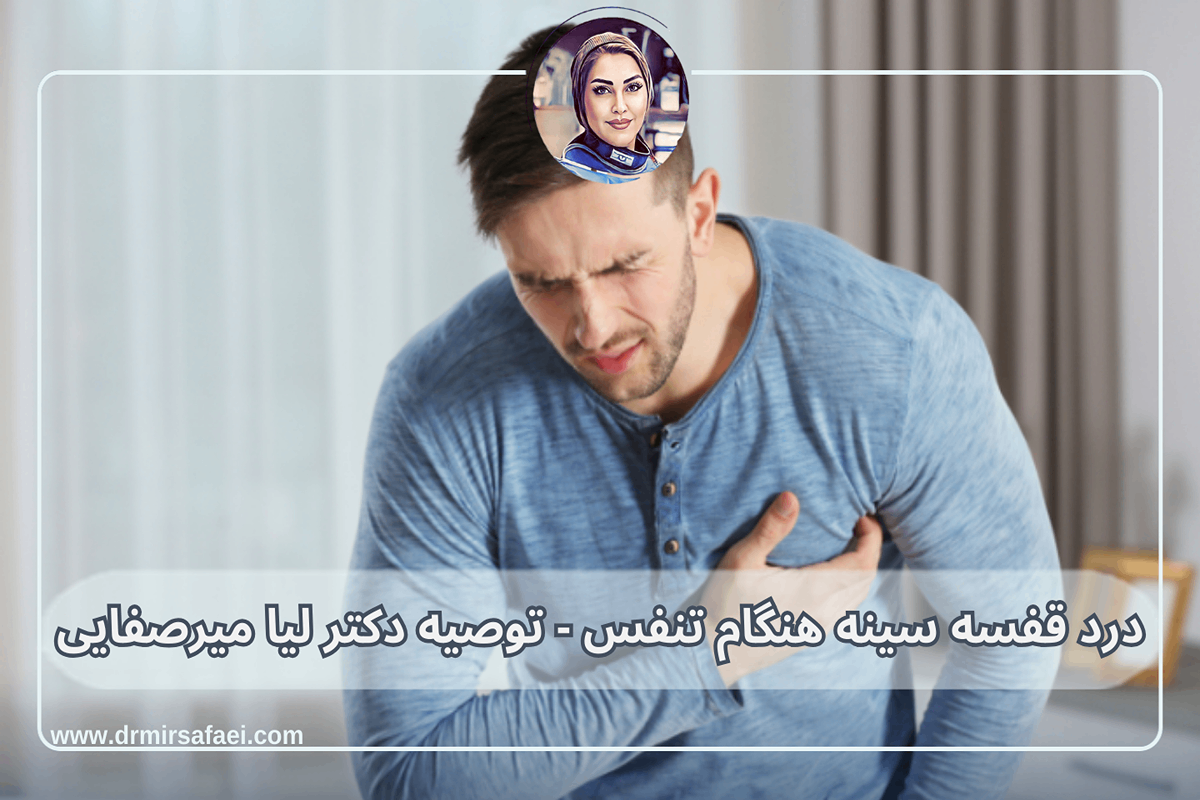
Chest pain when breathing - advice of Dr. Lea Mirsafai

Dr. Leah Mirsafai
تهرانCardiovascular specialist

chest pain when breathing is one of the most common and worrying symptoms that make many people think of heart disease. This pain may worsen when inhaling deeply, exhaling, sneezing or coughing and cause anxiety. Many patients mistakenly think that any chest pain is a sign of a heart problem, when in most cases, the causes include muscle problems, pleurisy, lung infections, or even anxiety and stress. rel="noopener">Dr. Leah Mirsafai is a specialist in cardiovascular diseases and a member of the American Heart Association. One of the most common and least dangerous causes of chest pain when breathing is stretching of intercostal muscles or chest muscles. This condition is usually caused by heavy exercise, lifting heavy objects, severe coughing or sitting and sleeping in an improper position. Dr. Leah Mirsafai emphasizes that the pains caused by muscle strain in the chest usually intensify when touching the painful area and decrease with rest. This type of pain often appears as a shooting pain and is felt more when taking a deep breath or moving the body. In most cases, these pains are not accompanied by systemic symptoms such as fever, severe shortness of breath or general weakness, and this can help to diagnose them as non-cardiac. Contrary to popular belief, chest pain when breathing is not usually due to a heart problem. Classic heart pains are often not directly related to breathing and appear more like pressure, heaviness or a burning sensation. However, Dr. Leah Mirsafaei warns that in some cases, heart diseases such as pericarditis or pericarditis can cause chest pain that intensifies when breathing. For this reason, if chest pain is accompanied by symptoms such as severe shortness of breath, cold sweat, nausea, or dizziness, it is absolutely necessary to conduct medical examinations and see a doctor immediately, because early diagnosis can prevent serious complications. Heart attack is one of the most serious causes of chest pain when breathing, which requires immediate medical attention. In a heart attack, blood flow to the heart muscle is reduced or cut off, causing pain and warning signs. Timely diagnosis and immediate visit to the doctor can prevent severe and life-threatening complications. Panic attacks are caused by severe anxiety and can Cause sudden and severe symptoms similar to a heart attack. Although these types of attacks are usually not dangerous, it is important to make a correct diagnosis. By examining the symptoms, the doctor can make sure that the pain is not caused by a heart attack and recommend appropriate treatment methods. People who have frequent panic attacks may have chronic anxiety or panic disorder. To control these attacks, the following methods are effective: Understanding the difference between the symptoms of a heart attack and a panic attack is very important and can save a person's life. If in doubt, it is necessary to see a doctor immediately. chest pain when breathing can be caused by various reasons and does not always have the same origin. Among its common causes are pleurisy or pleurisy, lung infections, pulmonary embolism, musculoskeletal problems, as well as anxiety and panic attacks. This type of pain may appear in the form of shooting, burning or a feeling of pressure in the chest, and in some people, it can only be felt when taking a deep breath. To accurately diagnose the cause of chest pain when breathing, it is necessary to review the patient's history, physical examination and, if necessary, perform imaging or additional tests. and has a non-cardiac origin, the symptoms can be controlled and reduced with simple home methods. According to Dr. Leah Mirsafai, home remedies are effective when the pain is caused by muscle strain, stress or temporary factors and is not accompanied by warning signs. Following some simple tips can help speed up the healing process and prevent pain from worsening. One of the most important initial measures in the home treatment of chest pain when breathing is adequate rest. Heavy physical activities, lifting objects or sudden movements can aggravate the pain. Reducing the physical pressure on the chest muscles allows the body to carry out the repair process properly and the intensity of the pain decreases over time. In cases where the chest pain is of muscle origin, using a warm compress can be very effective. Heat increases blood flow in the painful area, relaxes muscles and reduces spasms. Applying a warm compress for 15 to 20 minutes, several times a day, can help reduce pain when breathing. If needed, taking simple painkillers such as acetaminophen can be effective in reducing chest pain when breathing. Dr. Leah Mirsafai emphasizes that the use of any medication should be done with the doctor's opinion, especially in people who have a history of heart disease, gastrointestinal disease, or drug sensitivity. Arbitrary use of anti-inflammatory drugs may aggravate stomach problems in some people. Deep breathing and relaxation exercises play an important role in reducing chest pain when breathing. By reducing muscle tension, improving oxygen flow and controlling anxiety, these exercises reduce the intensity of pain and help improve lung function and overall body relaxation. Deep and controlled breathing exercises can play an important role in reducing chest pain when breathing. Correct breathing helps to reduce intercostal muscle tension and improve lung function. Doing calm breathing exercises daily, especially in a calm and stress-free environment, can significantly reduce the intensity of pain. Stress and anxiety are important factors that aggravate chest pain. Relaxation exercises such as meditation, yoga, or focusing on breathing can help reduce anxiety and prevent the pain associated with panic attacks. Although home treatment for chest pain when breathing is effective in many cases, it is not enough in some situations. If the pain continues for more than a few days, its intensity increases, or is accompanied by symptoms such as shortness of breath, cold sweat, dizziness, or pain radiating to the arm and jaw, it is necessary to see a doctor immediately. Timely diagnosis can prevent serious complications and determine the appropriate treatment path. Pain when breathing on the right side of the chest is usually less related to heart problems than pain on the left side, and in most cases, it has a non-cardiac origin. This type of pain can cause concern, but in many patients the cause is benign and treatable. The correct diagnosis of the cause of pain plays an important role in choosing the right treatment method. One of the most common causes of pain in the right side of the chest is stretching or spasm of the muscles in this area. This condition is usually caused by intense physical activity, sudden movements, frequent coughing, or improper body posture, and the pain is aggravated when taking a deep breath or changing position. Other important causes include infection or inflammation of the right lung. Diseases such as pneumonia or pleurisy can cause localized pain that intensifies when breathing deeply and is sometimes accompanied by cough or fever. In some cases, liver or gallbladder problems can be felt as referred pain on the right side of the chest. This type of pain may be aggravated by eating fatty foods or lying down and be mistaken for lung or muscle pain. One of the important features of right chest pain when breathing is its exacerbation with body movement. Bending, turning the trunk or raising the arms can increase the intensity of the pain, which is more in favor of a muscular or skeletal origin of the pain than the heart. In many cases, pain when breathing on the right side of the chest improves with conservative treatment. Adequate rest, avoiding strenuous activities, using warm compresses, and taking simple pain relievers with the doctor's advice can help reduce pain. However, if the pain is severe, persistent, or accompanied by symptoms such as fever, shortness of breath, or general weakness, it is necessary to see a doctor for a more detailed examination. Although in many cases, the origin of this pain is not cardiac and can be due to muscular, pulmonary or even gastrointestinal reasons, it can be dangerous to ignore it. Timely diagnosis of the cause of pain plays an important role in preventing serious complications. Contrary to popular belief, left chest pain when breathing does not always mean a heart problem. Stretching of the intercostal muscles, inflammation of the lung membrane or even anxiety can cause pain in this area. However, due to the similarity of the symptoms, it is not possible to distinguish between cardiac and non-cardiac pain without a medical examination. Dr. Leah Mirsafai recommends that any pain in the left side of the chest that is accompanied by symptoms such as shortness of breath, general weakness, dizziness or feeling of extreme pressure should be considered as a serious warning sign. These symptoms may indicate heart involvement or other serious problems and require immediate medical attention. If the left chest pain is sudden, severe or continuous when breathing and is accompanied by symptoms such as cold sweat, nausea, or pain radiating to the arm and jaw, it is necessary to go to the medical center immediately. A quick diagnosis can play a vital role in maintaining the patient's heart and life. Pain when breathing on the left side may be caused by: This pain usually changes with a change in body position and is often benign in the absence of danger signs. In some patients, pain when breathing on the left side appears intermittently. This condition can be caused by chronic stress or muscle spasm. Controlling anxiety and modifying lifestyle plays an important role in improving this type of pain. Right chest pain when breathing is usually caused by non-cardiac causes. According to Dr. Mirsafai, if the pain is accompanied by fever, cough, or shortness of breath, it is necessary to check for lung infections. Since the origin of this pain can be muscular, pulmonary, cardiac or caused by other underlying diseases, the treatment method should be chosen according to the doctor's diagnosis. These medications can help relieve muscle pain, pneumonia, or other non-cardiac problems. Dr. Leah Mirsafai emphasizes that the use of any medicine should be done under the supervision of a doctor and with the appropriate dosage in order to avoid side effects. In cases where the source of muscle or skeletal pain is, physiotherapy and exercises to strengthen the intercostal muscles and the back of the chest can play an effective role in reducing pain. Breathing exercises and correcting the body position can also prevent the recurrence of pain. If the left chest pain is caused by an underlying disease such as inflammation of the heart, lung, or digestive problems, the main treatment should focus on eliminating the cause. Early diagnosis and appropriate treatment can prevent serious complications and accelerate the healing process. Heart pain when breathing is usually rare, but seen in conditions like pericarditis will be This pain is often reduced by sitting forward and requires specialized treatment. Dr. Leah Mirsafai emphasizes: (Any chest pain that wakes up the patient or worsens with activity should be taken seriously.) Summary Chest pain when breathing is always a sign of heart disease. It is not, but it should never be ignored. Knowing the causes, paying attention to warning signs and following medical recommendations are the keys to maintaining heart and lung health. If the pain persists or worsens, it is the best decision to see a doctor. Chest pain when breathing is usually caused by stretched chest muscles, inflammation of the pleura, or anxiety and is often not cardiac. Chest pain while sleeping can be due to gastric reflux, poor sleeping position or muscle spasm. Most chest pains are not dangerous, but they can be dangerous if they are accompanied by shortness of breath, cold sweats, or pain radiating to the arm and jaw. In case of mild pain, rest, hot compress and stress reduction help; In severe or continuous pain, you should see a doctor. Dangerous heart pain is usually pressure, continuous and accompanied by shortness of breath, nausea or cold sweat. Left chest pain can be caused by muscles, stomach, anxiety or heart and needs to be investigated. For mild pain, acetaminophen is usually suitable; It is not recommended to take any medicine without diagnosing the cause. Heart pain during period is often caused by hormonal changes, anxiety or contraction of chest muscles. Dangerous heart pain is the pain that is severe, sudden and accompanied by general symptoms such as weakness and shortness of breath. Heart pain is usually felt in the middle or left side of the chest and may radiate to the arm, neck, or jaw. Yes, Gastric reflux and digestive problems can cause chest pain or burning. Pressure on the heart is a feeling of heaviness or tightness in the chest, which can be cardiac or non-cardiac. In the first step, see a general practitioner or internal specialist; If needed, you will be referred to the heart. If the pain is mild, resting and monitoring the symptoms is sufficient; In case of severe or suspected pain, see a doctor immediately.
All the information presented in this article is based on reliable medical sources and Dr. Mirsafai's clinical experience, and its purpose is to provide accurate and scientific guidance about Conditions such as muscle strain
Chest pain is usually due to a heart problem
Heart attack and chest pain when breathing
Common Heart Attack Symptoms
Panic attacks and chest pain

Symptoms of panic attacks
chest pain when breathing
The importance of resting and reducing pressure on the chest
Using a warm compress to relieve muscle pain
Using painkillers with a doctor's advice
The role of deep breathing and relaxation exercises

The effect of proper breathing on reducing chest pain
reducing anxiety and stress
When is home treatment not enough?
Pain when breathing on the right side
Common causes of right chest pain when breathing

Intensification of pain with body movement and position change
Methods to treat and improve right side chest pain
Is left chest pain always cardiac?
Warning signs in left chest pain
Warning signs Explanation Shortness of breath A feeling of difficulty breathing that can be a sign heart or lung problems General weakness Feeling very tired and reduced ability to perform daily activities Dizziness Feelings of confusion or imbalance which can be caused by decreased heart blood flow or blood pressure Feeling of severe pressure in the chest Feeling of heaviness or pressure on the left side of the chest which may accompanied by pain radiating to the arm, jaw, or neck When should you go to the doctor immediately?
Pain when breathing on the left side

Right chest pain when breathing
Physiotherapy and muscle strengthening
Treatment of the underlying disease

Heart pain when breathing
Why does my chest hurt when I breathe?
Why does my chest hurt when I sleep?
Is chest pain dangerous?
What should we do for chest pain?
Which heart pain is dangerous?
Why does my left chest hurt?
What pill should we take for chest pain?
Why does my heart hurt during my period?
Which heart pain is dangerous?
In which area is the heart pain?
Does upset stomach cause chest pain?
What does pressure on the heart mean?
Which doctor should we see for chest pain?
What should be done for chest pain?





