
Endometriosis cyst in the ovary
The female body is an amazing network of hormones and cyclical processes in which the uterus and ovaries play a central role. The endometrial tissue, or the inner lining of the uterus, reaches the necessary thickness every month to host a possible pregnancy, and if it does not happen, it falls out as menstruation. This is an accurate and normal process, but sometimes, part of this tissue begins to grow somewhere outside the uterus, often in the pelvic cavity and on the ovaries, a phenomenon known as endometriosis. It happens, during every menstrual cycle, like the inner tissue of the uterus, it bleeds. But since this blood has no way to leave the body, it is trapped in the ovary and over time it creates lumps full of old and thick blood, which are called chocolate cysts due to their appearance similar to liquid chocolate. The more scientific name of this condition is endometriosis cyst in the ovary or endometrioma, which, unlike many simple functional cysts, usually does not disappear by itself and requires follow-up and specialized treatment.
Knowing exactly the nature and complications of endometriosis cyst in the ovary is for any woman with chronic pelvic pain, very painful periods or infertility problems. It is faced, it is vital. These cysts not only affect the quality of life by causing pain and inflammation, but they can also threaten the fertility potential by causing adhesions and damage to the egg storage. In this article, we will comprehensively describe these cysts, symptoms, diagnostic methods and available treatment solutions to provide the necessary knowledge for the effective management of this condition. href="#%D8%AA%D8%B9%D8%B1%DB%8C%D9%81-%D8%B9%D9%84%D9%85%DB%8C-%D9%88-%D9%85%D8%A7%D9%87%DB%8C%D8%AA-%DA%A9%DB%8C%D8%B3%D Definition Science and the nature of endometriosis cysts in the ovary
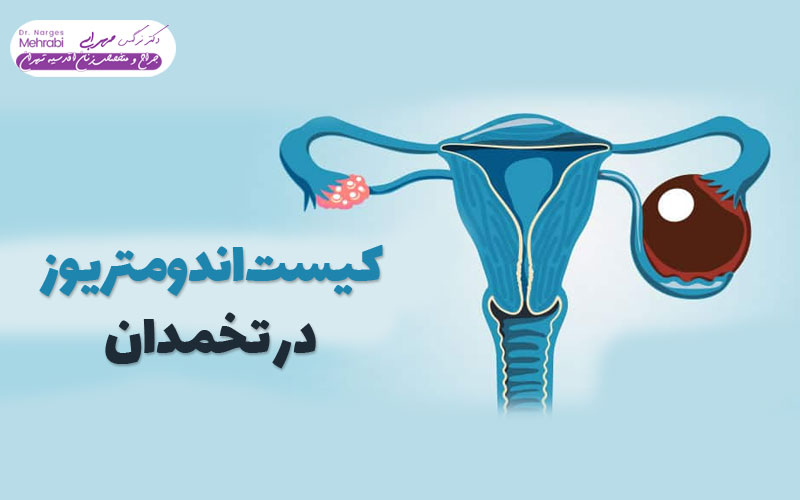
endometriosis cyst in ovary, which is also known as endometrioma or chocolate cyst, is one of the local forms of the disease It is endometriosis. Endometriosis is a condition in which tissue similar to the endometrium (the inner lining of the uterus) grows outside the uterus. When this misplaced tissue is replaced on the surface or inside the ovaries, it forms cysts with dark brown content over time with the accumulation of old and thick blood that has no outlet. Functional cysts are a direct result of the normal hormonal cycle and are temporary; But endometrioma cysts are caused by abnormal tissue growth and usually do not go away without intervention and can even grow over time or lead to more serious complications. The wall of these cysts is often thick and its contents are a viscous, brown and dense liquid.

common clinical symptoms of endometriosis cyst in ovary
endometriosis cyst in Ovarian cysts, unlike simple cysts, are often associated with specific clinical symptoms that indicate inflammation and impact on surrounding tissues. However, it should be noted that the severity of symptoms is not necessarily related to the size of the cyst; A small cyst may cause very severe pain due to its placement and adhesions.
The most common symptom of an endometriosis cyst in the ovary is dysmenorrhea (painful menstruation). This pain is usually more intense than normal menstrual pains, it may start a few days before the start of menstruation and continue until its end. The reason for this pain is the bleeding of endometriosis tissue inside the cyst and severe inflammation in the pelvic space, which is felt as a sharp, crampy or shooting pain. only during period) to exist. This pain can appear as pressure, heaviness or persistent discomfort in the lower abdomen or back. Also, dysparony (pain during intercourse) is a frequent symptom, especially if the cyst and adhesions around it are located deep in the pelvis and are stimulated during sexual activity.
One of the important complications of endometriosis cyst in the ovary is fertility and infertility problems. Many women who refer for infertility treatment notice the existence of these cysts. Endometrioma cysts can significantly reduce the chances of successful conception and implantation by damaging the ovaries, creating adhesions in the fallopian tubes and changing the hormonal environment of the pelvis.
formation mechanism and main causes of endometriosis cyst in ovary
The exact mechanism of endometriosis cyst formation, like endometriosis disease itself, is not yet fully known, but there are several theories to explain this phenomenon. Understanding these causes helps us better understand why endometriosis cysts form in the ovary and how to manage them. The most common theory is retrograde menstruation. According to this theory, instead of all the menstrual blood leaving the vagina, some of it goes back through the fallopian tubes and enters the pelvic cavity. This blood contains endometrial cells that should be removed by the body's immune system under normal conditions, but in susceptible people, these cells are planted on the surfaces of the pelvic organs, including the ovaries, and begin to grow. In addition, hormonal and genetic factors also play a role in the development of endometriosis cysts in the ovary. Estrogen is the main hormone that stimulates the growth of endometrial tissue and endometriosis tissue. Women with longer exposure to estrogen (such as early onset of menstruation or late menopause) are at greater risk. Also, strong family history suggests that genetic predisposition is probably involved in the development of this disease.
Disturbance in the immune system is another important theory. Normally, the immune system is responsible for detecting and eliminating abnormal endometrial cells. If the immune system does not work properly, these cells have the opportunity to survive, multiply and form masses outside the uterus, such as the ovaries, which will eventually lead to endometriosis cysts in the ovary.
Diagnosis: How is an endometriosis cyst in the ovary identified?
An accurate diagnosis of an endometriosis cyst in the ovary often requires a combination of physical examination, careful medical history, and imaging methods. To begin with, the gynecologist will ask questions about the symptoms, especially the intensity and pattern of menstrual pain and fertility problems, in order to achieve an initial clinical diagnosis. The most important diagnostic tool for identifying endometriosis cysts in the ovary is pelvic (vaginal) ultrasound. Vaginal ultrasound provides higher resolution images due to the placement of the probe closer to the pelvic organs. On ultrasound, the endometrioma cyst is seen as a cystic mass with a thick wall and homogeneous internal content with a "glassy" or "blurred" appearance (due to the presence of old blood), which distinguishes it from other ovarian cysts.

In suspected cases or to assess the extent of the disease, the doctor may use Magnetic Resonance Imaging (MRI). MRI provides more detailed images of soft tissues and can more clearly show the extent of cyst invasion to other organs (such as the bowel or bladder) and the extent of pelvic adhesions that are complications of endometriosis cysts in the ovary.
Although blood tests alone do not detect endometriosis cysts, they can be used to measure the level of tumor markers. CA-125 used. In women with endometriosis, the level of this marker may be high, although its increase can also occur for other benign reasons. Laparoscopy is the only method known as the "gold standard" for definitive diagnosis of endometriosis and direct observation of endometriosis cysts in the ovary and its lesions, although due to its invasive nature, it is usually performed only when surgical treatment is necessary.
Effect of endometriosis cyst on ovary on fertility
Effect The treatment approach for endometriosis cyst in the ovary must be completely individualized and depends on factors such as the severity of pain, the size of the cyst, the age of the patient and most importantly, her desire to get pregnant. Treatments are generally divided into two categories: medication and surgery. Medical treatment is primarily focused on reducing pain and slowing cyst growth. Since the growth of endometriosis cysts is dependent on the hormone estrogen, hormonal drugs are used to suppress the production of estrogen and prevent the menstrual cycle. These medications include oral contraceptive pills (which can be taken continuously), gonadotropin-releasing hormone (GnRH) agonists or antagonists, and progestins. These treatments can relieve pain and prevent cysts from getting bigger, but they usually don't get rid of large cysts. style="border-width:15px"> In cases where the cyst is large (usually over 4 to 5 cm), causes severe and uncontrollable pain, or interferes with the infertility treatment process, surgical intervention is recommended. The best surgical method to remove endometriosis cyst in the ovary is ovarian cystectomy through laparoscopy. In this minimally invasive method, the cyst is carefully separated from the healthy ovarian tissue and drained. The main goal of the surgery is to remove the cyst and preserve maximum healthy ovarian tissue. However, it should be noted that surgery to remove an endometrioma cyst can carry the risk of further reducing the egg reserve. Therefore, in women who intend to become pregnant, the decision to undergo surgery should be made with great care and with full consideration of its risks and benefits by infertility and endometriosis specialists in order to avoid unnecessary damage to fertility potential. Knowing the possible complications and risks of endometriosis cyst in ovary is necessary for correct and timely management of the disease. Although these cysts are usually not as prone to rupture or torsion as functional cysts (because they have a thicker wall), their chronic and long-term complications are very serious. One of the most common and important complications is the creation of severe pelvic adhesions. Repeated inflammation caused by endometriosis tissue bleeding around the cyst leads to the formation of scar tissue. These adhesions can attach pelvic organs such as the ovaries, fallopian tubes, intestines, and bladder to each other, causing chronic pain, bowel and bladder dysfunction, and serious fertility problems that require complex surgeries to remove the adhesions (adensiolysis). The risk of endometrioma cysts turning into ovarian cancer, especially of the clear cell or endometrioid type, is small (about 0.7 to 1 percent), but the risk does exist. This increase in risk has been observed in women who have long-standing large endometriosis cysts and doubles the importance of regular ultrasound follow-up and, if necessary, additional examinations. Acute and emergency complications in case of rupture Answer: Endometriosis itself is a relatively common disease and is estimated to affect 10-15% of women of reproductive age. to give Endometriosis cyst in the ovary (endometrioma) is also observed in about 20 to 40% of women with endometriosis, and therefore, it is considered one of the most common types of ovarian pathological cysts. Can an endometriosis cyst in the ovary become cancerous? Answer: Yes, although it is very rare. The risk of ovarian endometriosis cysts becoming ovarian cancer (especially the rare clear cell and endometrioid types) is less than 1%. This small risk doubles the importance of regular ultrasound follow-up and necessary investigations for large cysts or cysts that remain after menopause. When is the best time to get pregnant with an endometriosis cyst in the ovary? Answer: In women who have endometriosis cysts in the ovary, it is better not to delay pregnancy, because over time, the cysts can damage the egg storage more. The decision to perform surgery before pregnancy or to try for a direct pregnancy (naturally or with IVF) should be made by an infertility specialist, taking into account the size of the cyst, the severity of the pain, and the amount of egg storage of the patient. Does the endometriosis cyst in the ovary disappear by itself? Answer: No. Unlike functional cysts (such as follicular cysts or corpus luteum), endometriosis cysts are formed in the ovary due to the growth of abnormal endometrial tissue and do not disappear naturally with the menstrual cycle. These cysts may remain stable over time or even grow and require drug treatment to inhibit growth or surgical treatment for complete removal. Does surgery to remove an endometriosis cyst in the ovary damage the ovary? Answer: Surgery to remove an endometriosis cyst in the ovary (cystectomy) is always associated with the risk of reducing the egg reserve, because the cyst is usually deeply attached to the ovarian tissue. However, the use of laparoscopic surgical techniques by experienced endometriosis surgeons can minimize this damage. Measuring the risk of surgery against the damage caused by the cyst itself on the ovary is a critical decision before the operation. Does the endometriosis cyst in the ovary recur after menopause? Answer: Since the growth of the endometriosis cyst in the ovary is dependent on the estrogen hormone, usually after menopause when the estrogen level drops sharply, the possibility of its recurrence or regrowth is very low. However, if the patient uses hormone replacement therapy (HRT), there may be a risk of re-stimulation and recurrence of the cyst. Endometriosis cyst in the ovary. This article is being updated and expanded to meet the SEO standard.Treatment approaches: from drugs to surgery for endometriosis cysts in Ovary
Myomectomy test Pap smear Labiaplasty With laser Vaginal fat Prinoraph Dr. Mehrabi's services complications and possible risks of endometriosis cyst in ovary

Instagram
FAQ
How common is an endometriosis cyst in the ovary?