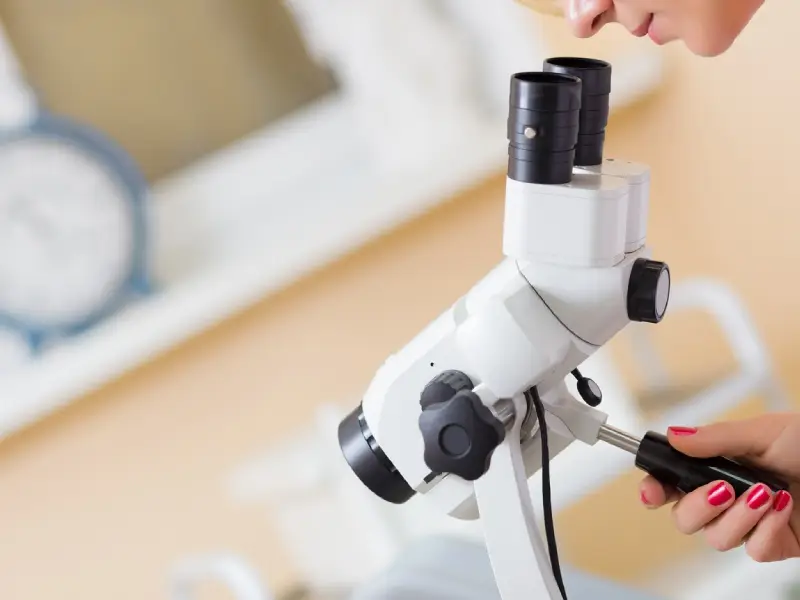

کولپوسکوپی یکی از حیاتیترین بررسیهایی است که میتواند قبل از بروز مشکلات جدی، زنگ خطر را بهموقع به صدا درآورد. Many cervical lesions are completely asymptomatic in the early stages, and if not detected in time, they may lead to more advanced diseases. When the result of pap smear or HPV test is reported abnormal, one's mind will be full of questions and worries. Colposcopy is exactly the stage that determines the answer to these concerns scientifically and definitively. In this article, we fully explain what colposcopy is, when it is necessary and why it can play a decisive role in maintaining women's health.
Genital wart colposcopy video performed by Dr. Fatemeh Alizadeh

Coaposcopy of genital warts
To get expert advice and answer all your questions, contact Dr. Fatemeh Alizadeh, gynecologist now.
What is colposcopy?
Colposcopy is a non-invasive diagnostic method that is performed using a device called a colposcope. A colposcope is actually a type of microscope with a strong light that allows for a detailed observation of the cervix, vaginal walls and vulva area. In this method, the doctor can identify suspicious areas without making a surgical incision. Colposcopy is performed in the office or clinic and does not require general anesthesia. If abnormal tissue is observed, the doctor can take a sample (biopsy) at the same time. This feature has made colposcopy one of the most important tools for diagnosing women's diseases.
Why is colposcopy done?
The main reason for performing a colposcopy is to carefully check the abnormal results of the pap smear test. When cellular changes are observed in the pap smear, colposcopy is recommended as an additional diagnostic step.
- Abnormal pap smear results: When abnormal cellular changes are observed in the pap smear test, colposcopy is recommended for a more detailed examination of the cervix.
- Positive high-risk HPV test: If high-risk types of HPV virus are positive, colposcopy helps in early detection of precancerous lesions.
- Observation of suspicious lesions on the cervix: If any lesion, stain or abnormal appearance change is observed on the cervix, colposcopy enables a more detailed examination.
- Abnormal vaginal bleeding: Abnormal bleeding, especially after intercourse or outside of the menstrual cycle, may require a colposcopy.
Read more: benefits of colposcopy
In this section, you will learn about the most important benefits of colposcopy and understand why this method plays a key role in early diagnosis and maintaining the health of the cervix. The most important advantage of colposcopy is identifying cell changes in the early stages; When the disease has not yet caused clear symptoms. Early diagnosis makes treatment easier, less expensive and more successful. This issue plays an important role in preventing the development of cervical cancer. Colposcope with multi-fold magnification and strong light allows for accurate observation of the cervix. Many cellular changes are not detectable by routine examination, but are clearly seen in colposcopy. This high accuracy significantly reduces the possibility of detection error. With the help of colposcopy, the severity and exact location of the lesion is determined and the doctor can make a more accurate decision. This prevents additional, invasive or unnecessary treatments. As a result, the patient receives only the treatment he needs and fits his condition. If a suspicious area is observed, the doctor can take a sample from the exact same area. This targeted biopsy increases the accuracy of pathology results. A more accurate diagnosis helps to choose the best treatment method. Colposcopy is performed without anesthesia and in a short period of time. The side effects of this method are very limited and in most cases end in mild spotting or short-term discomfort. For this reason, this method is considered completely safe for most women. The ambiguous results of pap smear or HPV test can cause great concern. Colposcopy determines the true condition of the cervix by careful examination and puts an end to many of these concerns. Being aware of the real conditions of the body creates more mental peace for the patient. Read more: colposcopy cost Not all women need a colposcopy, but it is necessary in certain situations. People who are more candidates for colposcopy include the following: Women who have a weak immune system: In people with a weak immune system, the possibility of developing infections and lesions is higher, and colposcopy is more important. Early diagnosis in these people can play a decisive role in preventing cervical cancer. Read more: endometriosis treatment Colposcopy is performed in a few simple steps and takes about 10 to 20 minutes. First, the patient is placed on the examination bed to provide proper access to the cervix. Then the doctor uses a speculum to keep the vagina open and observe the cervix closely. After that, a special solution such as acetic acid or iodine is applied to the desired areas so that the abnormal areas are highlighted and easier to identify. These early stages allow for a complete and accurate examination with colposcope magnification. In the next step, the doctor examines cell changes and suspicious lesions using a colposcope. If an abnormal area is detected, sampling or biopsy of the same area is performed. This sampling helps in more accurate diagnosis and treatment decision making. It should be noted that during colposcopy, there is no direct physical contact with the cervix through the device and only careful observation is done. This method is non-invasive, safe and painless or with mild discomfort and allows patients to quickly return to daily activities. HPV treatment with colposcopy by Dr.Fateme Alizadeh HPV treatment with colposcopy This technique is a diagnostic method that is used for a detailed examination of the cervix, vagina and vulva. Some of its most important uses are: Conclusion Colposcopy is one of the most important diagnostic methods in women's health, which allows early identification of abnormal changes in the cervix. This method is simple, safe and very effective and plays a key role in the prevention of cervical cancer. Knowing the steps, applications, and necessary preparations before colposcopy helps patients to do this examination more calmly and confidently. You can return to your daily activities immediately after the colposcopy, unless there is a special recommendation from the doctor. Yes, it is better for the patient to refrain from sex, vaginal douching and tampon use before colposcopy and the examination should be performed outside of the menstrual period. The biopsy results will be ready within 1 to 2 weeks and the doctor will give the necessary recommendations after examining it. Colposcopy is safe and only some light bleeding or short-term spotting may occur; Serious infection is very rare. No, colposcopy is performed without anesthesia and only in rare or special cases local anesthesia may be used. be.Early detection of pre-cancerous and cancerous lesions
High accuracy in cervical examination
Reducing the need for unnecessary treatments
possibility of targeted sampling (biopsy)
safe and low-complication method
Reducing patient anxiety through definitive diagnosis

What people need colposcopy?
stages of colposcopy

colposcopy applications
Usage Description Diagnosis of precancerous lesions of the cervix To investigate abnormal cell changes that may lead to cancer. Evaluation of abnormal pap smear results If abnormal results are observed in the pap smear, colposcopy is performed to check the situation more closely. Identification of HPV infections and genital warts Colposcopy helps the doctor to detect the presence of HPV virus and Diagnose associated lesions. Examination of abnormal vaginal bleeding In case of unusual bleeding, the cause can be investigated through colposcopy. Tissue biopsy Suspicious If abnormal tissues are observed, the doctor can take a sample (biopsy). Cervical ulcer examination and evaluation Colposcopy for accurate identification and evaluation of chronic ulcers or caused by infections. Control and follow-up after treatment of cervical lesions To check the success rate of previous treatments such as cryotherapy or laser therapy. Diagnosis of the cause Chronic pelvic pain or vaginal discomfort In some cases, colposcopy is performed to find the cause of unexplained pain in the pelvic area. Check for abnormal changes in the vulva and vagina In suspected cases of cancer or abnormal lesions in the vulva and vagina, colposcopy is used. FAQ





