
عصبکشی یا درمان ریشه یکی از رایجترین روشهای نجات دندانهای آسیبدیده یا عفونی است. But is this treatment always the end of the story? Unfortunately no. In some cases, even a denervated tooth may get infected after some time.
In this article, we will have a closer look at the symptoms, reasons and scientific methods of treatment of denervated tooth infection. From signs that should not be ignored to advanced treatment methods used in dentistry today. Just remember that the information in this article can help you better understand your oral condition, but it's not a substitute for an in-person dental exam. If you experience any of the following symptoms, it is better to consult an endodontic dentist.

Does a denervated tooth also get an infection?
On the surface, when a tooth is denervated, it is thought that there is no longer a reason for infection, because the pulp of the tooth (the internal soft tissue that contains the nerve and blood vessels) has been completely removed; But the fact is that even after a specialized nervectomy of the tooth, there is a possibility of infection in some cases.
This happens when a part of the infected tissue remains in the side canals or the tooth is not repaired properly and bacteria find a way to penetrate the root. Also, small fractures, permeable veneers or even poor oral hygiene habits can cause the infection to return. This may happen a week to ten days after denervation, or even months or years later.

Symptoms of denervated tooth infection that you should take seriously Signs that should not be ignored:Persistent pain and Throbbing
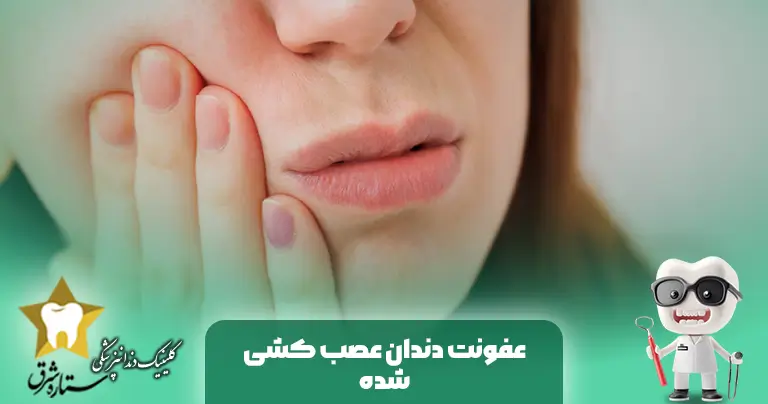
The pain that is felt deep in the tooth or jaw is usually throbbing and may be more intense at night. This pain can be annoying when chewing, biting or even while resting. If this pain appeared after specialized dental denervation, it needs to be investigated.
Inflation In the gum or facial area
slight to visible swelling around the denervated tooth or even in the cheek and jaw may be a sign of the accumulation of infection in the underlying tissues. Sometimes this swelling appears with painful touch or redness of the area.
Sensitivity to heat and cold class="ez-toc-section-end">
Usually, a denervated tooth should not react to heat and cold. So, if you still have a painful reaction to a hot drink or ice cream, there is probably an infection or inflammation around the root of the tooth.
Pus and bad breath
Sometimes the accumulation of infection drains from the gum in the form of a purulent abscess, which can cause an unpleasant taste and bad smell in the mouth. This symptom is one of the serious warnings of tooth root infection and requires immediate intervention.
Teb and feeling generally unwell
In more severe cases, the tooth infection may enter the bloodstream and cause symptoms such as fever, headache, fatigue, or lethargy. In such a situation, it is necessary to see a dentist or even an emergency room immediately.

why Does denervated tooth get infected?
In this section, we will examine the cause of denervated tooth infection:
Staying of bacteria in the sub-channels of the root
The roots of the teeth do not have only one straight channel; But sometimes they have tiny branches and very narrow branches in the depth of the jaw bone that cannot be seen even in the photo. If these secondary canals are not properly cleaned and disinfected during treatment, the remaining bacteria can become active over time and reignite the infection.
A tooth that has just undergone root canal treatment is more sensitive to pressure and impact due to the emptying of its internal tissue. If there is a hairline crack or fracture in the root of the tooth (whether due to chewing hard food or incomplete repair), bacteria may enter through this route and cause infection.
filling or Improper and permeable veneer
Sometimes after nerve extraction, filling or tooth veneer is delayed or the material is not placed properly. In this case, very small seams remain between the tooth and the restoration, through which bacteria can easily pass and enter the dental canals. That is why it is recommended to perform the final restoration of the tooth as soon as possible and accurately.
New caries in the tooth
Even if the root canal treatment is done correctly, if oral hygiene is not followed, the tooth may develop caries again from other areas (for example, between the teeth or under the veneer). This decay can create a new way for bacteria to penetrate and covertly spread the infection.

In this section, we review the most up-to-date and effective scientific solutions for treating denervated tooth infection.
Dental specialty
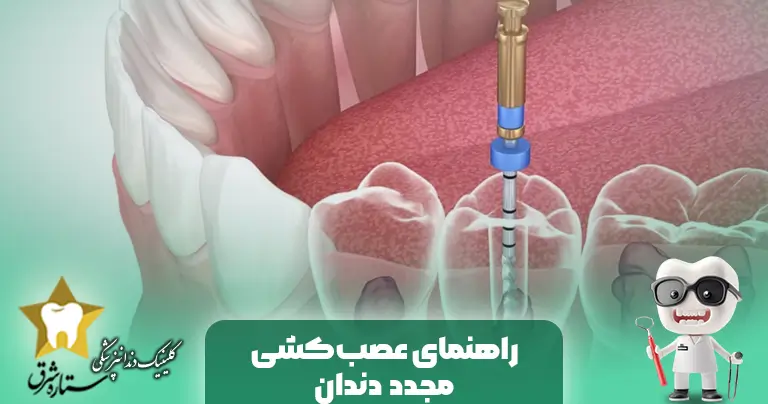
If the dentist determines that the cause of the infection is the remaining bacteria in the canals or the re-leakage of bacteria into the tooth, re-nervation of the tooth is performed. This method means reopening the tooth, carefully draining the remaining tissue, cleaning the canals, deep disinfection and filling it again.
In cases where only the tip of the root is involved in the infection, instead of re-nervation, root tip surgery or epicectomy may be used. This procedure is performed with precise microscopes, during which the end of the root along with the infected tissue is removed and the canal is sealed from below.
If the infection is in the early stages or has not yet entered the jaw and surrounding tissues, the dentist may try to control the inflammation and prevent its spread by prescribing antibiotics. Keep in mind that no medication alone can completely cure a tooth root infection. Medicines often play an auxiliary role so that the body is ready to accept the main treatment.
You should keep in mind that no home treatment can replace re-nervation of the tooth or epichotomy surgery; But some home remedies can help to temporarily reduce pain and inflammation so that you have the opportunity to visit the dentist:
- Washing your mouth with lukewarm salt water (3 times a day)
- Using a cold compress on the cheek to reduce swelling
- Using painkillers such as acetaminophen or ibuprofen
- Avoid eating hot or hard foods in the area of the infected tooth
Note: This The methods are only palliative, not curative. If you delay going to the dentist in hopes of home treatment, you may end up with tooth extraction or spread the infection to the jaw and body.

Following the following methods can prevent the return of pain after denervation of an infected tooth:
Oral hygiene
You may have heard it many times, but still one of the most effective ways to prevent infection is this simple tip:
- Brush your teeth twice a day.
- Floss your teeth at least once a day.
- Mild antibacterial mouthwash helps to kill bacteria hidden deep in the gums. be controlled.
This simple routine can prevent new caries, gum inflammation and bacteria from re-infiltrating the tooth root.
Reference Visit the dentist regularly for a check-up
Even if you do not feel any pain or any particular problem, it is necessary to visit the dentist every six months. Many problems, especially the infection of denervated teeth after several years, have no obvious symptoms in the early stages and can only be detected by radiographs or clinical examination.
Done Final restoration (filling or veneer) as soon as possible
One of the common reasons for the return of infection is the delay in the final restoration of the tooth. If the denervated tooth is left without a proper cover, the possibility of bacteria penetrating the root of the tooth through small seams and cracks increases.

When should we go to the dentist immediately?
If any of the following occurs, immediately contact East Tehran Dentist or a specialized root canal treatment center:
- Feeling pain for more than 3 days
- High fever, chills or feeling unwell General
- Increasing swelling of the jaw, face, or gums
- Persistent discharge of pus, bitter taste, or bad odor in the mouth
- Extreme sensitivity to heat or cold even without eating
- Difficulty opening the mouth or swallowing food
- Feeling of pressure, heaviness, or throbbing in the area of the treated tooth

Is pain after denervation always a sign of infection?
No; In most cases, mild pain or pressure after root canal treatment is normal and will subside within a few days.
cost How much is root canal treatment?
The cost of root canal treatment depends on factors such as the position of the tooth (front or Asian), the number of canals, the extent of damage or complexity of the root, the need for epitomy surgery or only non-surgical treatment. It has.
The infected tooth must be extracted?
Not necessarily. The dentist's primary goal is to save the tooth with re-nervation or endodontic surgery. Tooth extraction is recommended only in situations where the tooth structure is severely damaged and the infection has spread to the bone or adjacent teeth. class="ez-toc-section-end">
Denervated tooth infection, although rare; But if it occurs, it should be followed up quickly. Early diagnosis and timely visit to the dentist can prevent the spread of infection, destruction of tissues around the tooth, and the need for invasive treatments. If you have symptoms such as persistent pain, gum swelling, or unusual sensitivity in a denervated tooth, it is necessary to see a root canal specialist. To receive expert advice, information on dental tariff and to schedule an appointment at Setare Shargh Clinic, call 02191093560. Keeping teeth healthy is possible with timely action.
Last updated on December 24, 1404 by East Star Writers Team