Listen to the summary of this article in this podcast:
Babies are born with a developing immune system that matures by around 2-3 months and is more vulnerable to infection. There are serious diseases that are difficult for babies to deal with. For this reason, the child should be vaccinated in the first months so that the body's immune system can prevent these diseases. 2-month baby vaccine is from the prescribed vaccination series of the country's disease control and prevention organization, which includes 6 vaccines. Stay with us in the rest of this article to learn more about the two-month baby vaccine, its use, benefits and side effects.
What is the two-month baby vaccine?
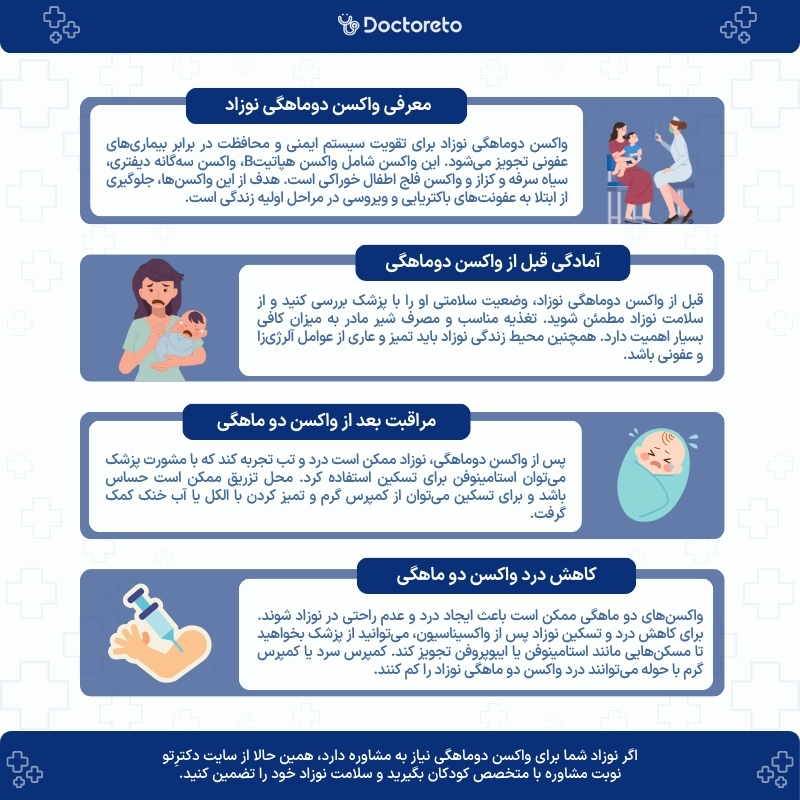
The two-month infant vaccine is usually part of the Children Checkup program and includes several vaccines at one time. A quintuple vaccine (for diphtheria, tetanus, pertussis, hepatitis B and Hemophilus influenza type b), oral polio vaccine and in the new program, pneumococcal and rotavirus vaccines have also been added in many cities.
In the 2-month-old baby vaccine, each of these receives a standard dose, and the baby's body slowly starts to build stable immunity. Usually, at the end of the second month of life, at the first opportunity, the baby should go to the health center or the children's doctor for the 2-month vaccine injection, so that the interval with the next appointments does not get confused. This vaccine is an important part of preventing brain and respiratory infections, paralysis caused by polio and severe diarrhea, and its removal increases the risk of serious diseases.
How many two-month-old baby vaccines are there?
In terms of the number of covered diseases, the two-month-old baby vaccine is 6, but in terms of the number of injections, it is usually considered 2 vaccines. At this age, a pentavalent vaccine (Pentavalan) is injected, which provides protection against 5 diseases, and the polio vaccine is given at the same time, which covers the sixth disease:
Triple diphtheria, pertussis and tetanus vaccine
Hepatitis B vaccine
Haemophilus influenzae vaccine
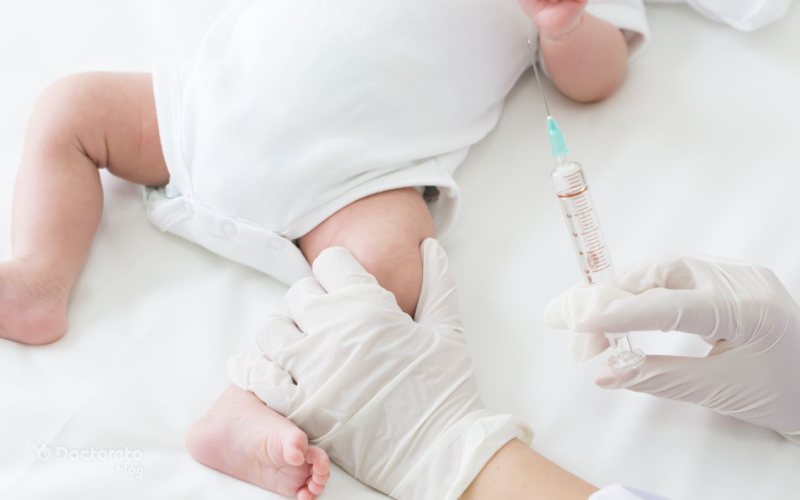
Polio vaccine can be injected or orally. This combination is prescribed to protect the baby's body against tetanus, whooping cough, hepatitis B, meningitis, pneumonia, ear infection and polio. Apart from the polio vaccine, which is usually given orally in children, the rest of the two-month-old baby vaccines such as tetanus vaccine are injected into the outer thigh area.
In this video, get to know the important points before and after the vaccine in order to have more complete care.
Is there a problem with the two-month vaccine delay?
Delaying the two-month vaccine means that the baby is not covered when it should be, against dangerous diseases such as whooping cough, hemophilus meningitis, pneumococcal and poliomyelitis. The longer the distance, the longer the child is unprotected. If there is a delay in the two-month vaccine for any reason, it is not necessary to start the vaccine from the beginning; It is enough to go to the vaccination center as soon as possible so that a compensatory program can be set based on age.
English text: 2-month vaccines help protect your baby from diseases like polio and hepatitis B. Persian translation: Two-month vaccines help protect your baby from diseases like polio and hepatitis B.
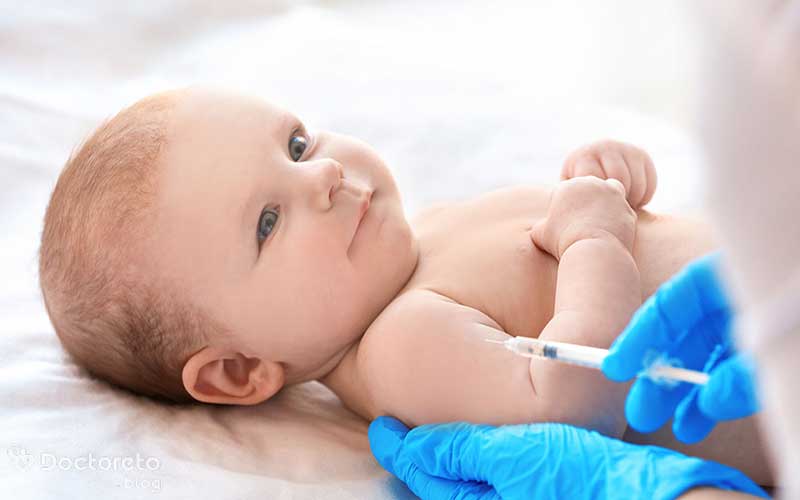
At the time of the 2-month-old baby vaccine, one or two intramuscular injections are usually performed in the front of the thigh (thigh muscle); The nurse first disinfects the skin, the baby is held firmly but still, and then the quintuple vaccine and, if available, pneumococcal vaccine are injected into two separate thighs.
Oral polio and rotavirus vaccine is usually dripped into the baby's mouth (there is also an injectable version). After the two-month-old baby's vaccine injection, parents are usually asked to stay in the center for 15 to 30 minutes so that if an acute and very rare allergic reaction occurs, it can be acted upon quickly.
complications of two-month-old baby vaccine
The most common side effects of the two-month-old baby vaccine are pain and redness at the injection site, slight swelling or hardening of the vaccine site, mild fever, restlessness, drowsiness or temporary loss of appetite. Babies who receive the rotavirus vaccine may have looser stools or slightly more frequent bowel movements for a few days. These side effects are usually mild and get better on their own.
Rare but important side effects include high fever, loud and continuous crying, widespread rash, breathing problems or seizure symptoms, which should be referred to a doctor or emergency room immediately.
Complications of the two-month-old baby vaccine include the following:
Baby Diarrhea
hardening of the vaccine site
Crying and restlessness of the baby
Seizures after the two-month vaccine
Drowsiness
sensitivity to the vaccine
Vaccine site infection
Lethargy
Fever after vaccine
Feeling pain
1. Baby's diarrhea after the two-month vaccine
After the two-month-old baby vaccine, especially if oral rotavirus vaccine has been injected, the baby's diarrhea after the two-month-old vaccine can occur in the form of loose stools several times a day, bloating and mild colic. This change in the baby's stool after the two-month vaccine is usually mild and can be resolved with continued breastfeeding, rest and simple care.
2. Tightening of the two month old vaccine
Hardening of the two-month vaccine site in the form of a hard and sometimes painful bump under the skin of the thigh is one of the common local side effects, and it usually softens and shrinks gradually within a few days to a few weeks. To treat the hardening of the two-month-old vaccine site, you can use a cold compress on the site (without direct contact of ice with the skin) in short periods, place the baby's foot in a comfortable position, and avoid intense massage or pressure on the injection site.
3. Crying and restlessness of the baby after the two-month vaccine
Vaccine stimulates the baby's immune system and changes his behavior or general state. Baby crying after two months vaccine may be caused by common side effects such as fever, pain and swelling at the injection site. To soothe the baby, calm the environment and give him peace. Massaging the baby's skin can calm the baby's crying.
English text: Most children don't experience side effects after getting the shot. That said, your baby may develop mild side effects, including fever, vomiting, or pain at the injection site. In very rare cases, some children develop a high fever, seizures, or continuous crying for 3 hours or more Persian translation: Most children do not experience side effects after vaccination. Your child may have mild side effects, including fever, vomiting, or pain at the injection site. In very rare cases, some children have a high fever, convulsions, or persistent crying for 3 hours or more.
4. Seizure symptoms after the two-month vaccine
Seizures after the two-month vaccine are very rare, and if they do occur, they often occur due to high fever. Seizure symptoms after the two-month vaccine include involuntary and rhythmic movements of the arms and legs, staring of the eyes, turning the eyes up or to one side, sudden stiffening of the body, loss of responsiveness (the child does not respond to sound and touch) and sometimes bruising or breathing disorders. In such a case, you should immediately notify the emergency department, put the child on his side and do not put anything in his mouth. After the initial improvement, it is necessary to check with the pediatrician to decide on the continuation of vaccines.
Two-month-old baby vaccine is injected to strengthen the immune system and prevent dangerous infectious diseases.
5. Drowsiness after the two-month vaccine
Drowsiness after the two-month vaccine can be a part of the baby's natural reaction to the stimulation of the immune system. Some babies sleep a little more than usual, feed less and fall asleep earlier. If the baby has difficulty waking up, has difficulty nursing, has a high fever, abnormal crying, or a marked decrease in wet diapers, a medical evaluation is needed.
6. Allergy to two-month vaccine
Allergy to two-month-old baby vaccine is rare, but it is important to know its symptoms. Mild reactions include limited redness of the skin, itching, or a few hives around the injection site, which usually resolve on their own. Severe sensitivity (anaphylaxis) usually occurs within the first few minutes after injection and is accompanied by widespread hives, swelling of the face, lips or tongue, wheezing, difficulty breathing, frequent vomiting, paleness, or severe lethargy.
7. Vaccination infection of a two-month-old baby
In rare cases, a two-month-old baby may get an infection instead of the vaccine, due to various factors such as lack of hygiene in the injection process, previous infections at the injection site, or personal sensitivity to the materials used in the vaccine. If you are diagnosed with an infection after the two-month vaccination, you should immediately go to the doctor to start the necessary treatment to control the infection.
8. Lethargy of the baby after the two-month vaccine
One of the common side effects after the two-month vaccination is the baby's lethargy, which naturally improves in a few days. During this period, the baby sleeps more, he is less active and his appetite decreases.
The two-month vaccine is an important step in keeping the baby healthy.
Fever after two months vaccine
Fever after the two-month-old vaccine is a common and usually mild side effect and indicates the activation of the immune system in response to the two-month-old vaccine. Fever usually starts within the first few hours to 24 hours after the injection and may last up to 48 hours. If the fever is higher than 38.5-39 degrees after the two-month vaccine or is accompanied by lethargy, crying, breathing problems or seizure symptoms, you should see a doctor.
How many hours does the fever start after the two-month vaccine?
In most cases, the fever appears after the two-month-old baby's vaccine on the same day of injection; That is, from the first few hours to about 24 hours later. Some babies may be slightly warmer that night and have a fever the next morning. A very late onset of fever is usually less related to the vaccine, and the possibility of a cold and two-month vaccine or other infection should also be considered.
If the baby develops a fever after the two-month vaccine, first measure the body temperature with an accurate thermometer. Reduce extra clothes, don't use too thick a blanket, and give him enough fluids (at this age, breast milk or formula). You can use acetaminophen drops according to the doctor's opinion after the two-month vaccine based on the child's weight.
How many degrees is normal for a baby's fever after two-month vaccines?
Mild fever after the two-month-old vaccine is usually considered to be around 38 or a maximum of 38.5 degrees, and in a child with a good general condition, normal breathing and acceptable breastfeeding, it often does not require aggressive action. However, in small babies, any fever above 38 should be taken seriously and it is better to consult a doctor.
Pain of two-month-old baby vaccine
The pain of a 2-month-old baby's vaccine can be seen in the form of crying during injection, sensitivity to the touch of the thigh, restlessness when moving the leg, or crying when changing the diaper. This pain is usually greater in the first few hours and gradually decreases. In most babies, the pain is mild and controlled by cuddling, breastfeeding, comfortable leg position, and, if necessary, acetaminophen drops as prescribed by the doctor. If the two-month vaccine pain is prolonged, severe, accompanied by large swelling, obvious warmth or high fever, the injection site should be checked by a doctor to rule out possible infection or abscess.
foot pain after two-month vaccine
Leg pain at the injection site of the two-month vaccine is one of the common side effects of these vaccines, which usually appears within a few hours to a few days after vaccination and gradually improves. You can use a cold compress to reduce leg pain after the two-month vaccination. It is better for the baby's clothes to be comfortable so as not to put pressure on the injection site.
Preparation before two-month baby vaccine
One of the important questions of parents is what to do before the two-month vaccine? Before the two-month vaccine, check the baby's health condition with the doctor or nurse. If the baby has symptoms of illness or problems, be sure to inform the doctor. Proper nutrition for a baby is very important.
Before the two-month vaccine, make sure that the baby is fed regularly and consumes enough breast milk. A clean and hygienic environment is very important for the baby. Before the two-month vaccine, make sure that the baby's living environment is clean and free of allergens and infectious agents.
Be sure to observe the following before applying for the 2-month-old baby vaccine:
Make sure that the baby does not have a fever or a serious acute illness on the day of the two-month vaccine.
Bring your vaccination card, health booklet and any reports of previous illnesses or current medications.
Choose baby clothes so that the thighs are easily accessible (not a tight and multi-layered hat).
Before the injection, ask your doctor or nurse your questions about side effects, fever, acetaminophen drops after the two-month vaccine and when the next appointment is.
It is better for a parent or companion to be with the child to hug and calm the baby during and after the injection.
Avoid arbitrarily giving painkillers or antipyretic drugs before the baby's 2-month vaccine without a doctor's prescription.
Check the baby's health condition with a doctor or nurse before the two-month vaccination.
acetaminophen drop before two-month vaccine
It is not recommended to use acetaminophen drops before the two-month vaccine. You can use acetaminophen drops after consulting your doctor to reduce the side effects caused by the vaccine and relieve pain and fever after the injection.
Care after the two-month vaccine - what to do after the two-month vaccine?
Due to stimulation of the immune system, the baby may experience symptoms such as pain and fever after the vaccine injection. If necessary, you can use acetaminophen (paracetamol) drops as prescribed by your doctor to relieve pain and fever. The injection site may be sensitive or painful for a few days. One of the care methods after the two-month vaccine is to use a clean and cool cloth (cool compress) to reduce the pain of the injection site and avoid manipulating or rubbing the injection site.
After the two-month vaccine, the baby will be confused and tired due to pain. If needed, you can hold the baby to calm him down. Make sure the baby is getting enough food and fluids. If you notice unusual symptoms such as high fever, severe swelling at the injection site, difficult breathing, severe changes in behavior or digestive problems after the injection of the two-month-old baby vaccine, see a doctor immediately.
Time
Main tasks
Important point
When should we go to the doctor?
Before the injection
Controlling the baby's general fever, carrying the vaccine card and file, choosing comfortable clothes to access the thigh
Your questions about fever, Ask for acetaminophen and the next dose before the injection
If the baby has a fever above 38 degrees before the vaccine, is lethargic, his breathing or feeding seems abnormal
Immediately after the injection
Stay 15 to 30 minutes in the center, hug and breastfeed for comfort, pay attention to breathing and skin color
To unusual crying, hives, swelling of the face, Be careful with wheezing
In case of widespread hives, swelling of the face or lips, shortness of breath, wheezing, frequent vomiting, severe lethargy, immediately go to the doctor or emergency room
24 to 48 hours later
Measure the temperature if it is warm, monitor the injection site, feeding and the number of wet diapers, use a mild cold compress in case of pain and swelling Injection
In case of mild fever and restlessness, acetaminophen can be given according to the doctor's opinion, avoid wearing too many clothes and very cold compresses
In case of fever above 38.5 degrees, fever for more than two days, refusal of milk, decrease in wet diapers, continuous crying, symptoms of convulsions or severe lethargy, an examination is definitely necessary
Checklist Care before and after two-month-old baby vaccine
Bathing a baby after two-month vaccination
After the baby's two-month vaccine, you can bathe the baby normally. In fact, bathing helps the baby's pain to settle and calm down. Of course, keep in mind that babies react differently to bathing after the two-month vaccine; Some babies may be more sensitive to water and heat.
Therefore, if your baby expresses discomfort or shows unusual symptoms, it is better to postpone bathing and consult a doctor. Use warm and gentle water between 37 and 38 degrees Celsius to wash the baby and make sure that the water is not too hot so as not to irritate your baby.
normal body temperature of a baby after two-month vaccine
Fever can occur after vaccination, but not all babies develop fever. For a baby under 3 months, if the temperature rises to 38°C or higher (or the parents feel feverish), the doctor or emergency room should be called. It may be necessary to take antipyretic drugs or acetaminophen.
Fever is one of the common and normal side effects of the two-month baby vaccine.
How many days did he give acetaminophen after the two-month vaccine?
Usually, acetaminophen drops after the two-month vaccine are only necessary when the baby has a fever above 38 degrees or is clearly restless. In this case, the doctor determines the dose based on the baby's weight and usually allows consumption for the first 1 to 2 days, not more and not as a preventive measure.
Cold compress after two months vaccine
Cold compresses after the two-month vaccine can help reduce pain, redness, and swelling at the injection site. To do this, moisten a clean cloth with cool (not frozen) water or wrap the cold pack in a thin towel and gently place it on the injection site. It is better to avoid putting ice directly on the baby's skin. A cold compress is usually most effective in the first 24 to 48 hours after a 2-month-old baby's vaccine, and along with hugging and breastfeeding, it helps reduce the child's discomfort.
How to apply a cold compress after a two-month vaccine
If using a cold compress, keep it on the injection site for a short time. 10 to 15 minutes is enough to not irritate the skin. If needed, you can use the cold compress repeatedly. But keep the distance between each time.
duration of cold compress after vaccine
For a cold compress after a 2-month-old baby's vaccine, you can use the compress several times a day (for example, every few hours) for about 10 to 15 minutes each time; If the baby becomes restless or the skin becomes very cold and pale, remove the compress.
After the first two months of the vaccine should we put a cold or hot compress?
The main recommendation is to use a cold compress, and the use of a warm compress is not recommended routinely, because it can increase the inflammation in the first 24 hours. If after a few days, only a little stiffness without pain and slight redness remains, if needed and with the doctor's opinion, you can ask about gentle heat, but do not use warm compresses arbitrarily.
Drug interactions of two-month-old infant vaccine
The two-month vaccine usually does not have drug interactions. But if the baby is taking a certain medicine, it is better to consult the doctor to know about any possible interaction with the vaccine. In some cases, the simultaneous use of anticonvulsant drugs, steroids, immunosuppressant drugs and other special cases may interfere with the two-month infant vaccine.
Conclusion
Two-month baby vaccine is of great importance and is prescribed to protect the baby against preventable diseases. The two-month vaccine usually does not have severe side effects and is sometimes associated with fever, pain and swelling at the injection site, drowsiness and restlessness. These symptoms appear in a short period of time after the vaccine and gradually improve within two days after the injection. If your child has just been born, you can consult a pediatrician to learn about vaccines.
Your doctor takes care of your health!
Frequently Asked Questions
The two-month-old vaccine is designed to protect the child against several serious diseases: diphtheria, tetanus, Pertussis, hepatitis B, brain and lung infections caused by Haemophilus and pneumococcus, polio and severe rotavirus diarrhea. With the 2-month-old vaccine, the baby's body produces antibodies, and the risk of hospitalization, disability, and death from these infections is significantly reduced.
daily) should be injected so that the interval with the next appointments is accurate. If for any reason there is a delay of a few days or even a few weeks, it is better to act as soon as possible; Usually, the program can be compensated before the four-month appointment.
If the baby's two-month vaccine is not injected, the child is vulnerable to severe diseases such as Pertussis, meningitis and pneumonia caused by Haemophilus and pneumococcus, polio and hepatitis B remain unprotected. These infections can lead to prolonged hospitalization, permanent disability (such as paralysis of limbs or brain damage), and even death.
Temporary anorexia after the two-month vaccine is usually due to a combination of fever Mild, injection site pain and fatigue are caused by immune system activation. The baby may want the milk shorter and with more intervals and become a little grumpy. In children who have colic, the two-month colic vaccine can cause the baby to cry more, have gas and colic, and seem less interested in breastfeeding in the hours after the vaccine.
In most guidelines, the 2-month-old vaccine for premature babies is based on chronological age. nine birth weight; That is, when the premature baby reaches the age of two months and is clinically stable, the two-month vaccination of the baby starts like other babies. These children need protection against infections such as whooping cough and pneumonia even more than other babies.
The reason for the baby not breastfeeding after the two-month vaccine is usually a combination of local pain injection, mild fever, drowsiness and lethargy are temporary. Some babies sleep more in the first 1-2 days or become upset and cry when they move their legs to feed. If the baby starts sucking with a little patience and changing the position of the leg, has enough wet diapers and is in a good general condition, this situation is usually temporary.
The two-month old baby vaccine is usually injected in the outer thigh muscle. This injection site is considered as the standard site for injecting two-month vaccines in infants.