

ایمپلنت دندان به عنوان یک استاندارد خوب جایگزینی دندانهای از دست رفته، تحولی بزرگ در دندانپزشکی ایجاد نموده است. dental implant restores stability, function and natural beauty to patients who have lost a tooth or teeth for any reason.
The issue of dental implant cost is one of the biggest concerns of the patient. This question is raised: to what extent does insurance play a role in reducing this treatment cost? The answer to this question is as complicated as the implant process itself. This article examines in depth the cost of insured implants and its role in implant coverage.
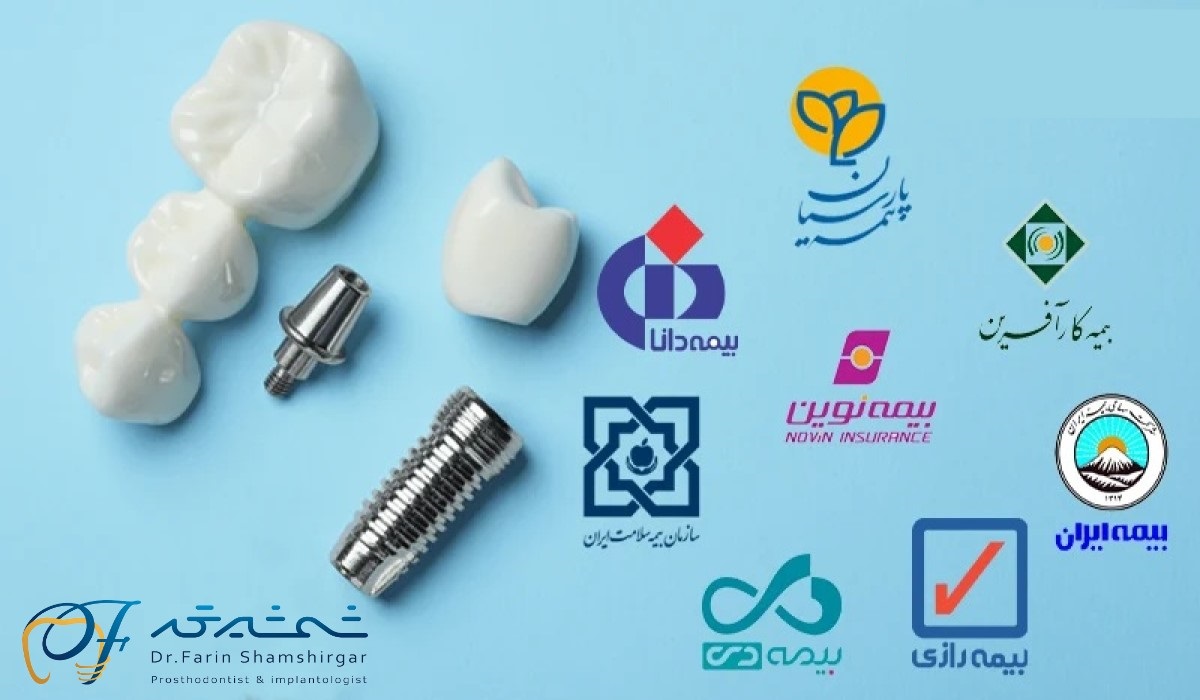
"group supplementary insurances (with at least 50 members) cover a part of the cost of dental implants, but a exact treatment plan must be sent to the insurance by the dentist. and written confirmation be received. The coverage limit of valid insurances such as Razi (2 to 20 million Tomans) and Asia (3 to 15 million Tomans) varies and can usually only be used in the contracting party centers. href="https://www.sid.ir/blog/post/81787/%DA%A9%D8%AF%D8%A7%D9%85-%D8%A8%DB %8C%D9%85%D9%87%E2%80%8C%D9%87%D8%A7-%D9%87%D8%B2%DB%8C%D9%86%D9%87-%D8%A7%D B%8C%D9%85%D9%BE%D9%84%D9%86%D8%AA-%D8%AF%D9%86%D8%AF%D8%A7%D9%86-%D8%B1%D8 %A7-%D9%BE%D9%88%D8%B4%D8%B4-%D9%85%DB%8C%E2%80%8C%D8%AF%D9%87%D9%86%D8%AF-" rel="nofollow noopener" target="_blank">Academic Jihad
If you wish, you can listen to the podcast on the cost of dental implants with additional insurance
Determining factors of dental implant cost
Before looking into insurance coverage for implants, it's important to know exactly what you're paying for. The cost of the implant is not a fixed number and consists of several main components:
fixture implantation surgery
fixture cost: the brand and manufacturer of your implant (Switzerland, Germany, Korea, Iran, etc.) is the most important factor determining the price. High-quality implants with a long history are usually more expensive.
Surgery cost: includes the cost of anesthesia, the cost of surgery to place the fixture in the jawbone, the fee of an implantologist or gum surgeon (periodontist) or an experienced dentist in the implant.
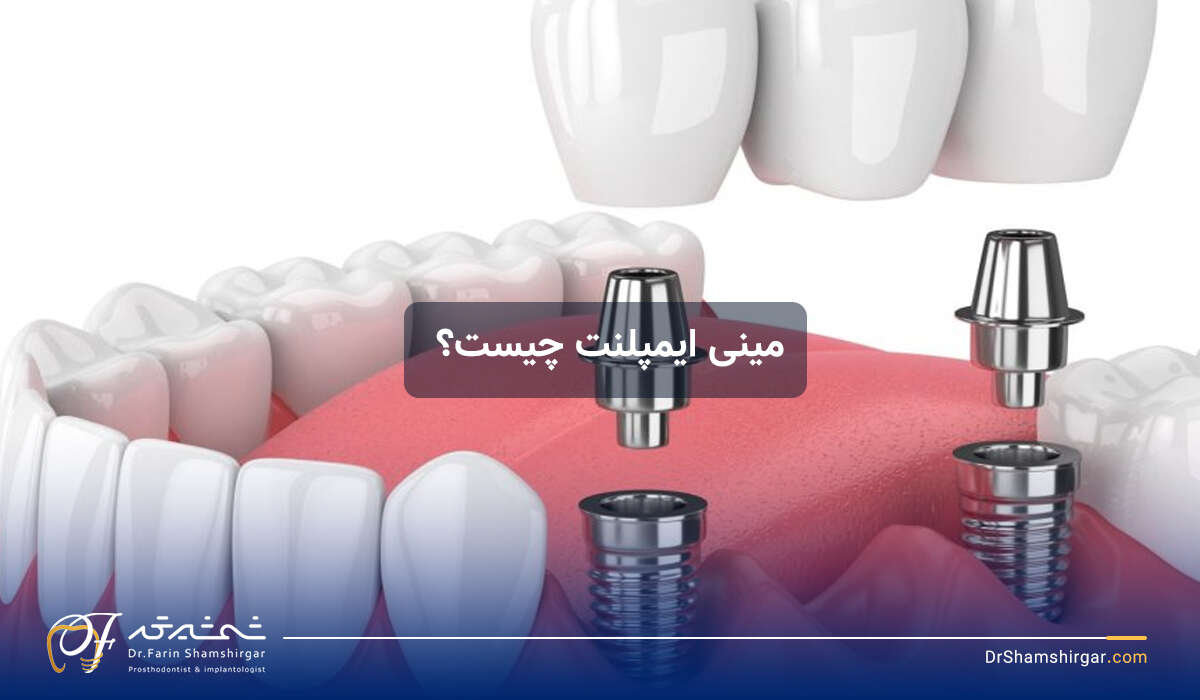
Cost of imaging: the cost of a three-dimensional CT scan (CBCT) to accurately assess the quality and bone size, these costs are absolutely necessary for accurate surgical planning and making a surgical guide. Cost of consumables: such as bone membranes, pins, and other materials needed during surgery. Connecting parts (abutments) are connecting parts of the bridge between the fixture and the tooth crown. These parts can be standard or customized. Custom abutments will cost you more, especially for special situations.
Final prosthesis
Crown type: ceramic crown (the most beautiful and natural tooth crown), metal-ceramic crown (more durable than ceramic crown and slightly cheaper), dental bridge or implant-based prosthesis (for replacement several teeth).
Costs related to the material and technology used to make the veneers: zirconia ceramic, feldspathic ceramic, all-ceramic veneers, the use of CAD/CAM – all affect the price.
Dentist's fee: for the design, molding and installation of the final crown
Possible side costs
Bone graft (bone graft): in case of severe erosion of the jaw bone, creating a solid base for the necessary implant is The cost of graft materials, which consist of three types of artificial, animal, and human, is significant.
Sinus lift: This operation is often required in the implant of the posterior teeth of your upper jaw where the sinus is close.
Tooth extraction: If the damaged tooth is still in the mouth and needs to be extracted before the implant, this operation is also required and includes costs for you.
Treatments Preliminaries: Scaling and treatment of gum disease (periodontitis) is necessary to create a healthy environment before surgery.
Temporary needs: temporary teeth during the healing period (usually 3-6 months).
Average cost of dental implants in Iran (this data is based on the time of writing this article and is an estimate and highly variable are):
A simple implant (no need for a graft or sinus lift): from about 10 to 25 million Tomans or more, depending on the brand and quality of the parts, the experience of the dentist and the geographic location of the clinic.
Bone graft: can add a few million to more than 10 million Tomans to the cost.
Sinus lift: similar to the graft, it has a significant cost.
Crown: from about 4 to 12 million Tomans depending on the type and type.

Decreasing the cost of dental implants with insurance and its importance
Basic insurances - social security, medical services
Practically zero coverage: In most cases, basic government insurances in Iran do not provide any coverage for dental implants as a tooth replacement method. Implants are generally classified in the category of "cosmetic" or "optional" treatments.
Very rare exceptions: In special and very limited cases, such as severe congenital defects (for example, the congenital absence of several teeth) or injuries caused by accidents that lead to the loss of teeth and there is proof of medical necessity by the Insurance Medical Commission, very partial and conditional coverage may be considered. But these cases are very rare and need to go through long administrative procedures.
Supplementary insurances
The only possible source of coverage: Supplementary insurances play the main role in helping the implant cost with insurance, but their coverage is also:
- limited: most supplementary insurances offer implant coverage up to a certain annual or periodic ceiling (for example, 5-15 million Tomans per year). This amount usually covers only a part of the total cost of an implant.
- Conditional: they often have special terms and conditions:
Waiting period: 1 to 2 years after the start of the insurance policy, implant coverage may be activated.
Medical necessity: Some insurances only cover the cost if missing teeth cause problems in chewing or speech and it is proved by submitting a medical report. Insurance coverage for beauty is usually not available.
Obtain insurance approval prior to treatment: Obtaining written approval from insurance is required before treatment begins. The insurance will review the treatment plan and the possible costs.
Number limitation: coverage may apply to a limited number of implants during the life of the policy or per year.
List of contracted dentists: may only pay for treatment at certain clinics or dentists that are a party to the insurance contract.
Partial coverage: Some insurances only cover the cost of surgical crowns or only the cost. The coverage of parts (fixture and abutment) is also different.
Exceptions: the costs of bone grafting, sinus lift, specialized imaging (CBCT) and temporary teeth are often completely out of coverage or have limited coverage.
Significant difference between companies: Be careful that the terms and limits of implant coverage vary widely between different insurance companies and even between different plans of the same company. Reading the brochure carefully and asking the insurer directly is critical.
Specific Dental Insurance
Some companies offer specialty dental insurance policies that may provide better coverage for implants. However:
There are still limitations: the annual coverage they offer is usually not enough for the high costs of implants.
Cost of insurance: insurance premiums for plans such as dental implants are usually higher.
Lack of widespread use: the frequency and accessibility of these insurance policies are not as common as supplementary insurances.
Dental implant cost with insurance and how to cover it
The cost of implant with insurance is affected by the following factors.
- Classification as cosmetic treatment: The traditional view of many insurers (especially basic insurance) is that implants are more cosmetic than medical necessity (unlike removable prostheses, which sometimes have partial coverage).
- High initial cost: The high initial investment for insurers makes it unattractive to provide extensive coverage. It takes months and is done by different specialists, it is complicated for the insurance system.
- Lack of cost standardization: The wide price difference between clinics and dentists makes it difficult to establish a standard tariff and fair coverage.
- Rapid technological progress: Updating tariffs and coverage for new materials and procedures does not always keep pace with technological progress.
Dental implant cost management solutions with insurance
To manage the cost of implants with insurance before proceeding, check the following:
Research carefully about supplemental insurance
Read the brochure: Read the dental section carefully. Pay special attention to the coverage limit, waiting period, conditions and exclusions.
Direct contact with the insurance: contact the customer service department of your insurer. Ask specific questions, some examples: "What is the ceiling of my implant coverage?" "What documents are required?" "Which costs (surgery, fixtures, abutments, crowns, grafts, sinus lifts, imaging) are covered?" "Where can I see the list of dentists on your contract?"
Insurance comparison: If you are choosing a new supplementary insurance, carefully compare the implant coverage by insurance between different insurance plans. Ask your dentist to prepare a detailed and complete treatment plan including all the steps, the parts used and their brands, and the estimated costs of each part. Send this treatment plan to the insurance and get a written confirmation of the amount of insurance coverage for each part. This confirmation will prevent any disagreements that may arise in the future.
How to choose a dentist and dental clinic
Party with the insurance contract: Using dentists that are part of your supplementary insurance contract usually makes the process of getting funding from the insurance much easier. It declares clearly and detail by detail and guides you about the coverage of costs by insurance.
Good quality in relation to the price: the cheapest option is not always the best. Experience, expertise, use of quality materials and modern equipment especially CBCT and CAD/CAM are very important. It is helpful to get advice from several reputable experts.
Financial planning
Understanding the financial gap: Once you know the insurance coverage limit and the estimated total cost, calculate the amount you will have to pay.
Prepayment and installments: Many clinics allow you to prepay and pay in installments.
Savings: Financial planning for this expense in advance.
Prioritize: If you need multiple implants, talk to your dentist about prioritizing treatment based on need and budget.
Exploring Alternatives
It is important to approach this process carefully and consider consulting a dental implant specialist. have and part of their cost may be covered by basic or supplementary insurance. But in terms of comfort, function and preservation of the jaw bone, they do not reach the foot of the implant and may need frequent replacement or repair in the long term. Treatment in dental schools: Costs in dental schools are usually lower, but treatment is done by students under the supervision of professors. Insurance coverage in these centers should also be checked by you.
Awareness and changing the view of insurance on dental implants
The change of view towards dental implant should be done from a cosmetic process to a necessity for the health of mouth, teeth and body. Lack of teeth and problems caused by chewing (and ultimately digestion) lead to jaw bone degeneration, facial deformity, and displacement of teeth.
Over time, this change of perspective will lead to the expansion of insurance coverage, at least for proven medical necessity, in basic and supplementary insurances, and we hope that by updating information in insurances, more coverage for the cost of implants will be considered with insurance.

Key points and things to do
Before getting a dental implant, it is better to consider the cost of the implant with insurance according to the following:
- The cost of the implant is high and has several parts: fixture, surgery, abutment, crown and possible side costs (graft, sinus lift).
- Basic insurance (social security/medical services) practically does not cover.
- Supplementary insurance is the only way of financial assistance: But with limited coverage, the waiting period, the requirement of medical necessity in some cases and exceptions such as graft and sinus lift are often not covered.
- Research about supplementary insurance is essential: read the insurance obligations carefully, contact your insurance directly, compare different insurance plans.
- Prepayment is required: ask the dentist for a detailed treatment plan and send it to the insurance company for written approval.
- The difference calculate: know the difference between the total cost and the insurance coverage limit and make a financial plan for it (savings, receiving installments).
- Choosing a dentist: the dentist is a party to the insurance contract, speaks transparently about the costs and has sufficient expertise and experience.
- Do not sacrifice the quality of the work for the price: the implant is a long-term investment for your health.
- Consultation with a trusted dentist: the best source for real cost estimates and guidance It is best to consult with an experienced and reliable dentist regarding treatment options and interactions with insurance.

Consultation with Dr. Farin Shamshirgar, dental implant specialist in Zafaranieh
Implant planting has high precision and sensitivity, and for this reason, it is recommended to consult specialists who have sufficient expertise in this field. One of the specialists that people can refer to for their mini-implant with confidence is called Dr. Farin Shamshirgar. As a dental implant specialist in Zaferanieh, he has expertise in the field of dental prostheses, implants and beauty, and can perform mini-implants in the best possible way.
Final word
The cost of dental implants is high and the role of insurance in reducing it, especially in Iran, is limited. It is of complexity. However, by carefully researching your supplemental insurance, getting approval from your insurance before treatment, proper financial planning, and choosing a reliable and experienced dental specialist, you can choose the best option.
Remember that dental implants are a specialized treatment and the cost is an investment in your health, quality of life, self-confidence, and long-term well-being. Patience and precision in treatment planning bring lasting and favorable results.
It is important that before any action, you consult directly with your insurance company and an experienced and expert dentist to find out the cost of the implant with your insurance and the latest rules, coverage conditions and the most accurate cost estimate.
Free consultation!
Make an appointment for a free consultation or register online or call us.
No. Basic insurances, such as social security, classify implants as "cosmetic services" and do not cover them.
Only group supplementary insurances (with a minimum of 50 members) may cover part of the cost. Individual insurances usually do not cover implants.
Two main conditions:
1. Refer to centers of the contracting party with insurance.
2. Receive pre-treatment approval (Pre-approval) by presenting the dentist treatment plan
Pasargad Insurance: the only insurance that offers individual coverage (up to 90% of the cost up to 5 million tomans).
Armed forces insurance: only for veterans it pays for the implant
installment payment: at Dr. Shamshirgar's clinic, plans for 6 months and more without guarantor and with check Sayadi offers.
Using affordable brands: Korean or Iranian implants.
Treatment in dental schools: Costs are up to 50% lower, but done under the supervision of students.
Yes. این روشها معمولاً تحت پوشش بیمههای پایه قرار میگیرند، اما دوام کمتری نسبت به ایمپلنت دارند.