Complications of high heels
Hilary Brenner, a doctor specializing in foot diseases, says: Heels are getting higher day by day. We podiatrists call this situation, we are victims of the beauty of shoes. Mrs. Brenner, the spokesperson of the American Podiatrists Association, says that high-heeled shoes cause many problems, from sprained ankles to chronic pain.
We previously discussed the effects of high heels on the body in an article on the GCORP LLC website that may be worth reading.
Let's take a closer look at the height, model and problems of today's shoes.
Problem: heel spur
Whether the shoes are high-heeled or medium-heeled, this foot condition causes a painful bump on the back of the heel.... The hard material of the shoe puts pressure on this bump... This pressure causes blisters, swelling and even pain in the tendon area.... Using ice and better shoes can reduce the pain.... It reduces the permanent bony bump.. src="data:image/svg+xml,%3Csvg%20xmlns='http://www.w3.org/2000/svg'%20width='493'%20height='335'%20viewBox='0%200%20493%20493%203%C5" width="493" height="335">
Problem: Abnormal foot placement
High-heeled shoes put a lot of pressure on the toe.... In this sensitive joint, the long metatarsal bones connect to the pea-shaped bones and toes.
High pressure can cause bruising of these bones or nerves around them.... Long-term pressure on the leg bones can even lead to fractures.

Solution: Use low heels
Using short heels helps prevent problems related to the bones of the feet. The shorter the heel, the more natural your foot position will be. Ms. Brenner recommends using heels with a height of less than 2 inches, and even these shoes should not be overused.
Problem: sprained ankle
With all high heels there is a risk of ankle sprains....the most common problem is lateral sprains which occur when you turn the foot outward....this causes the ligaments to stretch beyond their normal length....a severe sprain may tear the ligament....a sprained or sprained ankle should be immobilized for a period of time and the joint treated if needed....ankle fractures are common. big.
Accused: narrow heel
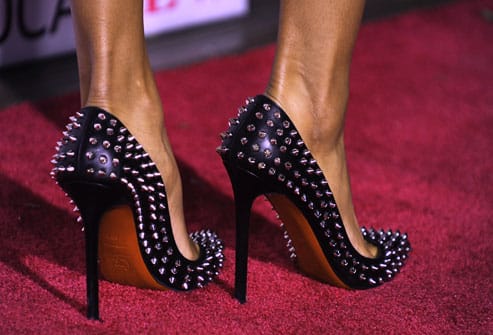
Although all high heels are problematic, very thin heels are especially dangerous.... Dr. Brenner says, "All the weight of the body is concentrated in one spot... It makes you stumble like you're walking with a stick." As a result, the possibility of twisting the ankle increases..
The solution: wide heels
A thick heel has more surface area and distributes your weight more evenly... These heels provide more stability than narrow, spindle-like heels...
Although thick heels also concentrate pressure on the forefoot, the risk of losing balance and rolling is greatly reduced.
Accused: flat shoes
Dr Bernerin compares delicate shoes to walking on thin cardboard: "These shoes have no support at all". This prevents the foot from working optimally and causes problems for the knees, hips and back. Poor support also creates another problem for the foot called plantar fasciitis, which is very painful.
The solution: orthotic insoles
If you like ballet shoes, use commercially available insoles that prevent mild foot pain....Heel pads provide extra cushioning for painful heels....Custom orthotics can alleviate many foot pains and problems.
Podiatrists prescribe these insoles to support the arch of the foot and reduce pressure in sensitive areas... Prescription orthotics can be expensive, but are sometimes covered by insurance.
Accused: Sandal
Sandals offer little protection to the foot....the risk of injury and abrasion increases when most parts of the foot are unprotected....diabetics should not wear such sandals as small wounds can have serious consequences....in addition, many sandals lack an arch....like ballet shoes, these shoes can cause inflammation of the soles of the feet and cause problems in the knees.. src="data:image/svg+xml,%3Csvg%20xmlns='http://www.w3.org/2000/svg'%20width='493'%20height='335'%20viewBox='0%200%20493%20493%203%C5" width="493" height="335">
Problem: inflammation of the soles of the feet
A group of tissues called the plantar fascia runs along the bottom of the foot.. These tissues pull the heel up when walking and this tissue works well when the foot has a proper arch.. It temporarily fixes it.
Sandals of the right size
Fitted athletic sandals are shoes designed for walking while exercising. The American Council on Exercise says there is no evidence to support this claim, but they may have other benefits.
Dr.. Brenner points out that: "These shoes hold the arch very well." Many of these shoes have the seal of approval of the American Podiatry Association.
Accused: platform shoes
These shoes have stiff soles... Dr. Brenner says, "This hard sole disrupts the biomechanics of walking.... Your foot wants to bend a certain way, but the shoe won't allow it to bend because of the stiffness." If the heel of this shoe is much higher than the toes, the shoe puts more pressure on the bones of the foot.
Smoother platforms are better
Although these shoes are not recommended, flat platform shoes put less pressure on the foot than high platforms.... Look for a shoe that is almost parallel to the ground.... This puts less pressure on the forefoot. However, stiff soles prevent natural movement when walking.
Accused: pointy shoes
These shoes may be stylish but they put pressure on the entire front of the foot.. After a while this causes nerve pain, calluses and blisters... Some women even experience dead blood in the area under the tips of the toes due to the constant pressure.
Problem: Callus
A bunion is a painful bump that forms at the base of the big toe and prevents it from bending normally.... A bunion occurs when the tissue or bone in the joint at the base of the toe is displaced.... This happens after years of pressure and abnormal movement...
Problem: deformation of the toes
High-heel shoes put a lot of weight on the toes and squeeze them together....this pressure over time causes hammertoe and abnormal bending of the toe joints, which gradually stiffens....in some cases, surgery is needed to relieve the pain....Toes being close together causes other deformation and wear and tear that may eventually lead to calluses and calluses..
Solution: wide shoe tip
By choosing pointed shoes, you can get rid of the discomfort of pointed shoes.... If you don't like the look of the shoes, use shoes that deviate to a point other than the corner of the toes.... A healthy shoe does not put pressure on the tips or ears of the toes... Dr. Brenner suggests using softer materials instead of hard leather.
Accused: famous people
Lady Gaga is known for her unconventional style, but you should reconsider her choice of heelless shoes.. The 12 inch heels she wears are just as dangerous... too much pressure on the forefoot can damage bones and nerves and cause pain.
Solution: comfortable shoes
Many women don't like to trade comfort for fashion, but many don't have to choose between the two.... Comfortable shoes are both fashion and health.... These shoes are made with reinforced heels, sneaker construction and more room for the toes..
Accused: shoes with the wrong size
9 out of 10 women use shoes that are too small....the consequences of this are calluses, calluses, blisters and other problems....continuous rubbing of the foot joints causes pain and arthritis....research shows that many children also use shoes of the wrong size, which carries the risk of changing the shape of their feet.
How To: Measure Your Feet
Before buying new shoes, measure the length and width of your feet professionally at the end of the day when you are standing. For feet with flat soles or high arches, an examination by a podiatrist is helpful. These conditions increase the risk of developing arthritis. src="data:image/svg+xml,%3Csvg%20xmlns='http://www.w3.org/2000/svg'%20width='493'%20height='335'%20viewBox='0%200%20493%20493%203%C5" width="493" height="335">
Men's fashions
Pointed shoes have also become popular among men....These shoes have the same risks as men, including hammertoes, calluses and pain....to avoid these problems, use shoes with wide toes.
Fitness Fashion: Minimalist
The new shoes entered into the world of shoes are minimalist shoes. The purpose of designing these shoes is to create a natural and mechanical feeling of walking with bare feet.
Dr. Brenner says, "There is no support for the heel or arch, and there is no design to absorb shock to the foot... In addition, in some brands, the toes are separated from the big toe, which contradicts the natural position of the foot when walking.See more: The best orthopedic specialist
Fitness Fashions: Rocking Shoes
These shoes make it easier to start moving while walking.... According to Dr. Brenner, this shoe shape helps reduce joint pain.... Helpful for people with lower foot deformities.... Dr. Brenner does not recommend these shoes for the elderly and people with balance problems and weak muscles.
3 tips for better shoes
Dr. Brenner has provided the following guidelines for choosing shoes:
- Make sure the toes bend but not too much
- Make sure there is adequate arch support
- Wear shoes with wide heels less than 2 inches high
Was this article useful for you?
![Which fruit increases blood pressure [high and low]? 18 effective fruits](/storage/posts/covers/2026_01_08/ef00bb701cbb99e90a24ba8d73265ba4c08936335e859a33b69553f5c5e737a2.webp)
![For whom is rhinoplasty dangerous? [10 groups+cause+solution]](/storage/posts/covers/2026_01_06/3e06a993c87e243daaf67dc69ac3e484d377b2708c93656820e0084ea4f080d6.webp)
![What fruits have vitamin B12? [13 fruits + consumption tips]](/storage/posts/covers/2026_01_06/dfaeceb7cb9a203805aeba8715bf7cdea6f5cb2b5b9314e1898807545e874bb1.webp)
![Is nasal massage necessary after surgery? [Training + 5 effective benefits]](/storage/posts/covers/2026_01_06/1f2686c8d522130d256828a51d7d46594dbde31ec2253325e6a8a38f04094789.webp)
![The best drops to reduce eye pressure [14 powerful drugs + method of administration]](/storage/posts/covers/2026_01_06/0177c50098eb80d878d1c883d09ae31ad2f489b17e1288f52018e3f8ef213e5f.webp)
![What is hair filler? [9 benefits, how to inject + durability of hair filler]](/storage/posts/covers/2026_01_06/c21c5e1ff48e9af8214111dfe0b867586f298e3d74a95fadda02b0b04df12598.webp)
![The strongest antibiotic for tonsil infection [7 drugs + method of administration]](/storage/posts/covers/2026_01_06/7b5adf6bb8cf556824d96570b6adba58f824b3a7f248993cfaafb73c0b5b8610.webp)
![Garlic pills for weight loss [4 effective benefits and side effects + how to use]](/storage/posts/covers/2026_01_06/c49f08b482d5860218c8635e48194a50f2ed48b51ef15925aa2d73d8393ff3ab.webp)
![What foods increase eye pressure? [8 harmful foods and drinks]](/storage/posts/covers/2026_01_06/52929c4d1b9ed7916d3fc5a8e45060479fb186f332dd217e68905f71f89a33f0.webp)
![What foods lower eye pressure? [18 useful foods]](/storage/posts/covers/2026_01_06/f180eb15f8e64fc9b386f9d5dc7936a5e416af36032be3bdcdf9054925a21d43.webp)
![itchy scalp; 18 causes [medical treatment + 11 home remedies]](/storage/posts/covers/2026_01_06/a1e116ec1c6243fd5c4e6fb951da5cb33bbd92a09c44e29b845852a86f550681.webp)
![What is intestinal colitis and what are its symptoms? [3 causes + definitive treatment]](/storage/posts/covers/2026_01_06/d3384e9221c036ff3eb447c69ffabb109dd6c0c35f5e5f0af775c4545cfd7ea5.webp)
![The best pills for irritable bowel syndrome [10 powerful drugs]](/storage/posts/covers/2026_01_06/70f02d6808fab88d67b0c6734a623e5e71982d323dbd2fb8158c29669849b813.webp)