Table of Contents

Listen to the summary in this podcast
lip
Hoarseness is a complication that may be caused by various reasons. Depending on the cause, hoarseness can be temporary or permanent. If you are also suffering from this problem, stay with us in the rest of the article to mention the symptoms associated with hoarseness and mention the types of causes of this problem. We also explain to you the methods of treating the harsh voice.
If you are looking for the best ear, nose and throat specialist for the treatment of hoarseness, you can apply through your doctor's website. In addition to the face-to-face appointment system, there is the possibility of online and telephone consultations.
What is hoarseness?
Quoted from nidcd, hoarseness or hoarseness is an abnormal change in the voice. Hoarseness is a common condition that is often associated with a dry or scratchy throat. The sound may have changes in the field of frequency (pitch) and loudness, which varies from a deep and harsh sound to a weak, sharp and ear-scratching sound, preventing the creation of a smooth and smooth sound.
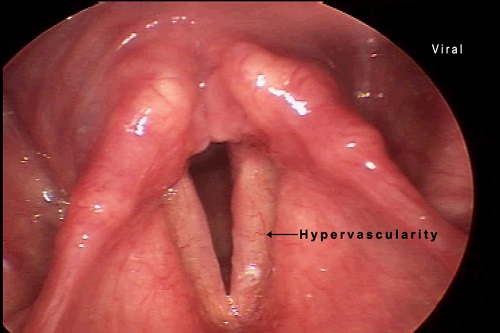
Hoarse voice is usually caused by a problem in the vocal cords and may cause inflammation of the larynx known as laryngitis. The larynx (also known as the voice box) is located at the entrance to the respiratory tract and contains the vocal cords. The outer wall of the larynx, which is cartilaginous, is commonly known as "Adam's apple". The vocal cords are two muscular bands that form a "V" inside the larynx. When singing or speaking, the vocal cords vibrate and produce sound. Keep in mind that if you have hoarseness for more than 10 days, you may have a serious problem, so see an ear, nose, and throat doctor immediately.

What are the reasons for loud noise?
The most common cause of hoarseness is acute laryngitis and upper respiratory tract infection. The main cause of hoarseness is usually diagnosed by a doctor based on the patient's medical history and physical examination. A hoarse voice is usually caused by a viral infection in the upper respiratory tract. Other common factors that can cause, develop or intensify the sound are:- Gastric acid reflux
- Smoking
- Consumption of caffeinated and alcoholic beverages
- shouting, long singing, or excessive use of vocal cords Allergy
- Inhalation of toxic substances
- Excessive cough.
Some of the less common causes of hoarseness are:
-
Polyps (abnormal masses) on the vocal cords
- Throat, thyroid or lung cancer
- damage to the throat such as entering the breathing tube
- Male teenagers (when the voice becomes lower during puberty)
- weak functioning of the thyroid gland
- Aortic aneurysm (swelling of part of the aorta, the largest artery of the heart)
- Neurological problems that weaken the vocal muscles (such as Parkinson's disease and stroke).
Hoarseness is usually caused by problems with the vocal cords and may cause inflammation of the larynx known as laryngitis.
What are the symptoms of hoarseness?
Hoarseness usually manifests itself with a harsh and sharp voice, it may appear with a change in the pitch or loudness of the voice. The speed of onset and any associated symptoms depend on the underlying cause of hoarseness. The main symptom of hoarseness is a hoarse and slow voice. Depending on the cause of this problem, different symptoms may occur. Possible symptoms are:
- Feeling of a lump in the throat
- Feeling dry throat
- The need to clear the throat continuously
- Persistent coughs
- Difficulty in swallowing
- Sore throat
- creating mucus in the throat
When to visit a pediatrician to treat a child's hoarseness?
It cannot be said that hoarseness and hoarseness is an emergency case for a child, but we must visit a pediatrician so as not to miss a special case. If hoarseness lasts more than a week in children, you should see a pediatrician for evaluation and treatment. If hoarseness is accompanied by phlegm (in children) and swallowing or breathing problems, see a doctor immediately. In addition, a sudden inability to speak or make coherent sentences may indicate a serious medical condition.
Sound detection
When you visit the doctor, the doctor will probably do a physical examination of the head and neck, as well as the chest and lungs. If he does not get an accurate result by doing the initial examination and checking the symptoms, he uses the following tests to accurately diagnose the cause of the hoarse voice.
1. Laryngoscopy
When hoarseness does not disappear after 4 weeks, this test should be done. In this method, a flexible tube with light is inserted through the nose to examine the vocal cords. Before the test, an anesthetic is used in the back of the throat so that the person is not bothered.
2. Video stroboscopy
In this test, a special light is used to create a series of images. These images show the vibration and slow movement of the vocal cords.

3. CT scan and MRI
In this method, the chest and neck are scanned. Usually, this test is also performed after performing a laryngoscopy test for a more accurate diagnosis.
4. Other tests
Other tests may be needed depending on the symptoms. For example, if the doctor suspects an infection, a blood test is prescribed. If acid reflux is suspected, upper gastrointestinal endoscopy is performed.Hoarseness treatment
The treatment is determined according to the underlying cause. The doctor may prescribe medicines to soothe the throat. In most cases, giving the voice a rest for a few days can be effective in removing congestion. If your voice is very weak or you have vocal polyps, you should rest longer. Treatment of hoarseness depends on the underlying cause, for example:
- Acute laryngitis caused by an upper respiratory tract infection: usually recovers when the infection is cleared from the body. Treatment with cough suppressants and increasing air humidity can be helpful. Antibiotics are not useful for most cases of laryngitis
- Gastroesophageal Reflux (GERD) or Allergy: Gastroesophageal Reflux (GERD) or Allergy medications can be helpful if the underlying cause of hoarseness is reflux or allergy.
- Laryngeal cancer: In some cases, for benign masses or polyps, damage to the laryngeal cord and vocal cord, laryngeal cancer surgery is necessary.
- Smoking: If the cause of this problem is smoking or other chemicals that irritate the larynx, the doctor recommends that you avoid these irritants.
- Vocal cord paralysis: This problem is treated with sound therapy and sometimes with surgery.

1. The most powerful remedy for hoarseness
To relieve sore throat and hoarseness, you can use over-the-counter pain relievers such as expectorant syrup for sore throat. Some medications are specifically suitable for sore throats, but general pain relievers such as ibuprofen or acetaminophen can also be used. Sometimes some people use aspirin to relieve the symptoms of laryngitis. But be careful that children should never use aspirin. Because this drug has severe side effects for children.
2. Hoarse syrup
If you are looking for a syrup with the least possible side effects, you can use Rutarin Herbal Medicine. Rotarin is used for hoarseness. Rotarin is the seed of Cydonia oblonga plant and has a good effect on the vocal cords. This syrup opens the voice and reduces lung inflammation. If you have chronic cough and shortness of breath, using this medicine can be effective.
Also, bromhexine syrup and bron cold syrup also help to remove phlegm and hoarseness. When using these drugs, pay attention to the precautions and the age of taking the drug.
3. Treatment of hoarseness in cold
The best treatment for hoarseness during a cold is rest. Try not to speak for a few days and speak slowly when necessary. Irritation and inflammation of the vocal cords can only be resolved with regular rest. Speaking slowly does not mean whispering. Because whispering stretches the vocal cords and disrupts the healing process.
You can use non-steroidal anti-inflammatory drugs such as ibuprofen and naproxen. Do not use decongestants in this situation. Because these drugs dry the throat and nose and damage the vocal cords.

4. Hoarseness home treatment
Some home methods to help reduce hoarseness are introduced below:
- Give your voice a rest for a few days: avoid talking and shouting. Also keep in mind not to even whisper, as this can even further strain the vocal cords.
- Drink plenty of fluids: Fluids may relieve some of your symptoms and moisten your throat.
- Avoid caffeine and alcohol: they can dry out the throat and worsen hoarseness.
- Creating moisture in the air of the closed environment: this can open the airways and make breathing easier.
- Take a warm shower: the steam in the bathroom brings a lot of moisture into the respiratory tract and opens the airways.
- Quit smoking or limit smoking: Smoke causes dryness and irritation of the throat, so quitting smoking can help you recover.
- Chewing gum: This stimulates saliva secretion and may relieve sore throat.
- Removing allergens from the environment: Allergens can often cause hoarseness to worsen.
- Do not use decongestants (decongestants) for hoarseness: use of decongestants will irritate and dry the throat.
5. Treatment of hoarseness with honey
Using honey with boiling water or tea can temporarily relieve the pain caused by inflammation of the larynx. Of course, be careful that no substance has direct contact with the larynx and cannot have a great impact on the vocal cords. But since honey has antimicrobial properties and helps to treat lung and chest infections, it can accelerate the healing process of the larynx.

6. Ginger for hoarseness
A miracle for hoarseness is ginger. Ginger is very useful for hoarseness. This substance reduces inflammation of the throat and is useful for the mucous membrane of the larynx. Respiratory infections can also be treated with ginger. You can consume ginger with salt and lemon juice or brew small pieces of it and drink this brew 3 times a day.
7. Fast treatment of hoarseness
To quickly treat hoarseness, you need to know the cause of this symptom. In the first step, you should know why your voice is hoarse so that you can take the necessary measures to treat it as soon as possible. For example, if the hoarseness is caused by a sore throat, you can use home remedies and drug treatment methods to improve the sore throat and, as a result, eliminate your hoarseness.
If the cause of hoarseness is nasal congestion, you can take the necessary measures to improve your hoarseness by using anti-hoarseness medicines. It is also possible that a dry throat is the cause of hoarseness. In these cases, you can help to improve your hoarseness as soon as possible by using humidification of the air and using medicines to improve hoarseness and eliminate dry throat.

8. Coriander plant for hoarseness
Rosser's crown plant is one of the plants whose appearance is similar to cock's crown and has a purple color. This plant belongs to the family of spinach and quinoa plants and has many properties for the body. One of the main properties of the cocklebur plant is that it can be used for severe coughs, sore throats, and hoarseness.
This plant is not a well-known plant, so not many people use it. This plant grows more in hot climates and therefore tropical regions are more familiar with this plant and use its properties. You can also use the cock's crown egg to improve sore throat and hoarseness.
9. Incense for hoarseness
According to a research conducted on 100 patients in Iran, after intubation, their throats were scratched and hurt. Usually, one of the side effects of a scratched throat is hoarseness. When a person is faced with hoarseness, he should use methods to improve his throat so that the hoarseness is also removed. One of the most important methods used in these patients is eucalyptus incense. After using eucalyptus incense, you can see its positive effects on the improvement of throat scratching and hoarseness. Not only after hoarseness due to chipping, you can use eucalyptus incense, but you can also use this incense for colds and throat congestion. One of the most important issues in the effectiveness of eucalyptus incense is time. Eucalyptus fumigation for about 10 minutes can increase its effectiveness.
prevention of sound blocking
You can take various actions to prevent violence. Some prevention methods that may help protect the vocal cords are listed below.
- Quit smoking and avoid cigarette smoke: Inhaling smoke can irritate the vocal cords and larynx and dry the throat. Frequent washing of hands: Hoarseness is often caused by a viral respiratory infection. Washing your hands will prevent the spread of germs and keep you healthy. Adequate water consumption: drink at least 8 glasses of water a day. It keeps the mucous fluids inside the throat thin and moist.
- Avoid fluids that dehydrate your body: such as caffeinated and alcoholic beverages. These drinks act as diuretics and make your body lose water.
- Try to resist the urge to clear your throat: the act of clearing your throat increases inflammation of the vocal cords and throat.
- Avoid situations that require excessive use of a loud voice: use a microphone if necessary.
- Dietary modification: In people with GERD, medication and dietary modification (such as avoiding alcohol, caffeine, and spicy foods) can be helpful.
When to see a doctor for hoarseness treatment?
If the preventive home methods do not reduce your hoarseness, see a doctor to help you determine the cause of hoarseness and the appropriate treatment. If you have a persistent and chronic hoarse voice, it may be caused by a serious illness and you need to see a doctor. Early intervention often improves your prognosis. Identifying the cause of chronic hoarseness prevents the situation from worsening and limits any damage to the vocal cords or throat.
Although hoarseness is not usually an emergency, it may be associated with some serious illnesses. If hoarseness lasts more than a week in children and more than 10 days in adults, you should see a doctor for examination and treatment. If hoarseness is accompanied by phlegm (in children) and swallowing or breathing problems, see a doctor immediately. In addition, a sudden inability to speak or make coherent sentences may indicate a serious medical condition.
If hoarseness lasts more than a week in children and more than 10 days in adults, you should see a doctor for examination and treatment.
1. What is the cause of hoarseness of the baby's voice?
A cold, sinus infection, or loud crying can make a baby's voice hoarse. Exposure to dry air or smoke can also cause this problem. If your baby's hoarseness is severe, you should see a doctor and take the necessary measures according to the instructions.2. What is the symptom of hoarseness with sore throat?
Since hoarseness is caused by inflammation of the vocal cords and throat irritation, it often presents with sore throat . Especially when you have a cold and an infection in the lungs and throat, the hoarseness of the voice is accompanied by a sore throat, and drinking warm liquids can help reduce these symptoms. The most effective way to treat both complications is to rest the vocal cords. It is better not to speak for a few days so that the sore throat and hoarse voice will gradually disappear.

3. What is hoarseness with fever?
Creating an infection in the body can cause fever. In conditions such as a cold, flu or sinus infection, hoarseness is normal, and if the level of infection is high, fever will probably be one of the symptoms.
4. What is the cause of hoarseness after quitting smoking?
Hoarseness of voice is one of the side effects of smoking. Since smoking causes chronic cough, it puts pressure on the vocal cords and increases mucus. In smokers, the immune system attacks the chemicals in tobacco smoke and destroys their effect. This process causes chronic laryngitis and inflammation and swelling of the vocal cords. Quit smoking This complication is removed and its positive effect can be seen after a few weeks.
5. Hoarseness after thyroid surgery
After thyroid surgery, the voice may become hoarse or it may not be possible to speak clearly. Within one or two weeks after the surgery, this condition will be resolved. About one percent of people may suffer serious damage to the vocal cords, and 5 to 10% of people will experience temporary symptoms due to nerve irritation during surgery or inflammation around the nerves.
6. Hoarseness in hyperthyroidism
Since the thyroid is located near the larynx, thyroid problems including hyperthyroidism may affect the vocal cords. According to the conducted research, voice changes in these patients have been recorded from 9% to 38%. In addition to hoarseness, these patients may suffer from other problems such as shortness of breath, pressure on the voice, and mixed voice.
7. Are hoarseness and corona related?You know that one of the main symptoms of Corona is that it appears like a cold. One of the symptoms of a cold is hoarseness. In many cases, hoarseness may be accompanied by sore throat or inflammation of the throat. When hoarseness occurs with a sore throat, painkillers or herbal medicines that relieve inflammation and throat congestion should be used to treat it.
Corona can also cause dry throat. When the throat is dry, it becomes hoarse and congested. For this, you can take the help of drinks that soften the throat.
sound blocking in micron
One of the main symptoms of omicron, which is one of the types of corona disease, is sore throat and hoarseness. The inflammation that Omicron causes in the throat causes problems for the larynx and it becomes difficult for these people to speak. Omicron period is very short and usually does not involve much pulmonary involvement. This type of corona disease is much milder than types like delta. But the problem is severe sore throat. Usually, Omicron's sore throat is likened to the pain of a dagger being pulled into the throat. Also, people who get Omicron sore throat face severe hoarseness.
8. hoarseness in children
Hoarseness can also occur in children and usually the cause of it can be diverse. One of the main causes of hoarseness in children is a cold. Sometimes it is also possible that hoarseness in children is due to inflammation and congestion of the larynx. Recently, Corona has also joined the causes of hoarseness, which is common in children. It is possible that hoarseness is due to inflammation of the sinuses and larynx.
To treat hoarseness in children, you should see a pediatric specialist. Sometimes it is possible that the cause of hoarseness is an infection that needs to be treated quickly.
Which doctor should we refer for hoarseness?
For more information about hoarseness, you can make an appointment with the best otorhinolaryngology doctor in Iran.
Next, you can see a list of the most prominent otorhinolaryngology doctors in some different cities of Iran:
Yazd ear, nose and throat doctor
ear, nose and throat doctor Kermanshah
Conclusion and guide to see a doctor
Hoarseness is a complication that many people face during their life. In many cases, the problem of hoarseness can be solved by resting. But if this complication does not go away after a few weeks, you should see a doctor to find out the cause.
To find the best ear, nose and throat specialist, you can apply through Doctoreto website. In addition to the face-to-face appointment system, there is the possibility of online and telephone consultations.
Your doctor takes care of your health!